Filters

10 filtered results

Clear all filters
Favorites
With answer key
Interactive

10 filtered results

Difficulty Level

Grade


Enhance your child's vocabulary with our specially designed Normal Writing Worksheets for Ages 4-5. These fun and engaging activities focus on building language skills through hands-on practice and interactive exercises. Each worksheet targets age-appropriate vocabulary, helping early learners understand and utilize new words in context. With colorful illustrations and playful tasks, children can enjoy learning while developing their writing abilities. Ideal for both classroom and home use, our resources support early literacy and set the foundation for future success. Boost your child's language development with our expertly crafted Vocabulary Expansion worksheets today!

Check out this FREE Trial Lesson on Writing for age 4-5!

High-frequency Words 3

Favorites
With answer key
Interactive
  • 4-5
  • Vocabulary expansion
  • Writing
  • Normal
Rime Time Worksheet
Rime Time Worksheet

Rime Time Worksheet

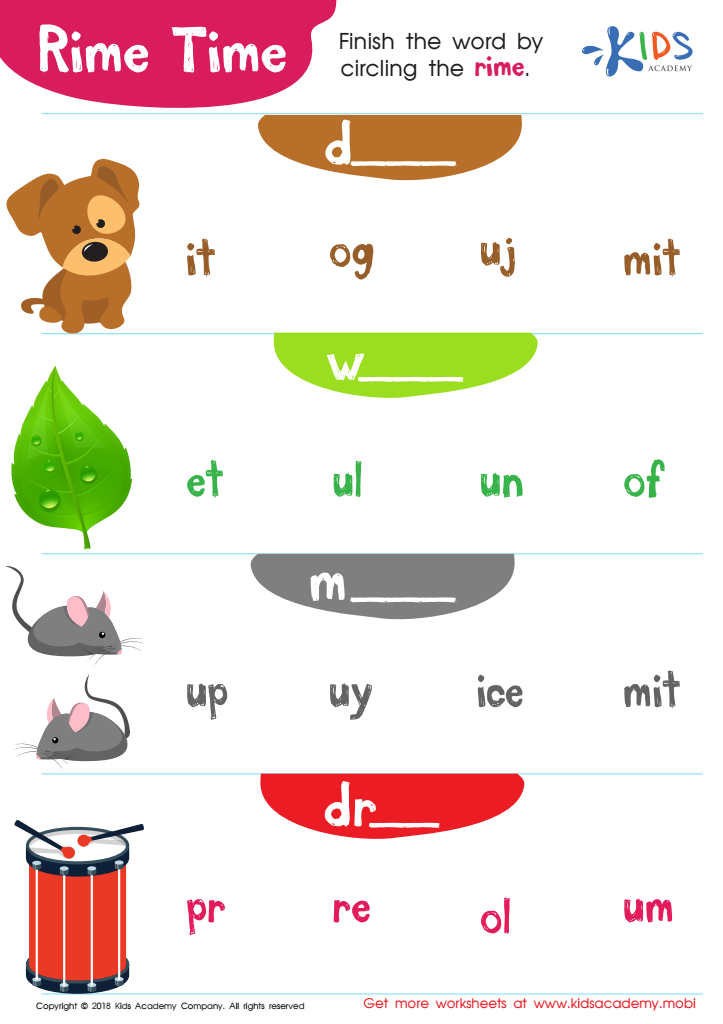
This free PDF worksheet helps new and emerging readers identify rimes (the letters after initial consonants) and practice fine motor skills. Kids trace the correct rimes for each picture and increase their fluency and decoding skills with each one!
Rime Time Worksheet
Worksheet
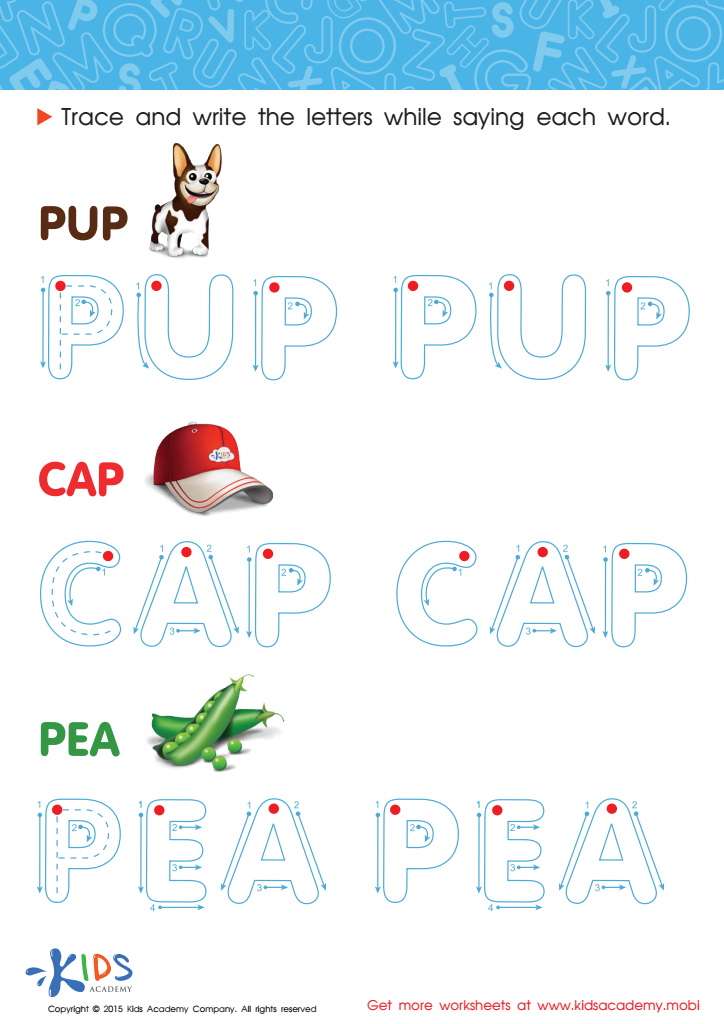
Spelling PDF Worksheets: A Pup, a Cap and a Pea

A Pup, a Cap and a Pea Spelling Worksheet
Practice tracing and writing with three new words. Carefully trace each word and try to remember it, then move on to the next one. Head to Kids Academy for more tracing worksheets! Get your pencils ready! Let's practice tracing and writing three new words on Kids Academy's spelling worksheets. Carefully trace each line and remember the words. Pick more great worksheets on their website to continue practicing. Have fun!
A Pup, a Cap and a Pea Spelling Worksheet
Worksheet
Guess the Meaning Worksheet

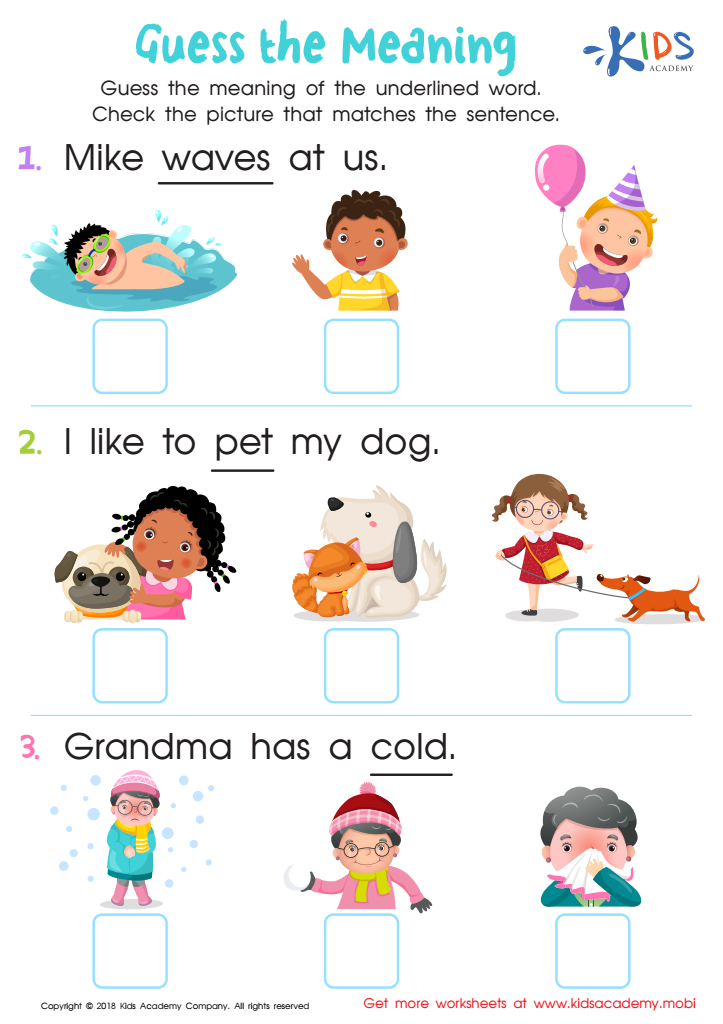
Guess the Meaning Worksheet

Help your child learn the meanings of words in different contexts by using this colourful, free worksheet. What is the meaning of the underlined words in each sentence? Look at the images and pick the one that accurately describes the word's context.
Guess the Meaning Worksheet
Worksheet
Similar Words Worksheet

Similar Words Worksheet

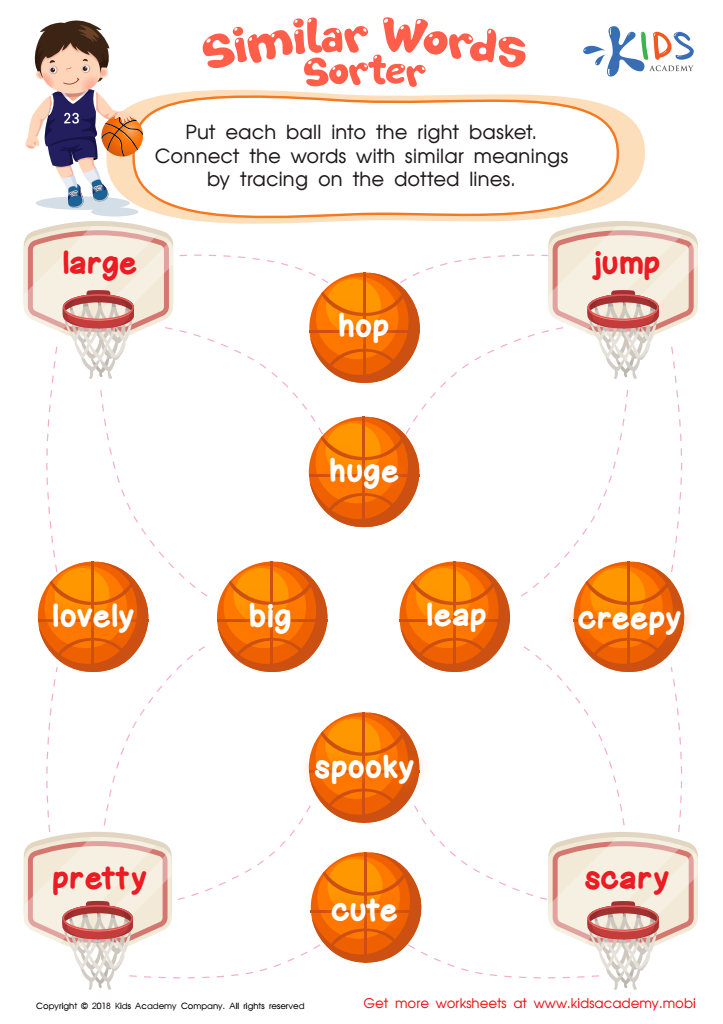
Test your child's knowledge of synonyms by having them name five words for "up"! This tracing sheet is a fun way to do it: your child must trace the dotted lines to put each ball in its right basket. To do so, they must know the synonyms and trace them to the correct baskets.
Similar Words Worksheet
Worksheet
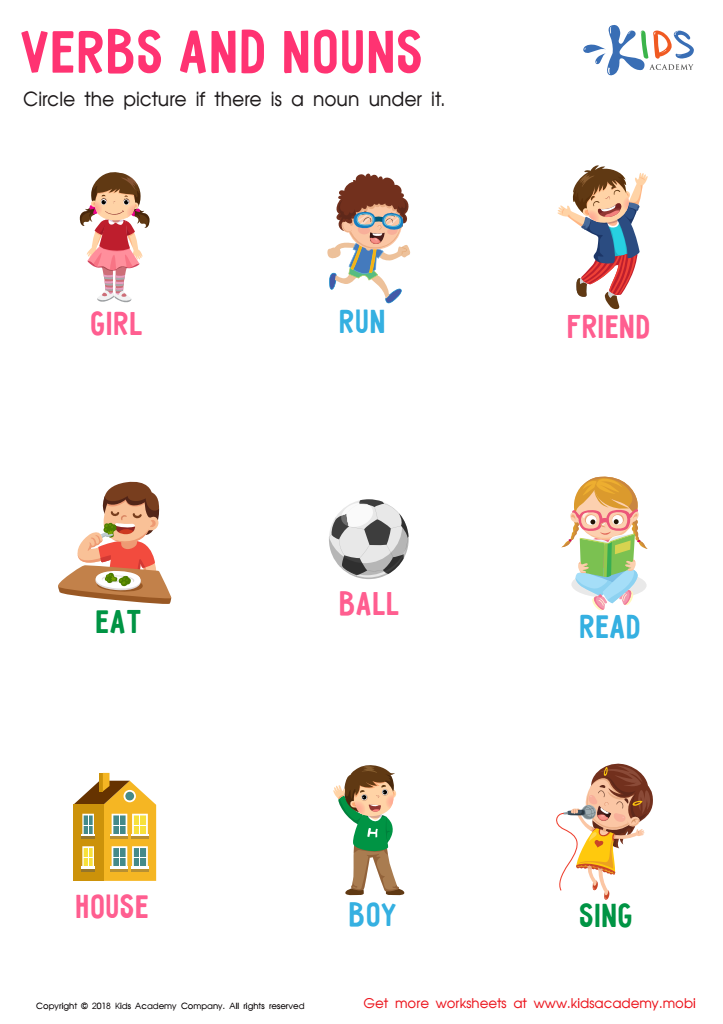
Verbs and Nouns Worksheet

Verbs and Nouns Worksheet

Your child should have basic knowledge of verbs and nouns before starting this worksheet. Go through it with them and ask them to circle the pictures with nouns under them. This way, they'll become more familiar with parts of speech.
Verbs and Nouns Worksheet
Worksheet
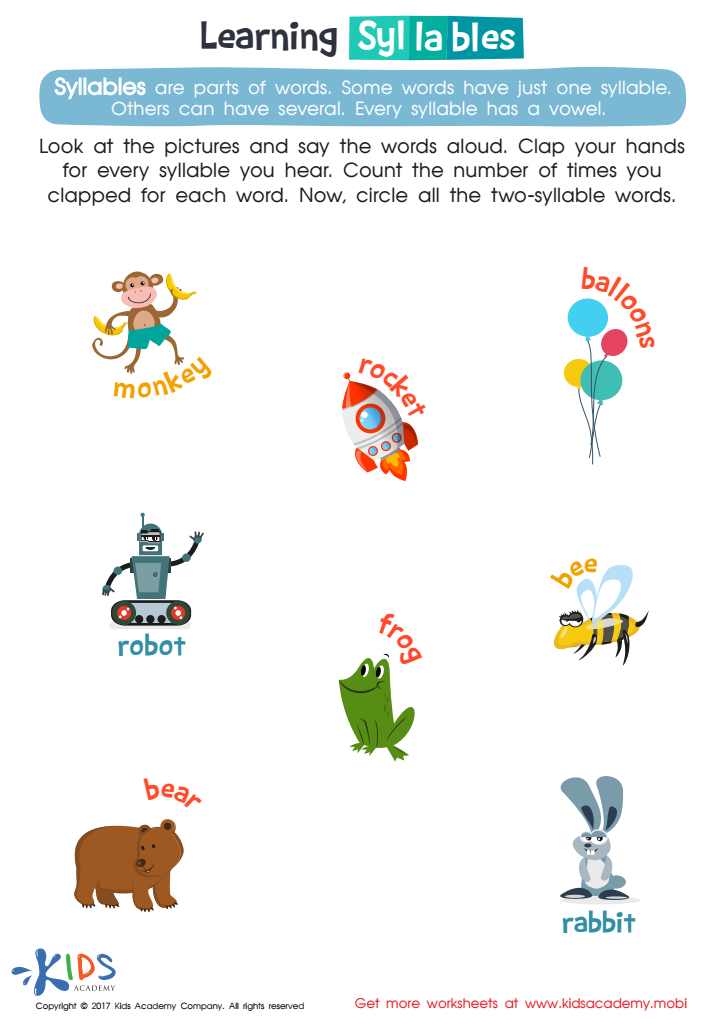
Worksheet: Learning Syllables

Learning Syllables Word Structure Worksheet
Teach kids to read and spell with our fun Learning Syllables worksheet. Kids will have a blast clapping and saying familiar words while counting syllables. Colorful and catchy, it's a great way to make learning enjoyable!
Learning Syllables Word Structure Worksheet
Worksheet
Word structure worksheet: syllables

Finding Syllables Word Structure Worksheet
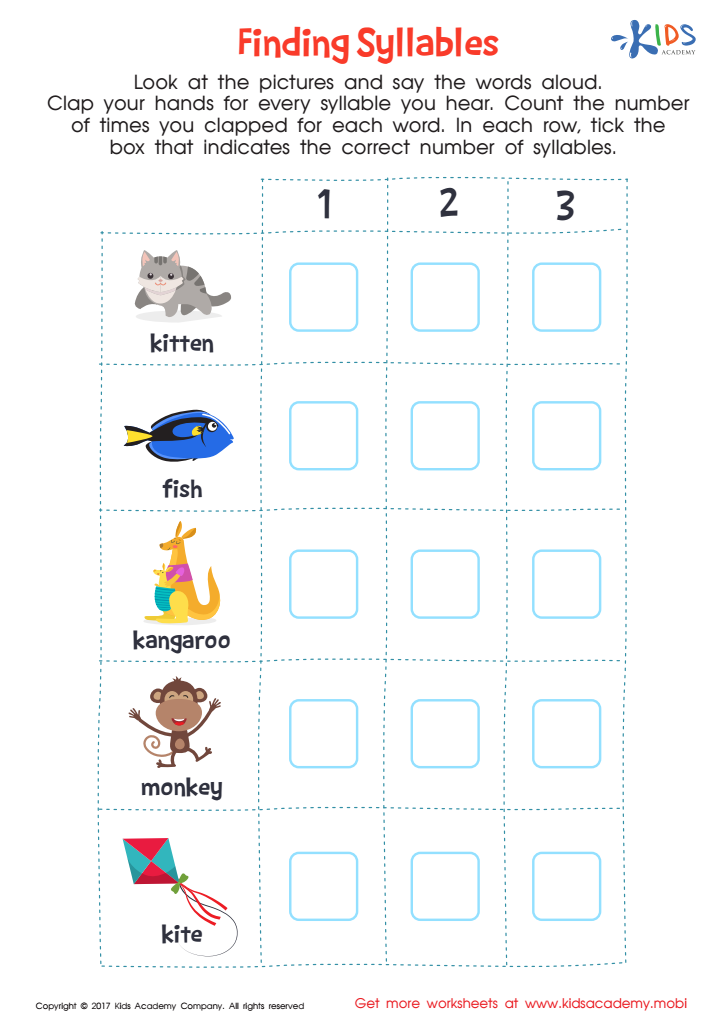
Have your kid clap and count syllables in words to improve their reading and spelling! Use this word structure worksheet for a fun activity - syllables!
Finding Syllables Word Structure Worksheet
Worksheet
Words Are Fun Worksheet

Words Are Fun Worksheet

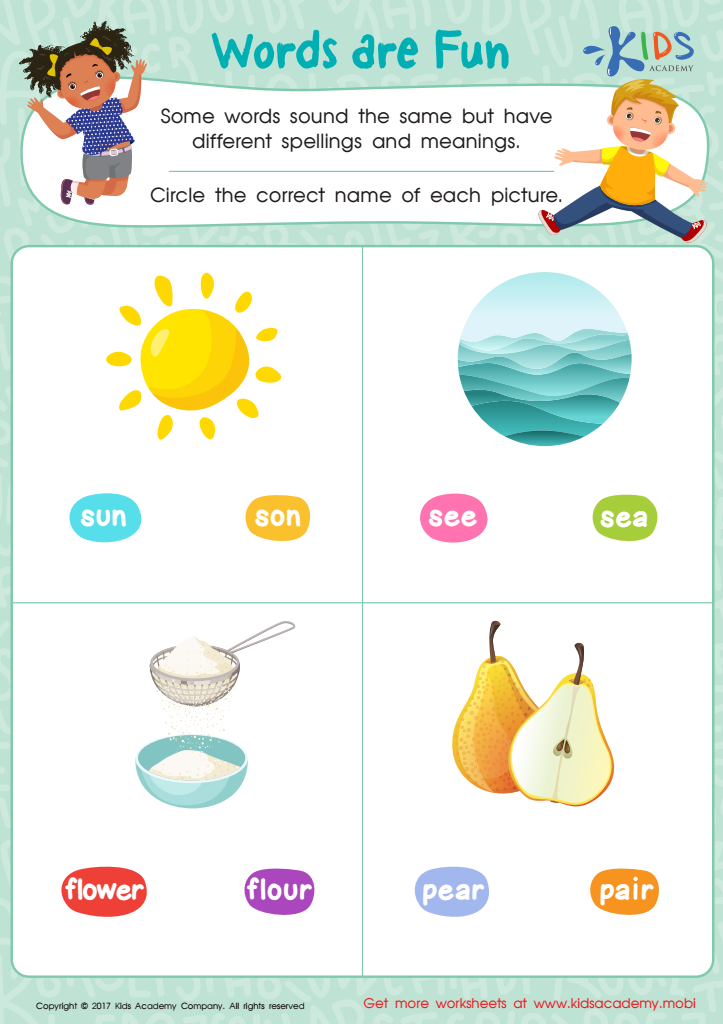
Homonyms are words that sound the same but have different meaning and spelling. Young authors may get confused. This PDF worksheet helps them practice by matching the homonyms to pictures. They'll also build fine motor skills, important for legible writing.
Words Are Fun Worksheet
Worksheet
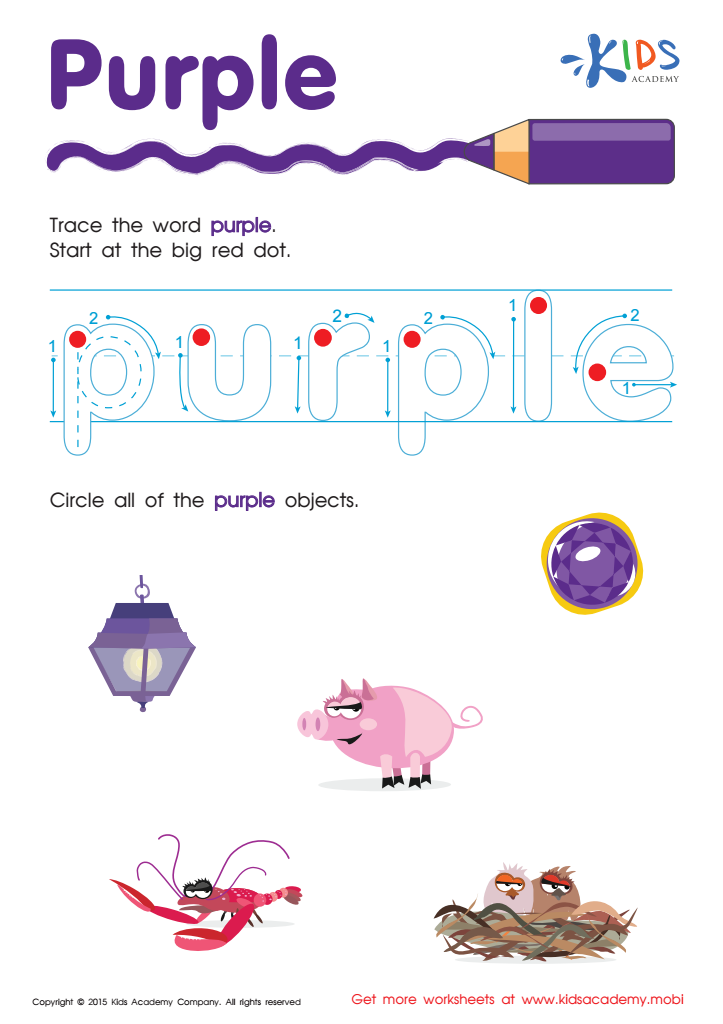
Handwriting PDF Worksheets | Tracing Color Words | Purple

Purple Tracing Color Words Worksheet

Help your kindergartener practice their handwriting with this fun, free printable. They'll trace and color the word “purple”, starting at the big red dots, and pick out and circle all the purple objects they see. They'll get to train their fine motor muscles while having fun! Check out here for more handwriting practice.
Purple Tracing Color Words Worksheet
Worksheet
Handwriting PDF Worksheets | Tracing Color Words | Brown

Brown Tracing Color Words Worksheet
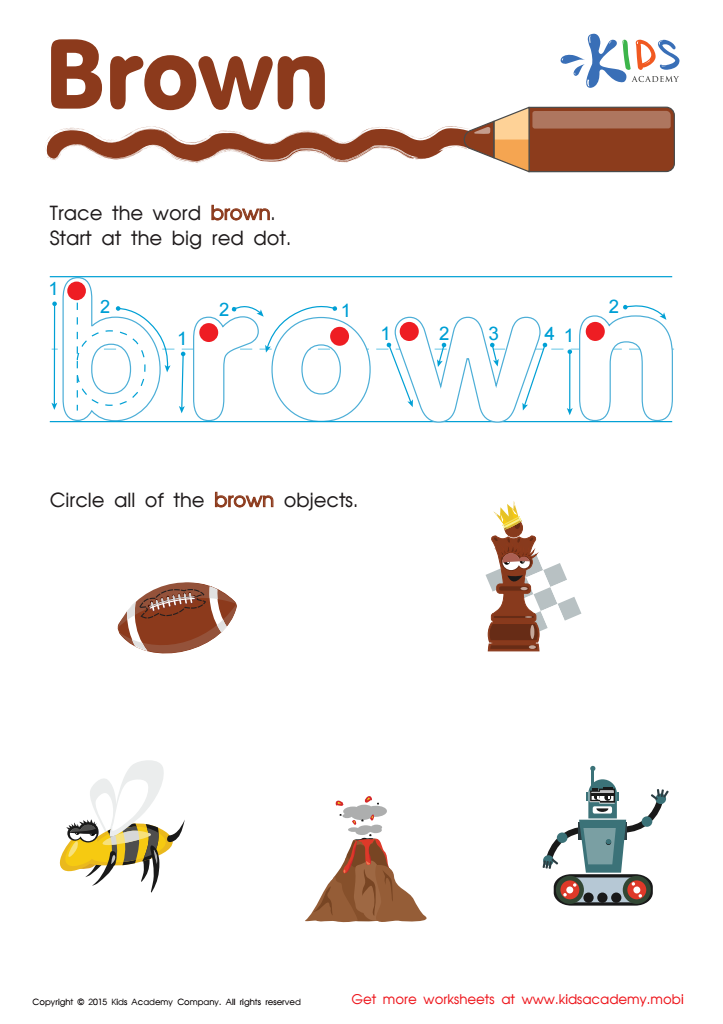
This worksheet helps kids develop fine motor muscles and practice writing. Have them trace the word "brown" with a crayon, then find the brown objects in the picture. Ask them to look around and say what's brown in their room to make it more fun. Writing basics and a bit of fun - check out this free printable handwriting worksheet! For more tracing color words, check out here.
Brown Tracing Color Words Worksheet

Worksheet


Vocabulary expansion is crucial for children aged 4-5 because it lays the foundation for their overall academic and social development. At this tender age, brain growth is rapid, and young children are exceptionally receptive to learning new words. A robust vocabulary improves reading and comprehension skills, enabling kids to understand stories better and follow instructions more effectively.

Moreover, having a rich vocabulary enhances a child's ability to express their thoughts, feelings, and needs more clearly. This improved communication helps reduce frustration and fosters healthier interactions with peers and adults. It also contributes to a child's social-emotional development by boosting their confidence in various social settings.

Early vocabulary development is also closely linked with future academic success. Studies have shown that children with a strong vocabulary early on tend to perform better in school later. They find it easier to learn new concepts because they can understand and use instructional language more proficiently.

Parents and teachers play an essential role in this developmental stage by engaging children in conversation, reading books together, and introducing new words in a fun, interactive manner. Encouraging vocabulary growth during these formative years sets the stage for lifelong learning and opens doors to more opportunities in the future.