
Alphabet understanding Normal Alphabet Worksheets for Ages 4-6
7 filtered results
Difficulty Level
Grade
Age
-
From - To
Subject
Activity
Standards
Welcome to our Alphabet Understanding Normal Alphabet Worksheets, specially designed for children ages 4-6! These engaging and interactive worksheets provide a fun and effective way to help young learners recognize and understand the alphabet. Each worksheet encourages letter identification, phonetic sounds, and proper formation, laying a strong foundation for future literacy skills. With colorful imagery and various activities, children will stay motivated and excited while honing their alphabet knowledge. Perfect for both classroom and home use, our worksheets foster a love for learning, making it easy for parents and educators to support early literacy development. Download and inspire your child today!
Favorites
With answer key
Interactive
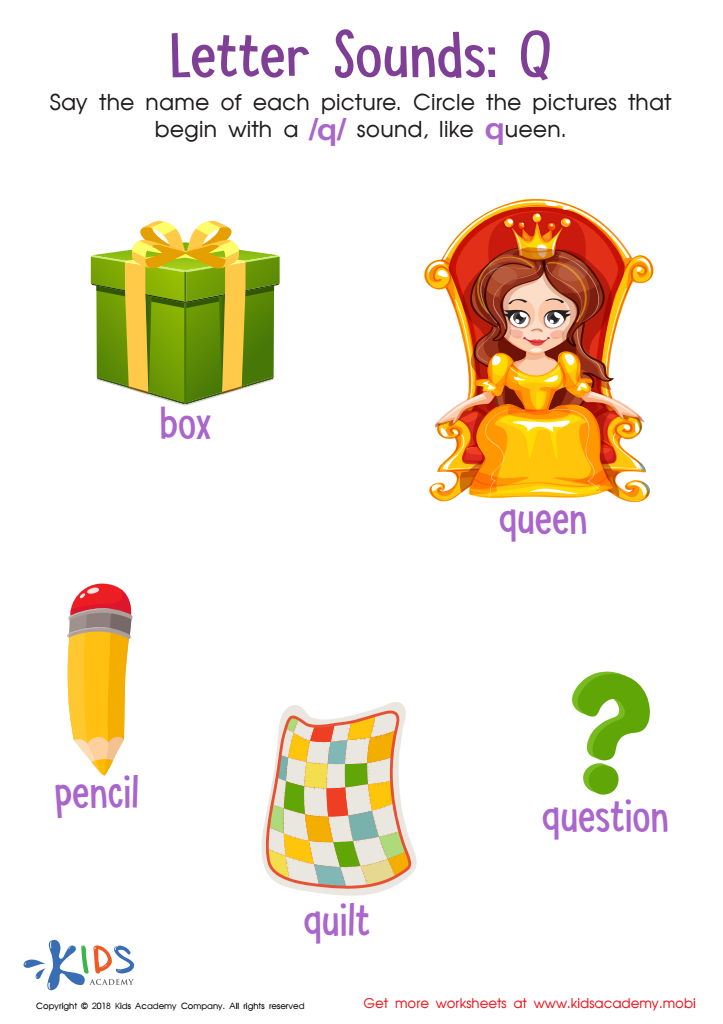
Letter Q Sounds Worksheet
Kids can get confused between "K" and "Q" sounds. Help them learn with this phonics worksheet. They'll name each image and read the word underneath. Point out that words with "Q" also have a "U" which affects how it sounds. Have them circle the matching pictures and watch as they learn this unique letter sound.
 Assign to My Students
Letter Q Sounds Worksheet
Worksheet
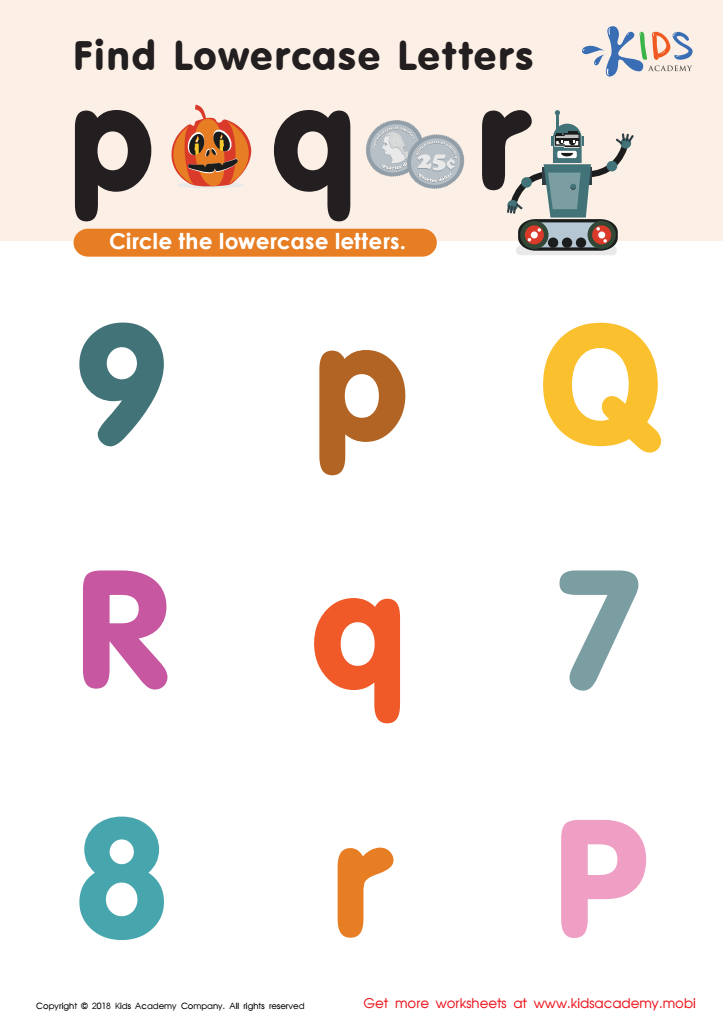
Find lowercase Letters p q r Worksheet
Help your child spot the lowercase letters among the numbers and uppercase letters in this worksheet. It's a great way to teach them to identify and write the lowercase and uppercase letters. Assist them in completing the exercise to give them a better understanding of the alphabets.
Find lowercase Letters p q r Worksheet
Worksheet
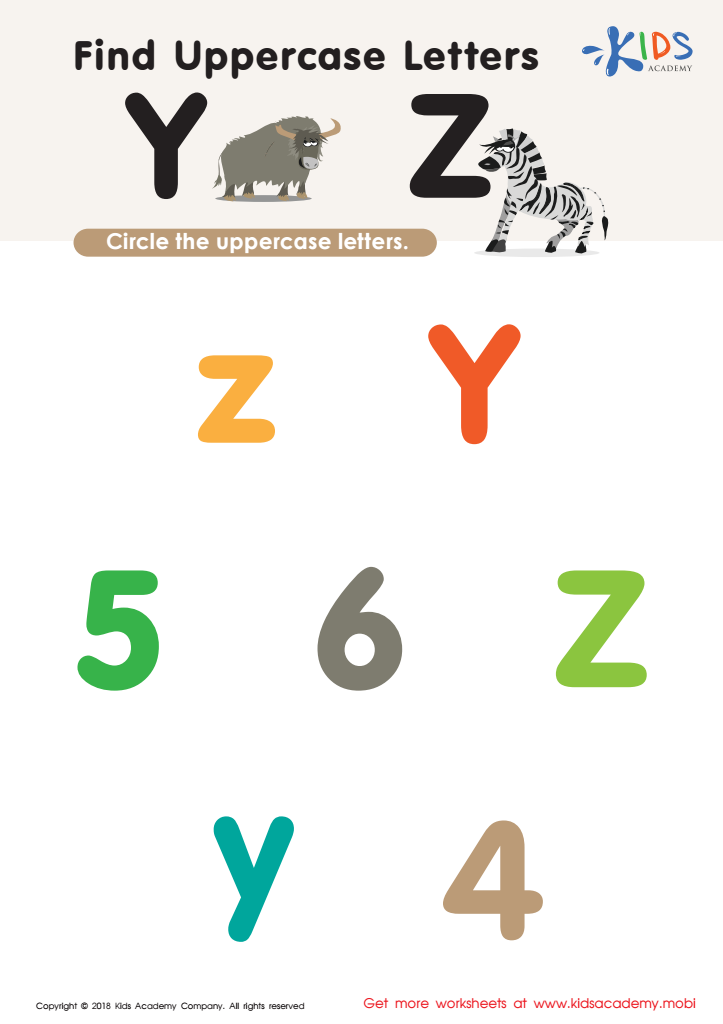
Find Uppercase Letters Y Z Worksheet
Download the worksheet! Help your youngster to learn the alphabet and distinguish uppercase from lowercase letters by having them circle the uppercase ones. It's an important first step towards reading and writing success!
Find Uppercase Letters Y Z Worksheet
Worksheet
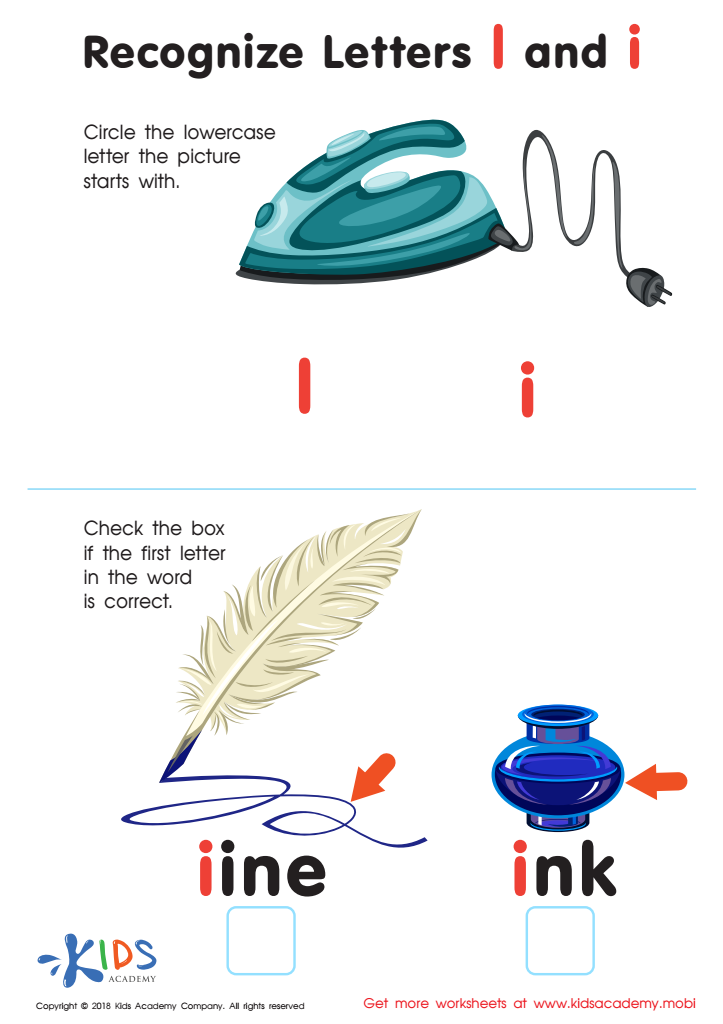
Recognize Letters l and i Worksheet
Help your child become familiar with uppercase and lowercase letters. Have them look at the pictures in the worksheet and circle the lowercase letter the picture starts with. For example: which one is the lowercase "i", the capital "I" or the small "i"?
Recognize Letters l and i Worksheet
Worksheet
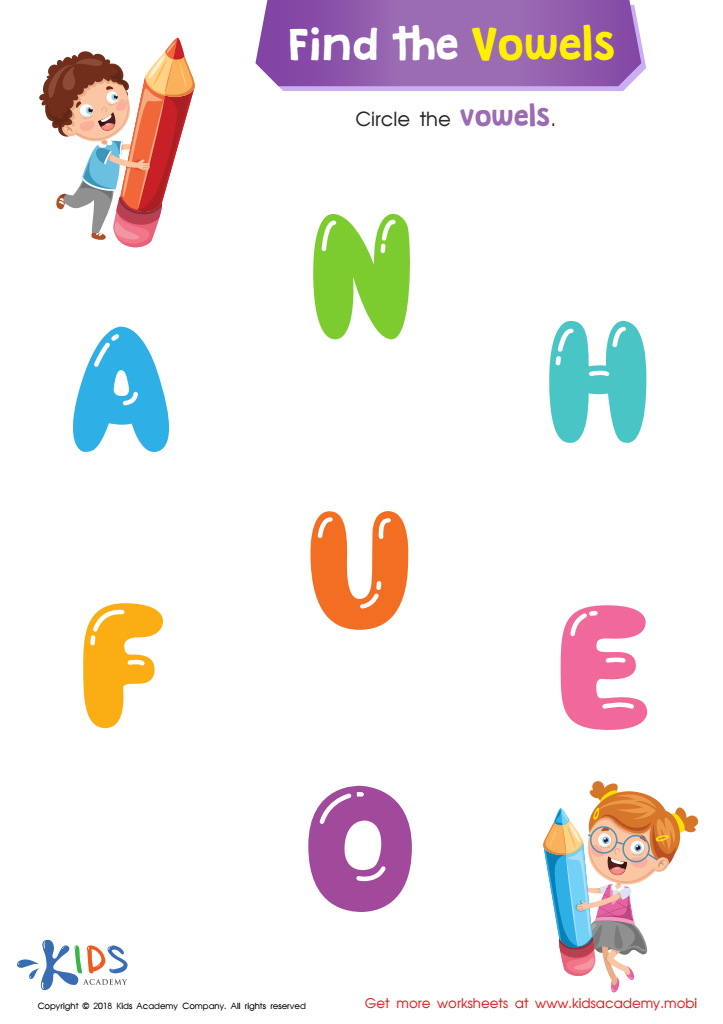
Find the Vowels Reading Worksheet
This worksheet helps kids identify vowels with bright colors and engaging activities to strengthen their visual discrimination and fine motor skills. Young learners will find it easy to succeed and be excited to keep reading!
Find the Vowels Reading Worksheet
Worksheet
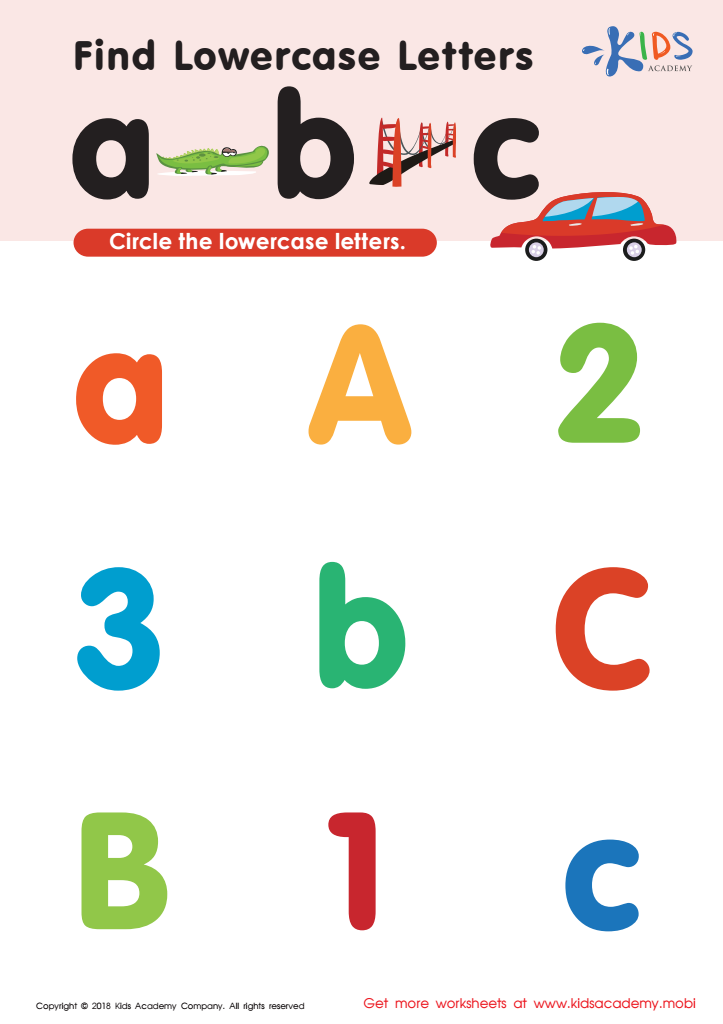
Find lowercase letters a b c Worksheet
Help your child identify lowercase letters with this worksheet. Carefully look at each letter and have your child circle the lowercase ones. This exercise is vital in helping them understand the alphabet and the difference between lower and uppercase letters.
Find lowercase letters a b c Worksheet
Worksheet
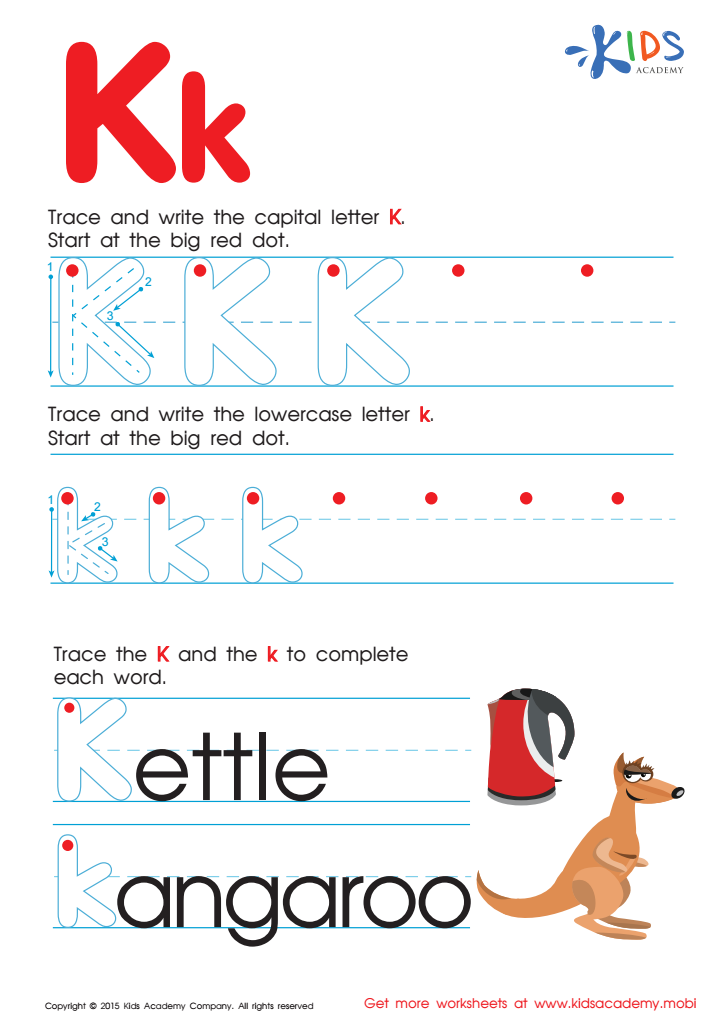
Letter K Tracing Page
Trace and write the letter K; start at the big red dot. Use it to complete words like "Kettle" and "Kangaroo". Visit Kids Academy for more free alphabet worksheets for kindergarten.
Letter K Tracing Page
Worksheet
Join Kids Academy for Free
Who is primarily going to use this learning content?






Alphabet understanding is crucial for children aged 4-6 as it forms the foundation of literacy skills vital for their academic success and overall development. During this formative stage, children are introduced to the alphabet, which enables them to recognize letters, understand their sounds, and develop phonemic awareness. Mastering the alphabet helps them transition from pre-reading to reading, allowing for greater engagement with texts and improved comprehension.
Teachers and parents should care about fostering alphabet understanding because it impacts various aspects of a child's educational journey. Early familiarity with letters promotes confidence in reading activities, enriching communication skills and facilitating vocabulary growth. The ability to recognize and articulate letters also enhances children’s writing and spelling abilities, laying the groundwork for narrative expression and creative storytelling.
Furthermore, alphabet knowledge supports cognitive development, encouraging critical thinking and problem-solving skills as children connect letters to sounds and meanings. In addition to academic benefits, it encourages curiosity and a lifelong love for reading. By actively engaging in alphabet activities and promoting literacy-rich environments, parents and teachers can enhance children's learning experiences and set them on the path to academic success and personal enrichment.







