Motor skills development Normal Alphabet Worksheets for Ages 4-6
3 filtered results
-
From - To
Enhance your child's motor skills development with our engaging Normal Alphabet Worksheets designed for ages 4-6. These worksheets are specifically crafted to provide preschoolers with fun, hands-on activities that improve their fine motor skills while learning the alphabet. With vibrant illustrations and interactive tasks, children will practice tracing letters, identifying shapes, and developing essential pen control. These activities support early childhood education by fostering both cognitive and motor understanding in a playful environment. Ideal for parents and teachers, our worksheets help build foundational skills that promote confident, independent learners. Start your child's learning journey today with our delightful and effective worksheets!

Letter H Tracing Page
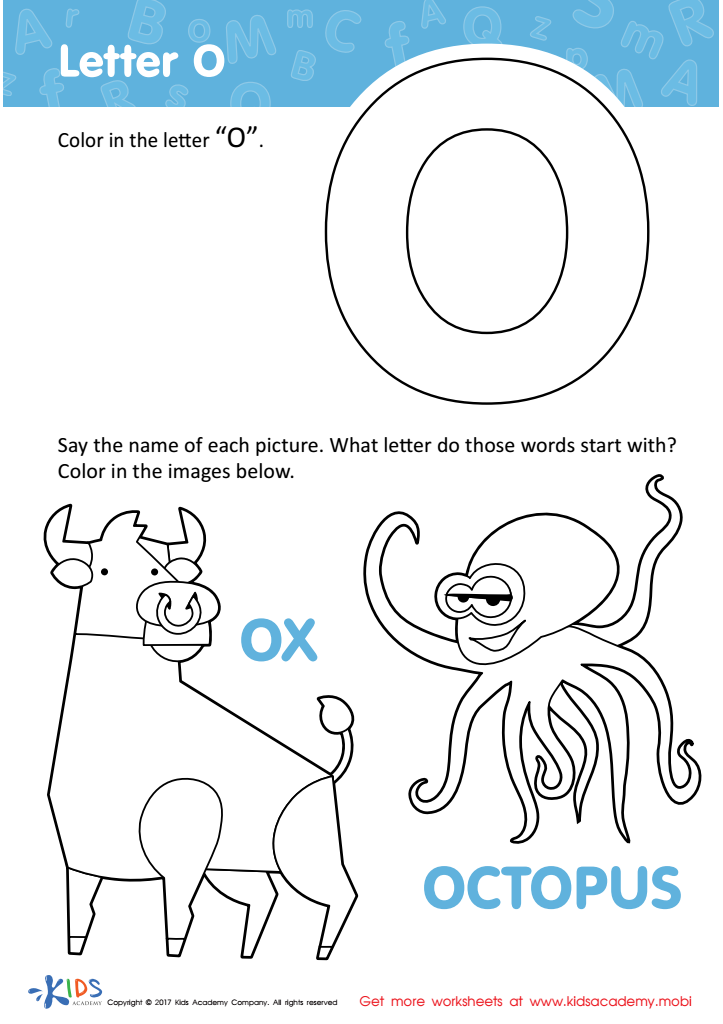
Letter O Coloring Sheet
 Assign to My Students
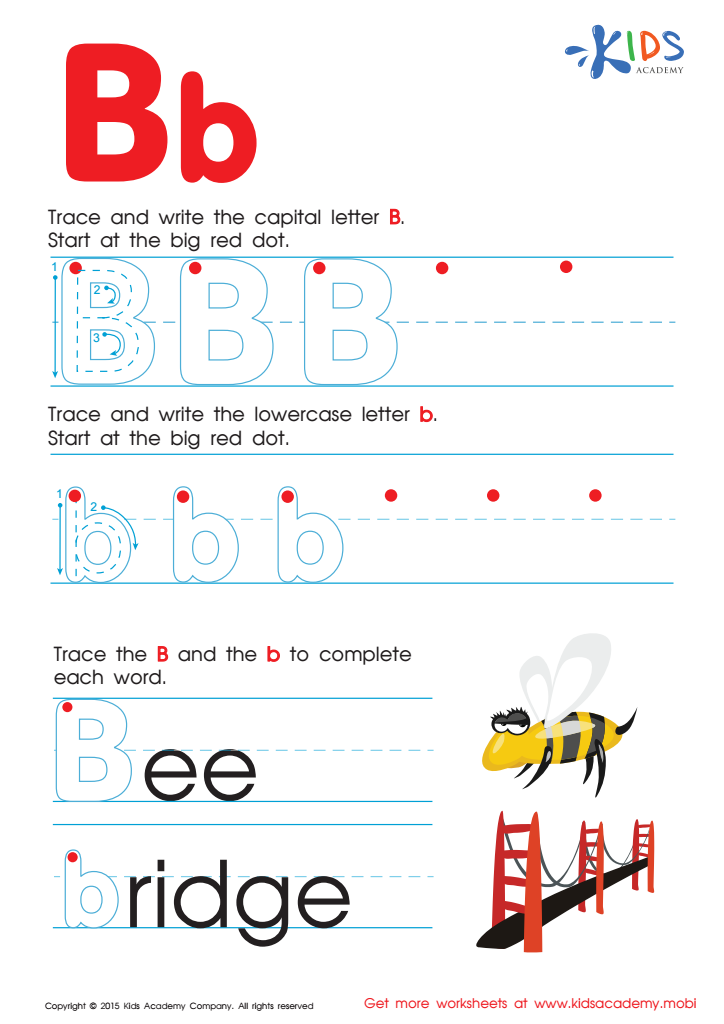
Letter B Tracing Page








Motor skills development is crucial for children aged 4-6, as it lays the foundation for their overall growth and learning. Parents and teachers should be attentive to this development because it directly impacts a child’s ability to engage in daily activities, learning tasks, and social interactions.
Fine motor skills, such as grasping, cutting, and coloring, are essential for handwriting and self-care tasks. As children learn to form letters in the normal alphabet, they improve their hand-eye coordination and dexterity, which boosts their confidence and independence. This development is vital for academic success, as strong fine motor skills contribute to better writing and engaging in classroom activities.
Gross motor skills, like running, jumping, and balancing, enhance children's physical health and coordination. These skills promote overall well-being and help improve concentration and focus in learning environments. Engaging in physical activities also encourages teamwork and social skills among peers.
Ultimately, parents and teachers who prioritize motor skills development create a supportive environment that fosters healthy growth, learning opportunities, and positive self-esteem in young children, helping them thrive both in and out of the classroom. Nurturing these skills is an investment in their future success and happiness.







