Spelling practice Normal Alphabet Worksheets for Ages 4-6 - Page 2
28 filtered results
-
From - To
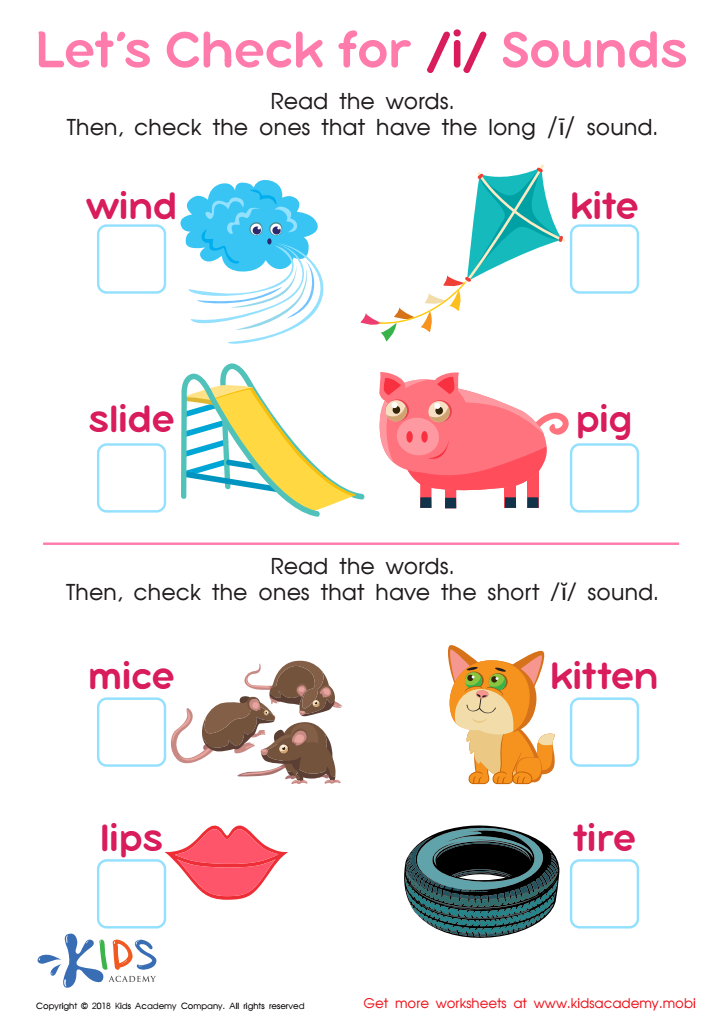
Let's Check for «i» Sounds Worksheet
 Assign to My Students
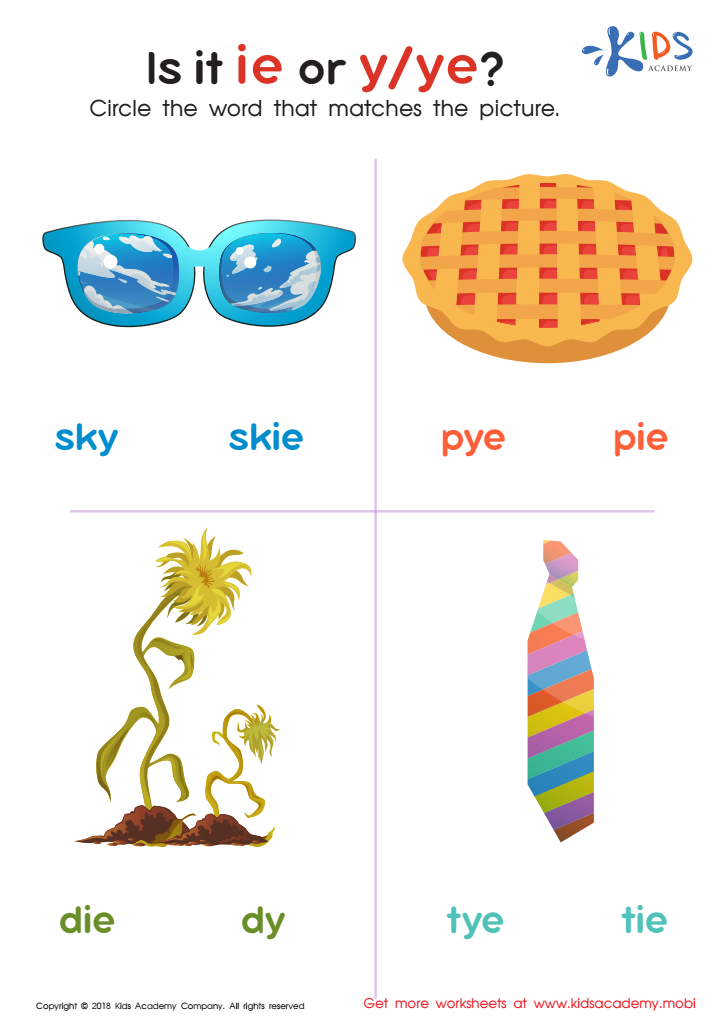
Is It IE or Y/Ye? Worksheet
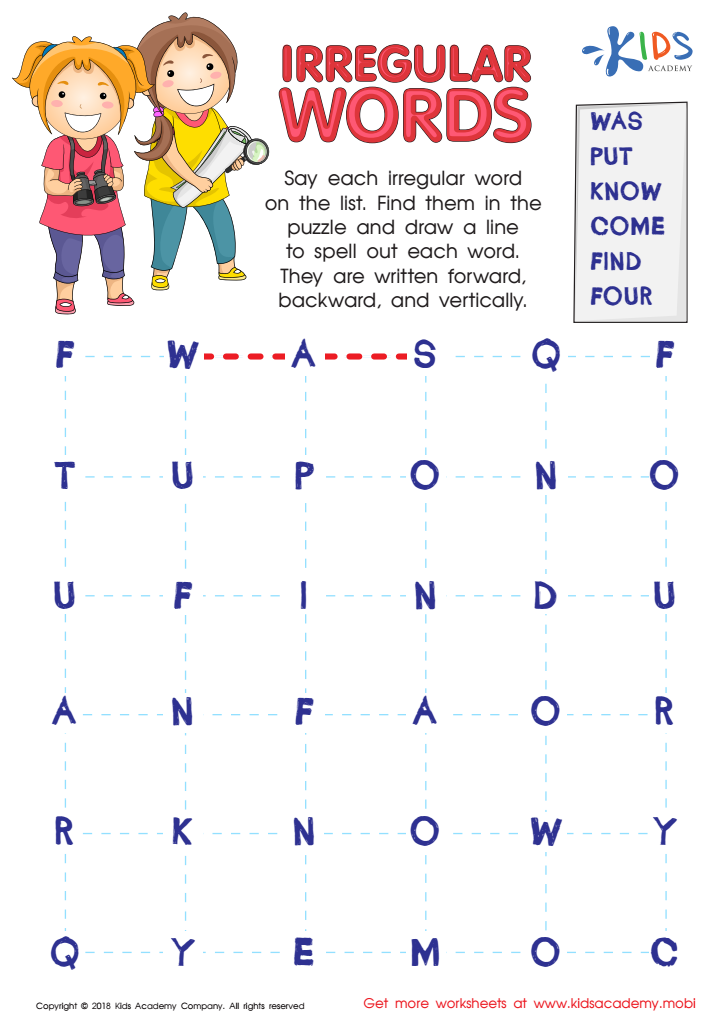
Irregular Words Worksheet
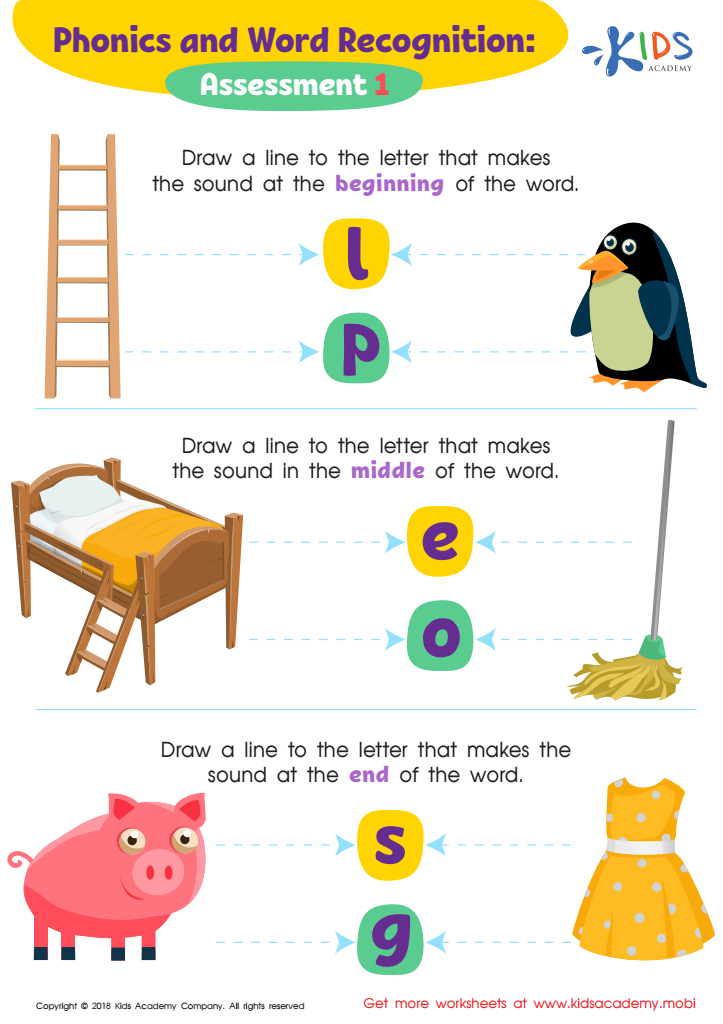
Phonics and Word Recognition: Assessment 1 ELA Worksheet







Spelling practice using the normal alphabet is essential for children aged 4-6 as it serves as a foundational skill for literacy development. At this age, children are beginning to recognize letters and sounds, and systematic spelling practice helps reinforce these vital connections. By focusing on spelling, young learners enhance their phonemic awareness, which is crucial for both reading and writing.
Parents and teachers should care about spelling practice because it promotes cognitive development. Engaging with letters and sounds fosters critical thinking skills as children learn to decode words. Additionally, mastering spelling encourages confidence in self-expression; children become more willing to write and share their thoughts.
Moreover, establishing a solid spelling foundation can lead to better academic performance in the long run. Children who can spell well are often more proficient readers, which positively impacts their overall literacy skills. Spelling practice can also be a fun, interactive activity that strengthens the bond between parents, teachers, and children. When spelling is integrated into games and play, it enhances engagement and makes learning enjoyable. Ultimately, prioritizing spelling practice in early education prepares children for successful literacy journeys and instills a lifelong love for language.







