Uppercase identification Normal Alphabet Worksheets for Ages 4-6
5 filtered results
-
From - To
Discover our Uppercase Identification Normal Alphabet Worksheets, designed specifically for ages 4-6. These engaging worksheets help young learners recognize and identify uppercase letters, building a strong foundation for literacy. Each activity is tailored to make learning fun and interactive, fostering early reading skills in a playful environment. With bright images and child-friendly exercises, your child will improve their alphabet knowledge while enjoying the process. Ideal for preschool and kindergarten students, these worksheets are the perfect tool to support early learning at home or in the classroom. Start your child on the path to reading success today!
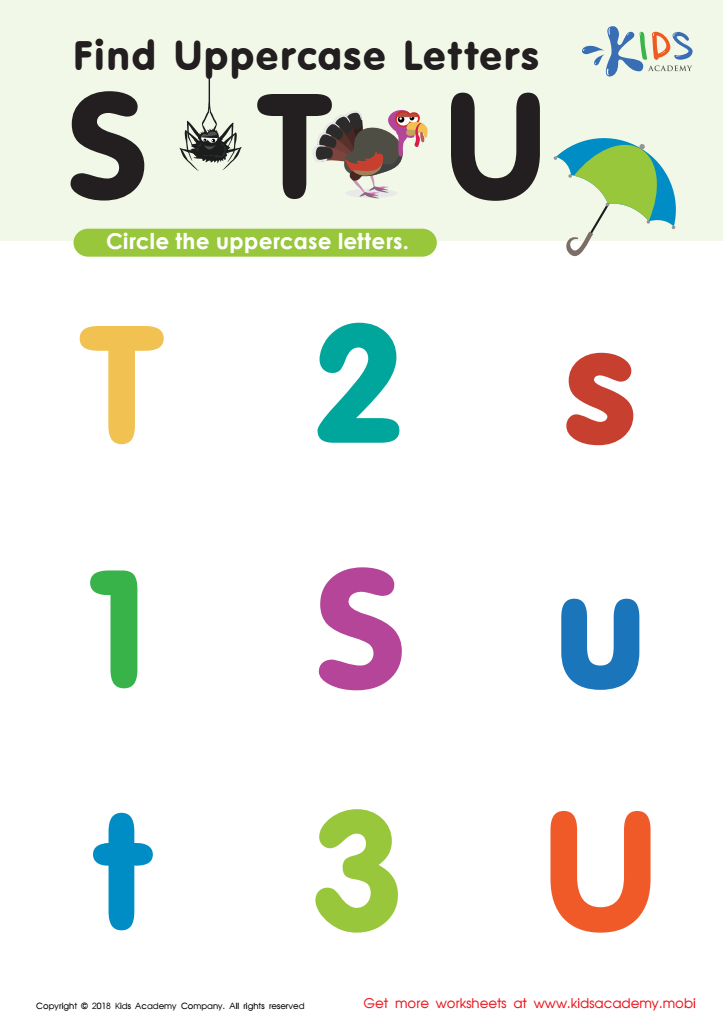
Find Uppercase Letters Worksheet
 Assign to My Students
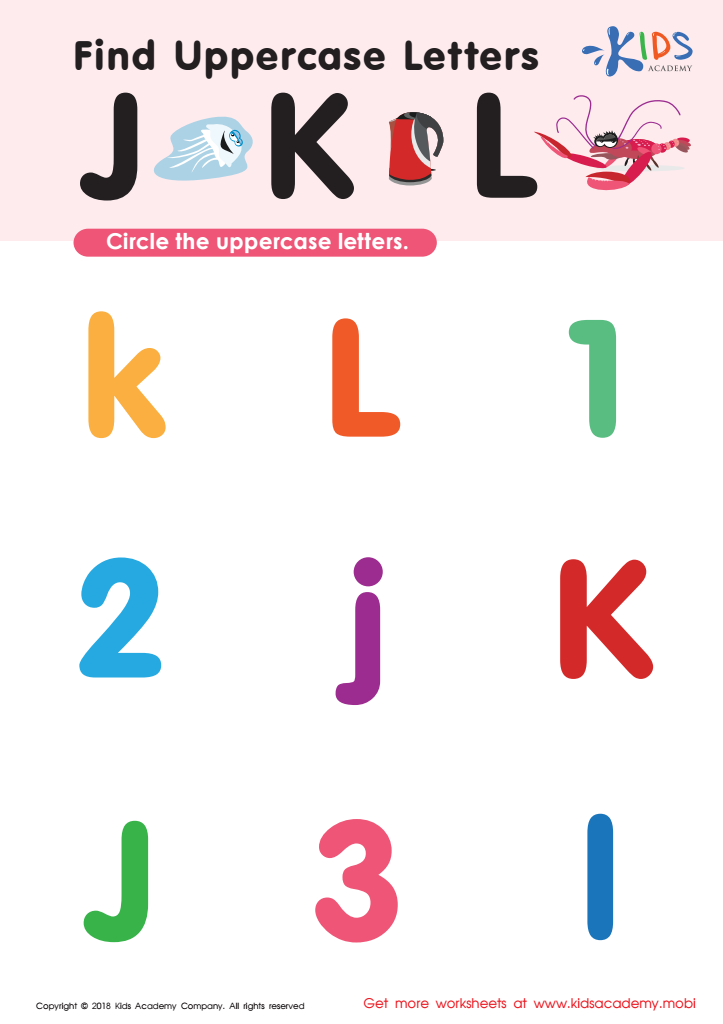
Find Uppercase Letters J, K, and L Worksheet
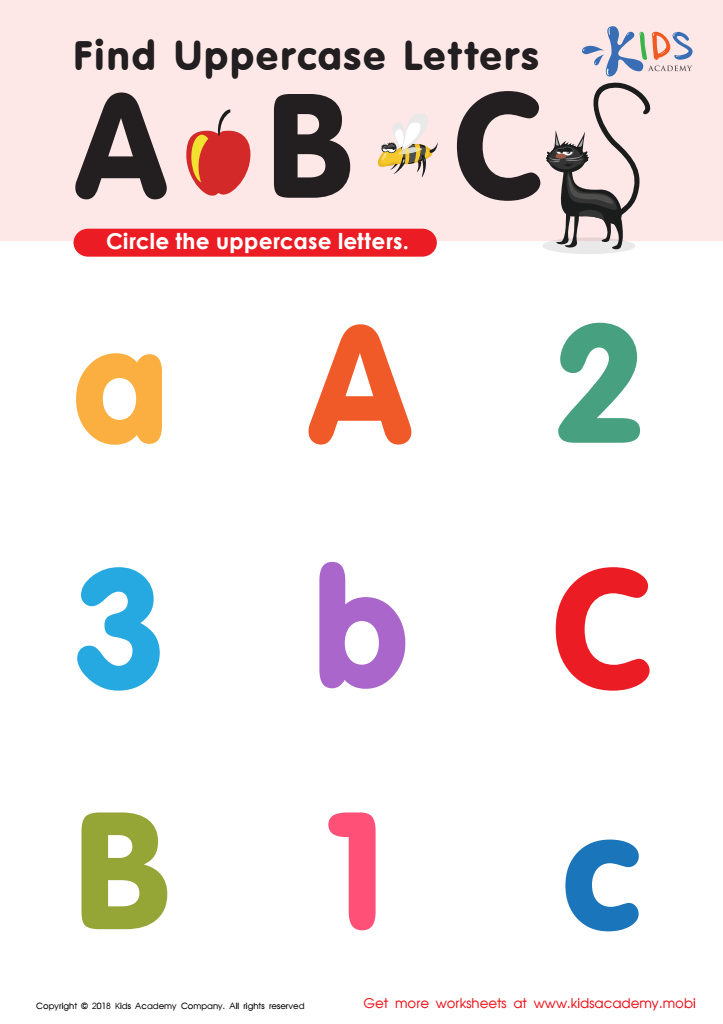
Find Uppercase Letters A, B, and C Worksheet
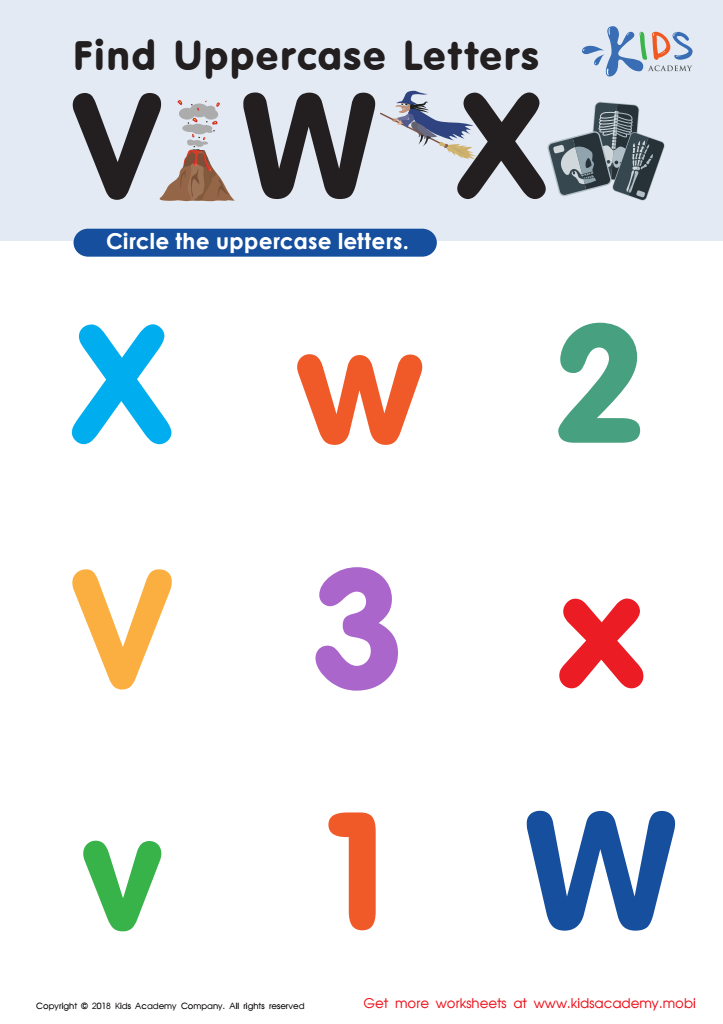
Find Uppercase Letters V, W, X Worksheet
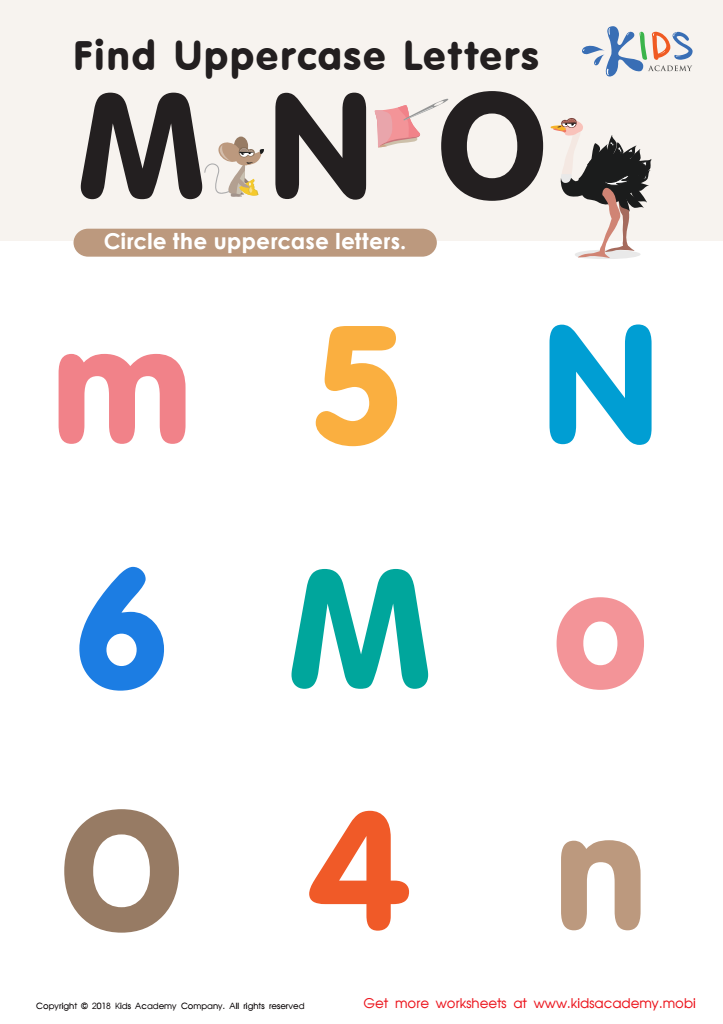
Find Uppercase Letters M, N, and O Worksheet






Uppercase alphabet identification is crucial for children aged 4-6 because it lays the foundation for literacy, a vital skill for academic success and everyday functioning. Recognizing and understanding uppercase letters is typically the first step in learning to read and write, as these letters are often more visually distinctive and easier for young children to grasp. Early familiarity with uppercase letters enhances a child's ability to recognize words in print, as these letters frequently begin names, sentences, and important words in texts for emerging readers.
Moreover, early mastery of uppercase letters builds confidence and motivation in young learners. This sense of achievement encourages them to continue their literacy journey with enthusiasm. It also enhances hand-eye coordination and fine motor skills essential for writing. For teachers, monitoring uppercase letter identification can help diagnose potential learning difficulties early on, allowing for timely interventions. Similarly, for parents, engaging in activities that reinforce letter recognition strengthens the parent-child bond and creates a supportive learning environment at home.
In essence, prioritizing uppercase letter identification at a young age is a critical step in developing a child’s overall literacy skills, enabling them to transition smoothly to recognizing lowercase letters, blending sounds, and eventually, becoming competent readers and writers.







