Visual discrimination skills Normal Alphabet Worksheets for Ages 4-6
5 filtered results
-
From - To
Enhance your child’s ability to recognize and differentiate letters with our tailor-made Alphabet Worksheets designed for children aged 4-6. Our printable worksheets focus on visual discrimination skills critical for early literacy. Kids will enjoy engaging activities that include identifying and matching letters, spotting differences, and distinguishing between shapes and forms. Perfect for preschool and kindergarten students, these fun and educational worksheets provide a solid foundation in alphabet recognition, setting the stage for reading and writing success. Explore our collection and support your child’s early learning journey with confidence!
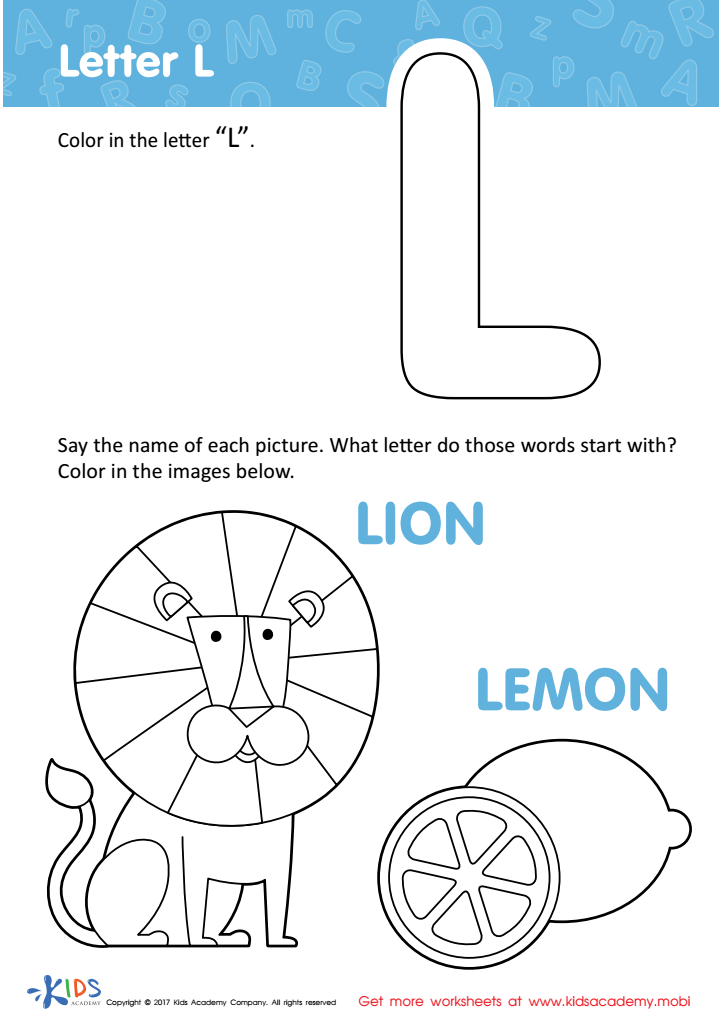
Letter L Coloring Sheet
 Assign to My Students
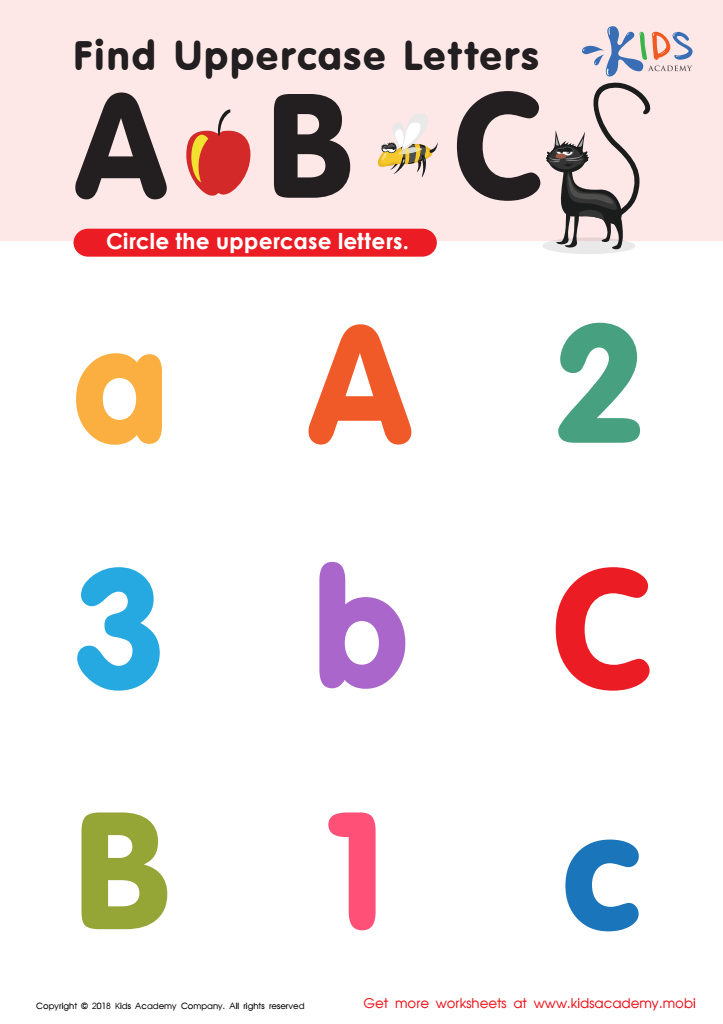
Find Uppercase Letters A, B, and C Worksheet
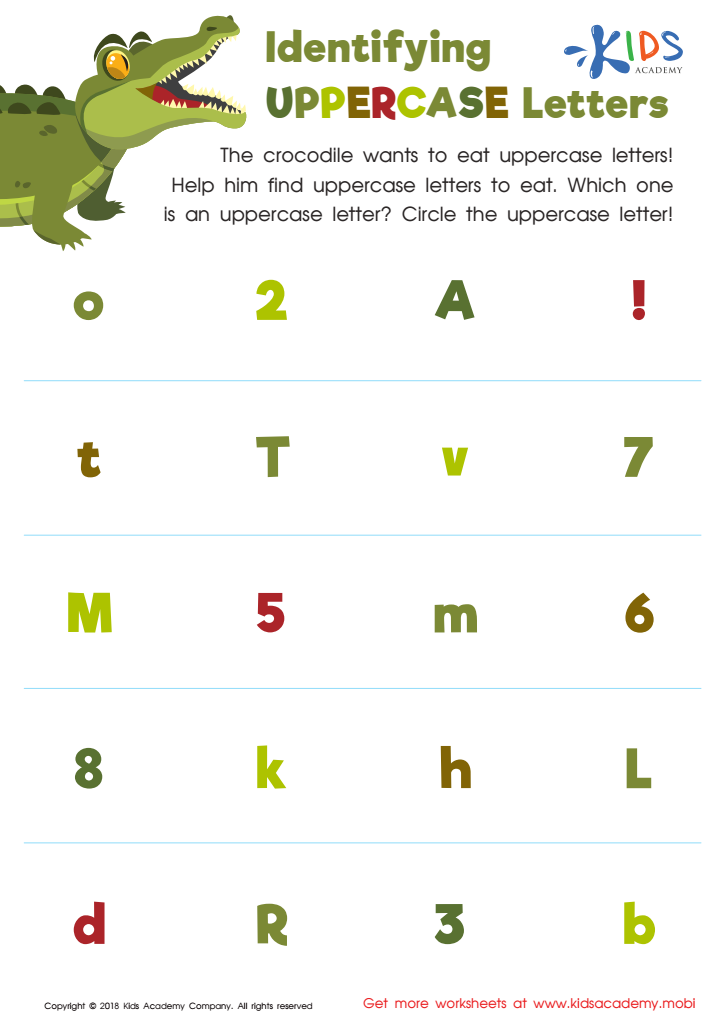
Identifying Uppercase Letters Worksheet
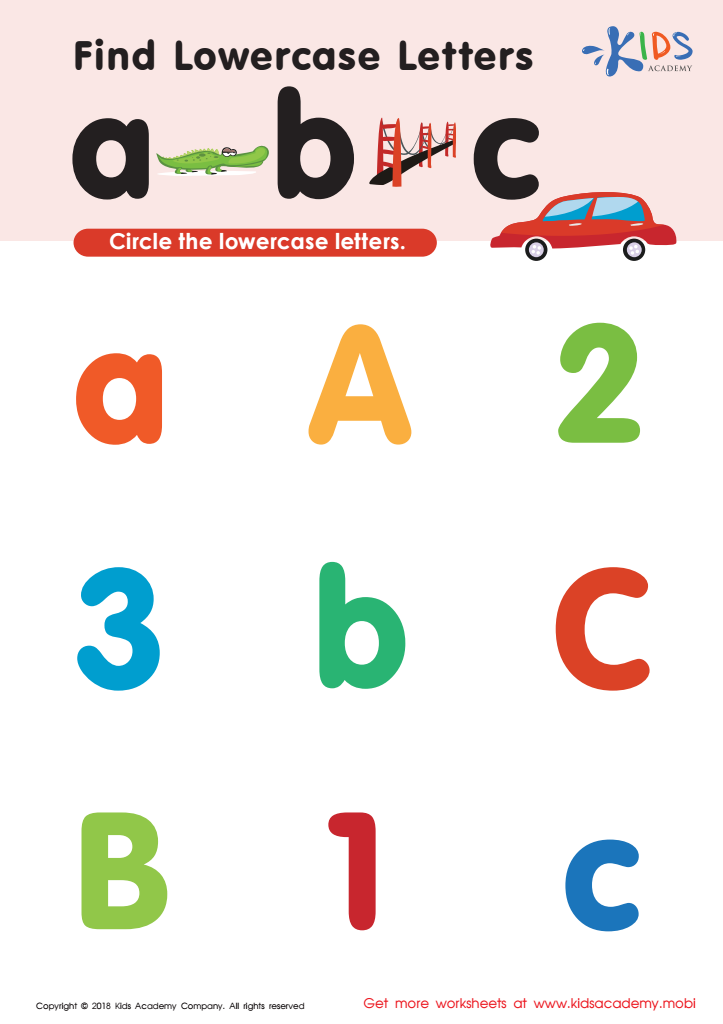
Find lowercase letters a b c Worksheet
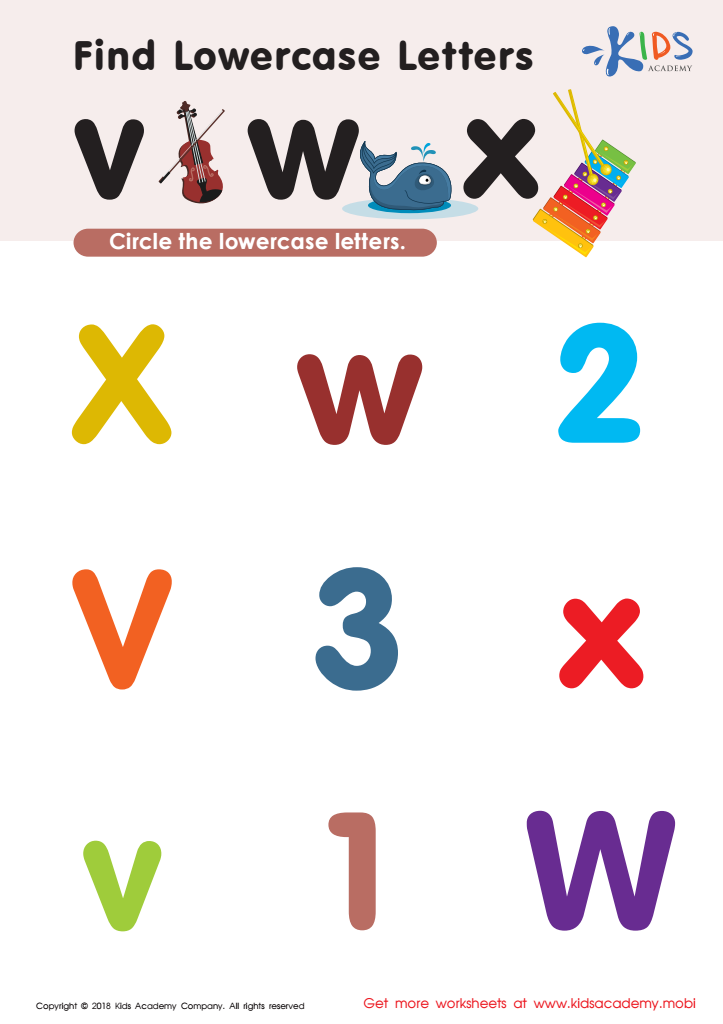
Find Lowercase Letters v w x Worksheet






Visual discrimination skills are foundational for early childhood development and play a crucial role in a preschool child's learning journey, especially in recognizing and differentiating letters of the normal alphabet. For children ages 4-6, these skills are essential as they begin to understand the building blocks of reading and writing.
Visual discrimination is the ability to notice and compare the distinctive features of different objects, including shapes, forms, patterns, sizes, and colors. In the context of the alphabet, it includes recognizing subtle differences between letters, such as 'b' versus 'd' or 'p' versus 'q'. Mastery of these skills aids in alphabet recognition, which is a cornerstone of literacy.
Parents and teachers should care about nurturing visual discrimination skills because they directly impact a child’s capacity to learn to read. Reading is tied to academic success and is fundamentally dependent on identifying and distinguishing letters and words correctly. Without strong visual discrimination skills, children might struggle with reading fluency, frustrate easily, or develop poor reading habits.
Additionally, improving these skills early on supports other developmental areas, such as hand-eye coordination, attention to detail, and cognitive differentiation. By fostering a child's visual discrimination capabilities, parents and teachers set the foundation for fluent literacy, enhancing future academic performance and boosting the child's confidence and love for learning.







