Vowel Recognition Normal Alphabet Worksheets for Ages 4-6
9 filtered results
-
From - To
Discover our engaging Vowel Recognition Normal Alphabet Worksheets, specially designed for children aged 4-6! These interactive worksheets help young learners identify and understand vowels through fun activities that encourage letter recognition and phonetic skills. With colorful illustrations and age-appropriate exercises, your child will enjoy mastering the five vowels (A, E, I, O, U) in a joyful, hands-on way. Our carefully crafted materials promote early literacy development while enhancing focus and creativity. Perfect for classrooms or at-home learning, these worksheets provide a solid foundation for future reading and writing skills. Download now and nurture your child’s love for learning!
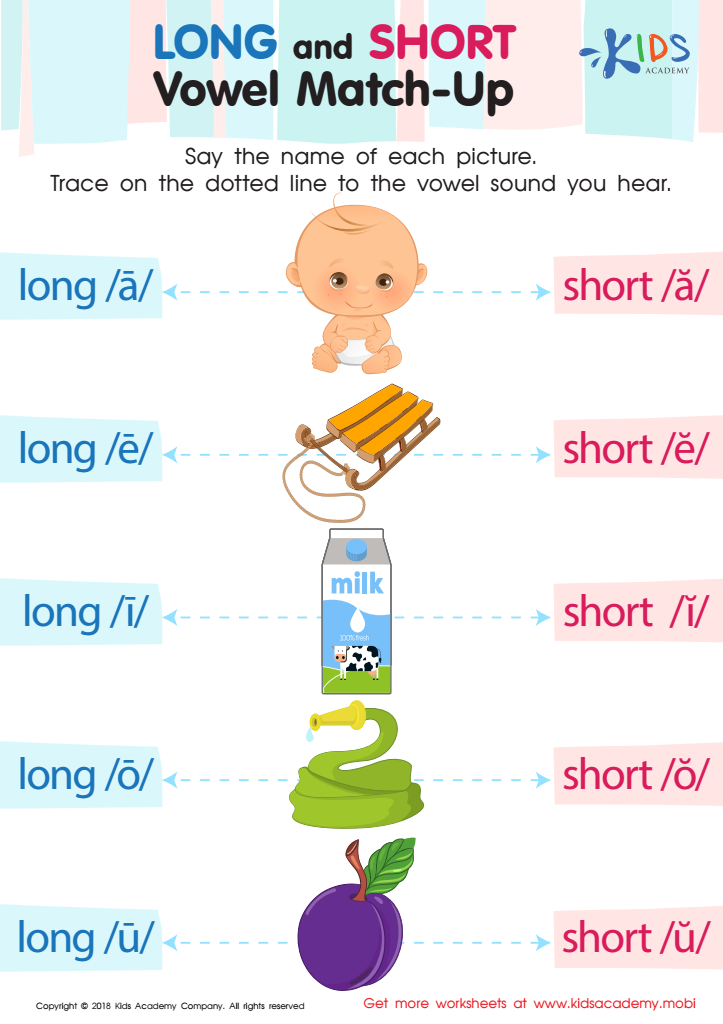
Long and Short Vowel Match up Reading Worksheet
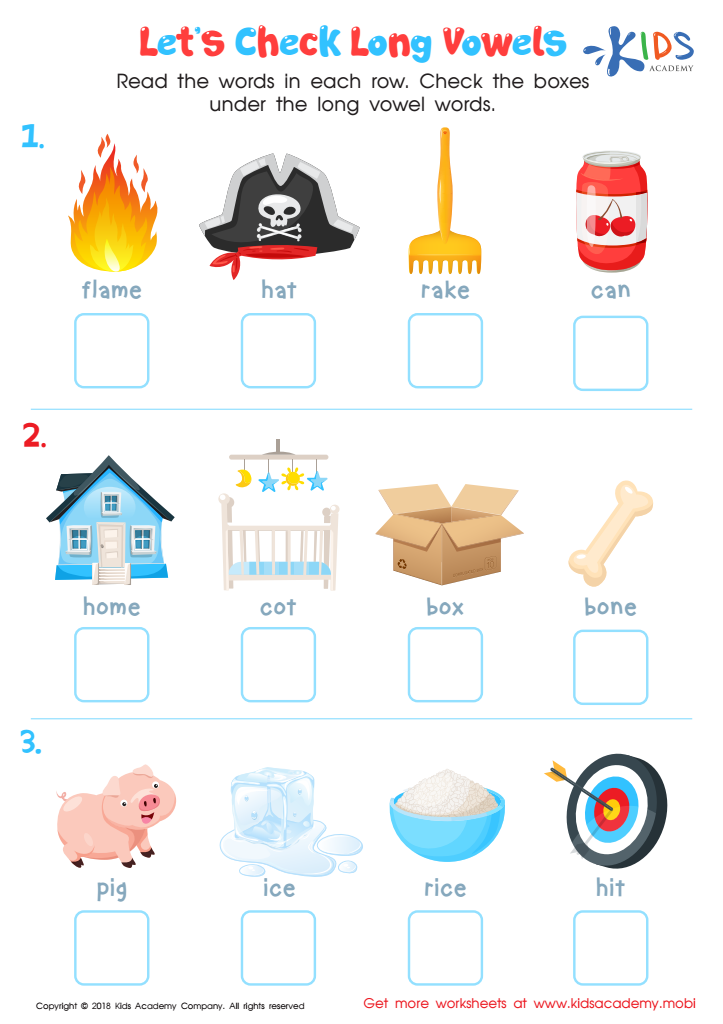
Let's Check Long Vowels: Assessment Worksheet
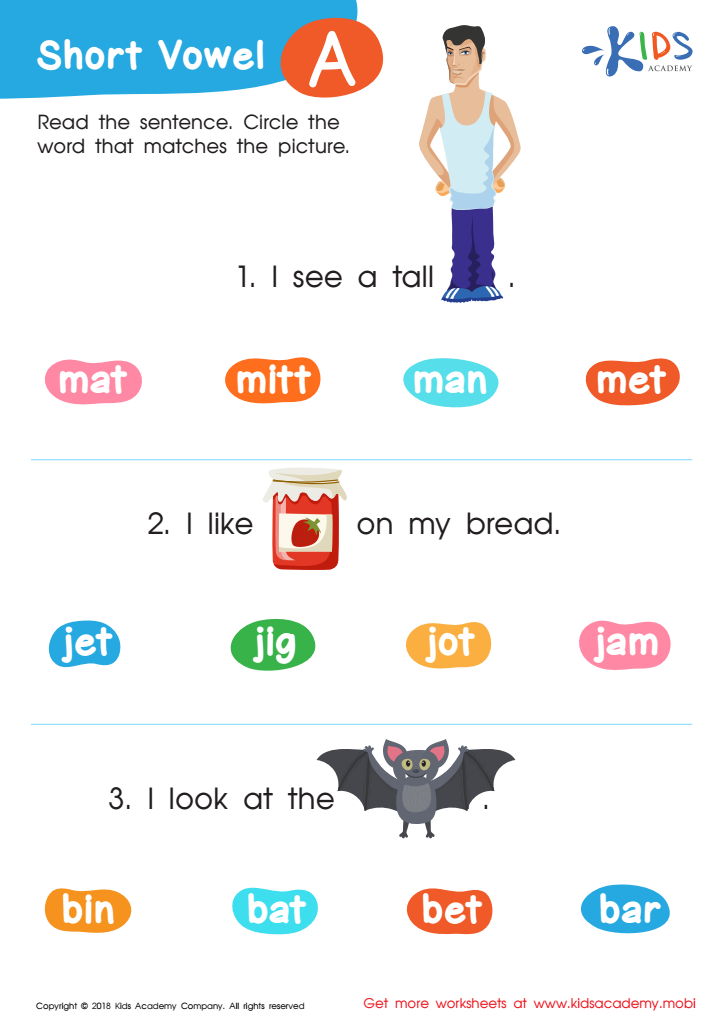
Short Vowel /a/ Worksheet
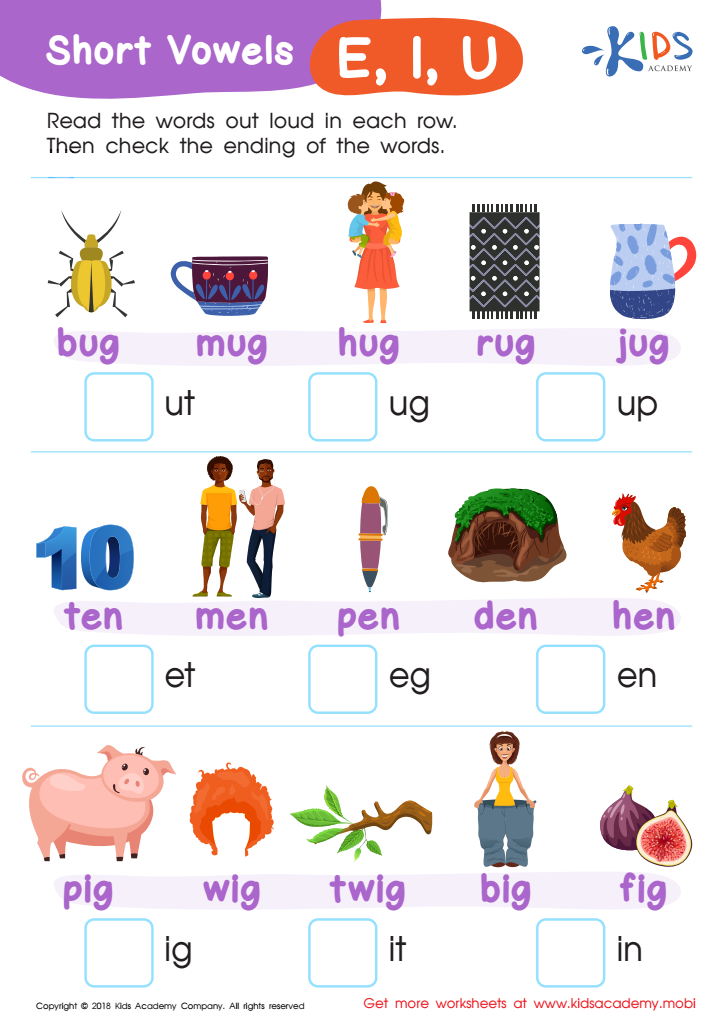
Short Vowels /e/, /i/, and /u/ Worksheet
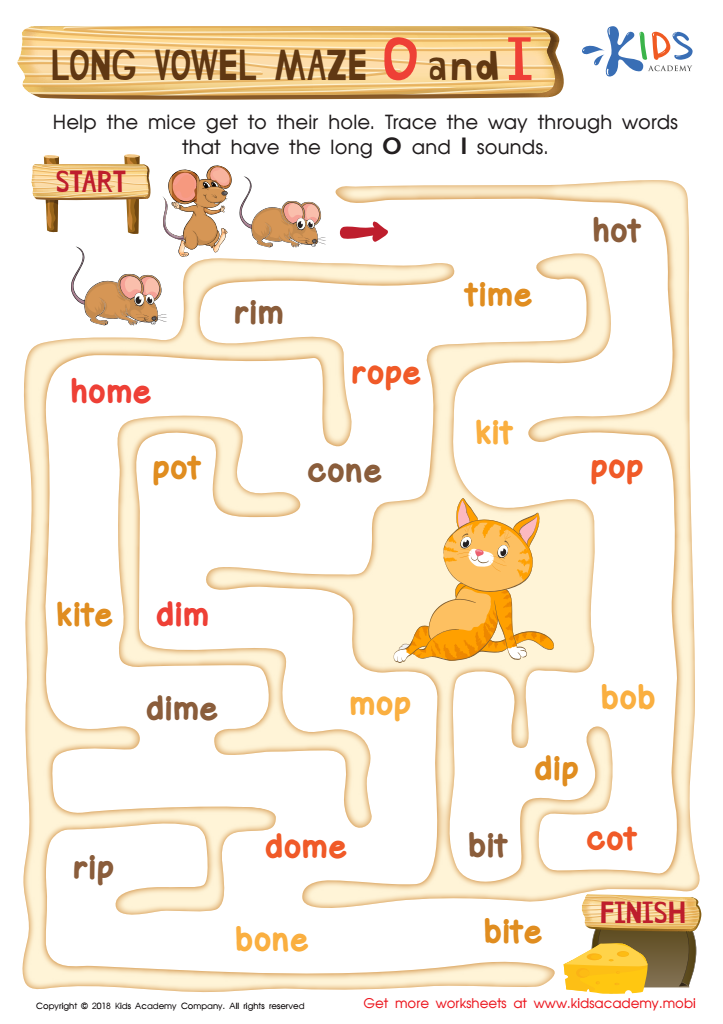
Long Vowel Maze /o/ and /i/ Worksheet
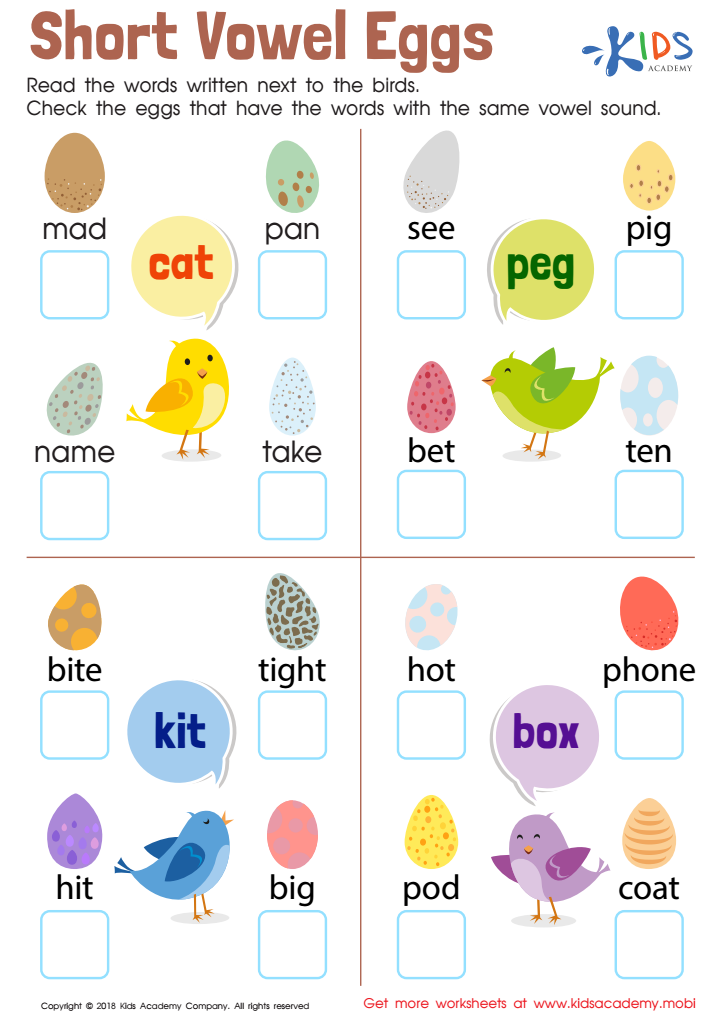
Short Vowel Eggs Worksheet
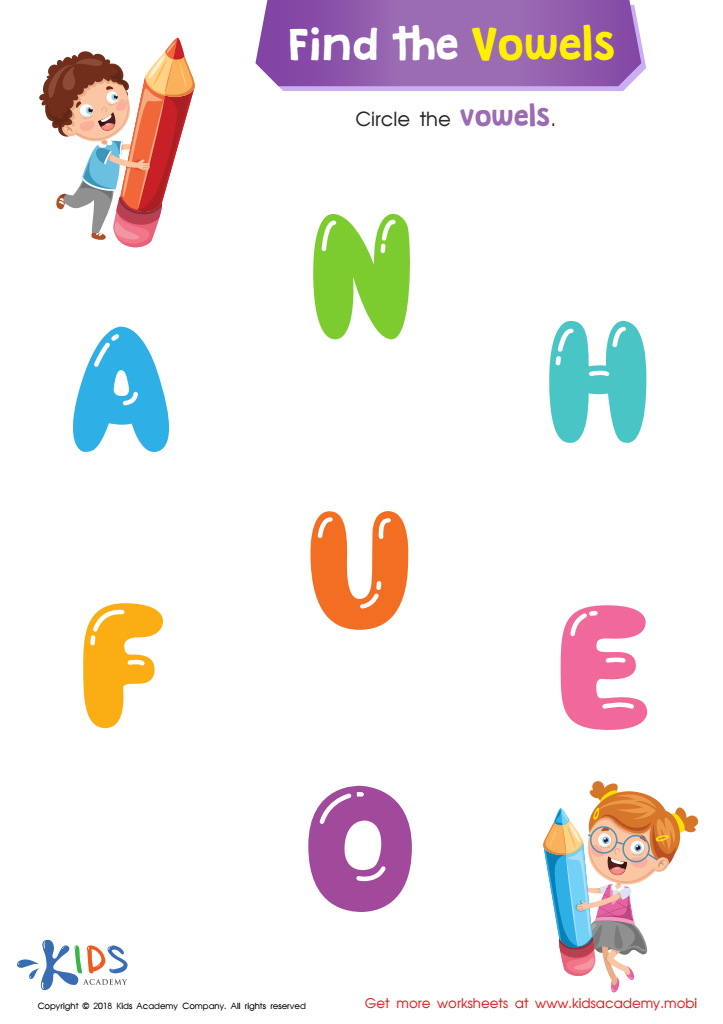
Find the Vowels Reading Worksheet
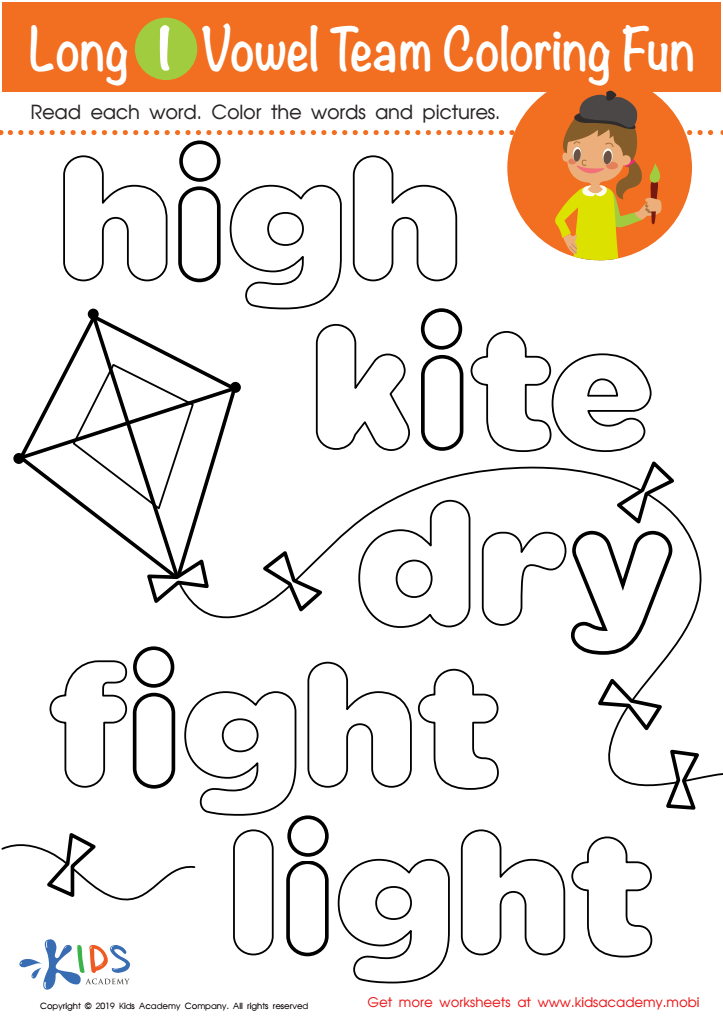
Long I Vowel Team Coloring Worksheet
 Assign to My Students
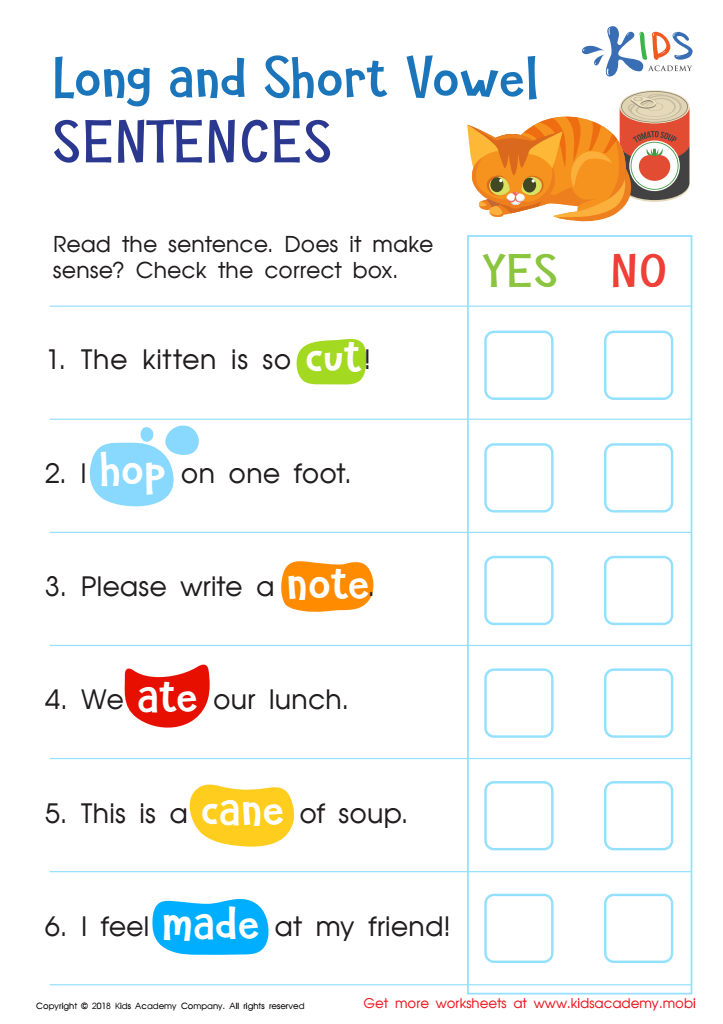
Long and Short Vowel Sentences: Assessment Worksheet







Vowel recognition is a crucial aspect of early literacy for children ages 4-6, and both parents and teachers should prioritize it in early education. Vowels—A, E, I, O, U—are fundamental building blocks of language, playing a vital role in word formation and phonetic awareness. Mastering vowel recognition enhances children's ability to read and write, which are essential skills for academic success and communication.
Understanding vowels helps children decode words, fostering their confidence as readers and writers. When children recognize vowels, they can better differentiate between similar-sounding words and understand how vowel sounds change with different contexts. This skill is particularly important for developing phonemic awareness, which lays the groundwork for more complex literacy skills.
Additionally, knowing vowels aids in spelling and can reduce frustration when children encounter new words. Parents and teachers can support this learning through interactive activities like songs, games, and storytelling that emphasize vowel sounds and recognition.
Ultimately, investing in vowel recognition from an early age significantly impacts a child's literacy journey, setting them up for future academic achievement and a lifelong love of reading. Thus, it is essential for parents and teachers to actively engage in and encourage this learning process.







