Alphabetical order understanding Normal Letter Recognition Worksheets for Ages 4-6
3 filtered results
-
From - To
Introduce your little learners to the world of alphabetical order with our engaging Normal Letter Recognition Worksheets for Ages 4-6. Designed to develop essential early literacy skills, these worksheets make letter recognition and sequencing fun and interactive. Through a series of hands-on activities, kids will practice arranging letters, improving both their understanding of alphabetical order and their confidence in letter identification. Perfect for preschool to kindergarten-aged children, these worksheets lay a strong foundation for reading and writing, all while keeping young minds entertained and eager to learn. Start their learning journey today with our comprehensive and enjoyable resources!

Letter G Tracing Page
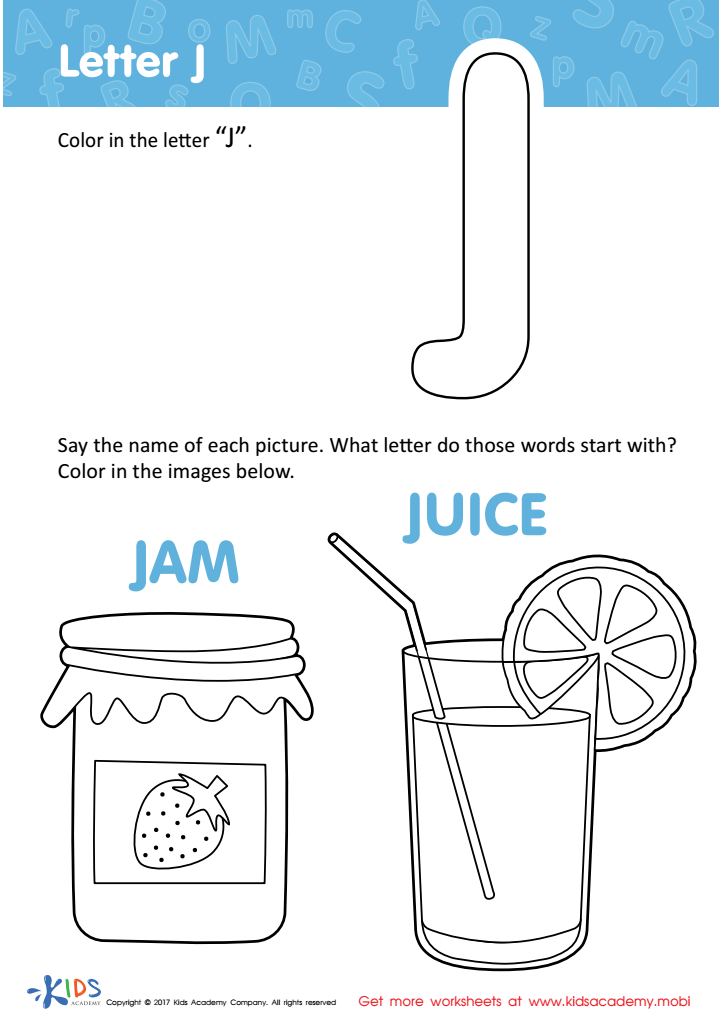
Letter J Coloring Sheet
 Assign to My Students
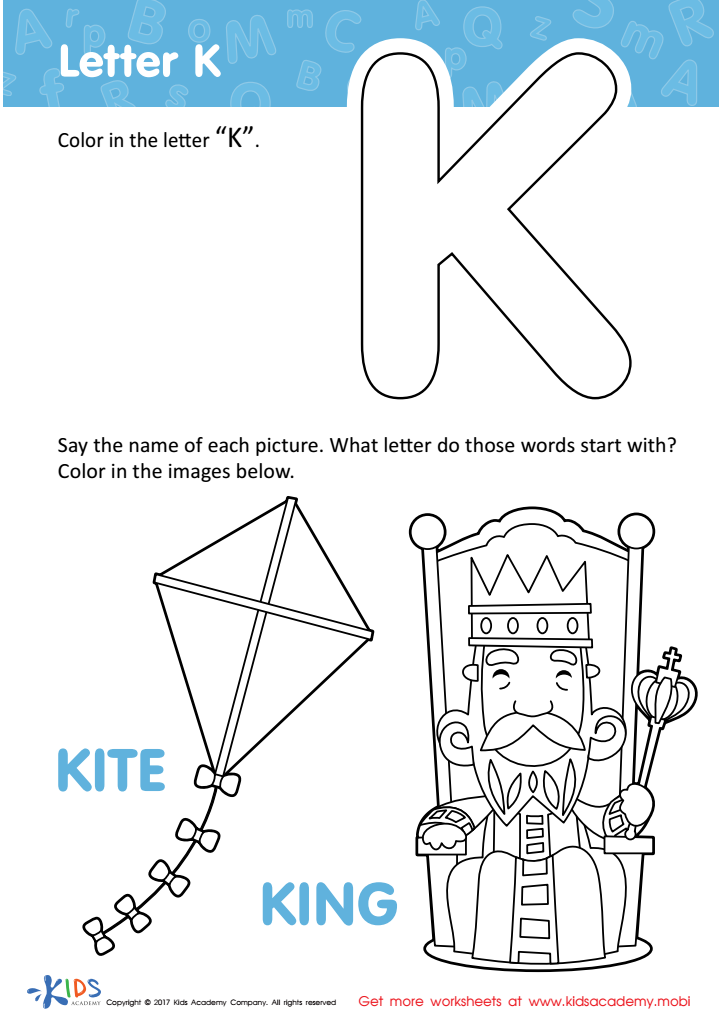
Letter K Coloring Sheet
Assign to My Students








Understanding alphabetical order and normal letter recognition are foundational skills that play a crucial role in a child's early language and literacy development, particularly for children aged 4-6. Parents and teachers should prioritize these skills because they serve as building blocks for more advanced literacy achievements.
Alphabetical order helps children recognize that letters are organized in a specific sequence, aiding in their ability to navigate dictionaries and other alphabetical lists as they grow older. Mastery of the alphabet enables children to follow along in reading activities, leading to better comprehension and engagement with texts.
Normal letter recognition is equally vital. It allows children to identify and differentiate between each letter, which is essential for reading and writing. Knowing the letters of the alphabet and their corresponding sounds (phonics) aids in word formation, spelling, and pronunciation. This foundation makes the transition to reading smoother and more intuitive.
Beyond academics, these skills can impact a child's confidence and willingness to participate in classroom activities and discussions. When children feel comfortable recognizing and ordering letters, they are more likely to enjoy and pursue reading, setting a positive trajectory for their future education.
Therefore, attention to these early literacy skills is not just about immediate educational milestones; it is about fostering a lifelong love for learning and literacy.








