Vocabulary development Normal Letter Sounds Worksheets for Ages 4-6
6 filtered results
-
From - To
Boost your child's vocabulary with our engaging Normal Letter Sounds Worksheets designed for ages 4-6! These age-appropriate resources help young learners connect letter sounds with words, enhancing phonemic awareness and expanding their language skills. With colorful illustrations and fun activities, each worksheet makes learning enjoyable and interactive. Designed to support early literacy development, our worksheets promote recognition of letter sounds and increase word variety, ensuring kids build a strong foundation for reading. Perfect for use at home or in the classroom, these printable worksheets make vocabulary development an exciting adventure for your little learners! Download and start exploring today!
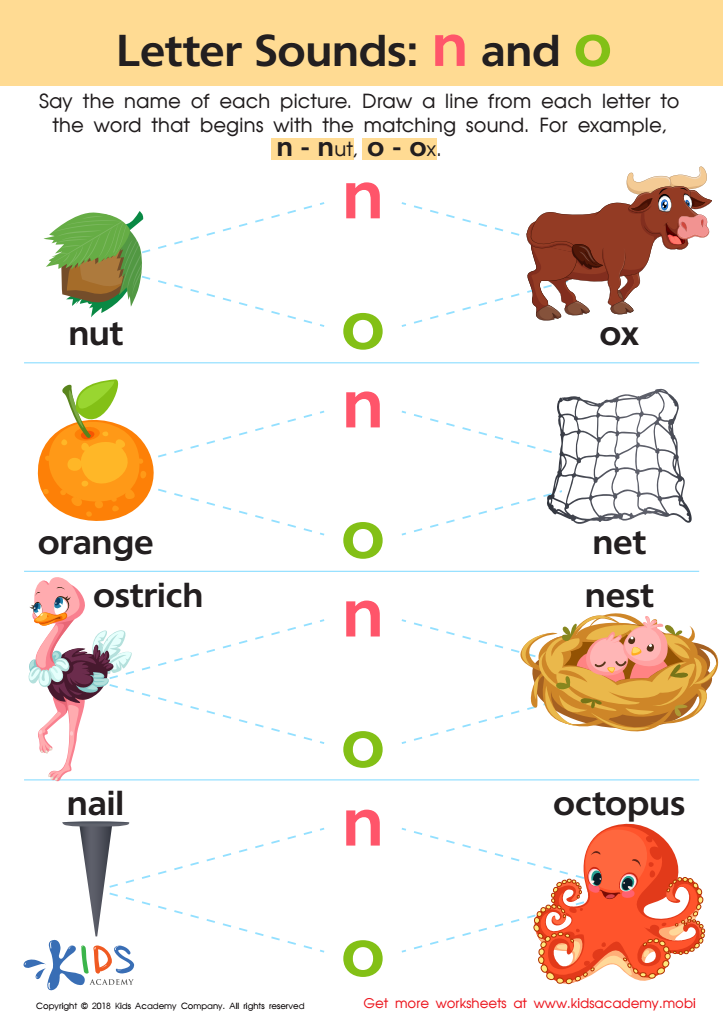
Letter N and O Sounds Worksheet
 Assign to My Students
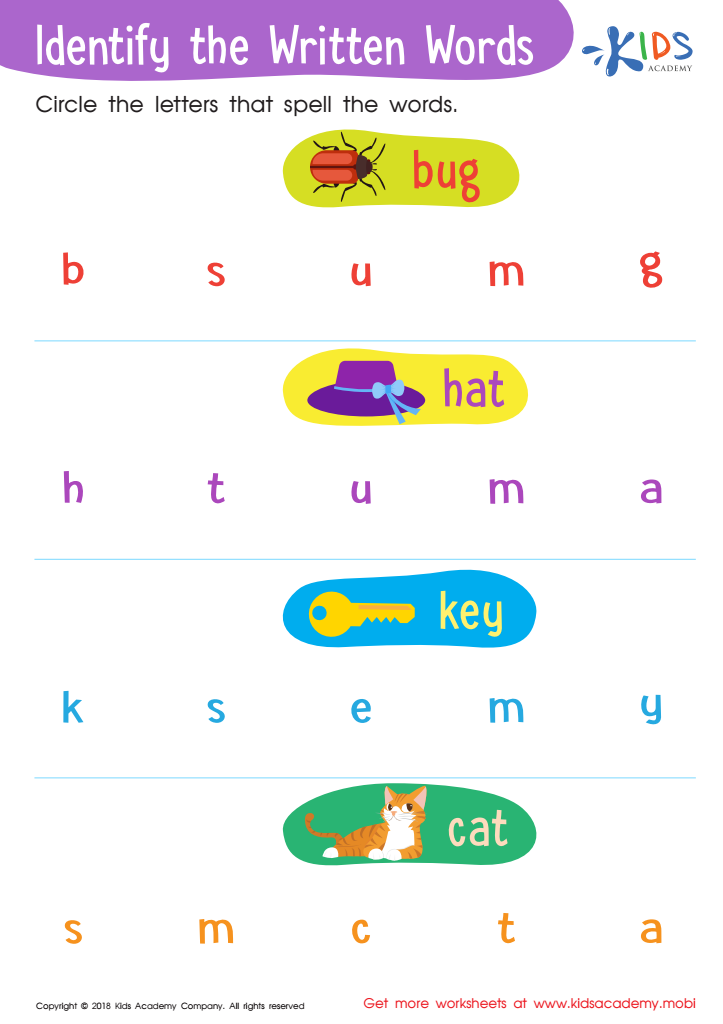
Identify the Written Words Worksheet
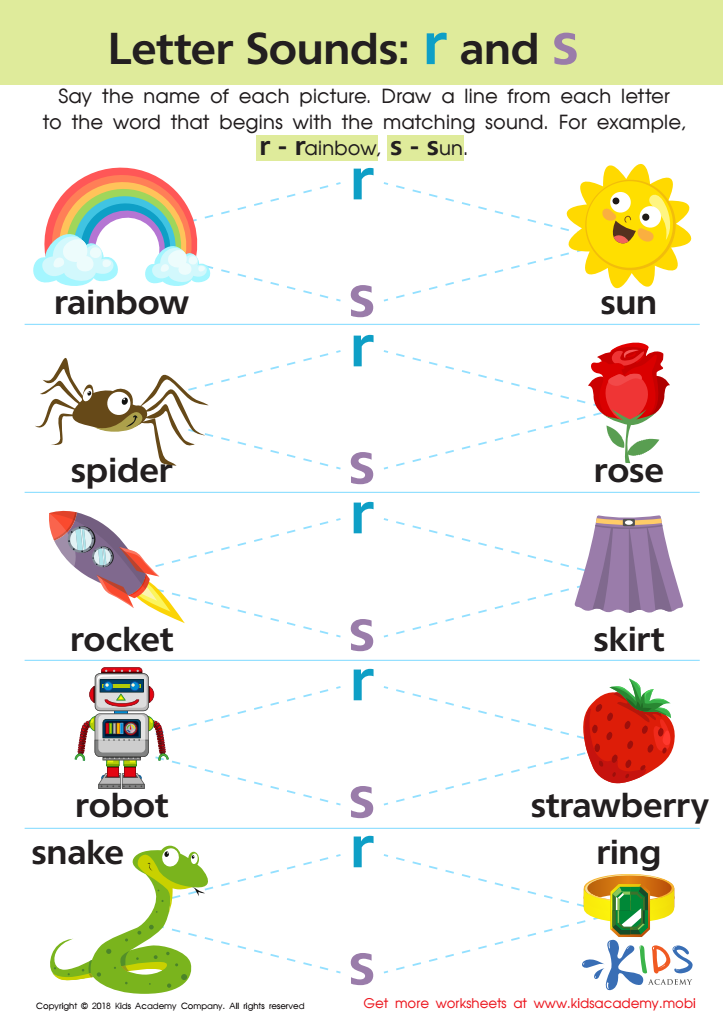
Letter R and S Sounds Worksheet
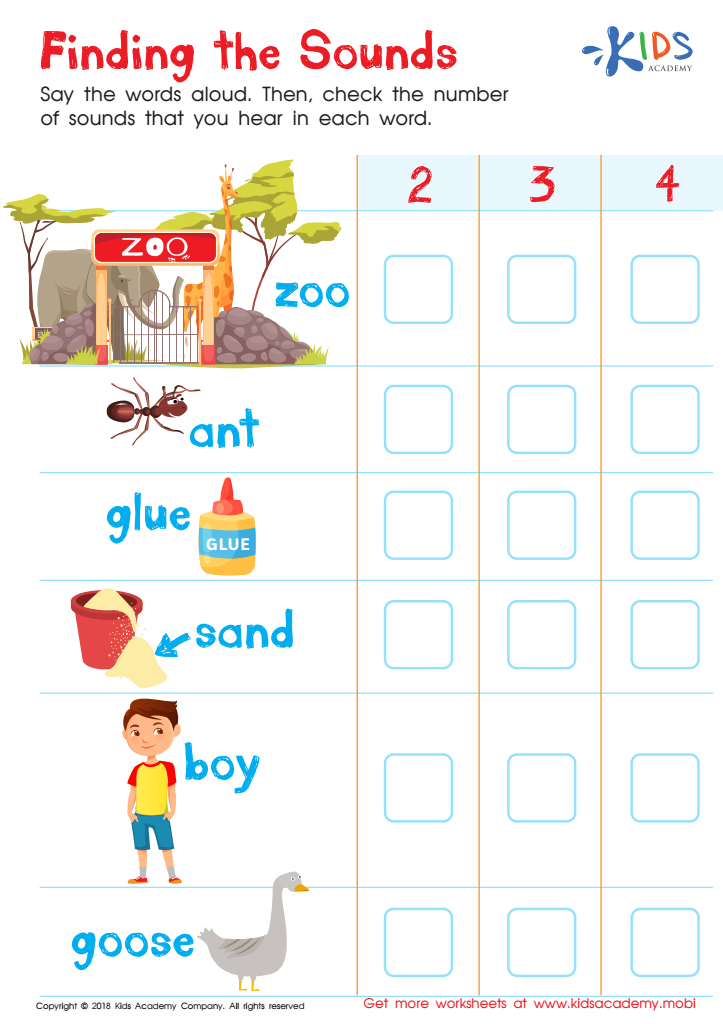
Finding the Sounds Worksheet
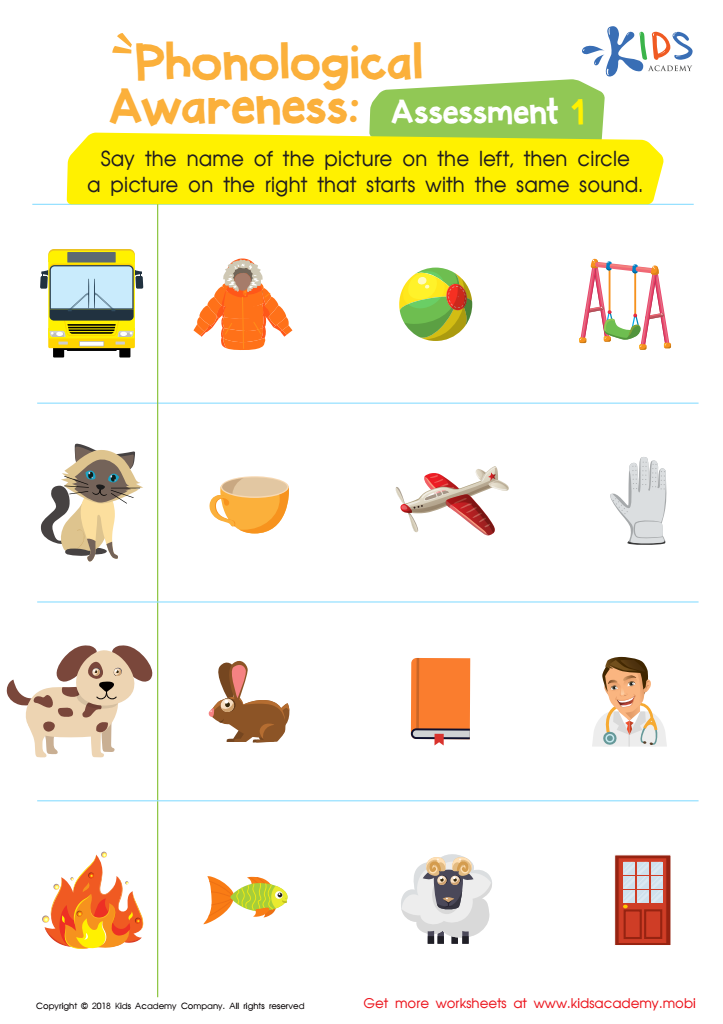
Phonological Awareness: Assessment 1 Worksheet
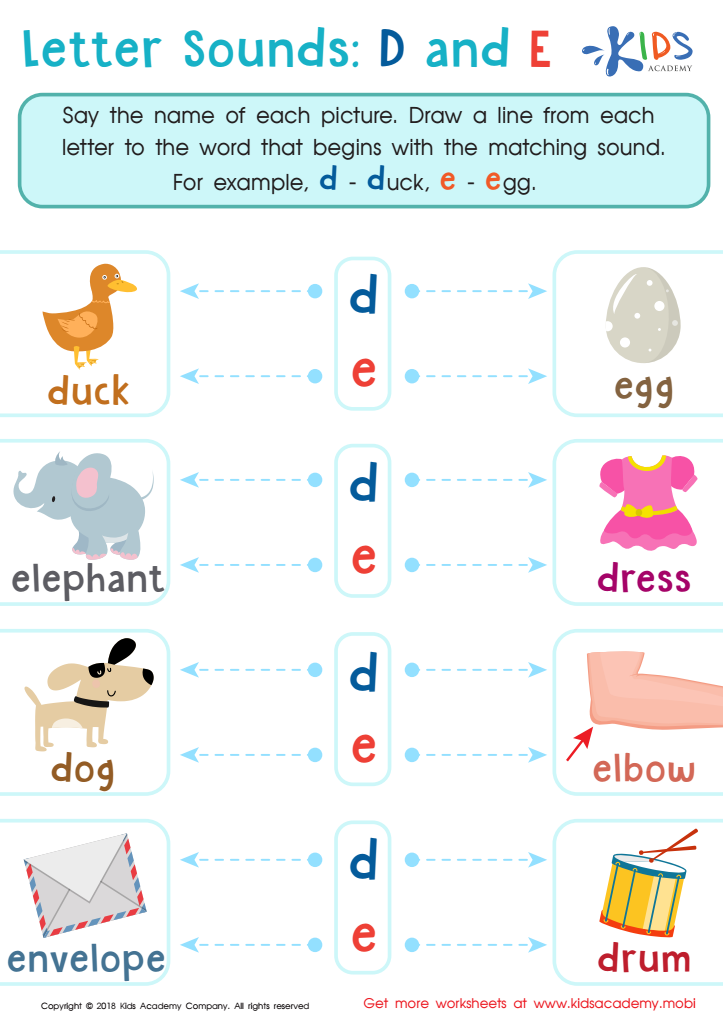
Letter D and E Sounds Worksheet








Vocabulary development is crucial for children aged 4-6, serving as a foundational pillar for their literacy and overall learning. During these formative years, children are incredibly receptive to language acquisition, and focusing on normal letter sounds significantly enhances their ability to communicate effectively.
Firstly, understanding letter sounds—phonemic awareness—helps children decode words, which is essential for reading proficiency. As they learn to recognize sounds associated with letters, they develop stronger word recognition skills, ultimately improving their reading fluency and comprehension.
Furthermore, a rich vocabulary enables expressions of thoughts, feelings, and ideas, fostering better social interactions and emotional understanding. Children who can articulate themselves clearly are more likely to engage in class discussions and build friendships, contributing to their social development.
For parents and teachers, investing time in vocabulary development—through activities, songs, and games that emphasize letter sounds—can yield long-term benefits. When children cultivate strong vocabulary skills early on, they are better prepared for academic success and lifelong learning.
Ultimately, nurturing vocabulary development in early childhood not only supports literacy skills but also shapes confident, articulate children ready to explore the world around them.






