Rhyming skills development Normal Phonics Worksheets for Ages 4-6
4 filtered results
-
From - To
Enhance your child's phonics knowledge with our engaging Rhyming Skills Development Normal Phonics Worksheets for ages 4-6! Designed to cultivate early literacy skills, these interactive worksheets focus on teaching children the joy of rhyming through fun activities. From identifying rhyming words to creating simple rhymes, kids will build confidence in their reading and speaking abilities. Each worksheet is crafted to align with educational standards, making learning effective and enjoyable. Perfect for use at home or in the classroom, these resources nurture a love for language and set a strong foundation for future literacy success. Download today and watch their skills soar!
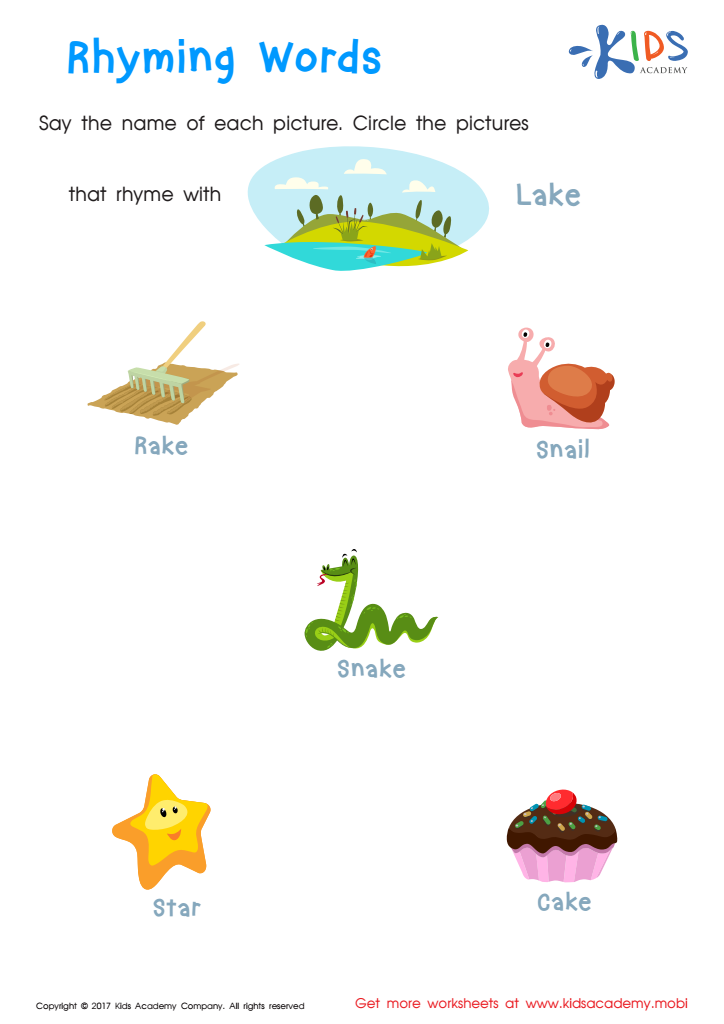
Rhyming Words Rhyming Worksheet
 Assign to My Students
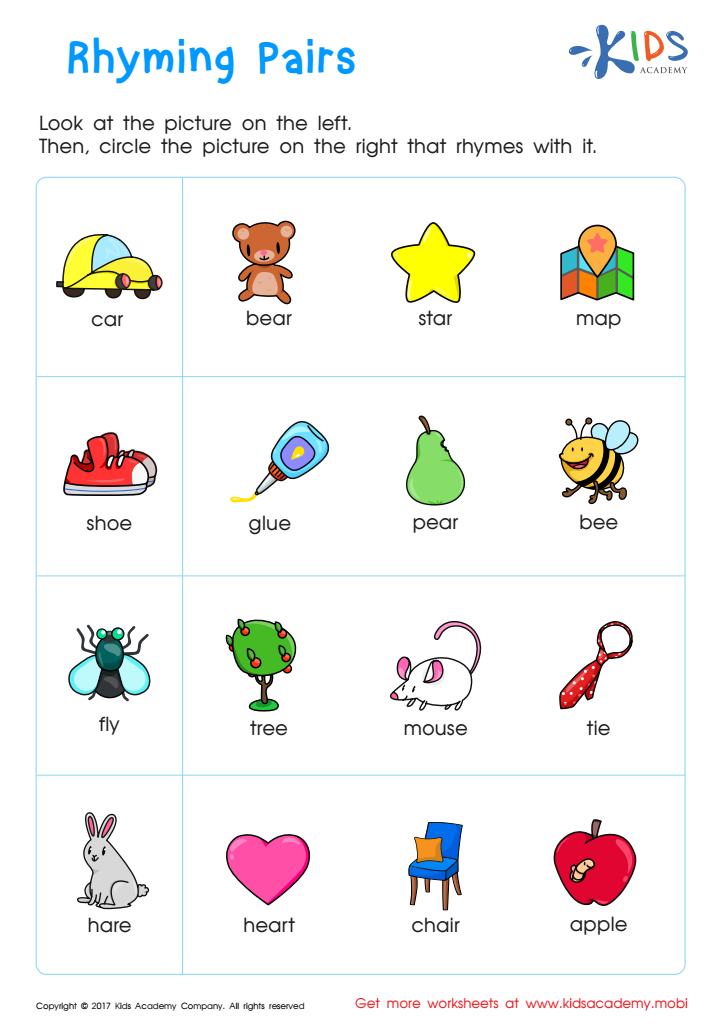
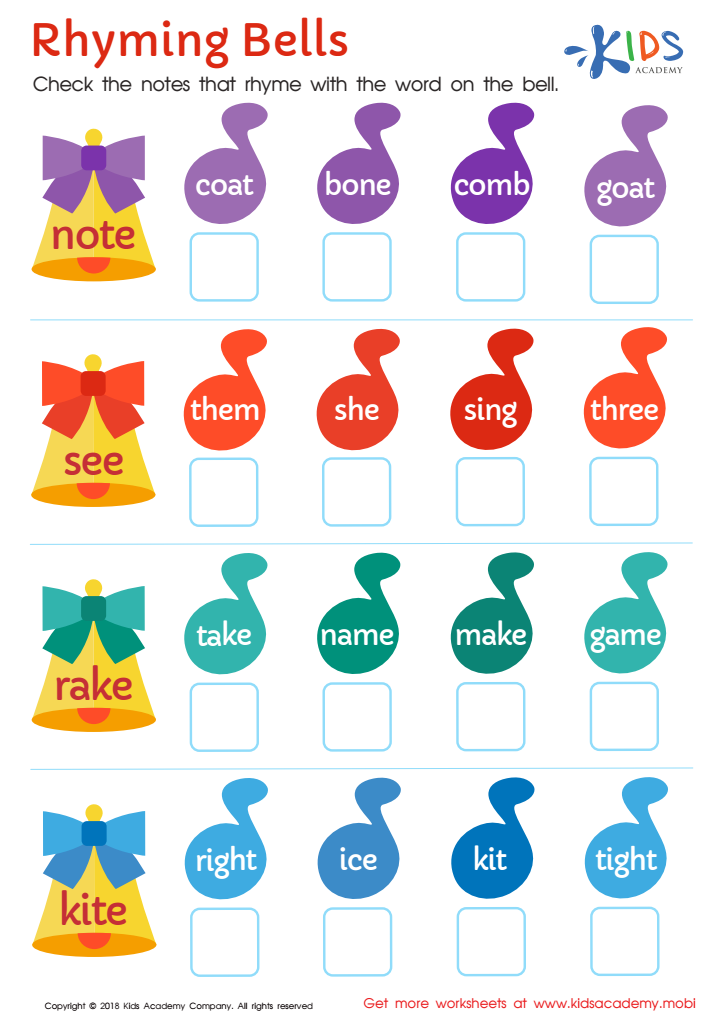
Rhyming Bells Worksheet
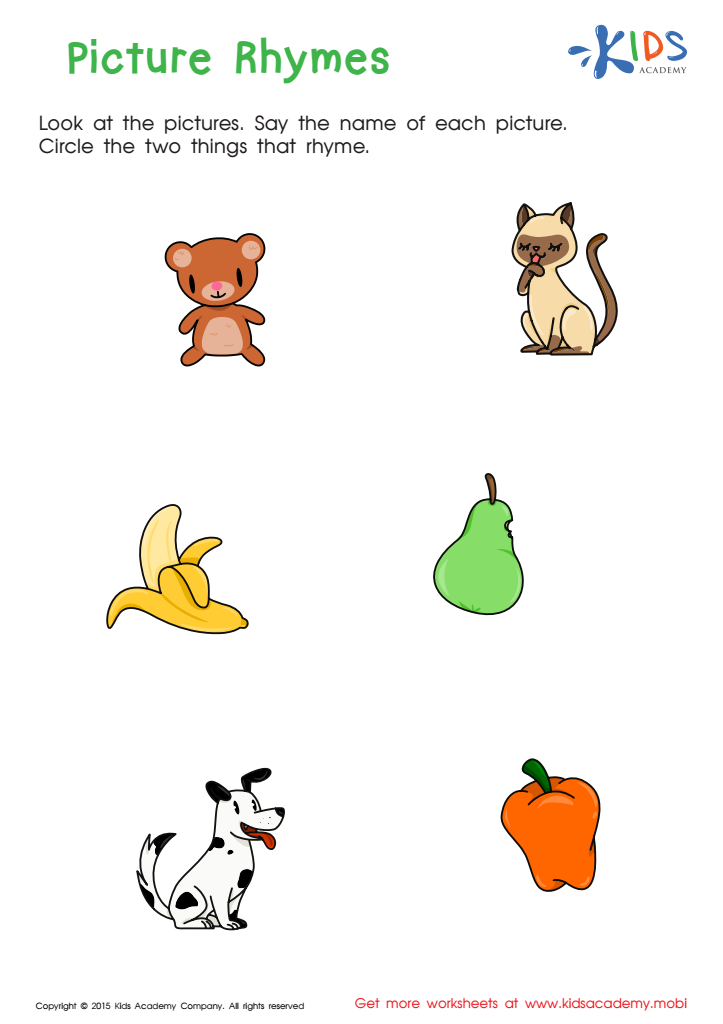
First Words: Picture Rhymes Worksheet








Rhyming skills play a pivotal role in early literacy development for children aged 4-6 and are crucial for both parents and teachers. Engaging in rhyming activities helps children develop phonemic awareness, which is the ability to hear and manipulate sounds—an essential skill for reading. When children can recognize and generate rhyming words, they begin to understand the concept of phonetic similarities, which lays the foundation for phonics and word recognition.
Additionally, rhyming enhances vocabulary and language skills, making learning new words more accessible. When children play with rhymes, they enjoy the rhythm and sound of language, fostering a positive attitude towards reading and writing. Rhyming games and songs can also create a fun, engaging learning environment, promoting further language exploration.
Moreover, identifying rhymes boosts listening skills, as children must pay attention to sounds, enhancing their auditory processing. For parents and teachers, nurturing these skills in early childhood not only prepares children for future academic success but also fosters a love for language, storytelling, and creativity. Encouraging rhyming is ultimately a stepping stone to proficient reading and writing, vital for children's overall development and lifelong learning.







