
Vocabulary Building Normal Phonics Worksheets for Ages 4-6
6 filtered results
Difficulty Level
Grade
Age
-
From - To
Subject
Activity
Standards
Boost your child's vocabulary with our engaging Vocabulary Building Normal Phonics Worksheets designed specifically for ages 4-6. These worksheets provide a fun and interactive way for young learners to expand their word recognition and language skills. With a variety of activities that focus on phonics, matching words, and connecting sounds to letters, your child will develop essential literacy skills while enjoying the learning process. Ideal for both classroom and home use, our printable worksheets encourage early learning and confidence in reading. Support your child's language development today with these thoughtfully crafted resources that make vocabulary building enjoyable!
Favorites
With answer key
Interactive
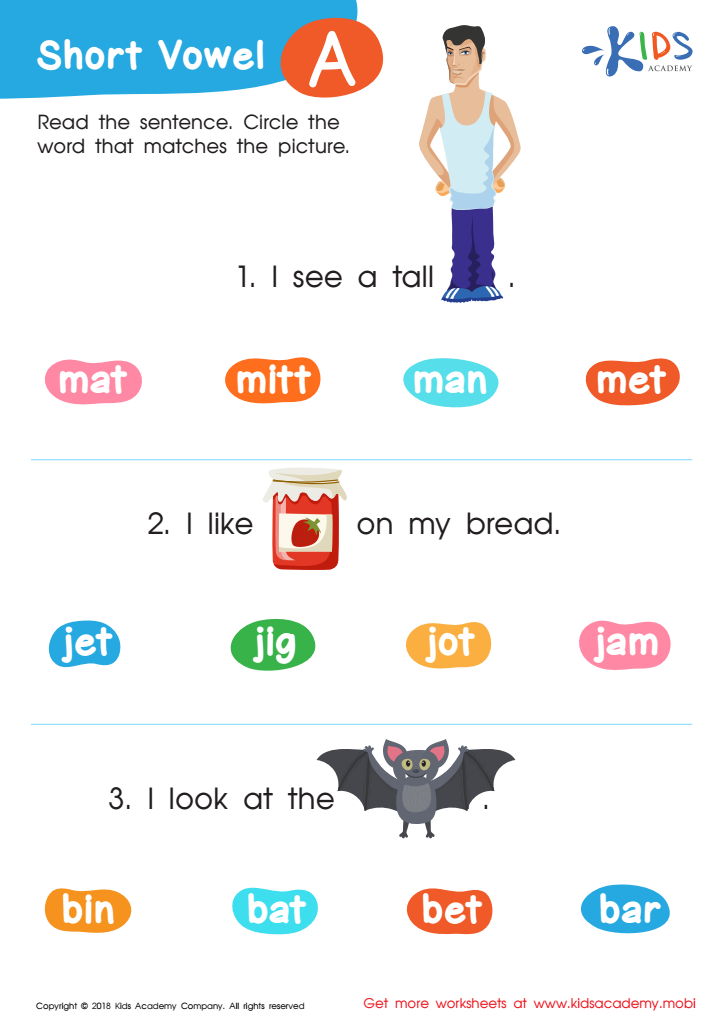
Short Vowel /a/ Worksheet
This free PDF helps new readers use sight words and pictures to read basic sentences. Then, they use accompanying word choices to find the correct word with the short a vowel sound. A key early reading skill, discriminating between short vowel sounds can be tricky in monosyllabic words, so use this PDF to help your reader reinforce it.
 Assign to My Students
Short Vowel /a/ Worksheet
Worksheet
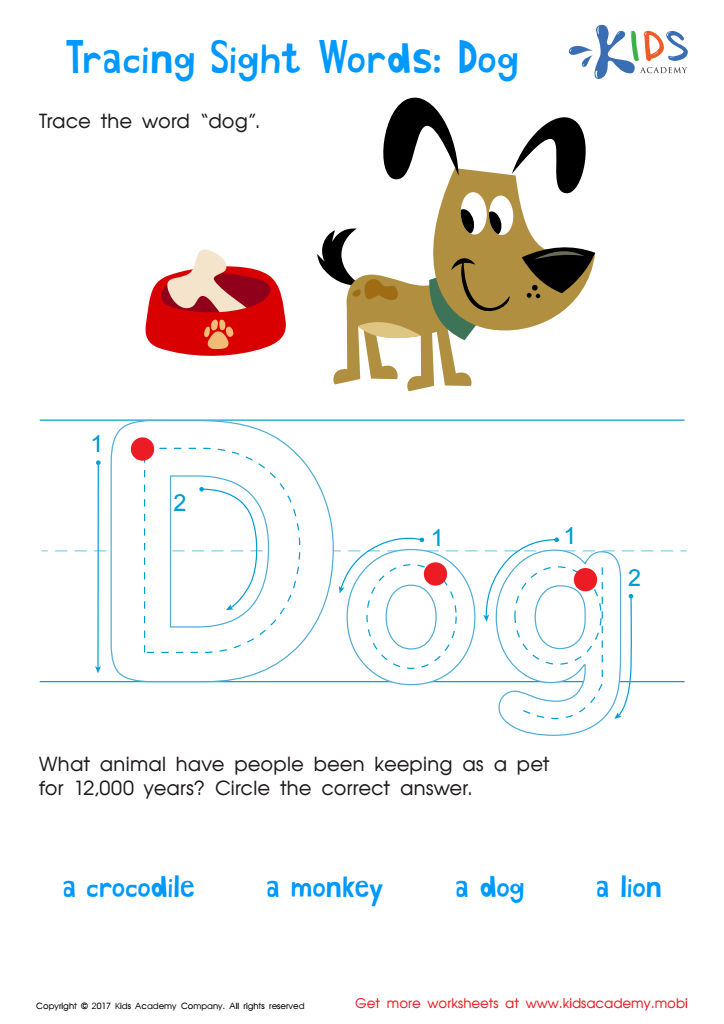
Dog Worksheet Sight Words Worksheet
Get your kids excited to read with our dog-themed sight words worksheet!
Excite your child to read with our sight words worksheet: dog edition! Featuring a lovable dog character to put a smile on any kid's face, this worksheet helps kids practice reading and writing the word "dog". Build a library of words they can read quickly and promote increasing literacy skills with early fluency! Get them ready for reading with our dog-themed sight words worksheet!
Dog Worksheet Sight Words Worksheet
Worksheet
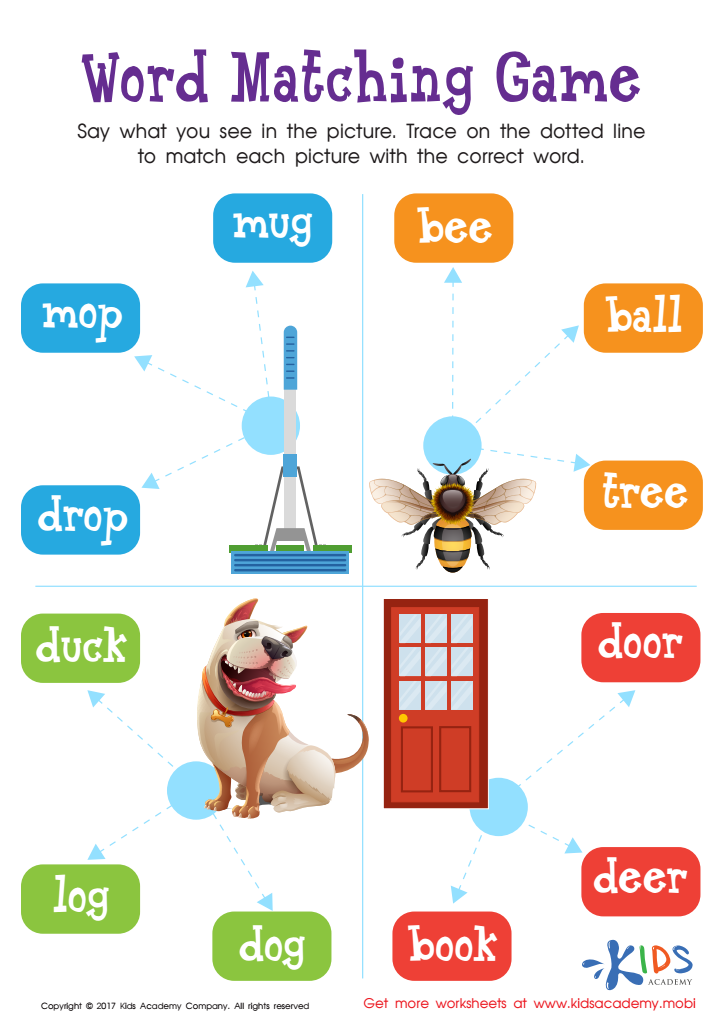
Word Matching Game Worksheet
Help your early reader develop prereading skills with this fun matching worksheet! Visual cues help them learn sight words, decode words in word families, and identify phonetic patterns. They'll practice discerning sounds past initial consonants while saying the name of the picture and finding the matching word - and reading at the same time!
Word Matching Game Worksheet
Worksheet
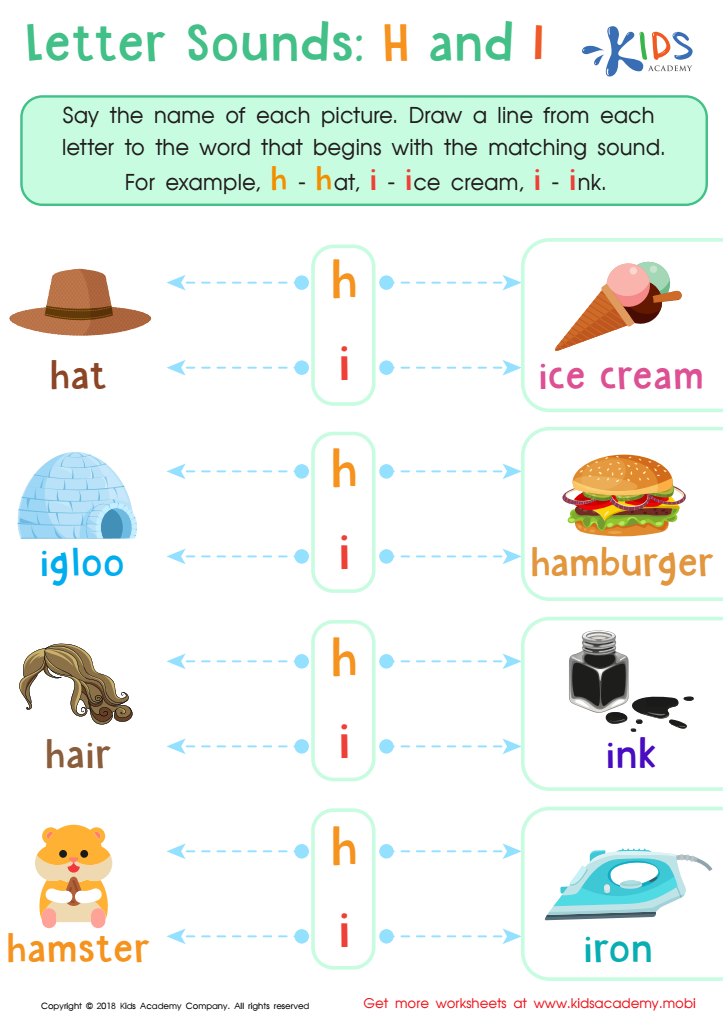
Letter H and I Sounds Worksheet
Preschoolers will have fun and develop reading and writing skills at the same time! They'll use pictures to recognize familiar words and differentiate between 'H' and 'I' sounds. Then they'll trace lines to connect each sound to the picture, improving their fine-motor skills. Bright and cheerful visuals make learning a breeze!
Letter H and I Sounds Worksheet
Worksheet
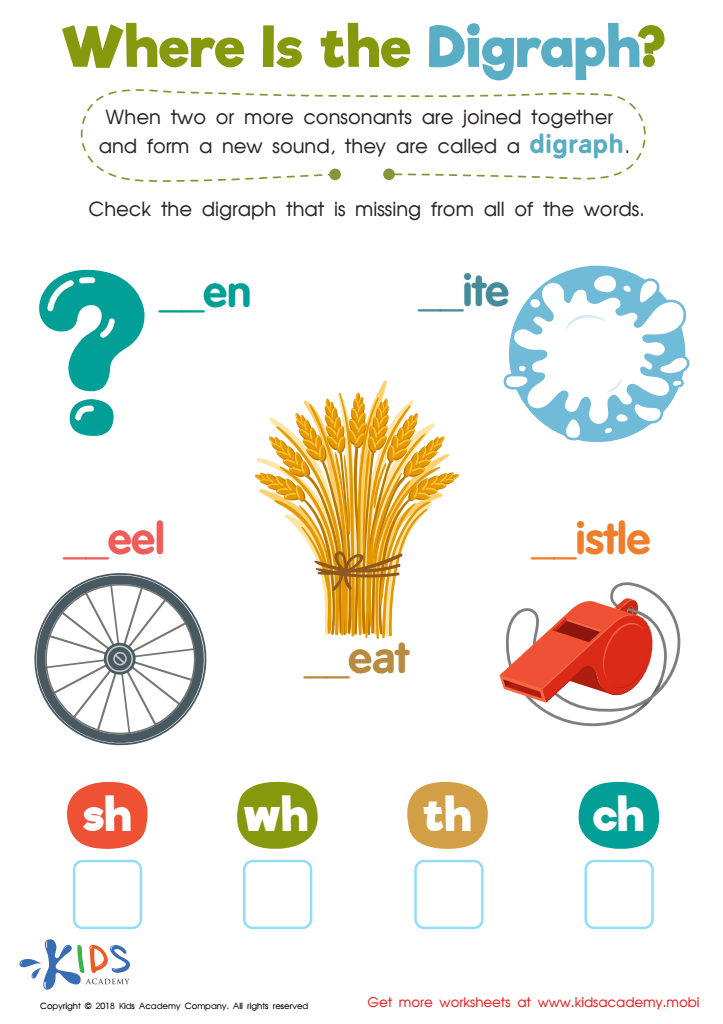
Where Is the Digraph? Worksheet
Teach your child about digraphs - two or more consonants that form one sound, like /wh/, /sh/, and /ch/. Show them words with these sounds and use this worksheet to help. Ask them which digraph is missing from the words and point out the pictures. 80 words.
Where Is the Digraph? Worksheet
Worksheet
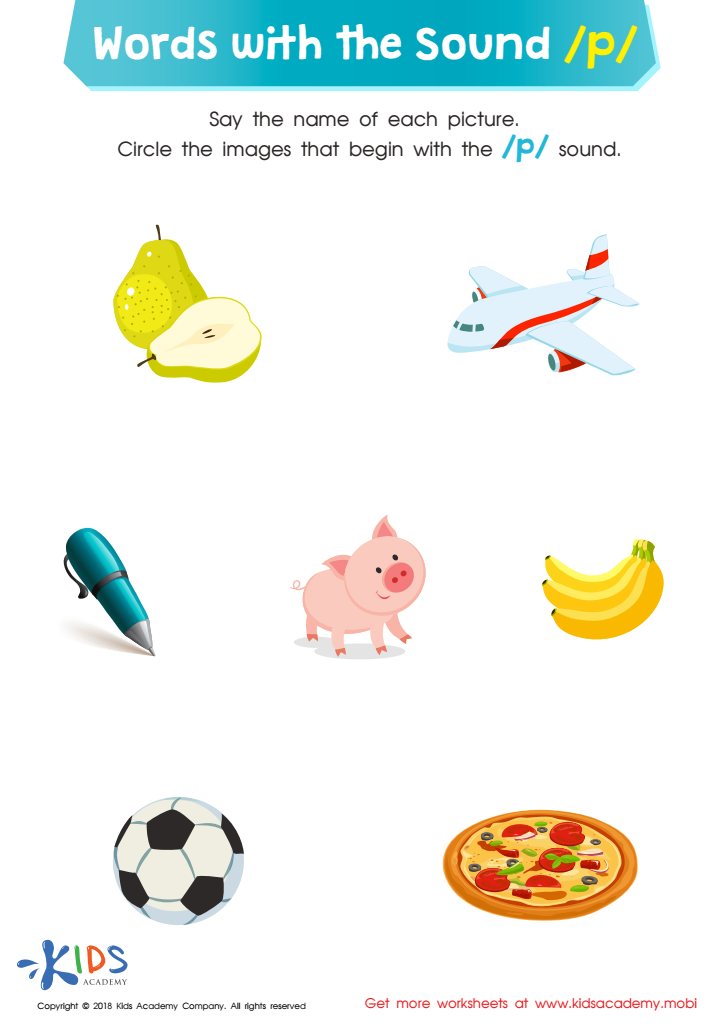
Words with sound p Reading Worksheet
Working on this fun worksheet? Name each picture aloud and listen carefully before circling those that start with the letter «p»! Pizza, pig, plane, or banana - practice phonics to help your child recognize the letter «p» sound for successful early reading and decoding!
Words with sound p Reading Worksheet
Worksheet
Join Kids Academy for Free
Who is primarily going to use this learning content?








Vocabulary building through phonics is crucial for children aged 4-6 as it lays the foundation for reading and overall language development. During this critical period, children are particularly adept at learning new words and sounds, which significantly influences their literacy skills. Phonics instruction provides children with the tools to decode words, understand how letters and sounds interact, and develop a strong reading strategy.
Effective vocabulary building enhances a child's comprehension and expressive language abilities. When children build their vocabulary in the early years, they gain confidence in their communication skills, which promotes positive interactions with peers and adults. Furthermore, a richer vocabulary fuels curiosity and encourages a love for learning, creating an intrinsic motivation to explore new subjects and ideas.
Parents and teachers play a pivotal role in this aspect of language development. By incorporating phonics-based vocabulary activities—like phonemic games, storytelling, and interactive reading—adults can actively engage children in developing these essential skills. It is also vital for them to model effective vocabulary use in everyday conversations. In short, investing time and effort in vocabulary building through phonics will not only support children's current literacy needs but will also foster a lifelong appreciation for language and learning.







