
Vocabulary Enrichment Normal Phonics Worksheets for Ages 4-6
3 filtered results
Difficulty Level
Grade
Age
-
From - To
Subject
Activity
Standards
Unlock your child's potential with our "Vocabulary Enrichment Normal Phonics Worksheets for Ages 4-6." These engaging worksheets, designed for young learners, blend fun with foundational phonics instruction. Guided activities introduce and reinforce new vocabulary, offering various exercises such as word matching, letter recognition, and beginning sounds. Our age-appropriate printables not only enhance phonetic skills but also support reading readiness and language development. Tailored to make learning enjoyable, these resources are perfect for both classroom and home use, ensuring comprehensive early literacy support. Boost your child’s confidence and abilities with our carefully crafted vocabulary enrichment worksheets.
Favorites
With answer key
Interactive
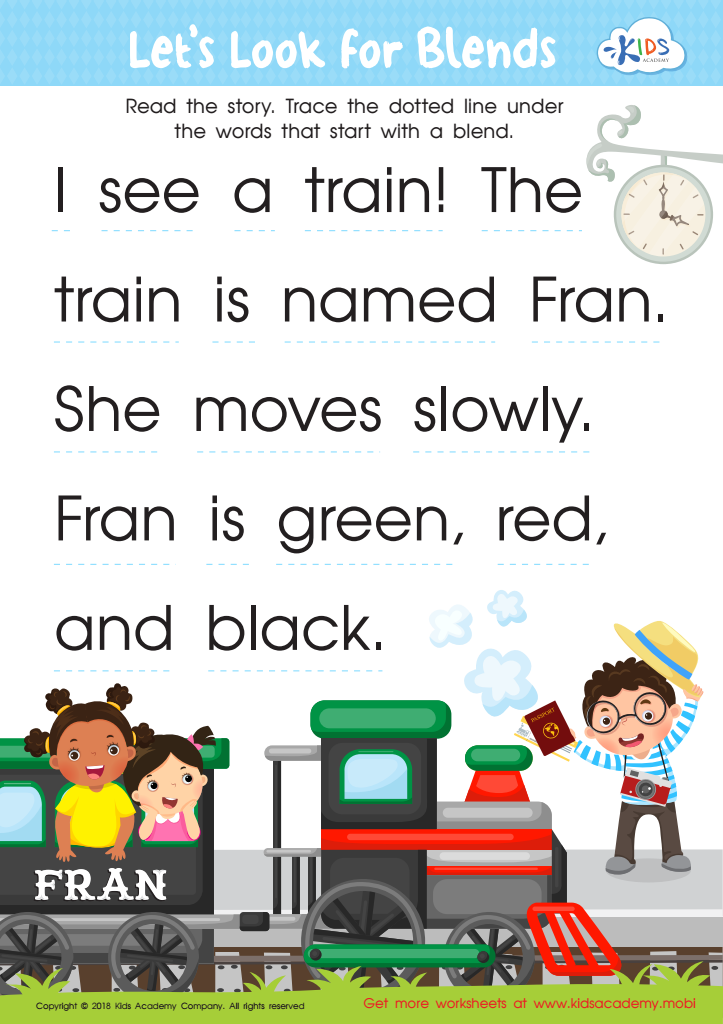
Let's Look for Blends Worksheet
Does your child love trains? Get them to read the story or help them read it aloud. Ask them to trace the words that start with blends on the dotted lines. This exercise will help them improve their blend-identifying skills!
 Assign to My Students
Let's Look for Blends Worksheet
Worksheet
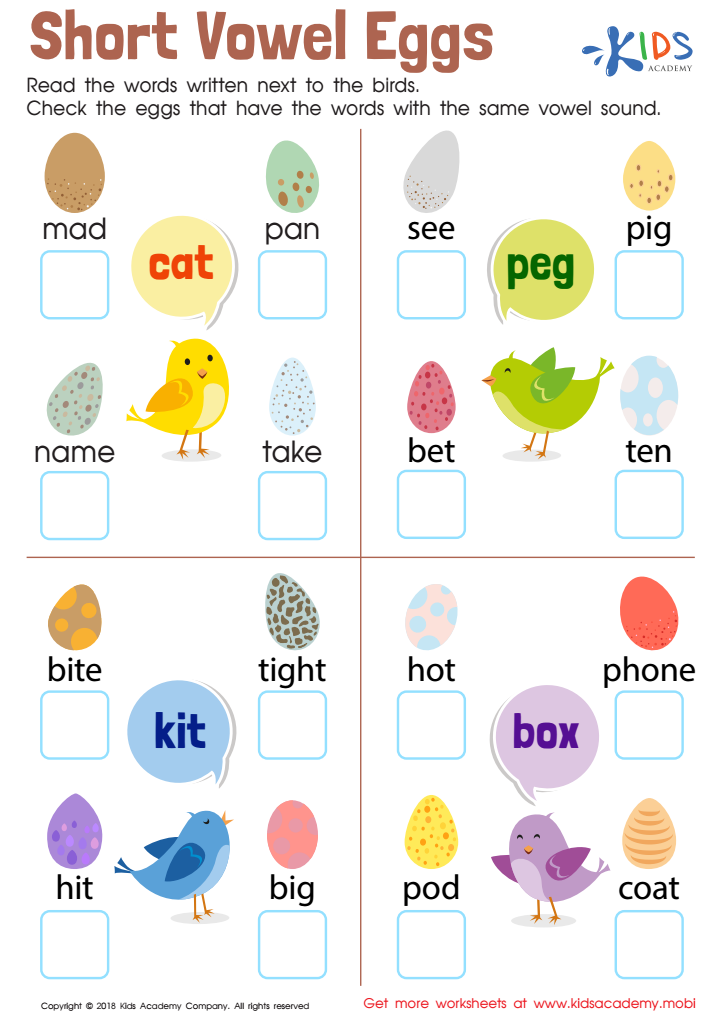
Short Vowel Eggs Worksheet
Your students will love helping these birdies pick the short vowel eggs! Have them read the words in the thought bubbles, then check off the boxes with the same short vowel sounds. The bright colors of this free Worksheet will draw them in and get them practicing their vowels!
Short Vowel Eggs Worksheet
Worksheet
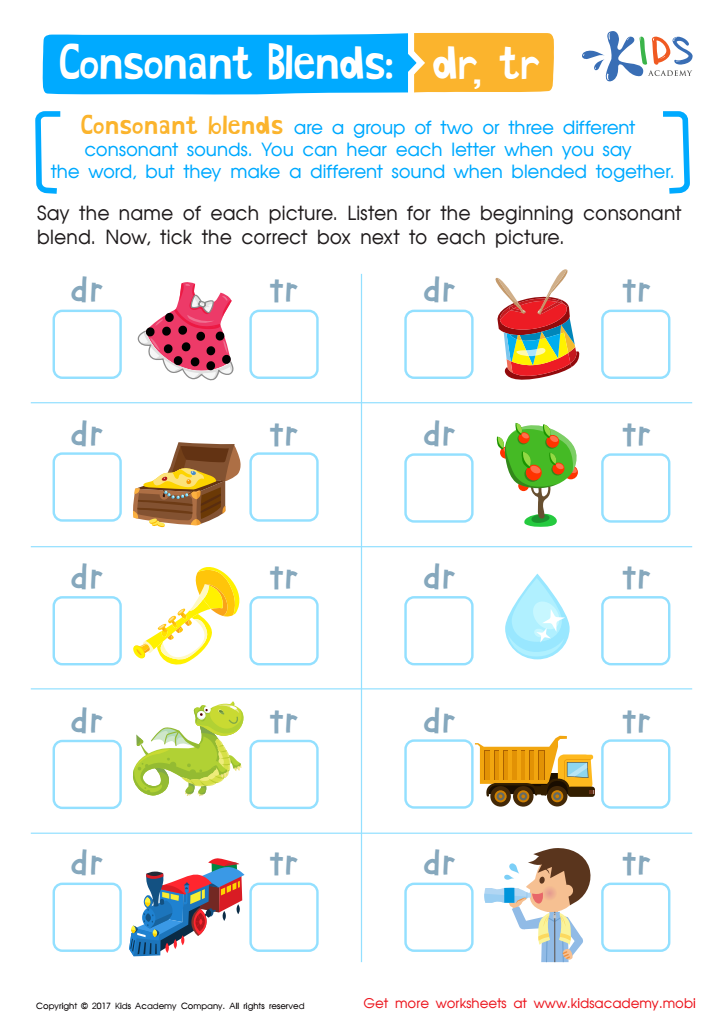
Consonant Blends: "Dr" and "Tr" Printable
Pictures of the words provide a visual cue, and sound-outs help with auditory cues.
Consonant Blends: "Dr" and "Tr" Printable
Worksheet
Join Kids Academy for Free
Who is primarily going to use this learning content?








Vocabulary Enrichment and Normal Phonics for children aged 4-6 establish foundational language skills critical for early education and lifelong learning. During these formative years, young minds are incredibly receptive to language input, absorbing new words and sounds quickly and efficiently. Building a rich vocabulary at this stage enhances communication skills, enabling children to express thoughts clearly and understand what others are saying. This leads to better social interaction and self-confidence.
Phonics instruction focuses on the relationship between sounds and their corresponding letters, which is essential for developing reading skills. Systematic phonics education teaches children to decode words by sounds, fostering reading fluency and accuracy.
Moreover, a strong vocabulary combined with phonics skills supports comprehension. When children can decode words easily and understand their meanings, they can grasp the content of what they read, making learning more enjoyable and less frustrating. This foundational literacy development sets the stage for academic success across all subjects.
Parents and teachers should prioritize Vocabulary Enrichment and Normal Phonics because these early literacy skills are interconnected and mutually reinforcing. A well-rounded approach ensures children possess the tools they need for effective communication, fruitful learning experiences, and a lifelong love of reading.







