Letter tracing skills Normal Tracing Letters Worksheets for Ages 4-6
3 filtered results
-
From - To
Elevate your child’s writing foundation with our "Letter Tracing Skills Normal Tracing Letters Worksheets for Ages 4-6." Designed to delight young learners, these engaging worksheets help children master basic letter formation. Each worksheet offers ample practice, building essential motor skills and letter recognition. Through repetitive tracing exercises, children enhance their handwriting fluency and confidence in writing both uppercase and lowercase letters. Ideal for introducing the alphabet, these worksheets are perfect for classroom settings or at-home learning. Give your child a head start in literacy with our expertly crafted letter tracing worksheets, tailored to inspire and educate ages 4-6.
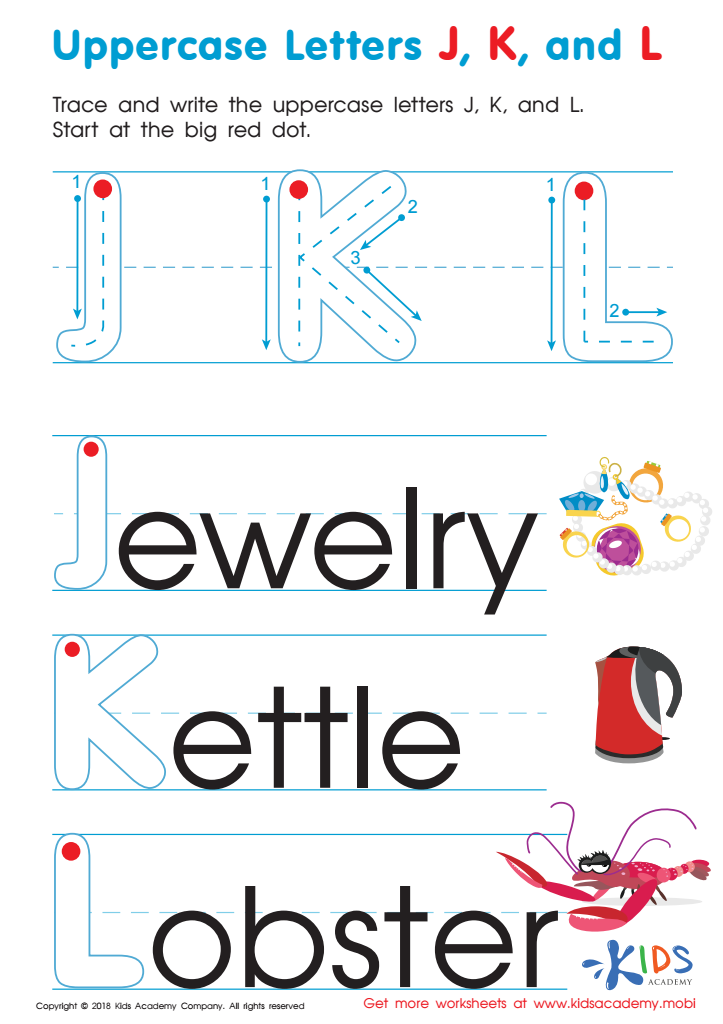
Uppercase Letters J, K, and L Worksheet
 Assign to My Students
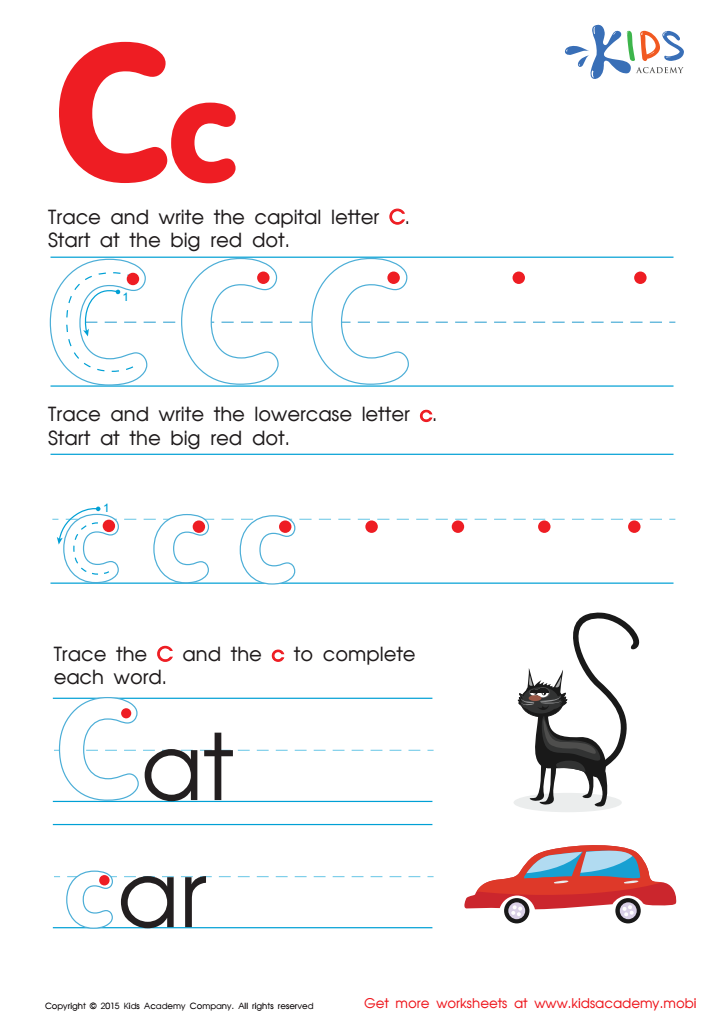
Letter C Tracing Page
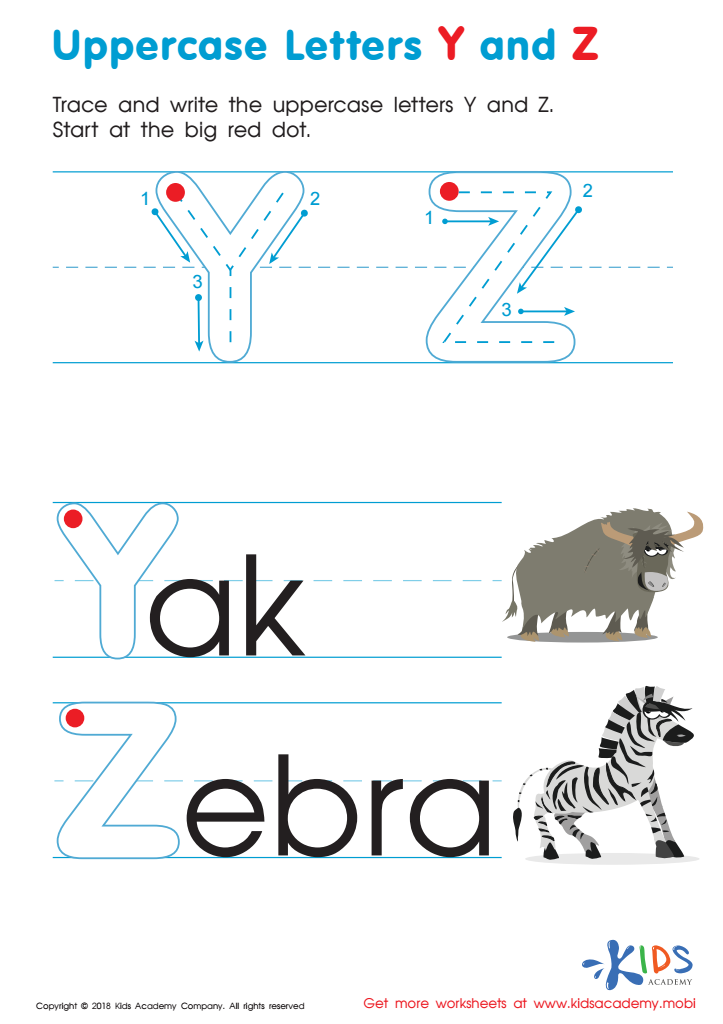
Uppercase Letters Y Z Worksheet








Parents and teachers should prioritize letter tracing skills for children ages 4-6 because these foundational skills establish the basis for literacy and academic success. At this developmental stage, most children are enhancing their fine motor control, a critical aspect of writing. By engaging in letter tracing activities, children refine their hand-eye coordination, grip strength, and dexterity. These motor skills are essential for developing legible handwriting, which plays a pivotal role as they progress in school.
Additionally, letter tracing enhances cognitive abilities such as visual memory and spatial awareness by making children familiar with the shapes and consistencies of different letters. This early familiarity is fundamental for both reading and writing skills because it helps children recognize letters and understand their individual sounds, contributing to phonemic awareness. As a results, they become more confident and capable readers and writers.
Moreover, letter tracing instills patience and attention to detail, reinforcing learning through repeated practice. It also boosts self-esteem; as children see their progress, their confidence grows, making them more eager to learn and less likely to experience frustration with writing tasks later on. Therefore, nurturing these skills from an early age sets a strong foundation for long-term educational achievements and literacy competence.








