Lowercase identification Normal Upper & Lowercase Letters Worksheets for Ages 4-6
4 filtered results
-
From - To
Our "Lowercase Identification: Normal Upper & Lowercase Letters Worksheets" are designed for children ages 4-6, aiding them in recognizing and distinguishing between lowercase and uppercase letters. These engaging activities enhance early literacy skills through fun, interactive exercises. Perfect for young learners, each worksheet provides opportunities for practice that reinforces letter recognition and improves fine motor skills. Ideal for classroom or at-home learning, our expertly crafted worksheets help build a strong foundation in reading and writing, ensuring your child’s joyful journey into literacy. Download now to support your child's early educational development.
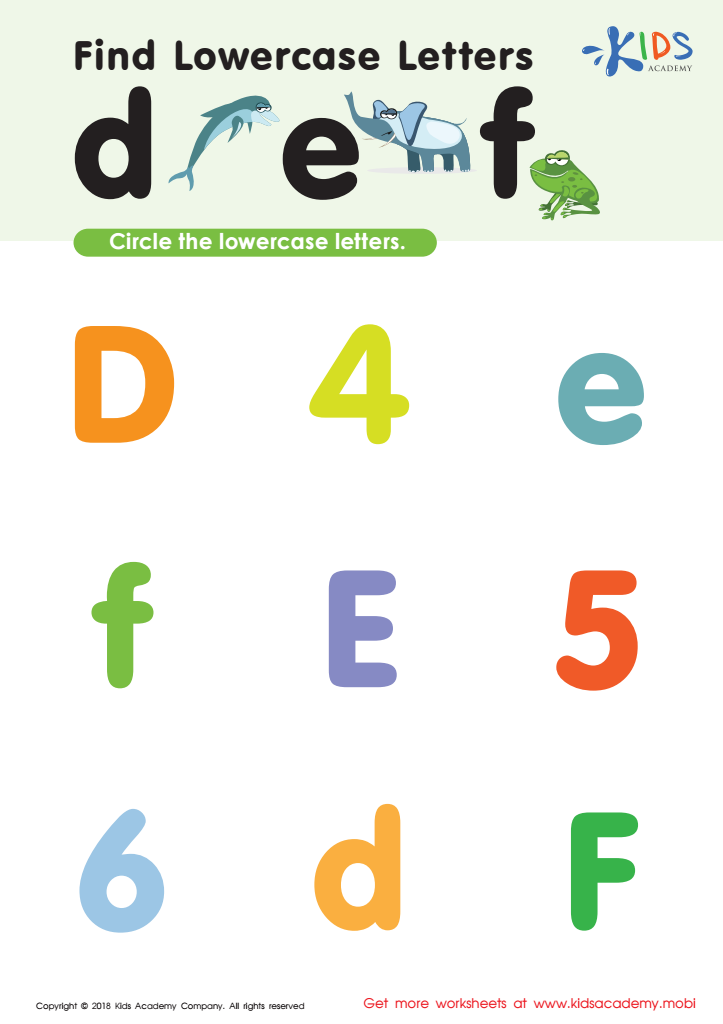
Find Lowercase Letters d e f Worksheet
 Assign to My Students

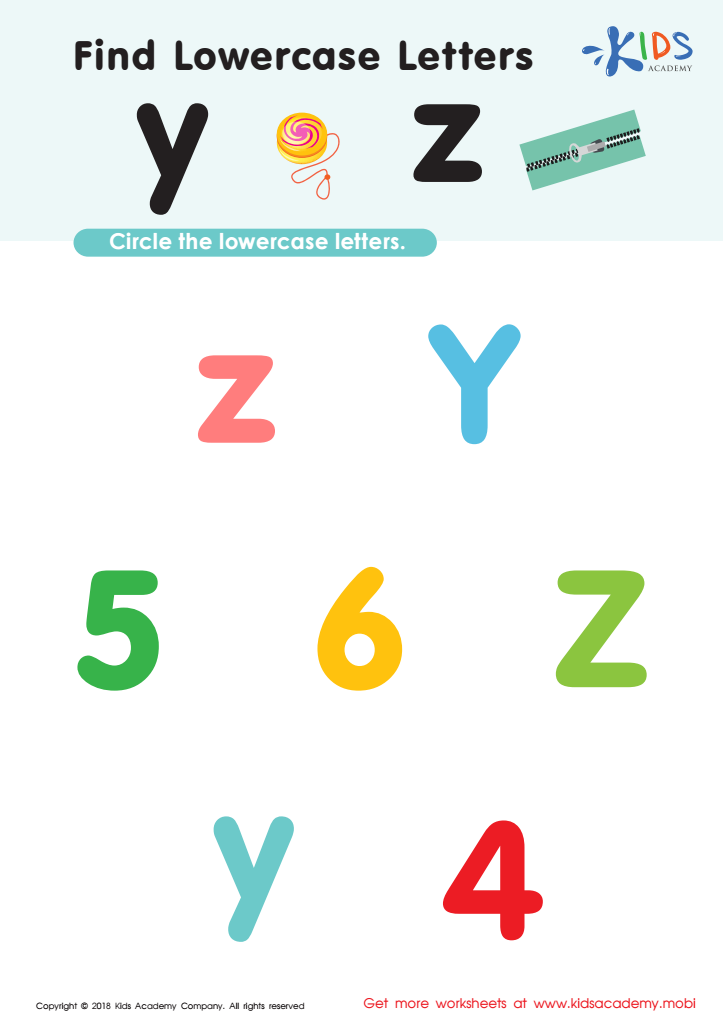
Find Lowercase Letters y z Worksheet
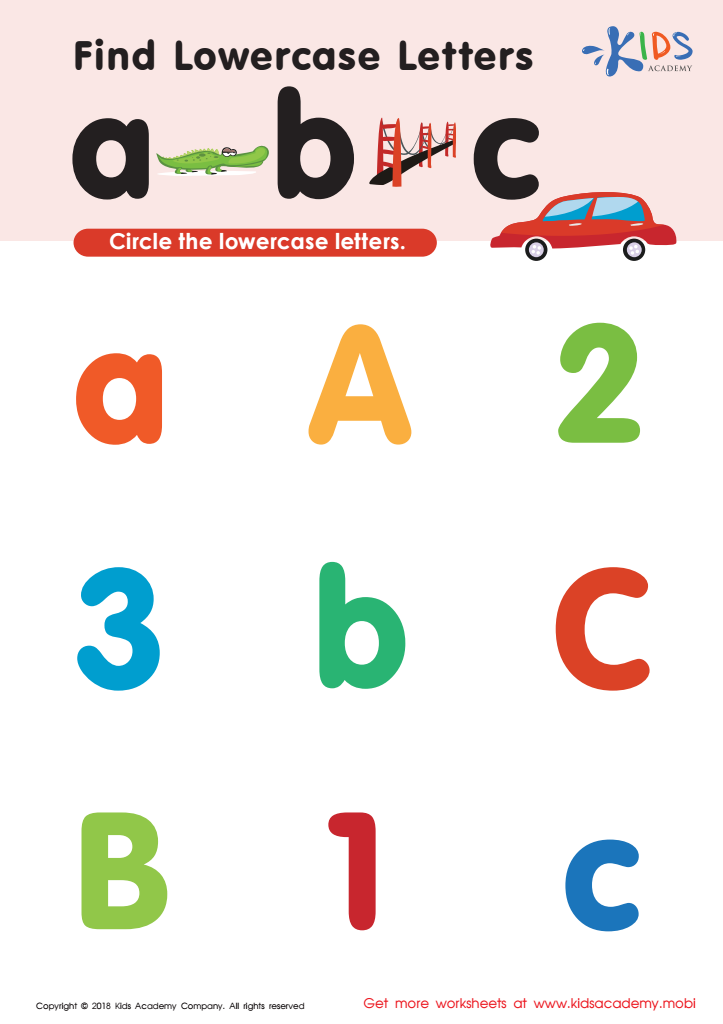
Find lowercase letters a b c Worksheet
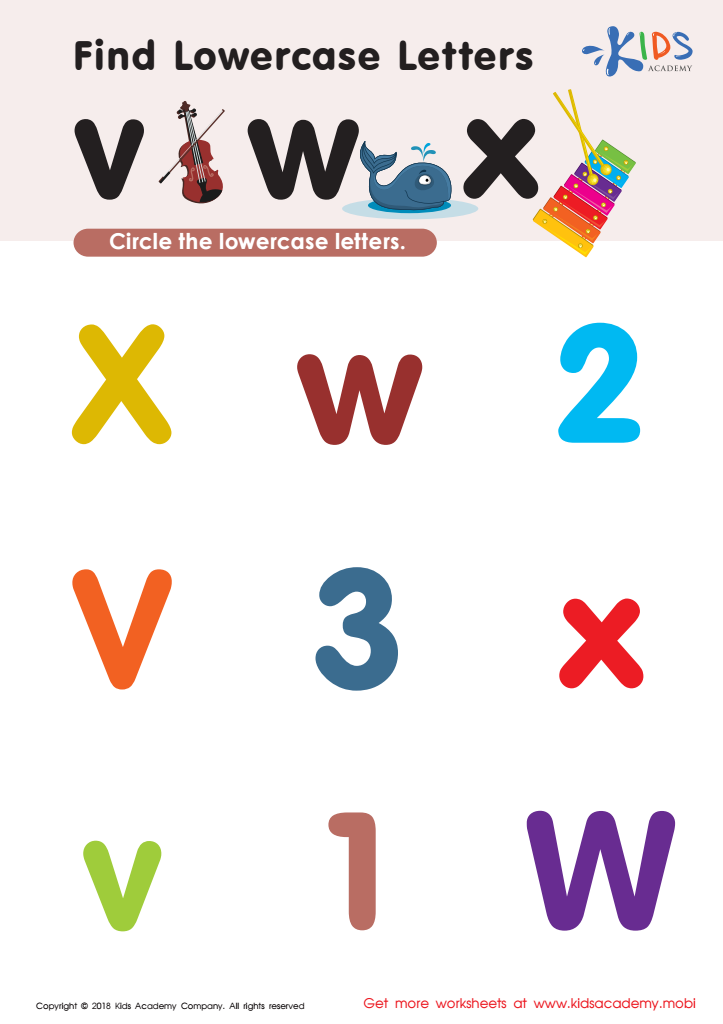
Find Lowercase Letters v w x Worksheet






Recognizing both lowercase and uppercase letters is crucial for young children aged 4-6 as it lays the foundational skills for reading and writing. Most print materials, like books and educational resources, primarily use lowercase letters, making it essential for children to identify them effortlessly. Understanding the difference between upper and lower cases equips children with the ability to read texts fluently, and it improves their word recognition skills, thereby fostering a smoother transition into more advanced literacy tasks.
For parents and teachers, emphasizing this skill supports cognitive development. It nurtures visual discrimination abilities, where children learn to distinguish shapes, patterns, and differences in letter forms. Consistent exposure and practice in recognizing both cases can mitigate potential confusion during the early stages of learning to read, ensuring that children do not mix up letters or misinterpret written cues.
Moreover, encouraging familiarity with both upper and lower case letters aligns with educational standards and curricula designed for early childhood education. It allows for better classroom performance and boosts a child's confidence in their reading and writing abilities. This basic skill is a stepping stone to a lifelong love of learning, setting a positive and proactive precedent for their educational journey.







