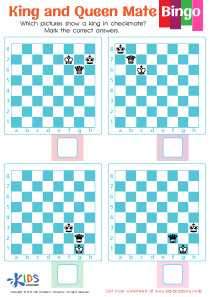
Memory enhancement Normal Chess Worksheets for Ages 4-6
3 filtered results
-
From - To
Introducing our "Memory Enhancement Normal Chess Worksheets" designed specifically for children ages 4-6! These fun and educational worksheets help young learners develop critical memory skills through engaging chess activities. Each worksheet is thoughtfully crafted to strengthen cognitive abilities, promote strategic thinking, and boost memory retention in playful and interactive ways. Perfect for early learners, our resources make it easy and enjoyable to explore the basics of chess while enhancing overall brain function. Set the foundation for lifelong learning and chess mastery with these delightful and effective memory enhancement worksheets!
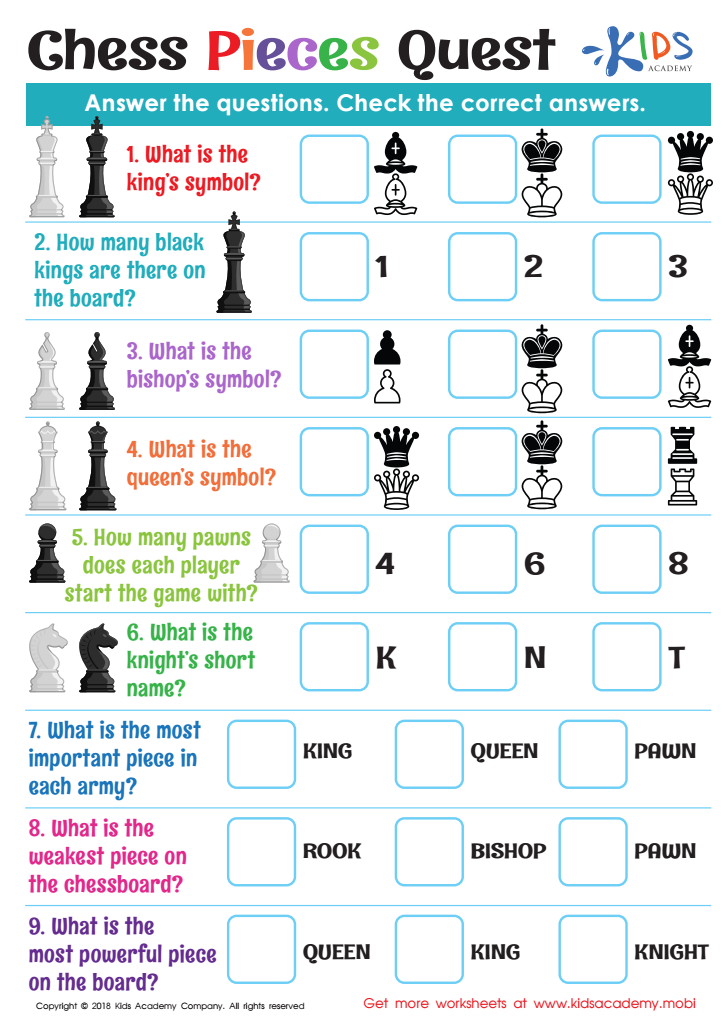
Chess Pieces Quest Worksheet
 Assign to My Students
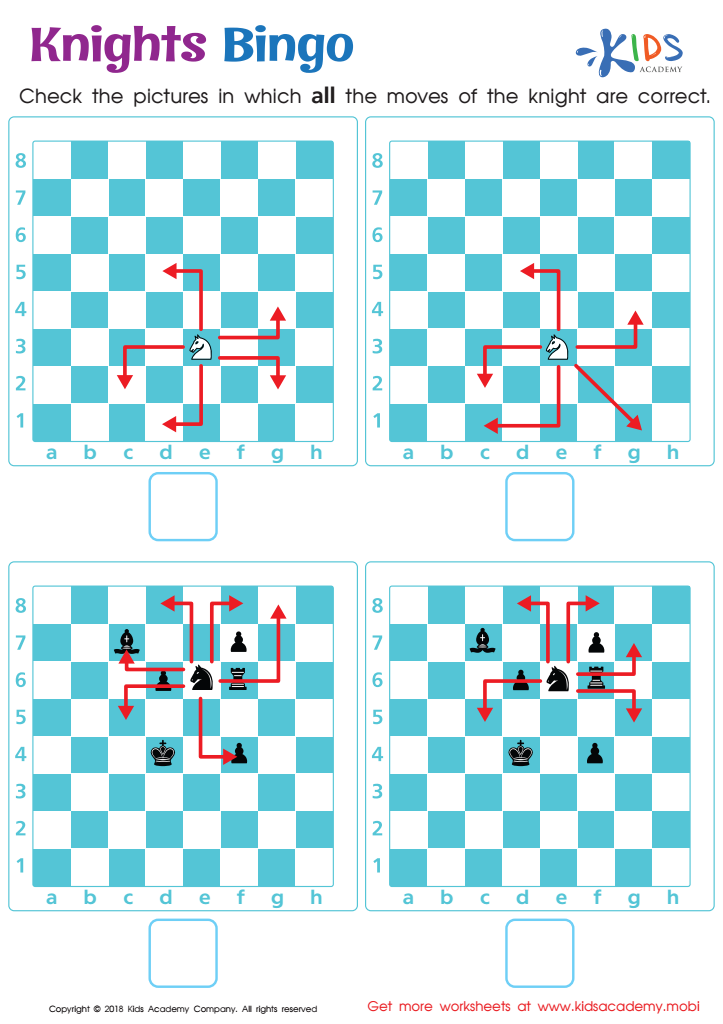
Knights Bingo Worksheet
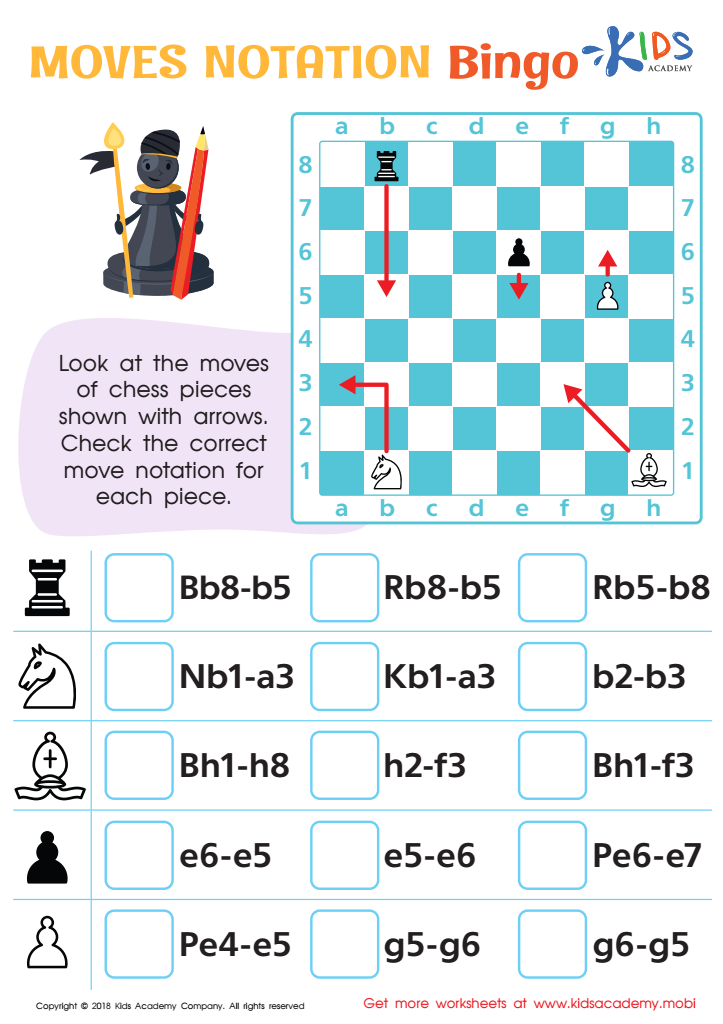
Moves Notation Bingo Worksheet







Memory enhancement activities are important for young children's cognitive development, and a game like Memory Enhancement Normal Chess can be highly beneficial for children aged 4-6. At this early stage of development, children's brains are rapidly growing and evolving, and engaging them with mentally stimulating activities can significantly boost their memory and thinking skills.
One of the main reasons parents and teachers should care about Memory Enhancement Normal Chess is because of its positive impact on memory and concentration. The game encourages children to remember the positions and movements of pieces, helping to sharpen their recall abilities and attention span. This can translate to improved academic performance as they grow older because strong memory is essential for learning new information and solving problems.
Furthermore, playing chess can enhance critical thinking and strategic planning. Even at a simplified level, as children figure out how to move their pieces or protect their king, they learn to think several steps ahead, make decisions, and foresee potential outcomes.
Socially, Regular chess also teaches patience and turn-taking, fostering emotional control and interpersonal skills, important characteristics in their formative years.
Finally, chess can be a great way to bond with peers or adults, supporting emotional connections and social development.
Overall, integrating Memory Chess into the lives of children aged 4-6 can set a foundation for lifelong cognitive skills and beneficial emotional habits.