Capitalization rules Normal Worksheets for Ages 4-6
3 filtered results
-
From - To
Discover our "Capitalization Rules Normal Worksheets for Ages 4-6" designed to help young learners master the basics of writing with correct capitalization. These carefully crafted worksheets focus on simple yet essential rules such as capitalizing the first word in a sentence, names, and 'I'. With engaging activities, bright illustrations, and kid-friendly instructions, our printable worksheets make learning fun and effective. Ideal for preschool and kindergarten students, these resources provide a solid foundation for developing strong literacy skills. Give your child the tools needed to succeed with our expertly designed capitalization worksheets.
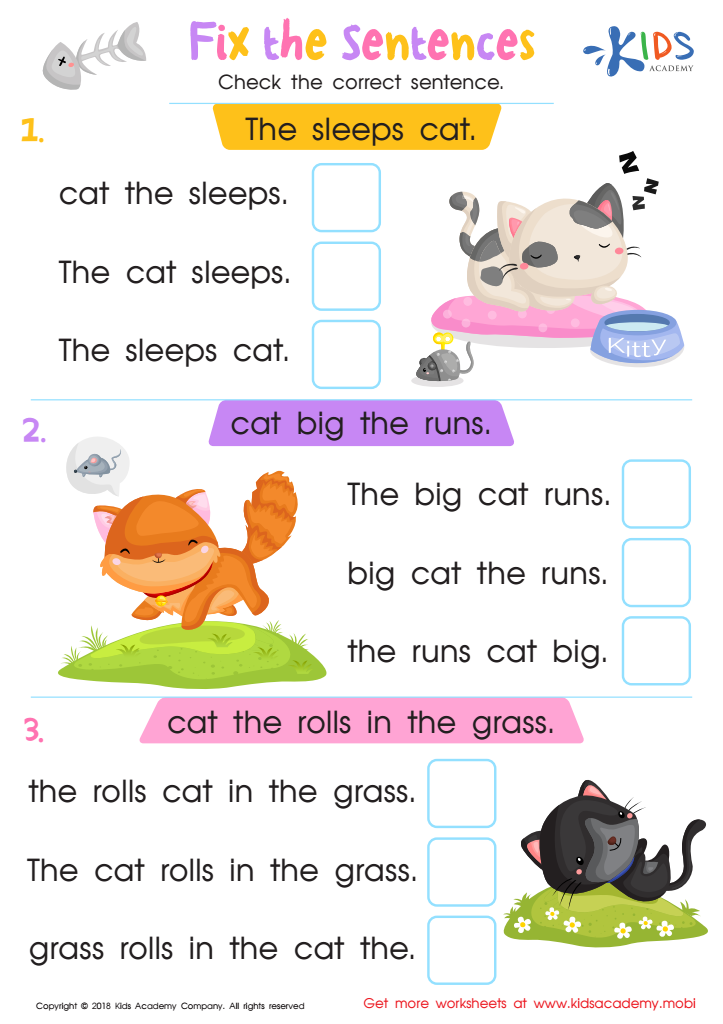
Fix the Sentences Worksheet
 Assign to My Students
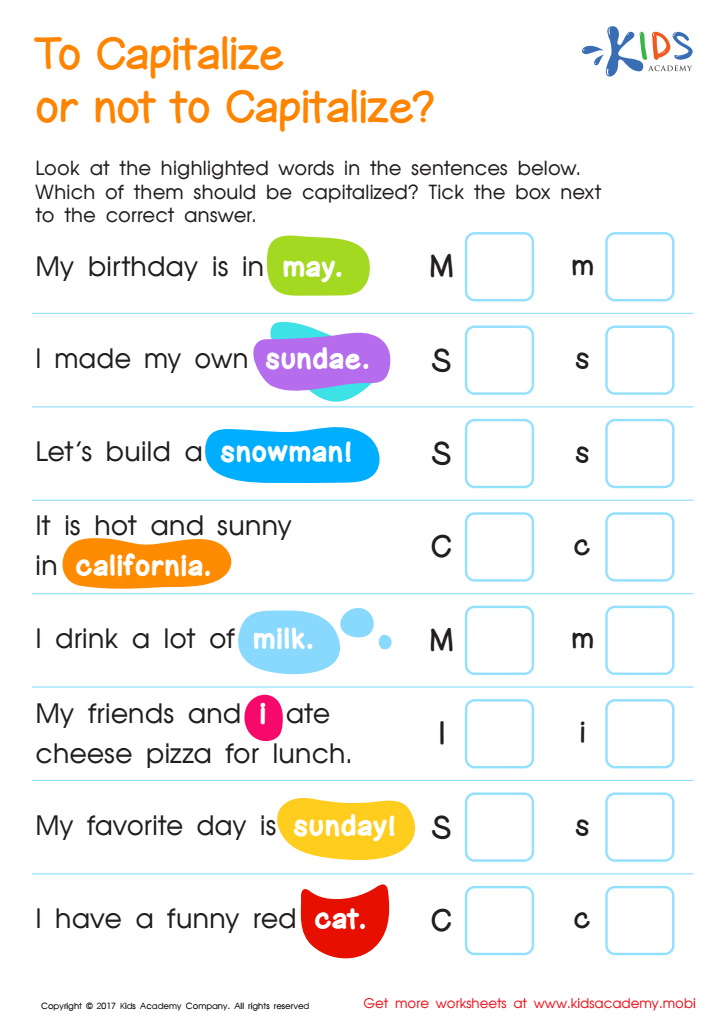
Capitalization: To Capitalize or Not? Printable
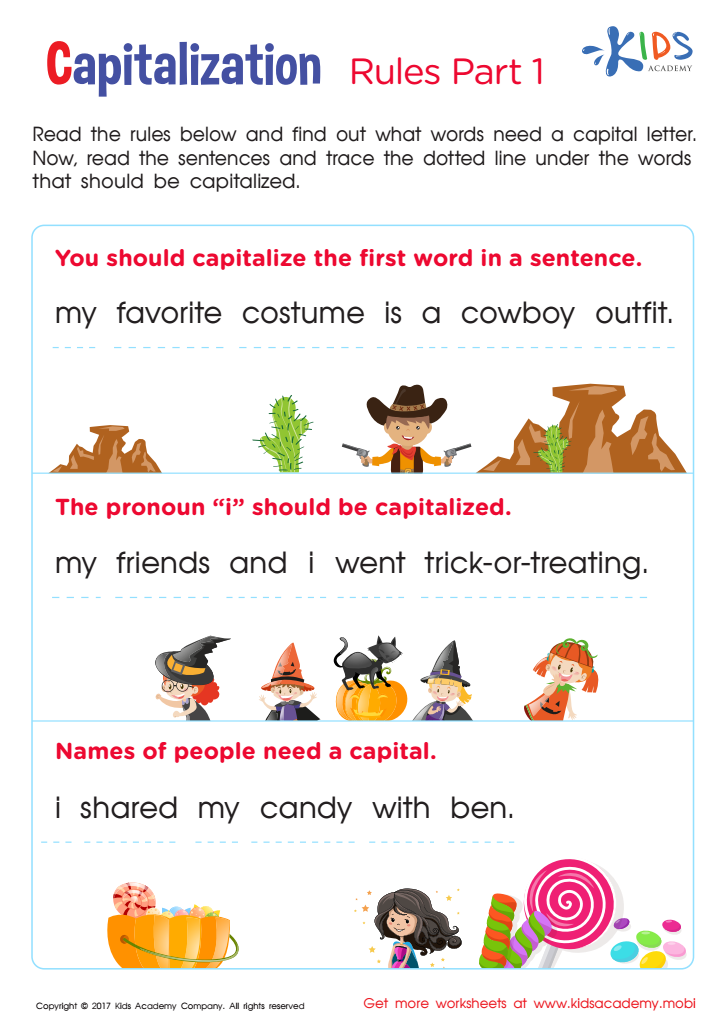
Capitalization Rules: Part 1 Worksheet







Capitalization rules are foundational elements of writing that caregivers and educators should prioritize for children aged 4-6. Instilling these rules at an early age sets a strong base for literacy development. Firstly, correct capitalization enhances readability and helps convey the intended meaning more clearly. Titles, proper nouns, and the beginnings of sentences require capitalization; understanding these basics aids children in distinguishing different kinds of words and sentences, crucial for effective communication. Early exposure to these conventions makes it easier for children to transition to more intricate writing tasks as they advance in their education.
Moreover, following capitalization rules fosters attention to detail and discipline, qualities beneficial beyond writing. Young children are naturally adept at learning through routines and repetition, so early lessons on capitalization fit well into their cognitive development stages. These small habits pave the way for broader language skills such as reading comprehension and composition capabilities.
Finally, mastering capitalization rules can boost a child’s confidence. When kids see that they're able to write properly and are successfully understood by others, their self-esteem grows, motivating further engagement and effort in learning. Helping children grasp these essentials ensures they have both the foundational knowledge and confidence required for long-term academic success.








