Counting practice Normal Worksheets for Ages 4-6 - Page 2
27 filtered results
-
From - To
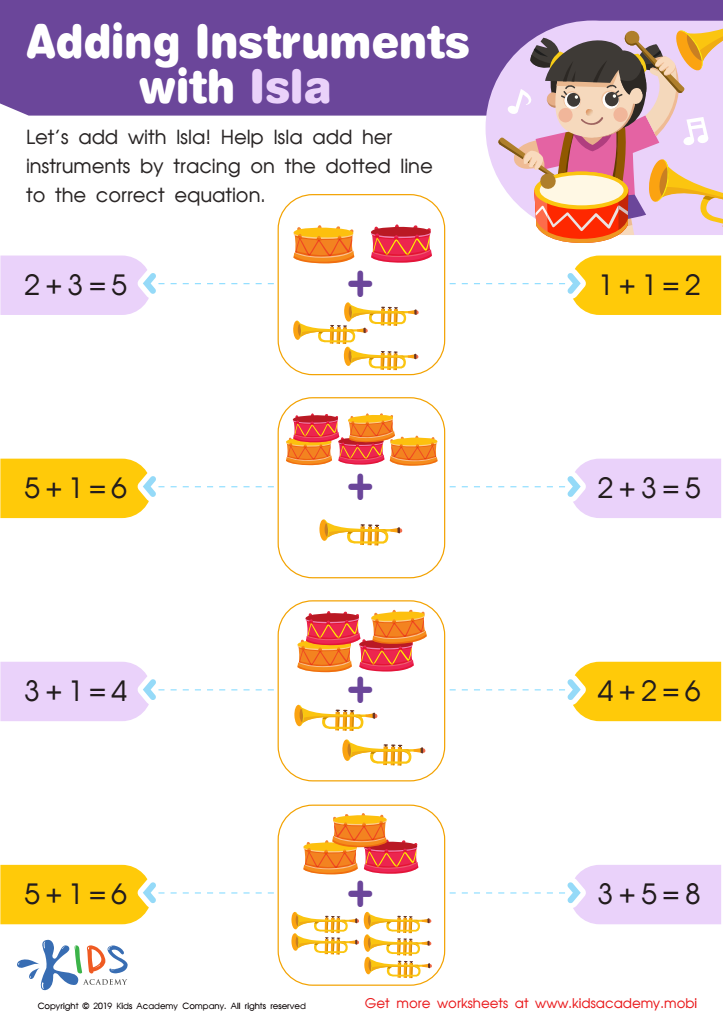
Adding Instruments with Isla Worksheet
 Assign to My Students
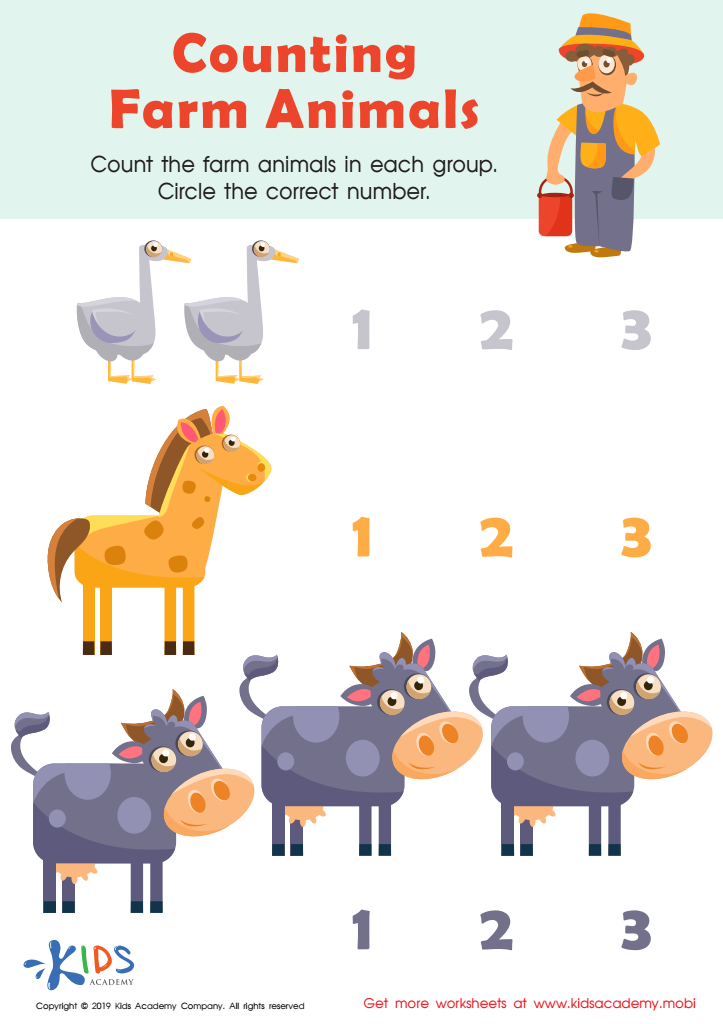
Counting Farm Animals Worksheet
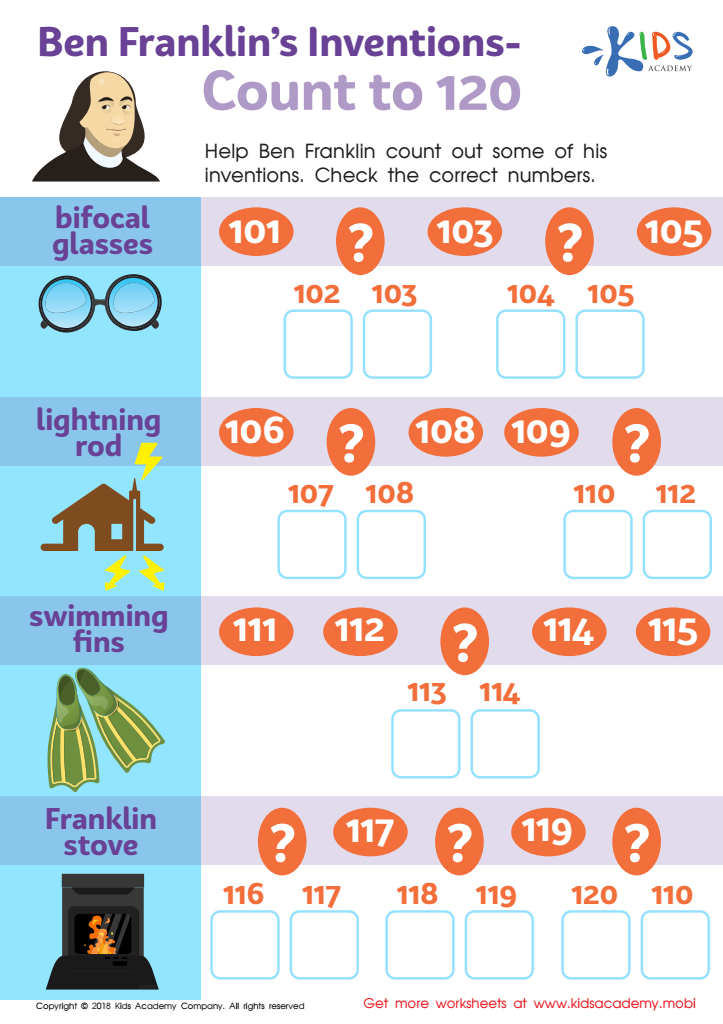
Ben Franklin’s Inventions – Count to 120 Worksheet






.jpg)
Counting practice for children aged 4-6 is crucial in laying the foundation for a solid mathematical understanding. During these early years, children are incredibly receptive to new concepts, and counting is one of the most fundamental skills they develop.
First, counting enhances children’s numerical literacy, giving them the ability to recognize numbers, understand quantity, and perform basic calculations. This skill is not only vital for academic success in later grades but also essential for everyday activities, such as shopping or sharing items.
Moreover, counting practice supports cognitive development. It encourages critical thinking and problem-solving abilities as children learn to sequence, categorize, and compare objects. Engaging in counting activities also fosters fine motor skills through various hands-on experiences, turning learning into a fun and interactive process.
Additionally, counting is interconnected with language development. As children count, they practice using vocabulary associated with numbers, promoting their language skills and improving communication abilities.
Finally, counting can strengthen the parent-child or teacher-student relationship through collaborative learning experiences. When parents or teachers actively engage in counting activities, children feel supported and motivated, boosting their self-esteem and enthusiasm for learning. Therefore, prioritizing counting practice is essential for holistic early childhood development.








