Developing math skills Normal Worksheets for Ages 4-6
3 filtered results
-
From - To
Discover an engaging collection of math worksheets specifically designed for children ages 4-6. Our "Developing Math Skills Normal Worksheets" are crafted to enhance young learners' mathematical understanding through fun activities and interactive exercises. These worksheets focus on essential early math concepts, including counting, basic addition and subtraction, shape recognition, and more. Each worksheet is tailored to foster critical thinking and problem-solving skills while ensuring a playful learning experience. Perfect for home or classroom use, our worksheets encourage independent practice and creativity. Help your child build a strong foundation in math and spark their love for learning with our resources!
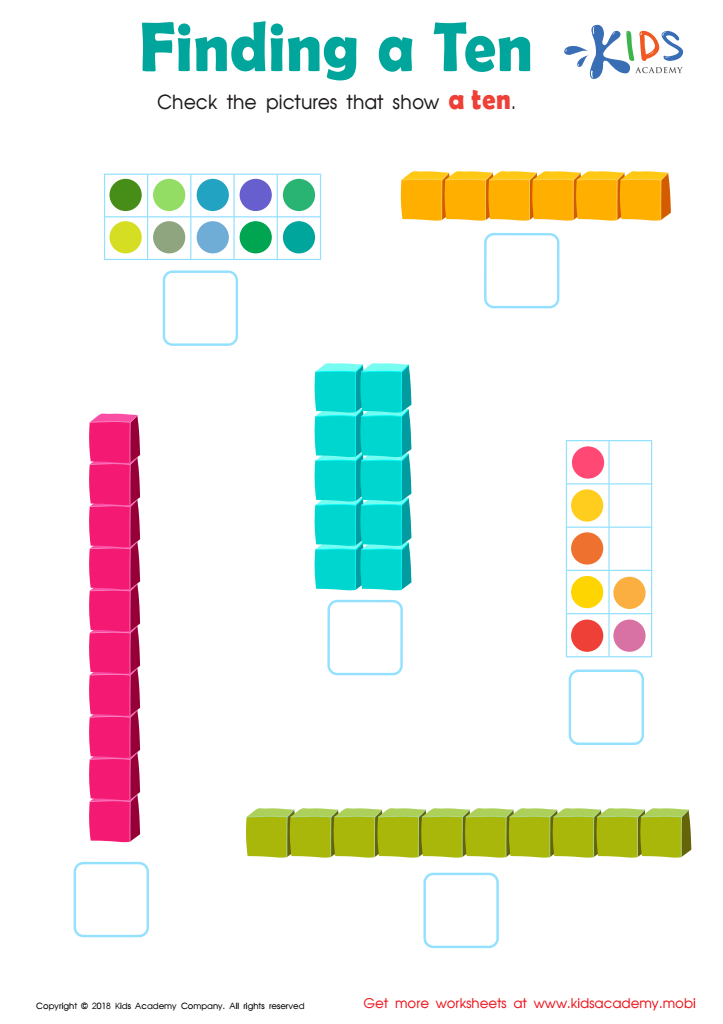
Finding a Ten Worksheet
 Assign to My Students
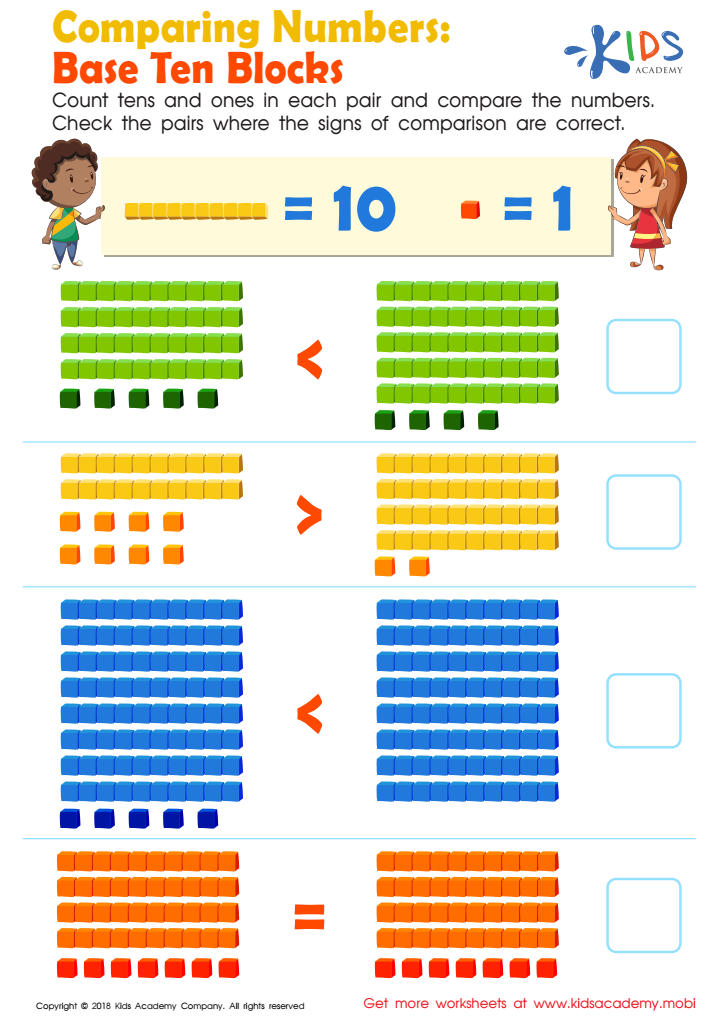
Comparing Numbers: Base Ten Blocks Worksheet
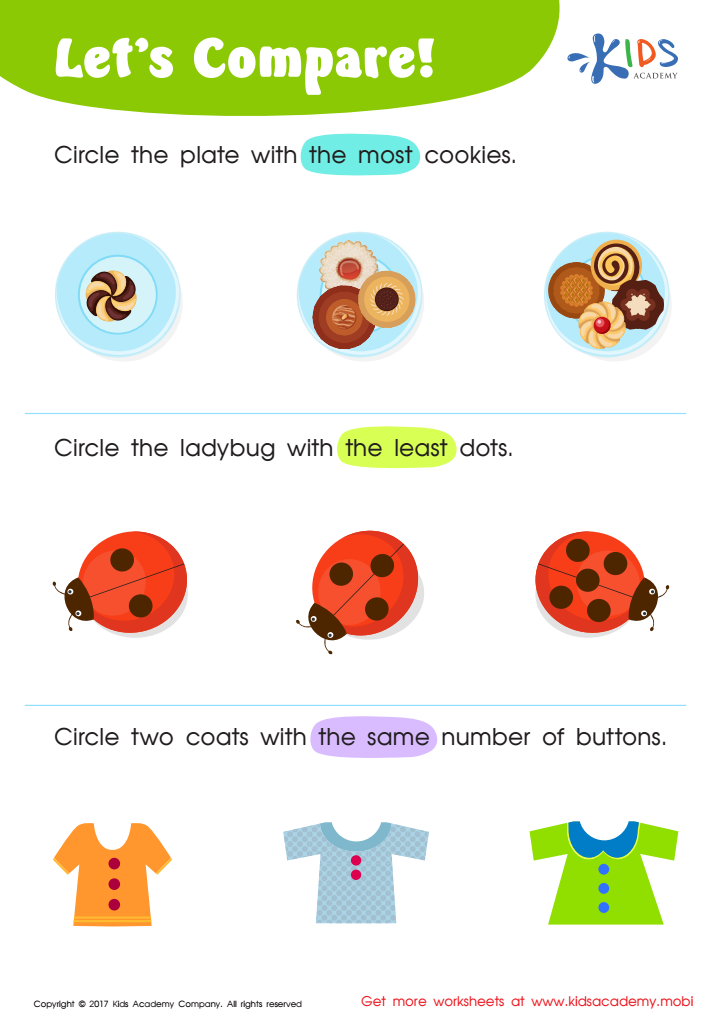
Matching: Classifying Toys by Size Worksheet






Developing math skills in children aged 4-6 is vital for their overall cognitive growth and future academic success. At this age, children are naturally curious and eager to explore the world around them, making it an ideal time to introduce fundamental math concepts. Early math skills, such as counting, recognizing shapes, and understanding patterns, form the foundation for more complex problem-solving abilities in later years.
Parents and teachers should care about fostering these skills because they enhance critical thinking, boost creativity, and improve logic. Mathematics is not just about numbers; it encourages children to approach problems systematically and think analytically. Furthermore, strong math skills contribute to greater confidence in learning. Developing comfort with mathematics in these formative years can prevent anxiety towards the subject later in school.
Additionally, early math skills are linked to success in other areas, including reading and science. Technological advancements and a growing reliance on STEM fields in the job market amplify the importance of a solid mathematical foundation. By nurturing these skills, parents and teachers play a crucial role in shaping problem-solvers and innovative thinkers for the future, ensuring children are well-prepared for the challenges ahead.








