Map reading skills Normal Worksheets for Ages 4-6
6 filtered results
-
From - To
Ready to embark on a geographic adventure? "Map Reading Skills Normal Worksheets for Ages 4-6" from Kids Academy offers young learners fun and educational activities to enhance their spatial awareness and navigational skills. These age-appropriate worksheets introduce basic map elements like symbols, directions, and keys, making geography engaging and accessible. Children will explore colorful maps and complete interactive exercises designed to develop critical thinking and problem-solving abilities. Perfect for home or classroom use, these printables will spark curiosity and foster a sense of adventure, setting the foundation for lifelong map-reading proficiency. Get ready to navigate the world!
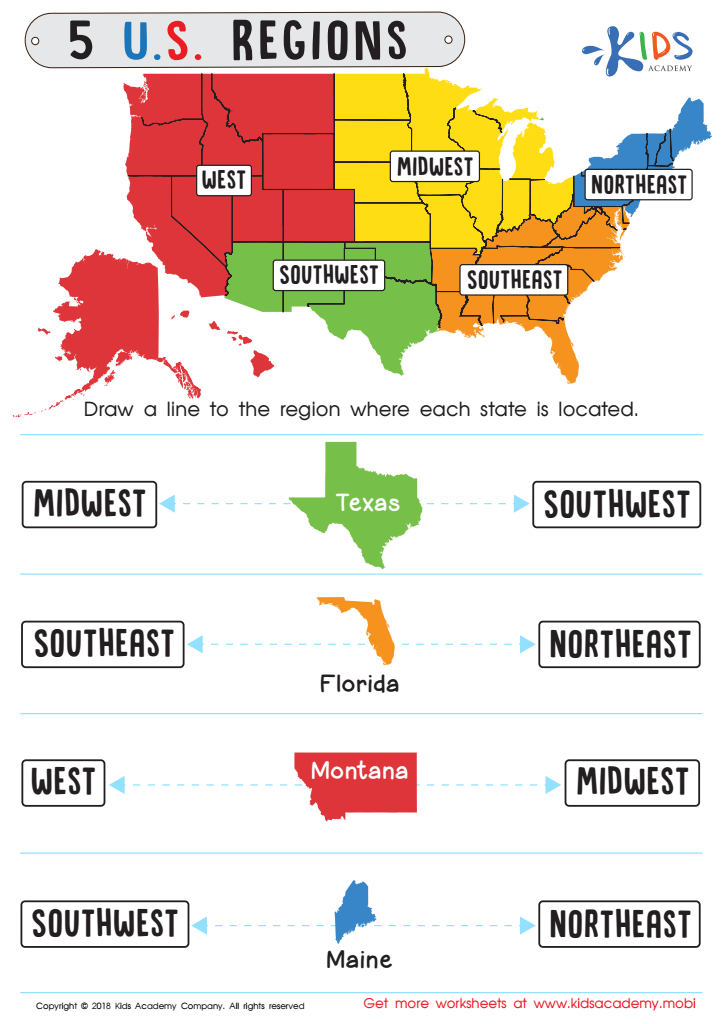
5 U.S. Regions Worksheet
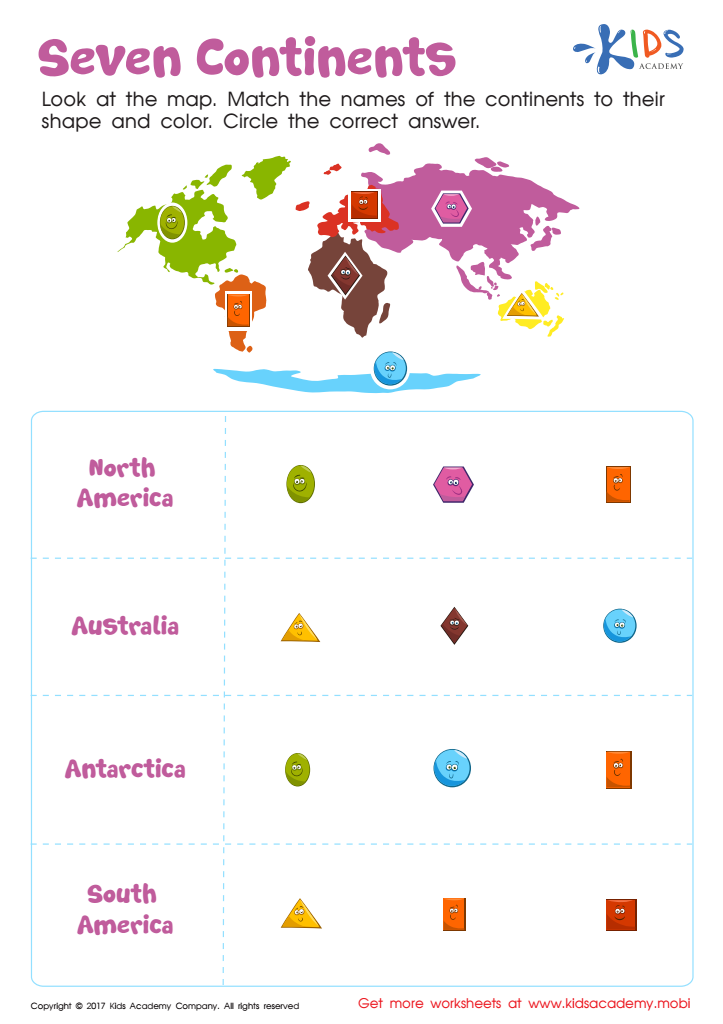
Seven Continents Worksheet
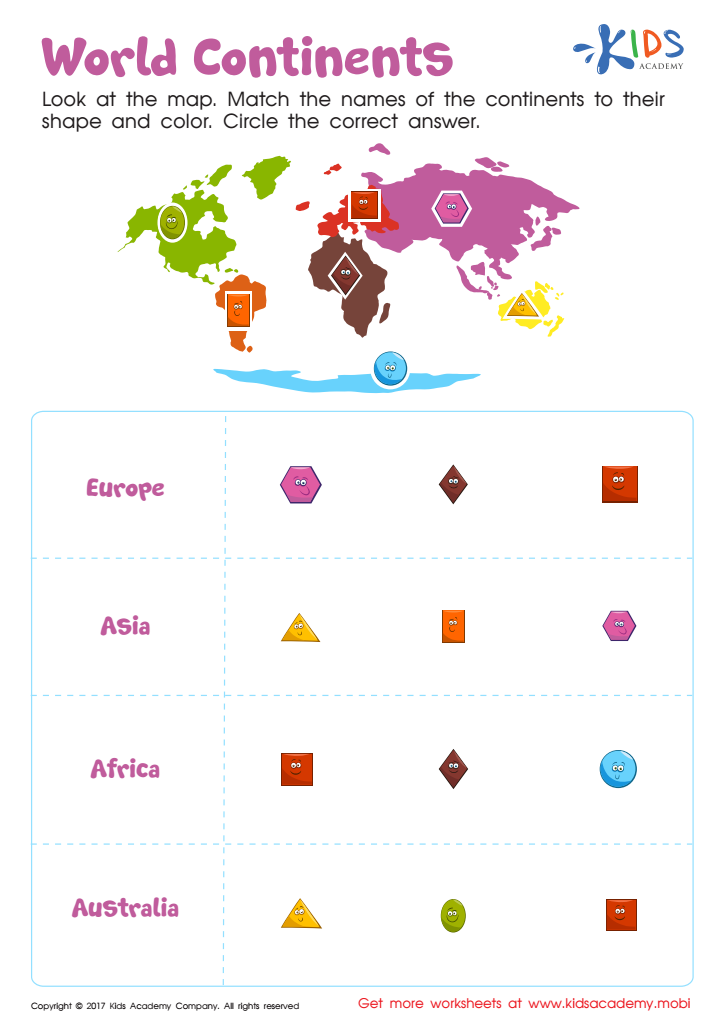
World Continents Worksheet
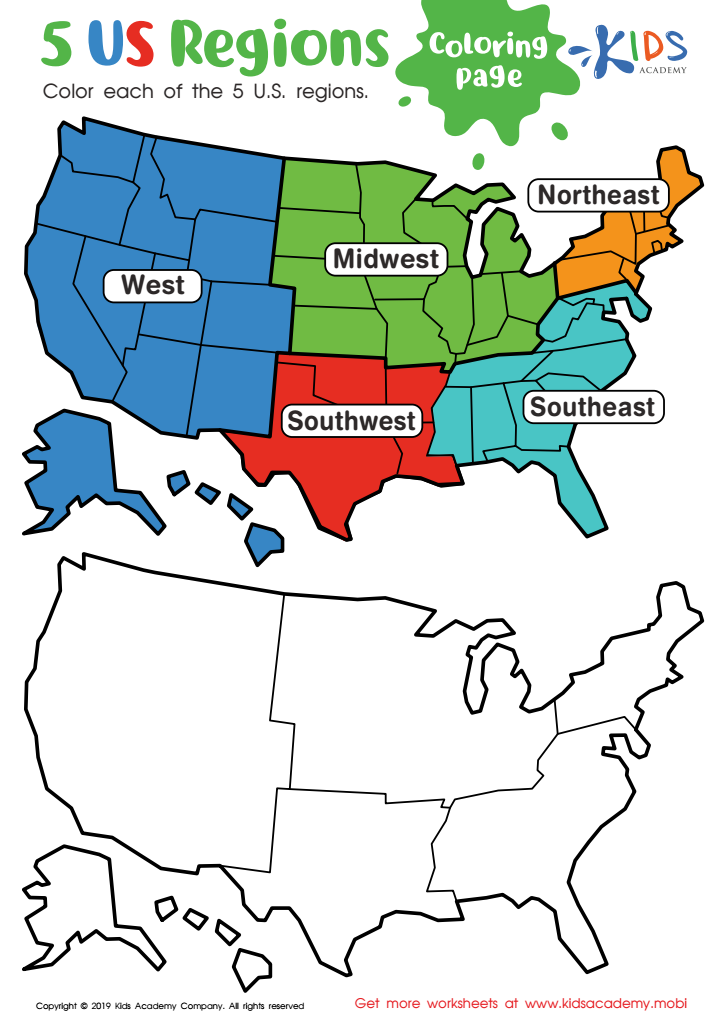
US Regions Coloring Page Worksheet
 Assign to My Students
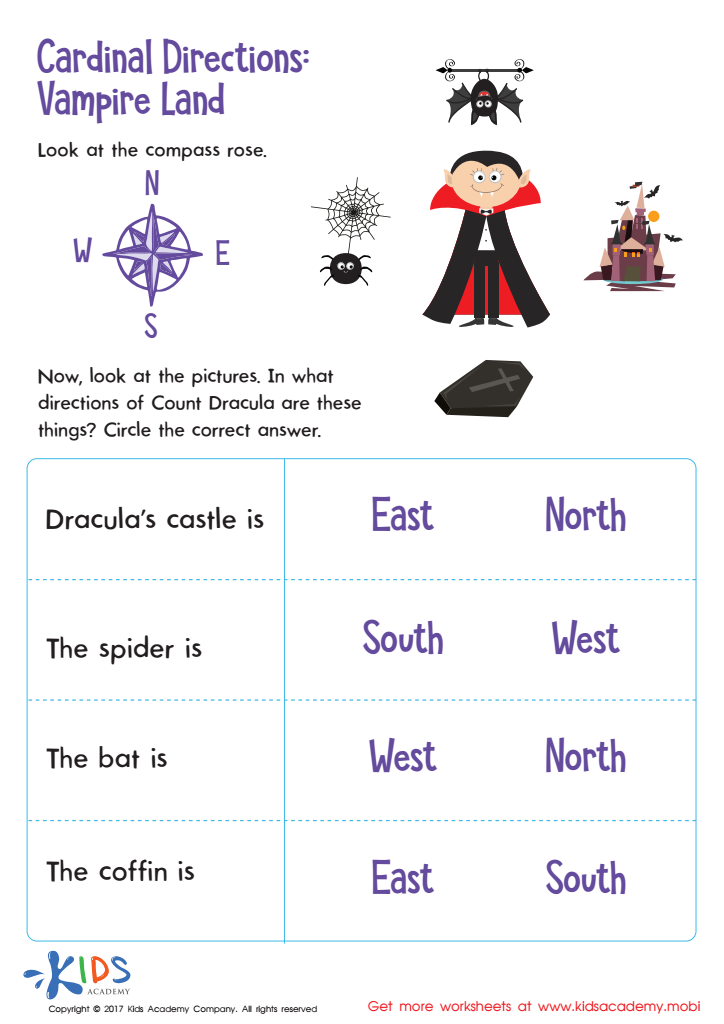
Cardinal Directions Printable

Towns Worksheet






Map reading skills are crucial for children aged 4-6 as they lay the foundation for a range of cognitive, spatial, and problem-solving abilities. During these early years, children are developing their sense of direction and understanding of the world around them. Introducing kids to map reading helps foster spatial awareness, which is fundamental for understanding relationships between objects, following directions, and even basic arithmetic concepts.
Parents and teachers play pivotal roles in this process. By engaging children with tasks that involve maps—such as simple treasure hunts, or identifying familiar landmarks—they can cultivate a child's ability to visualize spaces and conceptualize distances. These activities can be both educational and fun, making learning seamless and enjoyable.
Map reading also enhances memory and critical thinking as children learn to interpret symbols and legends, set routes, and recall locations. It sharpens their ability to plan and organize, skills that are transferable to various academic areas and everyday scenarios.
Moreover, early exposure to maps encourages curiosity about different places and cultures, fostering an early appreciation for geography. This helps children develop a broader understanding of the world, promoting lifelong learning and adaptability.
In essence, introducing map reading at an early age equips children with essential life skills, amplifying their learning experiences and preparing them for more complex problem-solving tasks in the future.








