
Mental math practice Normal Worksheets for Ages 4-6
5 filtered results
Difficulty Level
Grade
Age
-
From - To
Subject
Activity
Standards
Welcome to our Mental Math Practice Worksheets for Ages 4-6! Designed to enhance your child's mathematical skills, these engaging and interactive worksheets help young learners develop critical thinking and problem-solving abilities. Each worksheet is carefully crafted to make learning fun and effective, introducing essential concepts such as addition, subtraction, and counting through age-appropriate exercises. Perfect for at-home practice or classroom activities, these normal worksheets allow children to strengthen their mental math skills while boosting their confidence in mathematics. Explore our diverse collection and empower your child to enjoy math from an early age!
Favorites
With answer key
Interactive
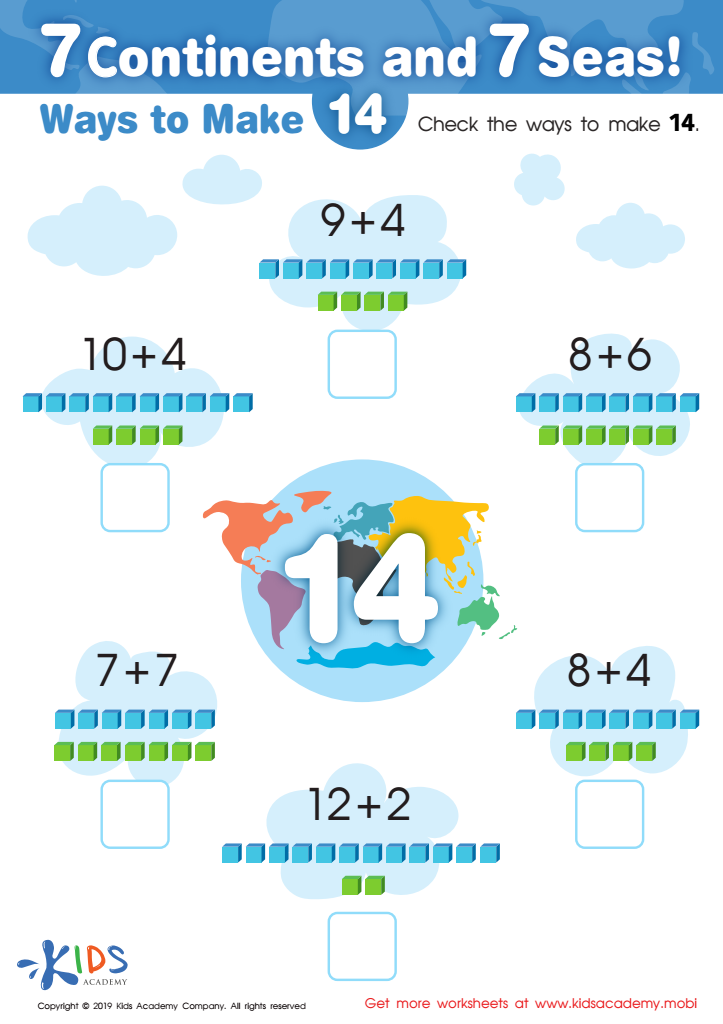
7 Continents and 7 Seas Worksheet
Remind kids of the continents and show them how different numbers can add up to the same figure. Give examples, like 2+2 =4, and 3+1 =4. Ask if they can provide other examples, then work through the simple additions in this worksheet with them. Ask them to circle all equations that make 14.
 Assign to My Students
7 Continents and 7 Seas Worksheet
Worksheet
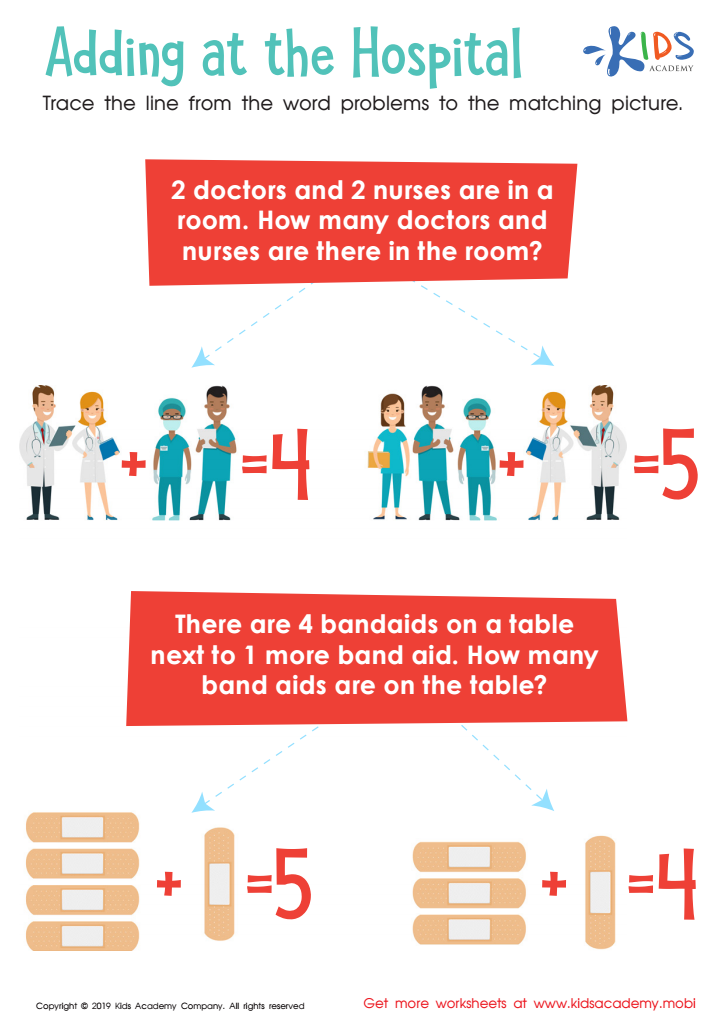
Adding at the Hospital Worksheet
A hospital visit doesn't have to be scary for kids. With this worksheet, they can count along with doctors and nurses, by reading the word problems and tracing lines to the corresponding picture. Guide them through it and you'll help them have a fun experience.
Adding at the Hospital Worksheet
Worksheet
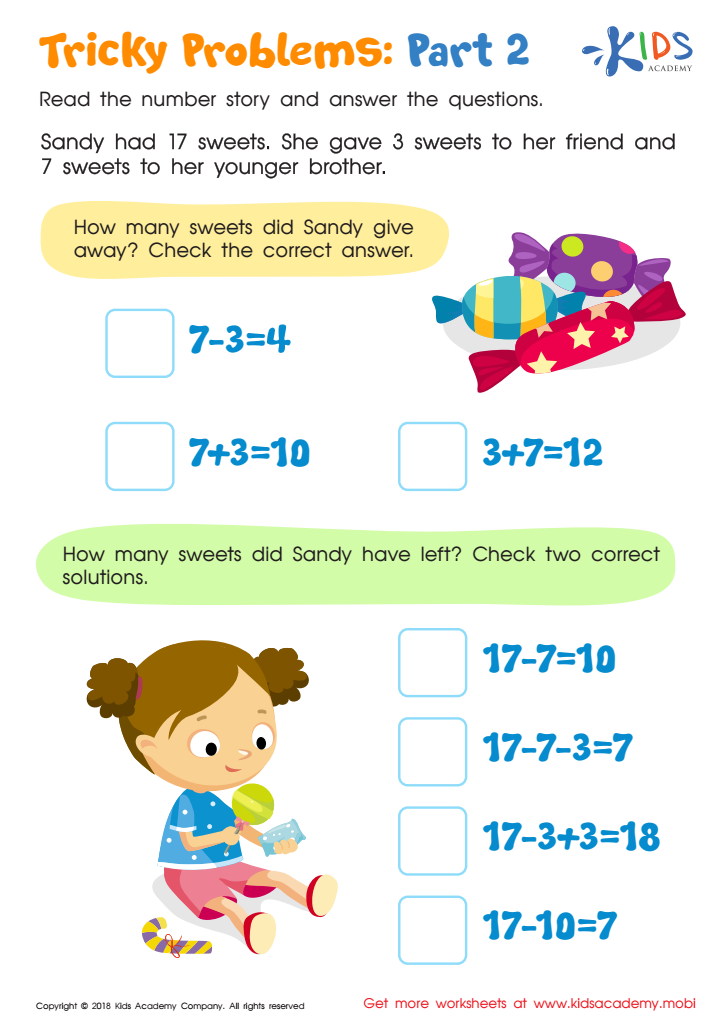
Tricky Problems Worksheet: Part 2
Help your little math learner visualize number stories with this engaging worksheet. They'll connect pictures to the story and use math facts to find the sums. After that, they'll be able to identify the correct number sentences to match. Let them practice and get better at problem solving!
Tricky Problems Worksheet: Part 2
Worksheet
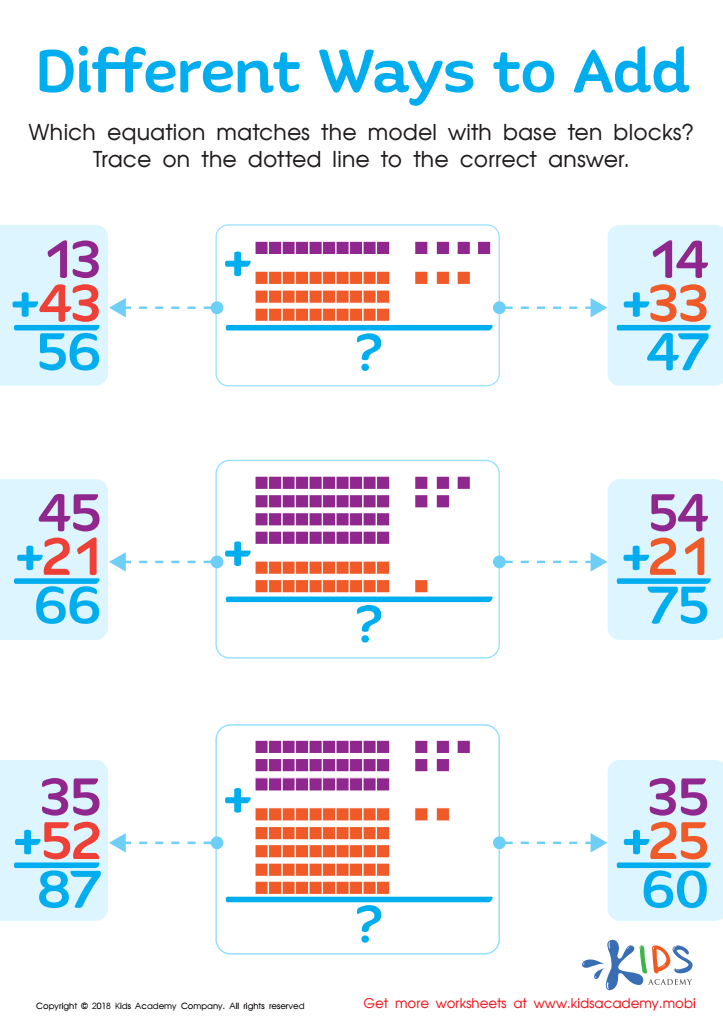
Different Ways to Add Worksheet
This worksheet enhances math skills by having students match equations to base ten pictures and tracing lines. It not only helps with fine motor skills, but also encourages number sense, with various ways to add and build upon existing math knowledge.
Different Ways to Add Worksheet
Worksheet
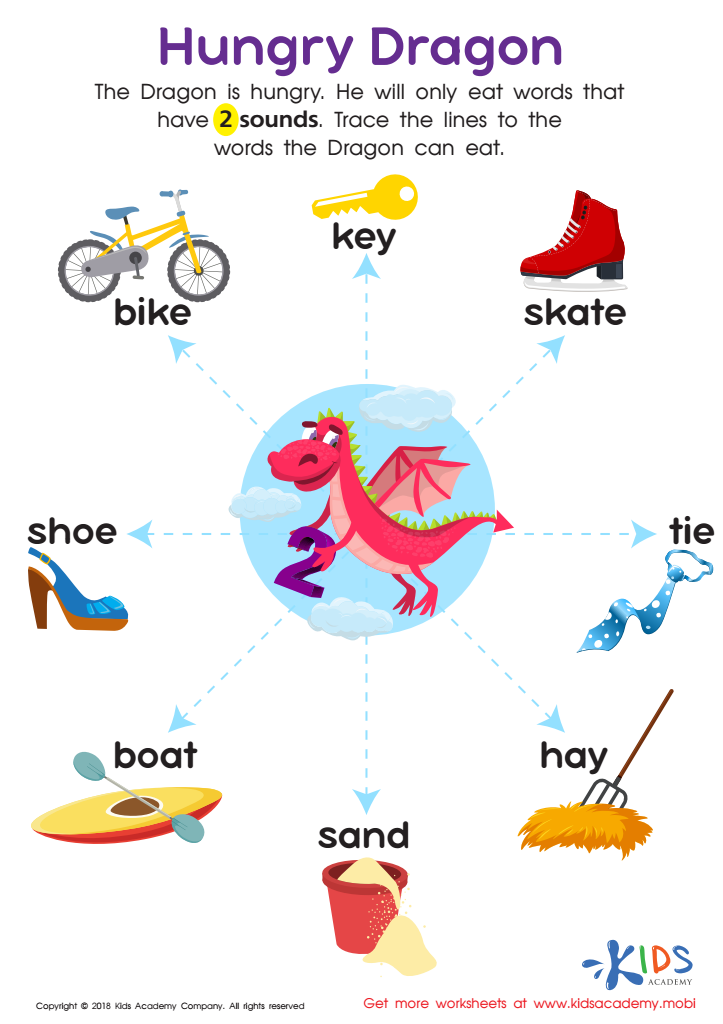
Hungry Dragon Worksheet
Feed the dragon words and watch your child strengthen their phonological awareness and auditory discrimination skills! Download this free PDF for tracing exercises that build their fine motor skills too. Kids will love spending time with the cute dragon while they unwittingly learn reading skills!
Hungry Dragon Worksheet
Worksheet
Join Kids Academy for Free
Who is primarily going to use this learning content?








Mental math practice is crucial for children ages 4-6 as it sets the foundation for basic math skills and cognitive development. At this young age, children are naturally curious and eager to engage with numbers, making it an ideal time to introduce mental math techniques.
Engaging in mental math strengthens numeral recognition, counting skills, and arithmetic understanding. Incorporating these practices helps kids develop number sense, allowing them to visualize and manipulate numbers confidently. This skill is instrumental not only for future math learning but also for everyday problem-solving scenarios.
Moreover, practicing mental math enhances critical thinking and cognitive flexibility, as children learn to approach problems from various angles. It promotes confidence, as children experience success in solving simple math problems independently, fostering a positive attitude towards learning.
Parents and teachers play a vital role in creating an environment that challenges and supports mental math practice through fun games, storytelling, and interactive activities. Such engagement cultivates a love for mathematics and encourages lifelong learning habits. Ultimately, prioritizing mental math for young learners nurtures essential skills that extend beyond academics, aiding in their overall personal and social development.








