Phonetic awareness Normal Worksheets for Ages 4-6
3 filtered results
-
From - To
Discover our engaging phonetic awareness normal worksheets designed specifically for children aged 4-6. These easy-to-use, printable resources cultivate essential literacy skills through fun activities that promote sound recognition, rhyming, and phoneme manipulation. Tailored to meet the developmental needs of early learners, our worksheets enhance vocabulary, improve reading readiness, and build confidence in young readers. Packed with colorful illustrations and interactive tasks, each worksheet encourages exploration and participation in phonetic concepts. Perfect for homeschooling or classroom settings, these materials make learning playful and effective. Empower your child’s journey to literacy with our thoughtfully crafted phonetic awareness worksheets today!
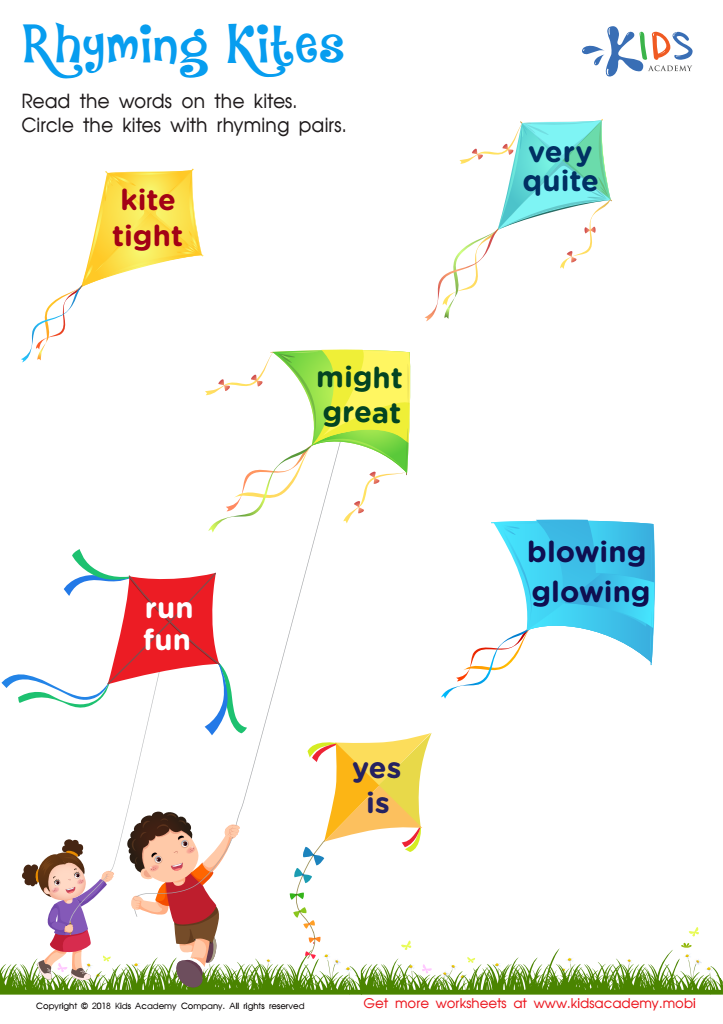
Rhyming Kites Worksheet
 Assign to My Students
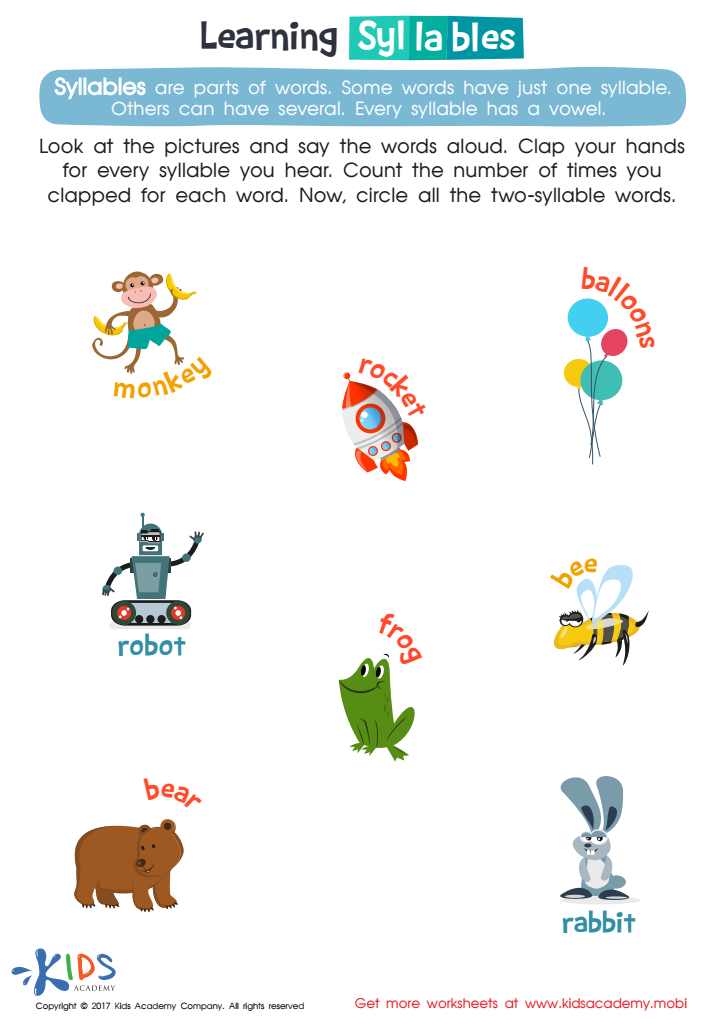
Learning Syllables Word Structure Worksheet
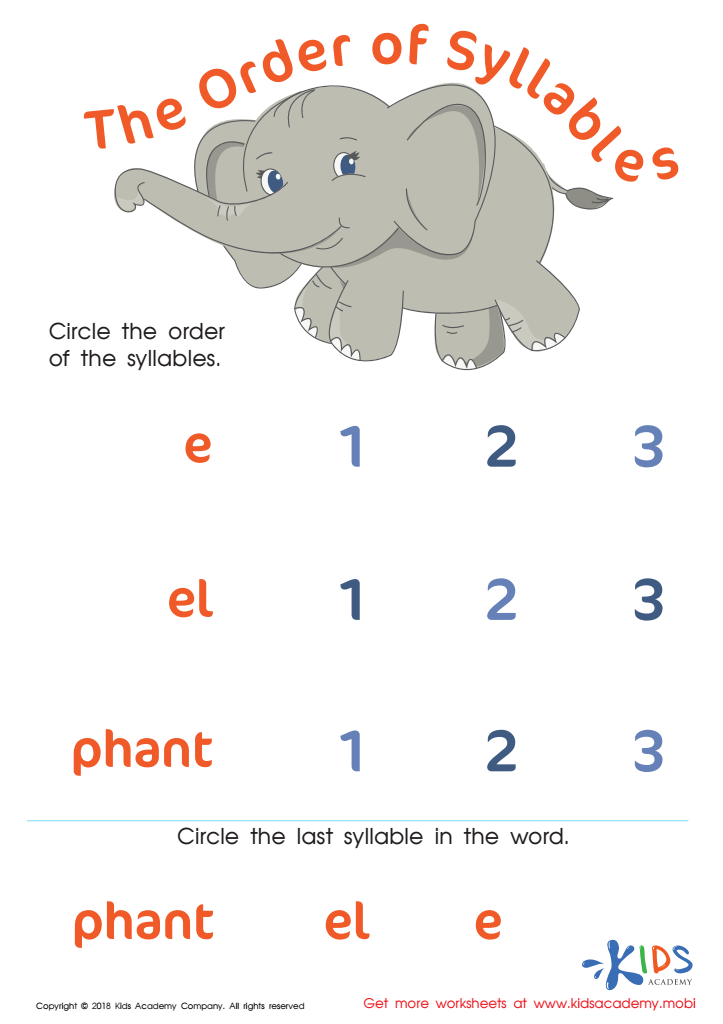
The Order of Syllables Worksheet








Phonemic awareness is a critical skill for children ages 4 to 6, serving as a foundational component of literacy. This skill helps children recognize and manipulate the sounds in spoken words, which is essential for reading and writing development. Understanding phonics fosters a love for storytelling and enhances vocabulary, paving the way for stronger communication skills.
For parents and teachers, prioritizing phonemic awareness is vital because it directly correlates with future academic success. Children who struggle with phonemic awareness are at a higher risk for reading difficulties. By engaging young learners in phonetic activities—such as rhyming games, sound manipulation exercises, and phoneme isolation—they can build confidence and competence in language skills.
Additionally, children who develop phonemic awareness exhibit improved performance in standardized literacy assessments, ultimately impacting their overall educational journey. Armed with these skills, children can approach reading with enthusiasm, making it a more enjoyable experience. Furthermore, phonetic awareness can be easily incorporated into play, allowing for fun and engaging learning opportunities. By recognizing the importance of phonemes in early learning, parents and teachers can create supportive environments that foster literacy and cognitive growth, setting the stage for a lifelong love of reading.








