Phonological awareness Normal Worksheets for Ages 4-6
3 filtered results
-
From - To
Discover our Phonological Awareness Normal Worksheets designed specifically for children ages 4 to 6! These engaging and interactive activities help young learners develop critical skills in recognizing and manipulating sounds within words. By exploring rhymes, syllables, and beginning sounds, kids enhance their listening abilities and formal literacy skills in a fun and playful manner. Our worksheets provide a perfect balance of challenge and accessibility, catering to various learning styles. Ideal for classrooms or at-home practice, these resources aim to build a solid foundation for future reading success. Unlock the joy of learning with our phonological awareness worksheets today!
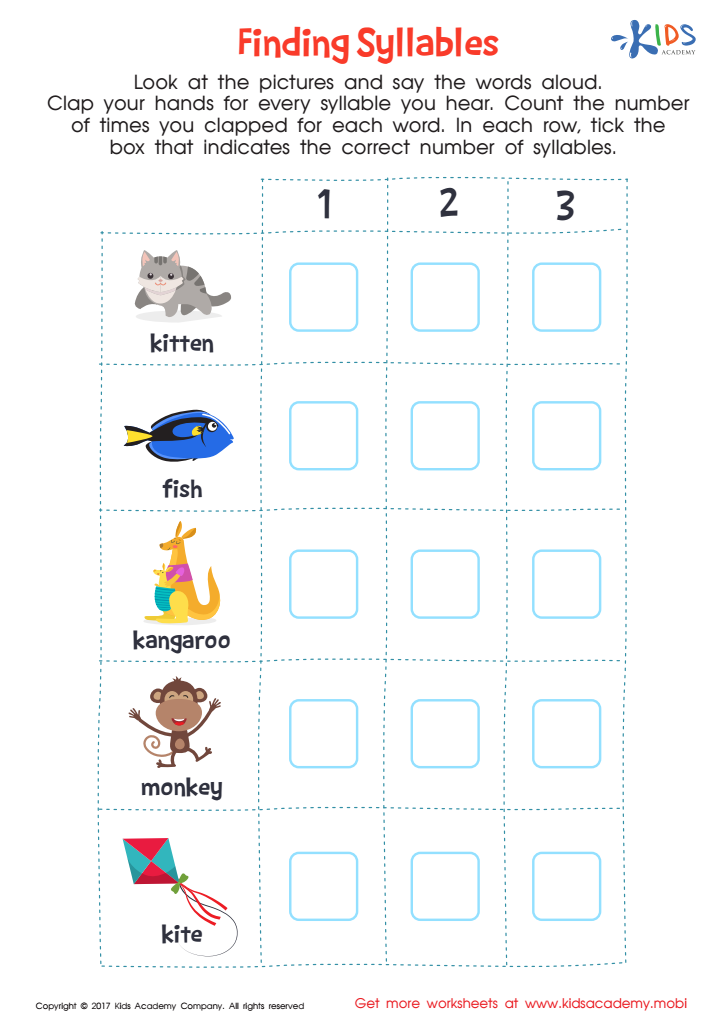
Finding Syllables Word Structure Worksheet
 Assign to My Students
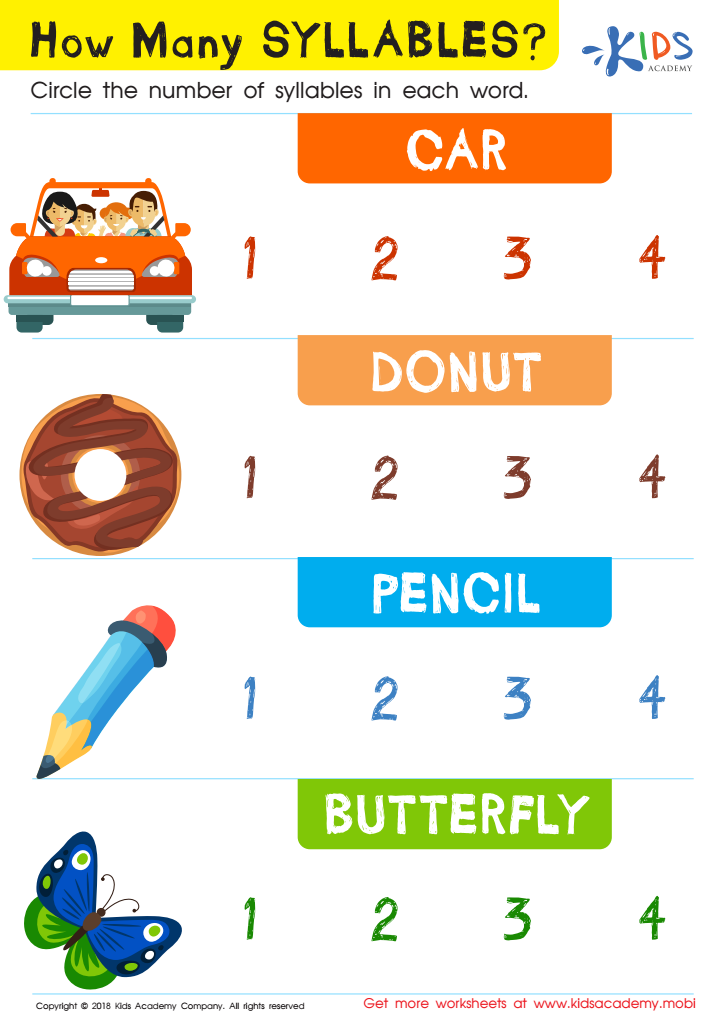
How Many Syllables? Worksheet
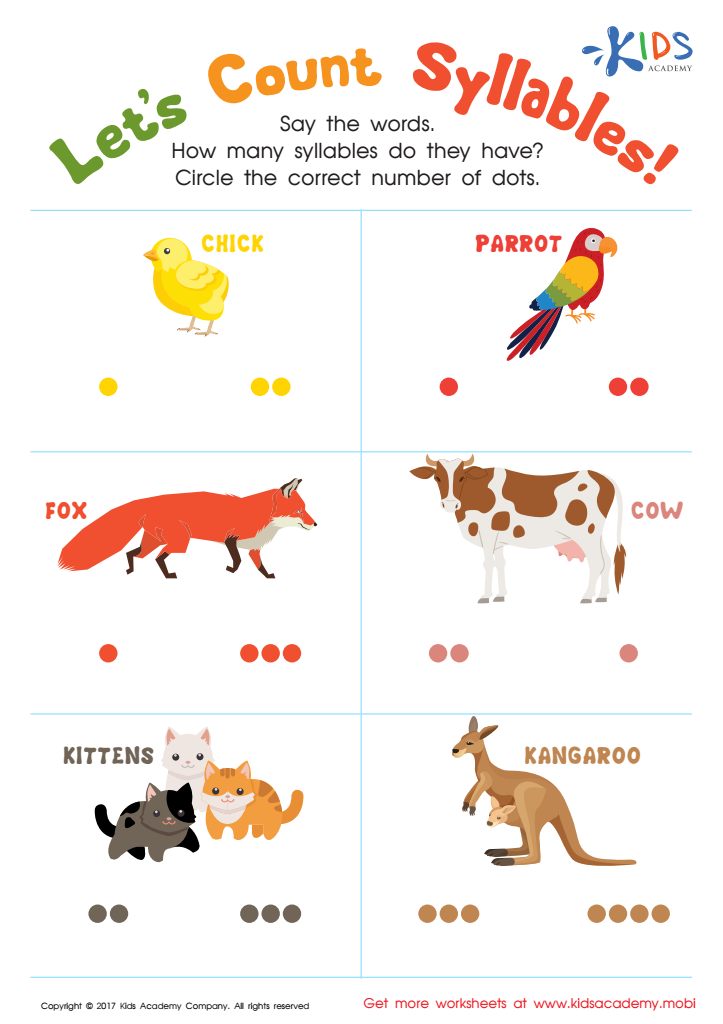
Lets Count Syllables Worksheet








Phonological awareness is a crucial skill for children ages 4-6 as it forms the foundation for literacy development. This skill includes the ability to recognize and manipulate sounds in spoken language, including identifying rhymes, syllables, and individual phonemes. Developing strong phonological awareness helps children understand how words are structured, making it easier for them to decode written texts later on.
Parents and teachers should care about phonological awareness because it significantly impacts a child's reading ability and overall academic success. Research shows that strong phonological awareness is a predictor of future reading achievement. When children can easily recognize sounds and patterns in language, they are more likely to develop effective reading strategies as they start school.
Furthermore, fostering these skills at an early age can help prevent reading difficulties and promote self-confidence in young learners. Engaging activities, such as rhyming games, singing songs, and reading aloud, can enhance phonological awareness while making learning enjoyable. By prioritizing this skill, parents and teachers can provide children with essential tools for literacy, paving the way for lifelong learning and communication abilities. Investing in phonological awareness sets the stage for a child’s academic journey, empowering them to thrive in reading and beyond.








