Problem-solving practice Normal Worksheets for Ages 4-6
5 filtered results
-
From - To
Enhance your child's critical thinking skills with our Problem-Solving Practice Normal Worksheets designed specifically for ages 4-6. These engaging resources from Kids Academy help young learners navigate through simple scenarios, boosting their confidence and cognitive abilities. Each worksheet is thoughtfully created to foster essential problem-solving and analytical skills through fun activities and interactive tasks. Perfect for home or classroom use, these worksheets provide a solid foundation for early learning and development. Equip your child with the tools they need to succeed and make learning an enjoyable adventure with our expertly crafted problem-solving practice materials.
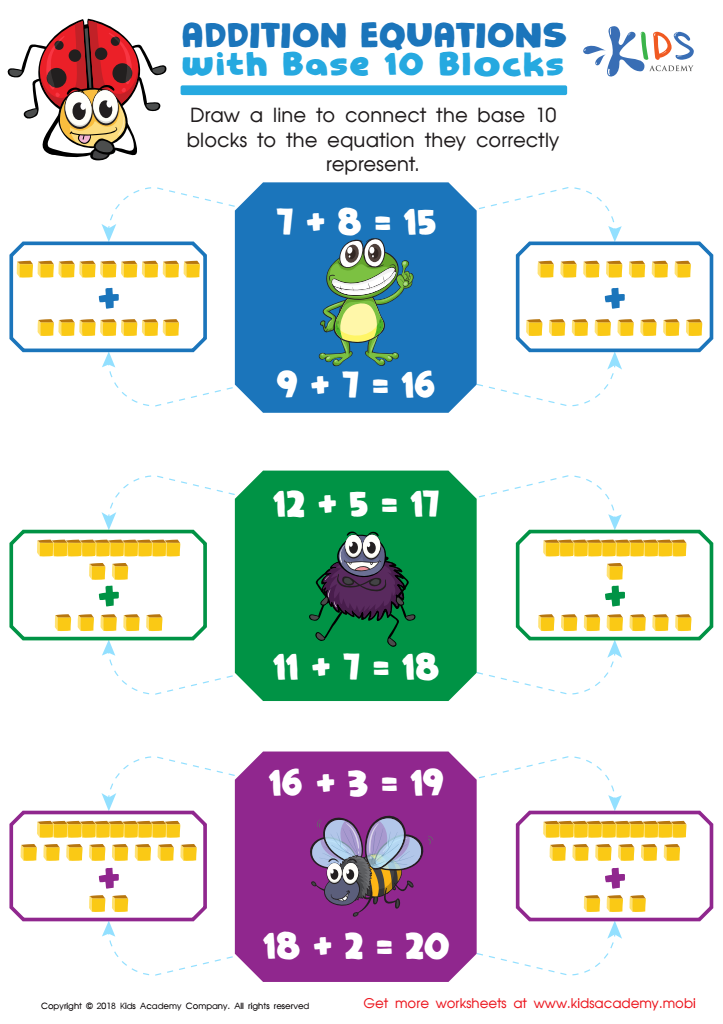
Addition Equations With Base 10 Blocks Worksheet
 Assign to My Students
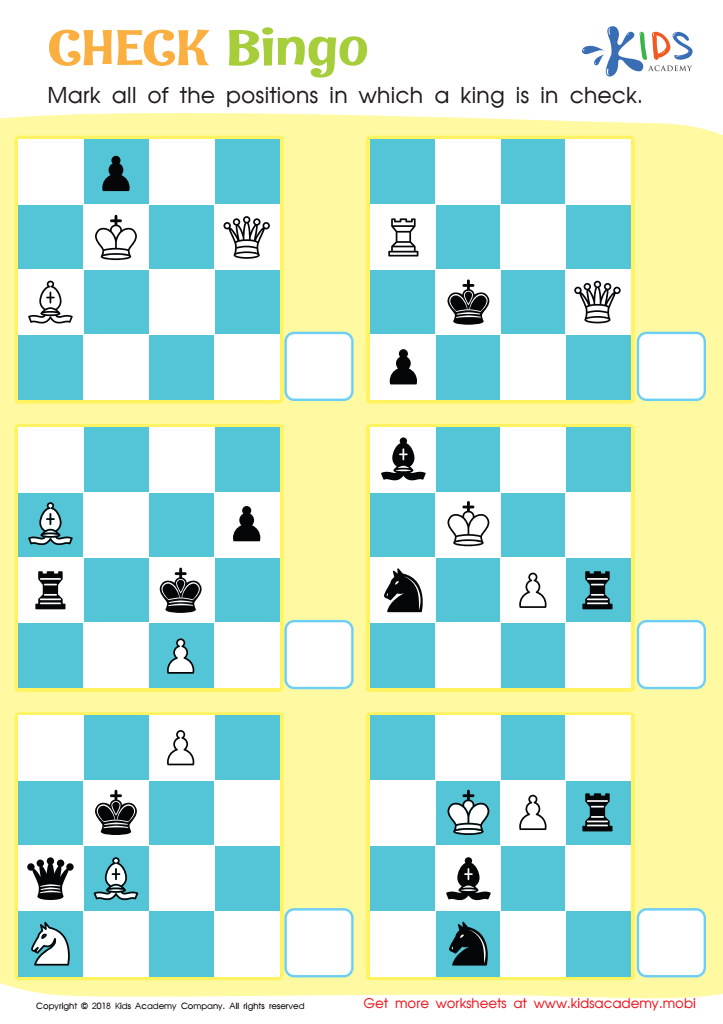
Check Bingo Worksheet
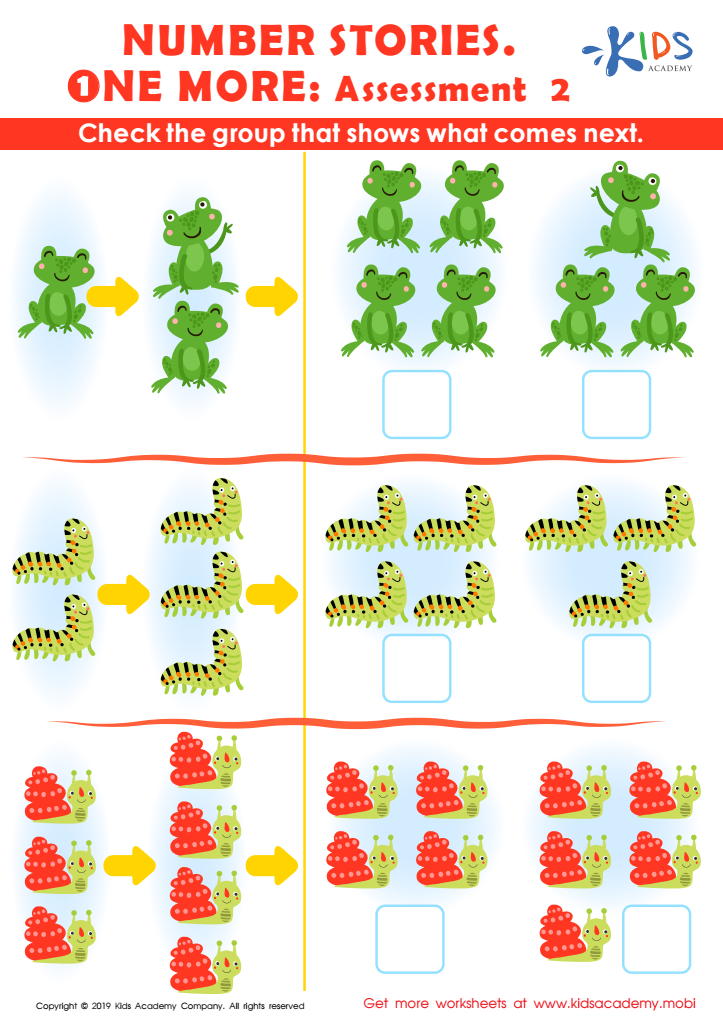
Number Stories One More – Assessment 2 Worksheet
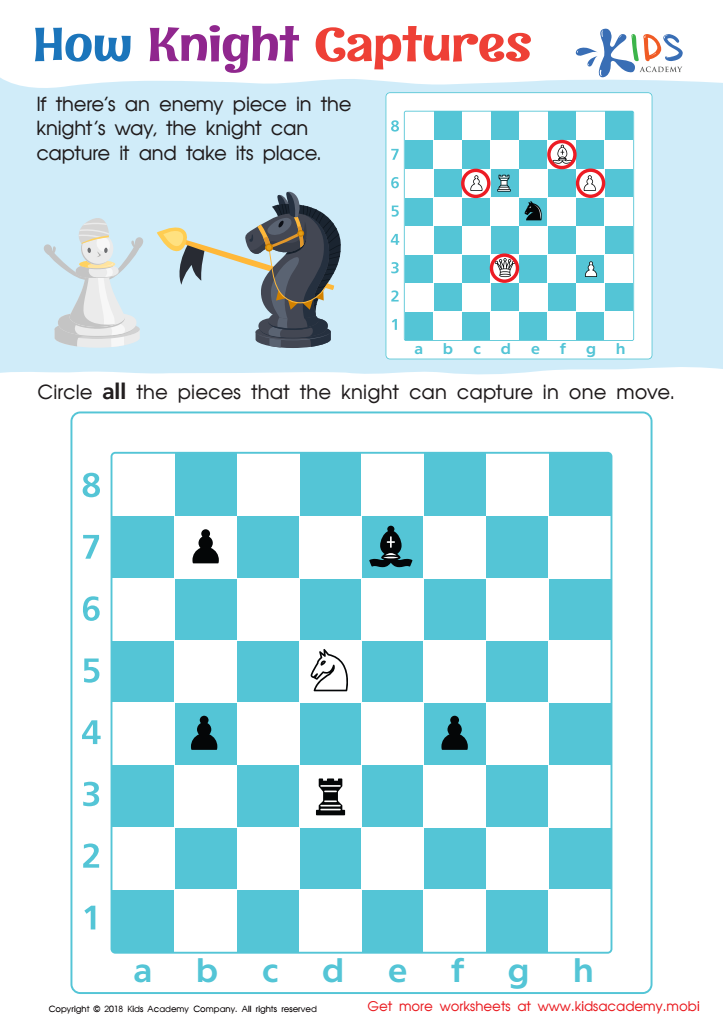
How Knight Captures Worksheet
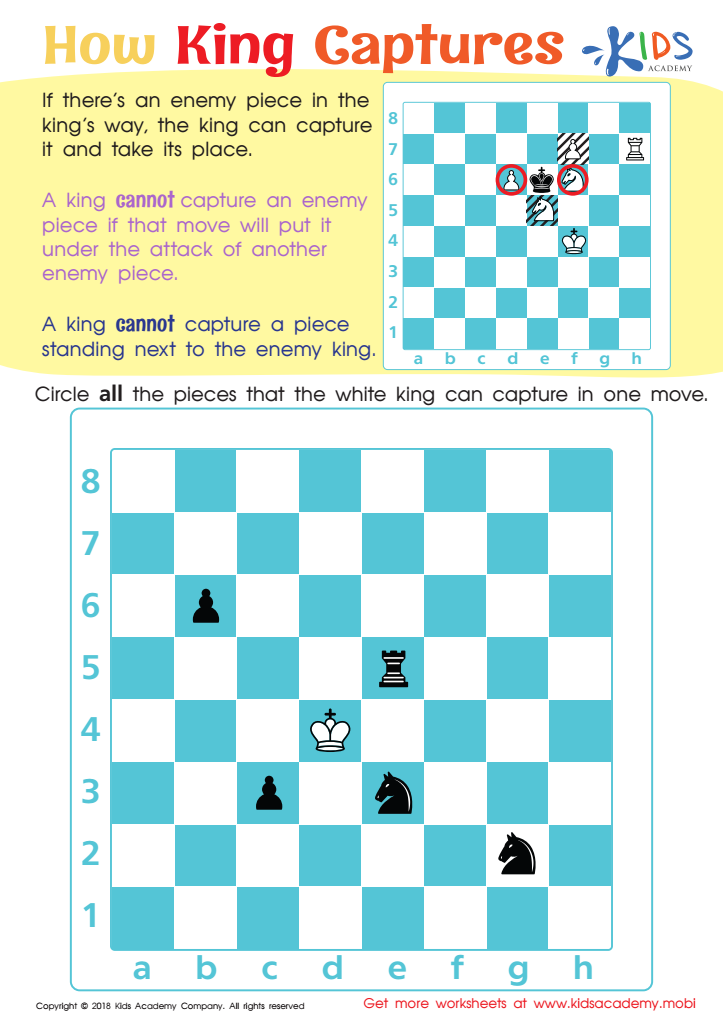
How King Captures Worksheet







Parents and teachers should prioritize problem-solving practice for children aged 4-6 because it is crucial for developing critical thinking and cognitive skills. At this young age, children's brains are highly adaptable and capable of rapid growth. Engaging in problem-solving activities helps strengthen neural connections and builds a foundation for logical reasoning and decision-making.
By solving various problems, children learn to approach challenges from different angles, promote creativity, and become more resilient. Problem-solving exercises teach patience and perseverance, as kids learn that trial and error are parts of the learning process. This persistence is essential for success in academic settings and life‘s daily obstacles.
Additionally, problem-solving activities boost confidence and independence. When children see that they can figure things out on their own, they feel more self-assured and willing to take on new challenges. This self-efficacy is a valuable trait in both educational settings and personal growth.
Engaging in problem-solving also encourages collaborative skills when activities are designed as group tasks. Children learn to communicate effectively, share ideas, and value different perspectives. These social skills are fundamental to creating a positive learning environment and forming healthy relationships.
Fostering problem-solving abilities in early childhood sets the stage for lifelong learning and personal development, making it a critical component of early education.








