Reading development Normal Worksheets for Ages 4-6
4 filtered results
-
From - To
Enhance your child's early literacy skills with our Reading Development Normal Worksheets for Ages 4-6. Designed to make learning to read a joyful journey, these printable worksheets cover the critical reading-building blocks such as alphabet recognition, phonics, and simple word formation. Colorful and engaging, they capture children’s attention and make practice fun. Tailored to meet the educational needs of preschoolers and kindergarteners, these resources ensure that your child advances their reading skills at a consistent, understandable pace. Empower your little learner by downloading worksheets from Kids Academy, where early reading proficiency takes flight!
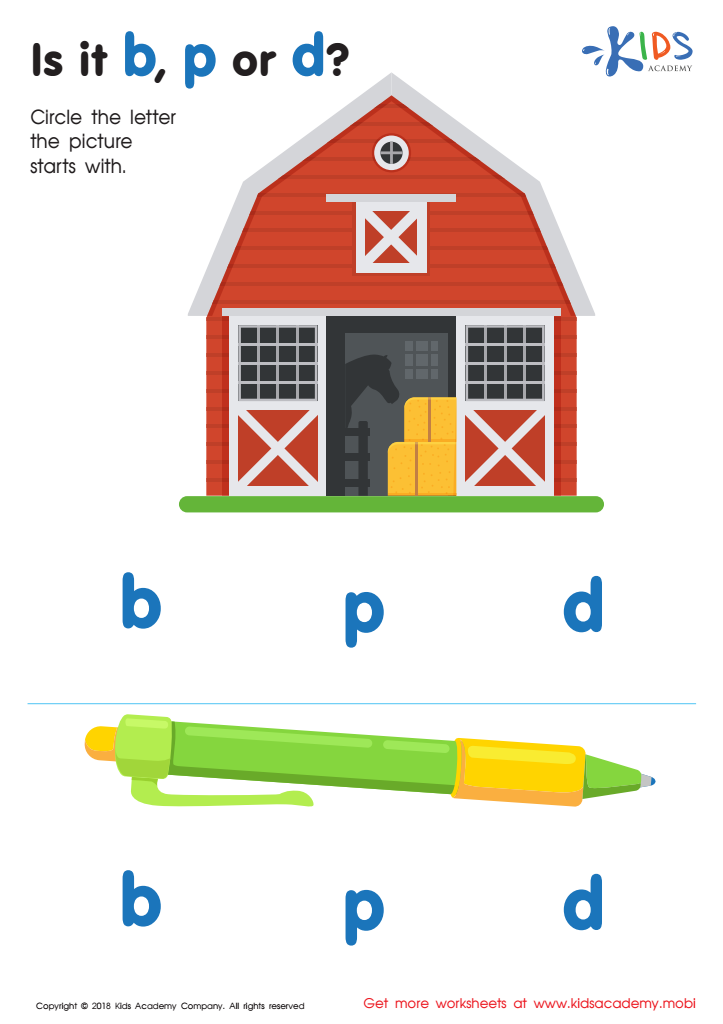
Is it b, p or d? Worksheet
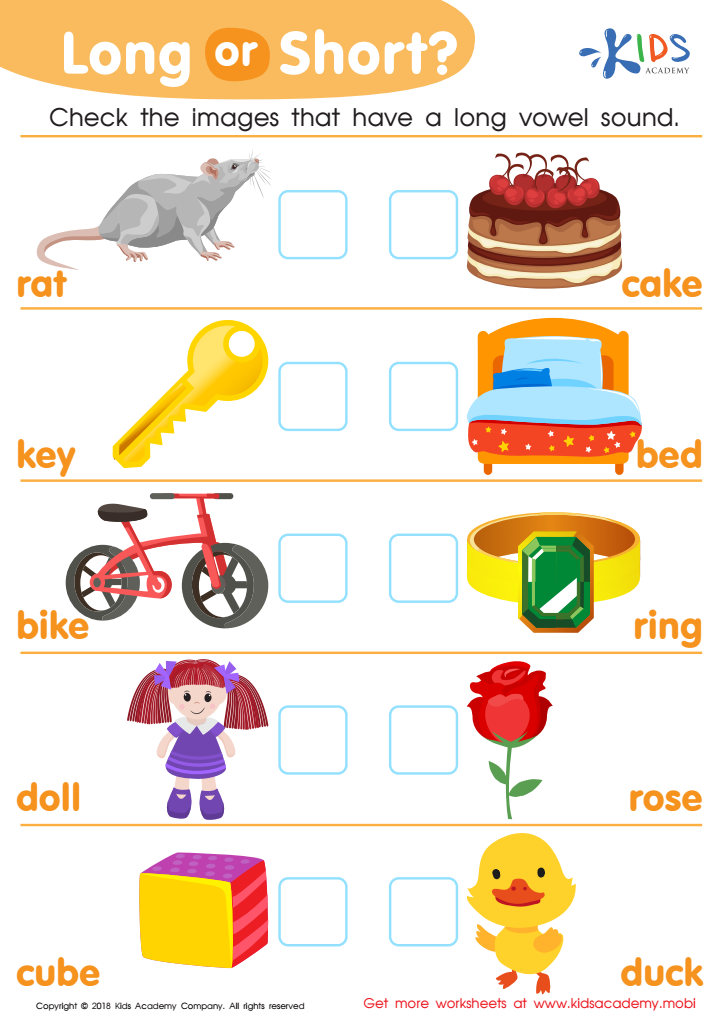
Long or Short Reading Worksheet
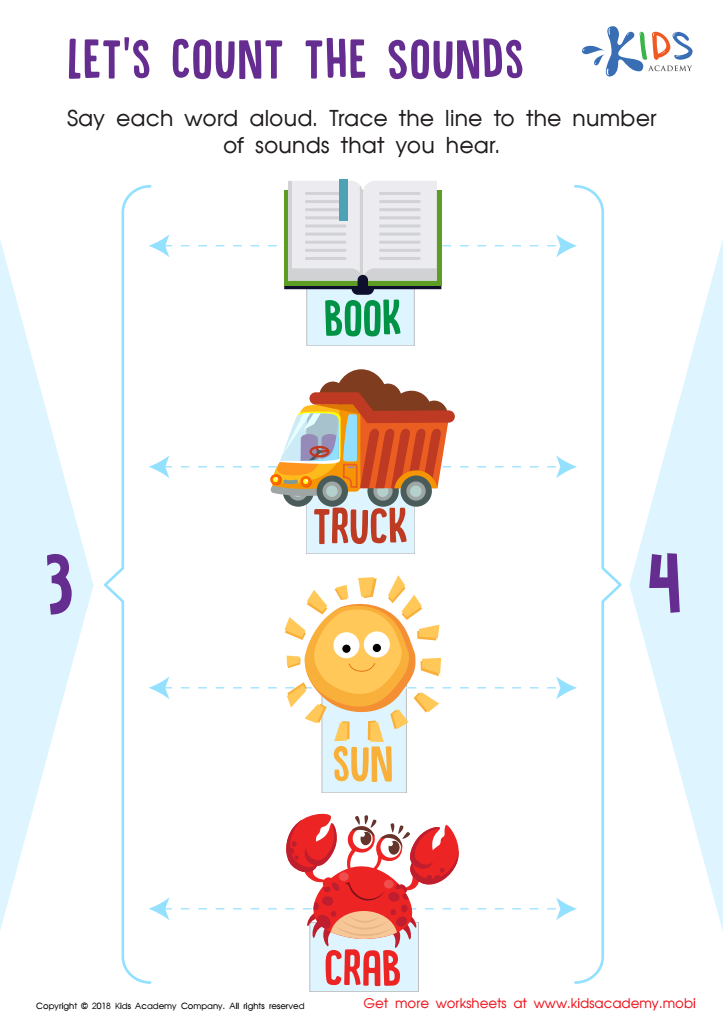
Let's Count the Sounds Worksheet
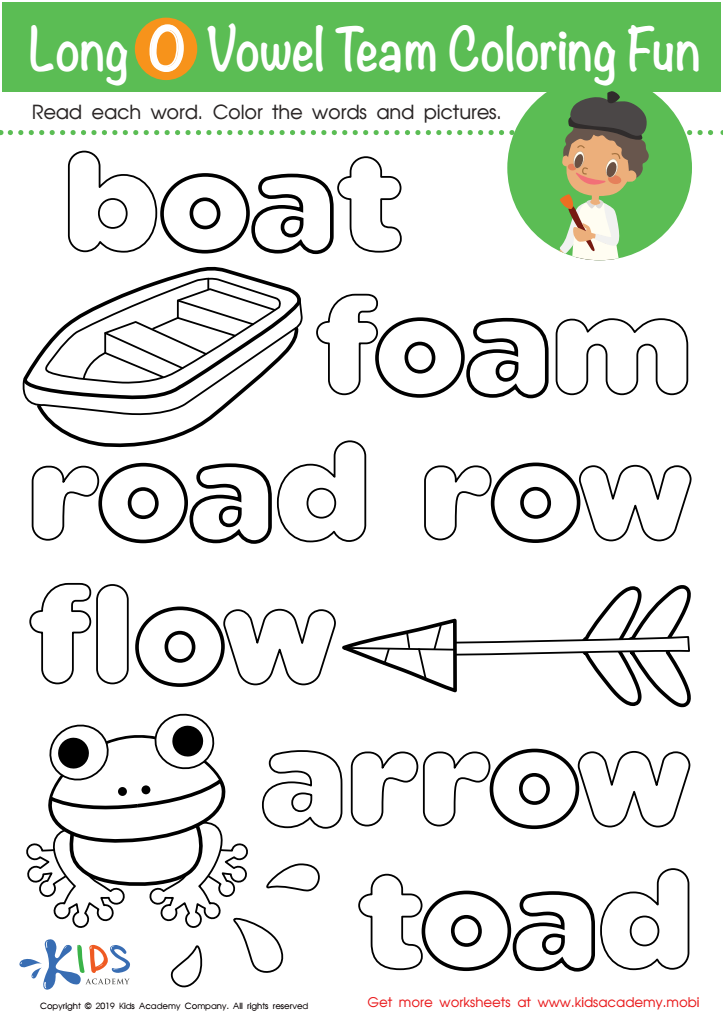
Long O Vowel Team Coloring Worksheet
 Assign to My Students







Absolutely! Reading development in children aged 4-6 is crucial and foundational for several reasons. At this stage, young brains are exceptionally receptive to learning new skills, including language and literacy. Encouraging appropriate reading habits ensures that children develop a strong vocabulary, comprehension skills, and the ability to express themselves clearly.
Firstly, reading enhances cognitive development. It stimulates brain regions related to understanding and reasoning, helping children improve concentration, imagination, and critical thinking skills. These abilities are not only essential for academic success across various subjects but also for problem-solving in everyday life.
Secondly, early reading fosters a love for books. This inclination often translates into continued reading and learning throughout life, which is beneficial for both personal growth and academic endeavors. Children who enjoy reading tend to achieve higher success rates in school as they are constantly reinforcing their knowledge base and vocabulary.
Moreover, reading together offers valuable bonding time, strengthening emotional connections and communication between parents and children. It's also an opportunity for parents to impart values, cultural knowledge, and empathy through stories.
In summary, nurturing reading development in ages 4-6 sets the stage for lifelong learning, cognitive prowess, and emotional well-being, making it an essential focus for both parents and teachers.








