
Reading skills development Normal Worksheets for Ages 4-6
3 filtered results
Difficulty Level
Grade
Age
-
From - To
Subject
Activity
Standards
Boost your child's reading skills with our engaging Normal Worksheets for Ages 4-6! Designed to cultivate literacy in young learners, these worksheets feature fun activities that enhance letter recognition, phonemic awareness, vocabulary, and comprehension. Each worksheet is tailored to meet the developmental needs of preschool and early elementary students, ensuring an enjoyable learning experience. Parents and educators can easily access printable resources that promote interactive learning at home or in the classroom. Encourage a passion for reading while building essential skills that set the foundation for academic success. Explore our collection and watch your child's confidence grow as they master reading skills!
Favorites
With answer key
Interactive
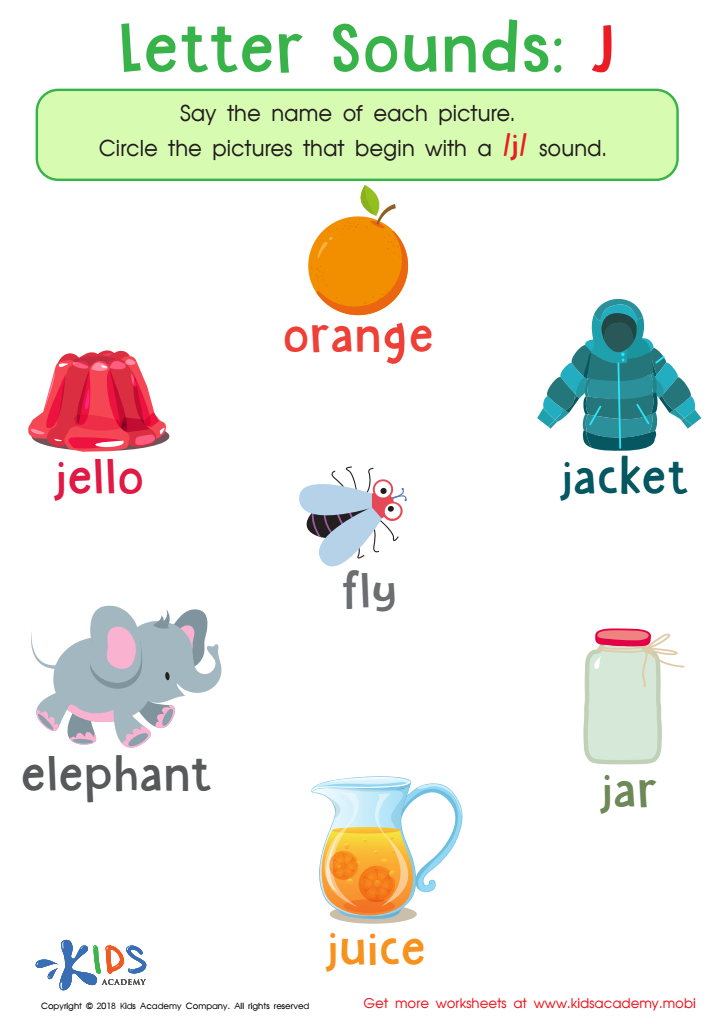
Letter Sounds: J Printable Worksheet
Preschoolers can learn to identify letter sounds by focusing on beginning sounds. This cute and colorful worksheet reviews the hard “j” sound. Kids can point it out by naming the words and circling only those starting with the “j” sound. Read the text out loud and listen closely!
 Assign to My Students
Letter Sounds: J Printable Worksheet
Worksheet
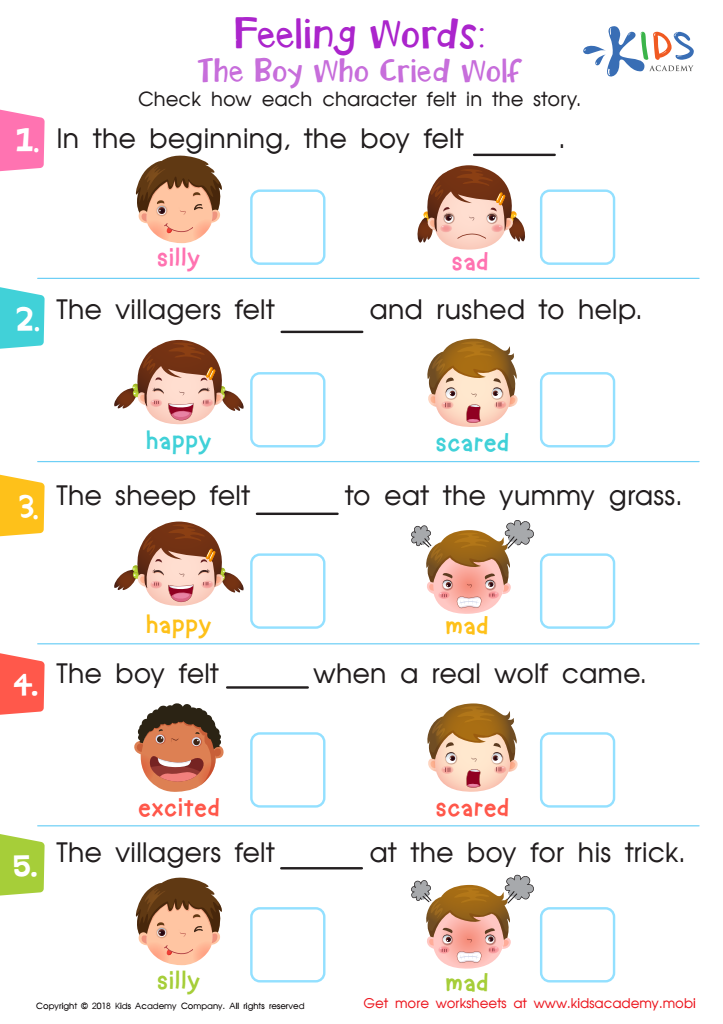
Feeling Words: The Boy Who Cried Wolf Worksheet
This worksheet helps students infer characters' traits and feelings by reading The Boy Who Cried Wolf. They choose the correct emotion for each character to improve their story comprehension. A great resource for the reading classroom, it teaches an essential comprehension skill.
Feeling Words: The Boy Who Cried Wolf Worksheet
Worksheet
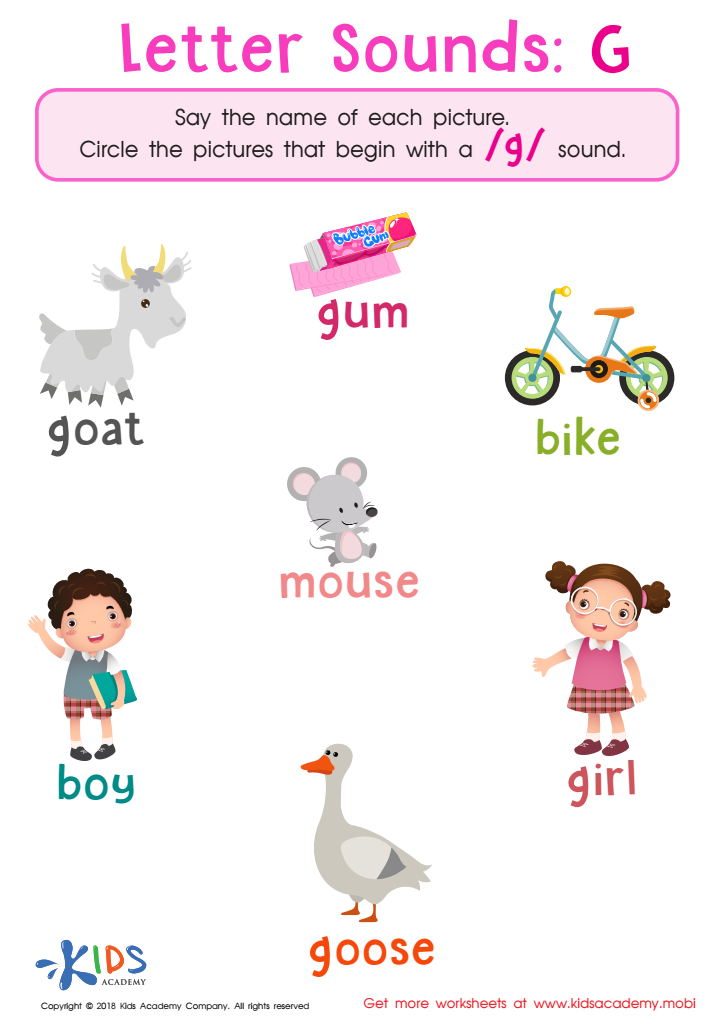
Letter G Sounds Worksheet
Help emerging readers build confidence by giving them practice identifying hard "G" with this free PDF worksheet. They'll use picture clues to name the words, and practice fine-motor skills tracing circles around the corresponding pics. It's a great way to introduce or reinforce hard "G" words.
Letter G Sounds Worksheet
Worksheet
Join Kids Academy for Free
Who is primarily going to use this learning content?






Reading skills development for ages 4-6 is crucial for several compelling reasons. Firstly, this is a critical period for cognitive growth, where children's brains are incredibly receptive to language and literacy acquisition. Emergent literacy skills—such as phonemic awareness, vocabulary, and comprehension—laid during these early years form the foundation for successful reading and overall academic performance later in life.
Moreover, strong reading skills enhance a child's ability to express themselves, fostering better communication skills necessary for social interaction and emotional development. Parents and teachers who engage in reading activities not only strengthen these skills but also cultivate a love for reading, which encourages lifelong learning.
Additionally, proficient reading at an early age can prevent future academic challenges. Children who struggle with reading early on may face difficulties in subsequent grades, impacting their self-esteem and motivation. By prioritizing reading skills development, parents and teachers can help mitigate these risks.
Furthermore, encouraging reading can promote family bonding and create joyful, shared experiences. By investing time in reading with young children, parents and teachers can support their development in a nurturing and impactful way, ultimately influencing their future success both academically and socially.








