Rhyming skills Normal Worksheets for Ages 4-6
3 filtered results
-
From - To
Our "Rhyming Skills Normal Worksheets for Ages 4-6" are designed to make learning fun and interactive for your little ones. These engaging worksheets help young learners develop their phonemic awareness by recognizing and matching rhyming words. Perfect for preschool and early elementary students, these activities foster crucial pre-reading skills, aiding in vocabulary development and reading fluency. With colorful illustrations and relatable themes, our worksheets captivate children’s attention while providing ample practice. Set a strong foundation for your child’s literacy journey with our expertly crafted rhyming worksheets. Download and let the fun in learning begin!
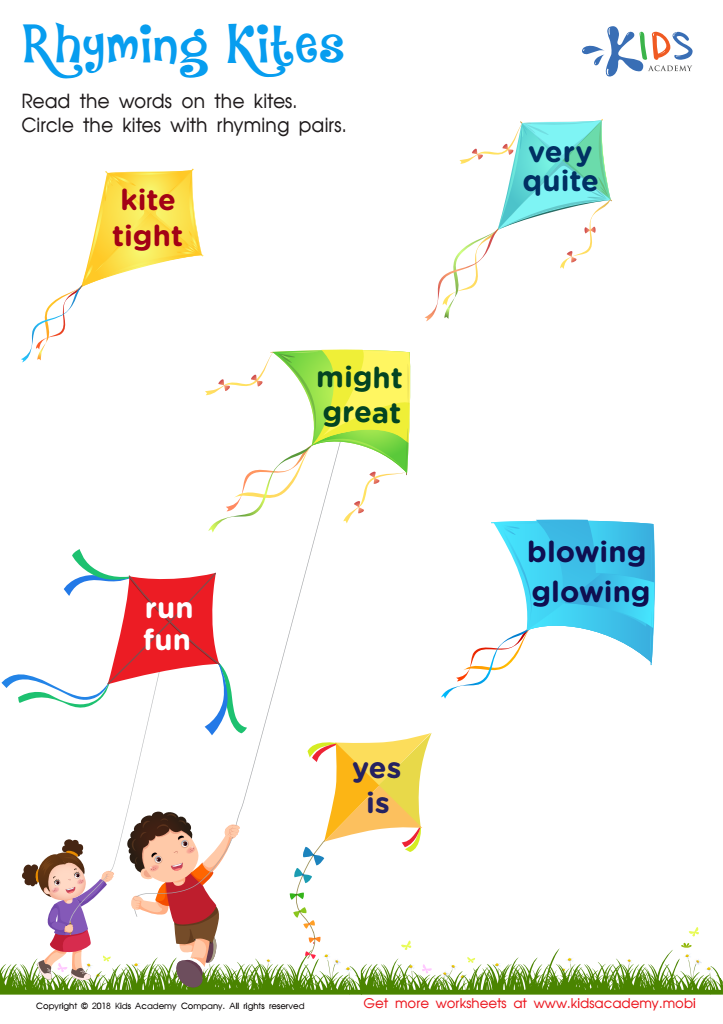
Rhyming Kites Worksheet
 Assign to My Students
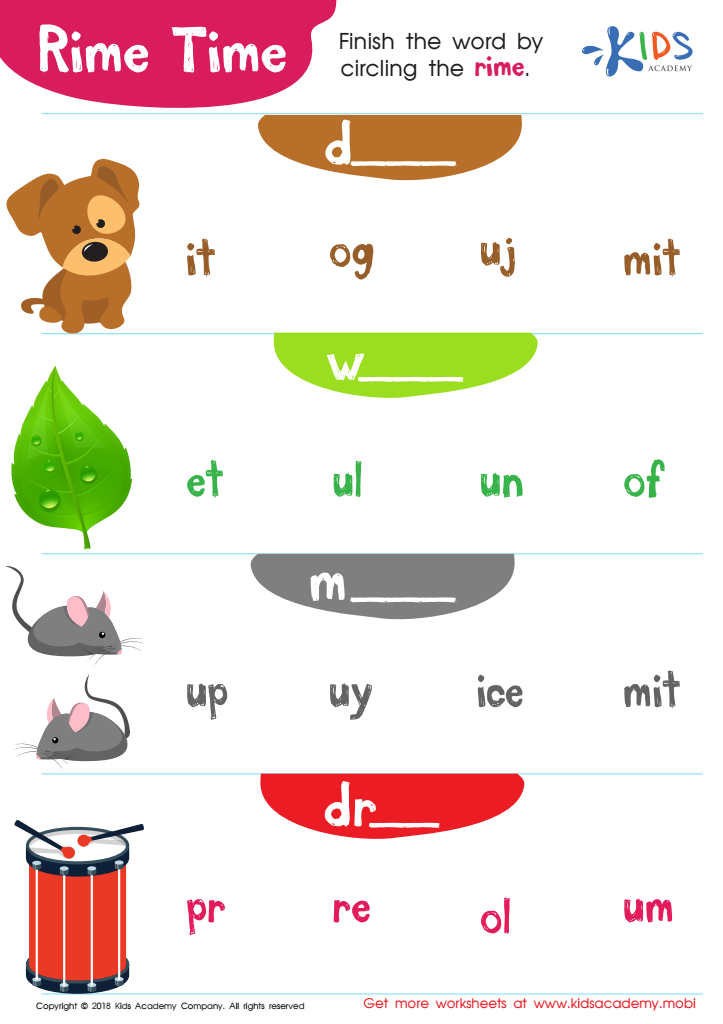
Rime Time Worksheet
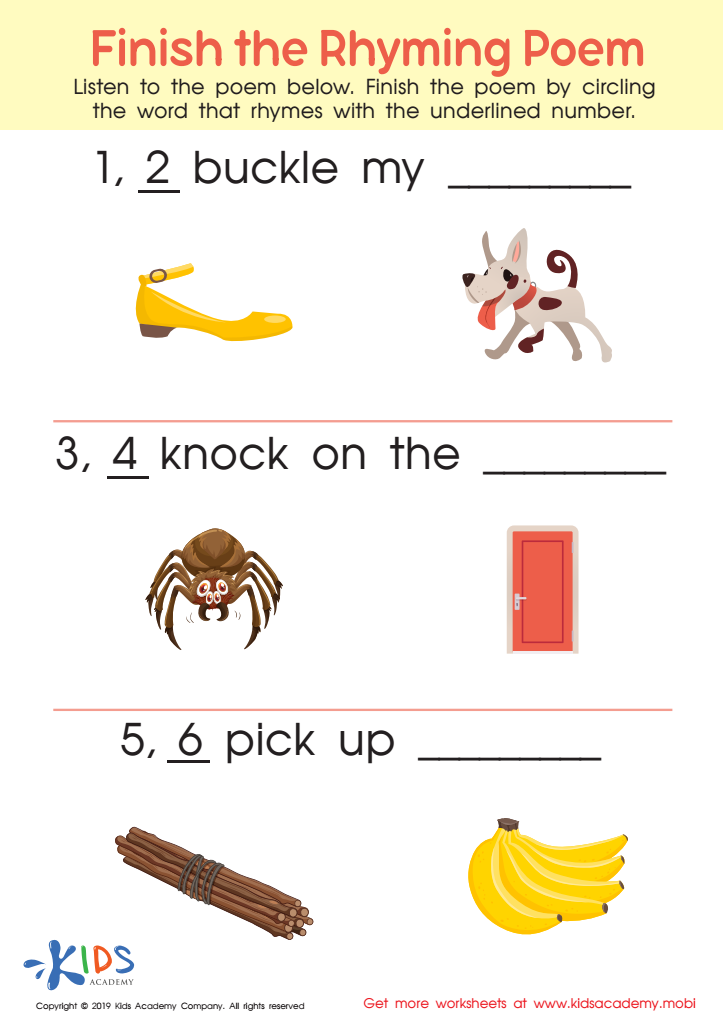
Finish Rhyming Poem Worksheet







Rhyming skills are fundamental for children ages 4-6 as they significantly contribute to early literacy development. When parents and teachers focus on these skills, they aren't just teaching children to appreciate word patterns; they're building essential building blocks for reading and writing. Rhyming activities help children recognize and predict sound patterns, which sharpens their phonemic awareness — the ability to hear, identify, and manipulate individual sounds in words. This is crucial for learning to read.
Moreover, rhyming exercises make learning fun and engaging, thereby fostering a positive attitude toward language and literacy at an early age. Through nursery rhymes, poems, and songs, children begin to understand that words with similar endings sound alike, making it easier to decode words when they start reading independently.
Rhyming also enhances memory and recall, as repetitive patterns and sounds are easier to remember. These activities promote listening skills, auditory discrimination, and vocabulary development, which are all vital for academic success. By investing time in rhyming, parents and teachers are setting a strong foundation for future reading fluency and overall language competence, ensuring that children are well-prepared for the challenges of formal education.








