Sound Association Normal Worksheets for Ages 4-6 - Page 2
27 filtered results
-
From - To
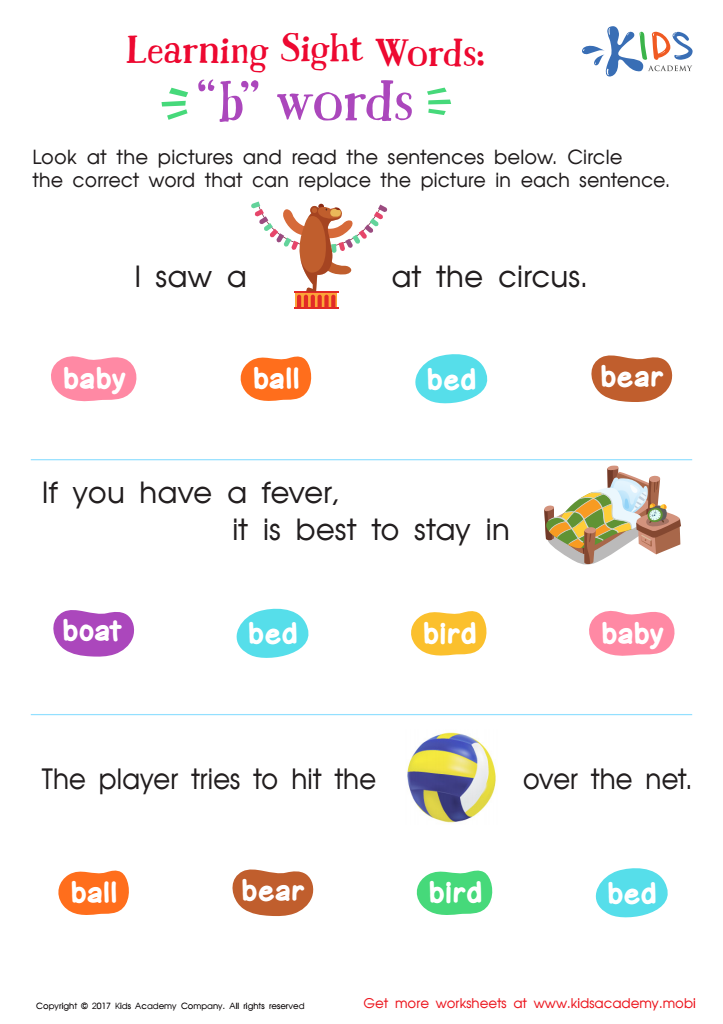
"B" Words Printable Sight Words Worksheet
 Assign to My Students
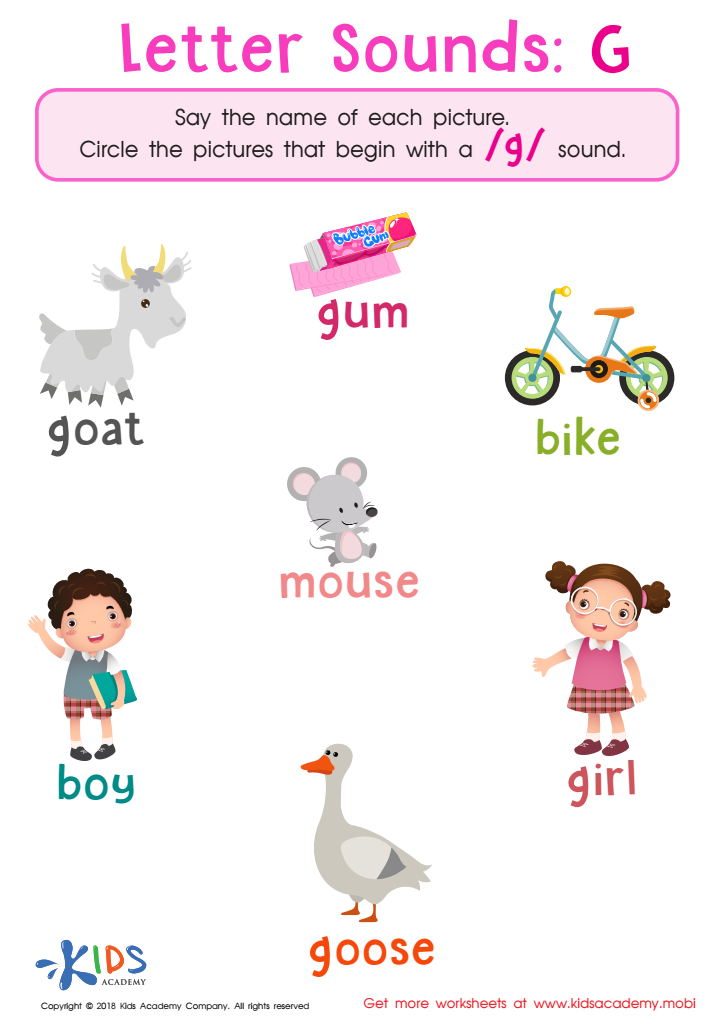
Letter G Sounds Worksheet
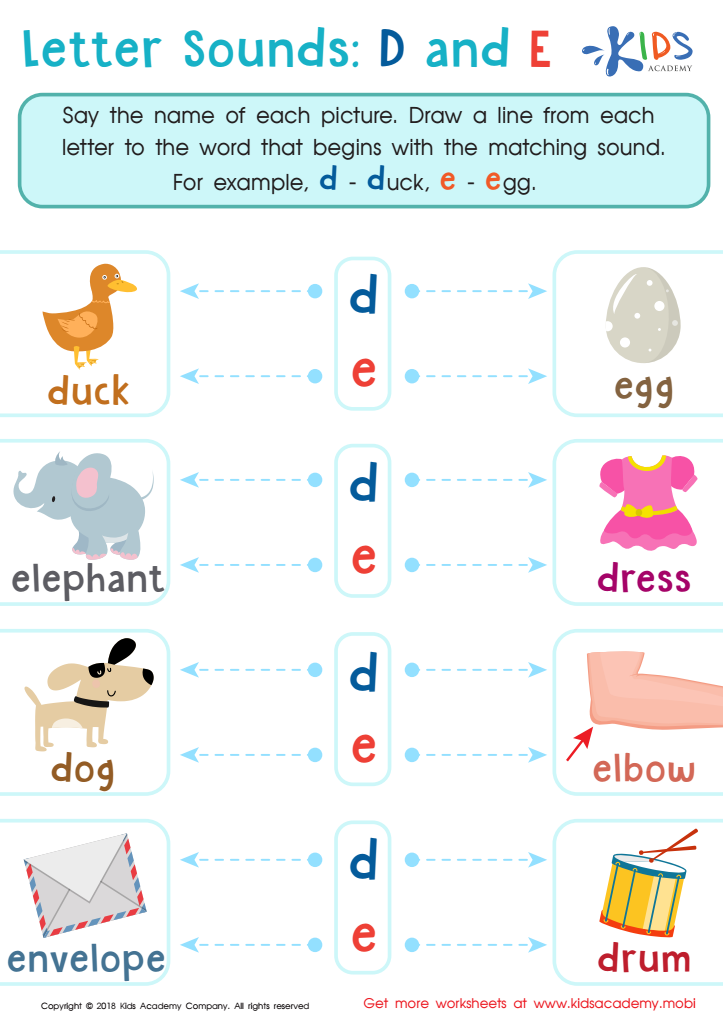
Letter D and E Sounds Worksheet






Sound Association Normal (SAN) is crucial for children aged 4-6, as it forms the foundation of their literacy and language development. At this age, children are naturally curious about sounds and words, which makes it an ideal time for them to learn how different sounds correspond to letters and words. Understanding sound associations enables young learners to improve their reading skills, boost phonemic awareness, and enhance their vocabulary.
Parents and teachers should care about SAN because it greatly impacts a child's academic trajectory. Children who struggle with sound associations may find it challenging to decode words, leading to lower self-esteem and a negative attitude toward reading. By fostering strong SAN skills, parents and teachers help children develop the confidence necessary to tackle reading independently, setting them up for long-term success.
Additionally, strong sound association skills contribute to effective communication and social interactions. The ability to articulate thoughts clearly and understand spoken language is vital as children begin their educational journey. Investing time and resources into developing SAN at this stage is an investment in a child’s future literacy, self-esteem, and lifelong love for learning. Ultimately, supporting sound association benefits not just academic performance but also personal growth and social development.








