Spatial Orientation Normal Worksheets for Ages 4-6
3 filtered results
-
From - To
Discover engaging Spatial Orientation Normal Worksheets designed for children aged 4-6. These expertly crafted resources from Kids Academy enhance early learning skills by allowing children to explore positions, directions, and spatial relationships through fun, interactive activities. Perfect for preschoolers and kindergarteners, the worksheets foster cognitive development and foundational math skills. With vibrant illustrations and age-appropriate tasks, young learners can strengthen their understanding of spatial concepts in an enjoyable manner. Ideal for parents and educators aiming to build critical thinking and problem-solving abilities, these worksheets provide a solid foundation for your child's educational journey. Start nurturing spatial awareness today!
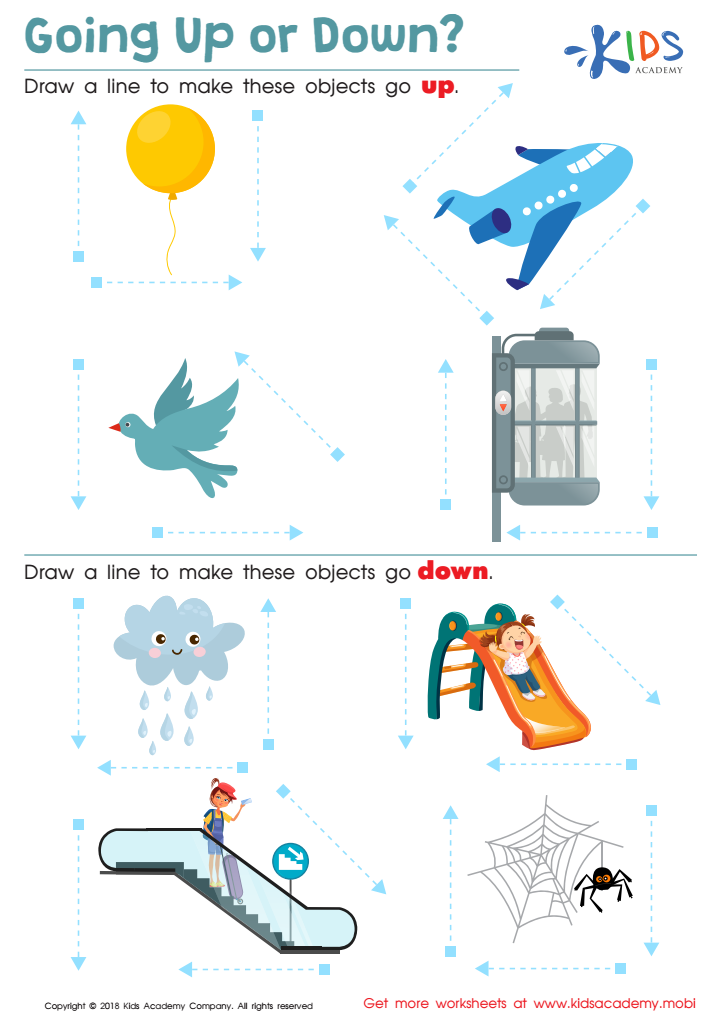
Going up or Down? Worksheet
 Assign to My Students
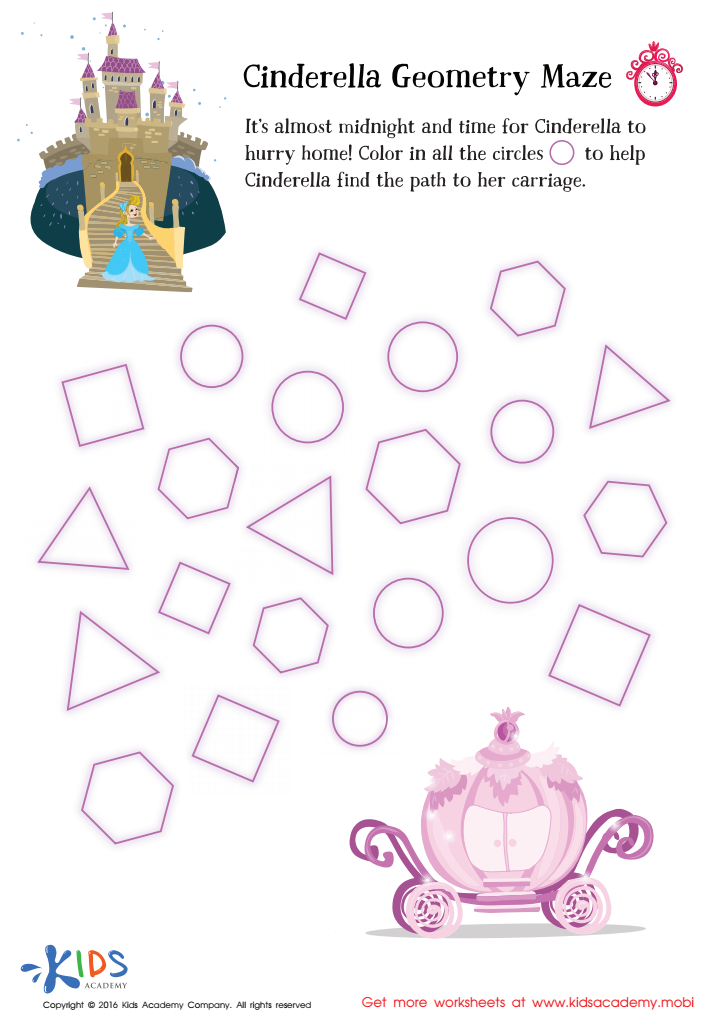
Cinderella Geometry Maze Worksheet
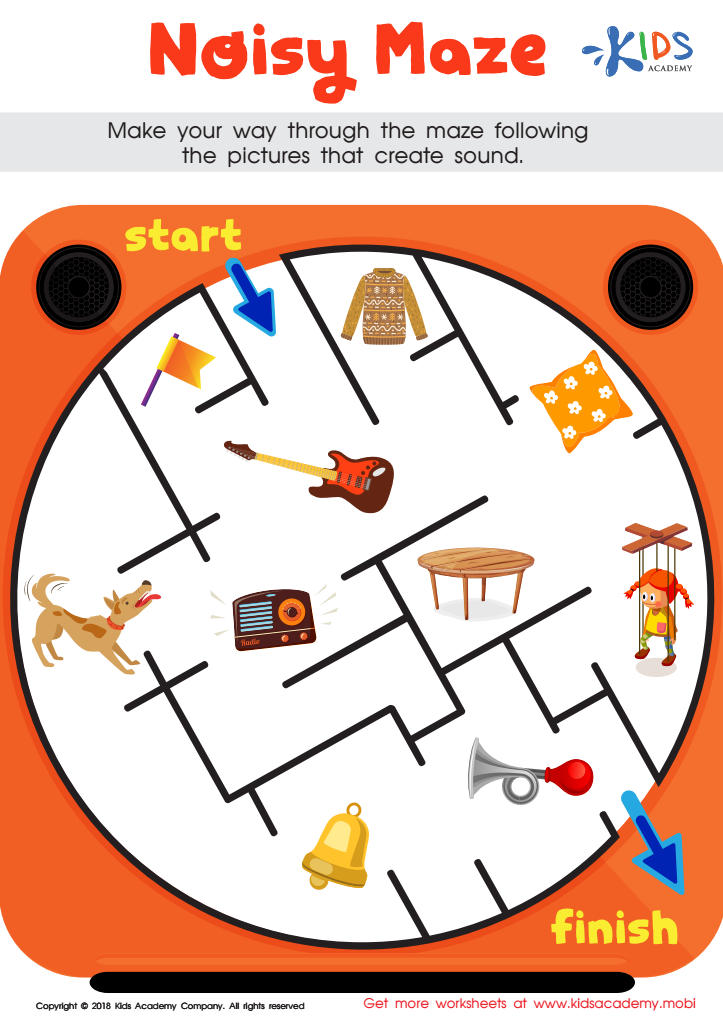
Noisy Maze Worksheet







.jpg)
Spatial orientation is a fundamental cognitive skill that everyone uses to navigate and understand the world around them. It involves knowing one's position and direction in space and understanding relations between different objects within an environment. For children aged 4-6, developing strong spatial orientation skills is crucial for several reasons, making it important for parents and teachers to focus on this aspect of early childhood development.
Firstly, spatial orientation lays the foundation for future success in subjects like mathematics, science, engineering, and everyday problem-solving. Studies have shown that children who excel in spatial reasoning tend to perform better in these subjects as they grow. For example, understanding shapes, sizes, distances, and the relationships between objects helps in grasping basic geometry and arithmetic concepts.
Secondly, spatial orientation is key for the development of everyday life skills. Basic tasks such as tying shoelaces, organizing a play area, or following directions rely heavily on one's ability to manage and understand space. This comprehension not only enhances physical coordination but also builds confidence in a child's ability to tackle new, unfamiliar tasks.
Lastly, fostering strong spatial skills can inspire creativity and imagination. Activities that enhance spatial orientation, like building with blocks or drawing, encourage creative thinking, which is essential for cognitive and emotional development.
Therefore, parents and teachers should pay attention to developing spatial orientation skills in young children to support their academic, practical, and creative growth.








