Understanding life cycles Normal Worksheets for Ages 4-6
3 filtered results
-
From - To
Our "Understanding Life Cycles" Normal Worksheets for Ages 4-6 offer young learners a fun and educational way to explore the stages of life in plants and animals. These beautifully illustrated activities foster early science skills and curiosity within your child. From seeds turning into plants to caterpillars transforming into butterflies, each worksheet guides your kids through natural processes. Engaging tasks and colorful visuals enhance learning and help solidify understandings of different life cycles. Perfect for emerging readers, these worksheets provide a strong foundation for future scientific discovery. Tailored for ages 4-6, they support both classroom and at-home learning.
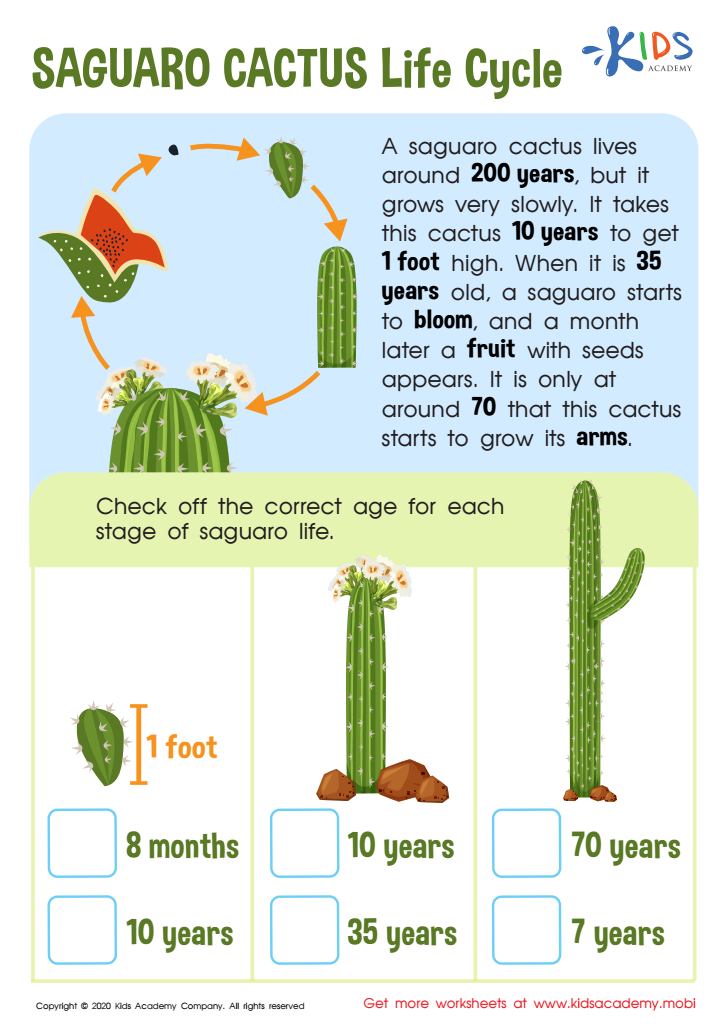
Saguaro Cactus Life Cycle Worksheet
 Assign to My Students
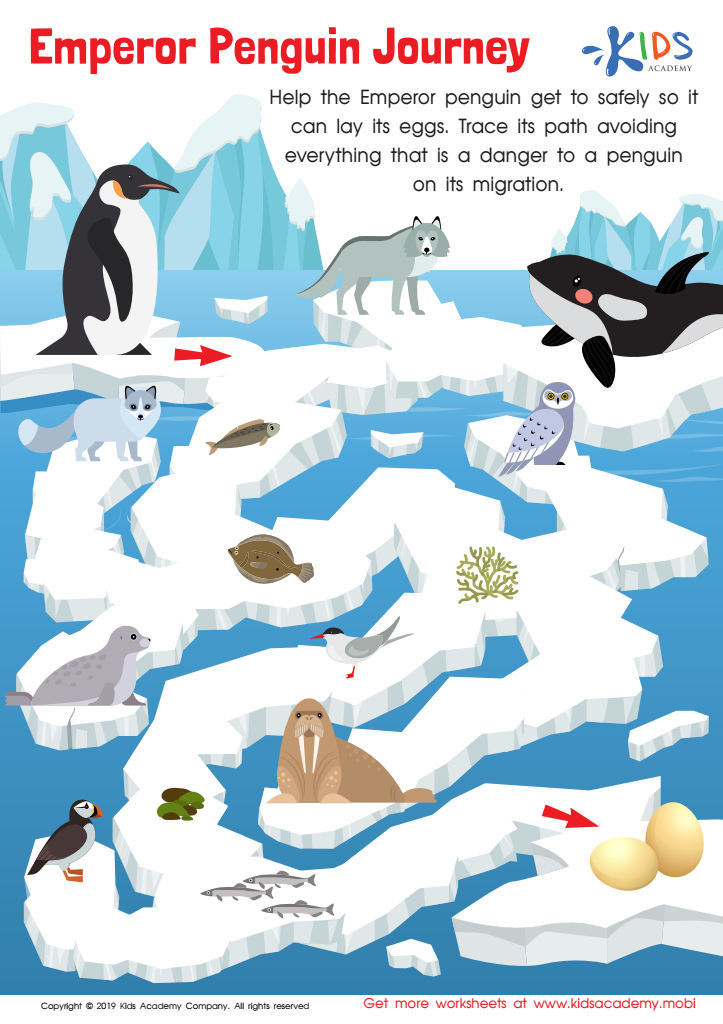
Emperor Penguin Journey Worksheet
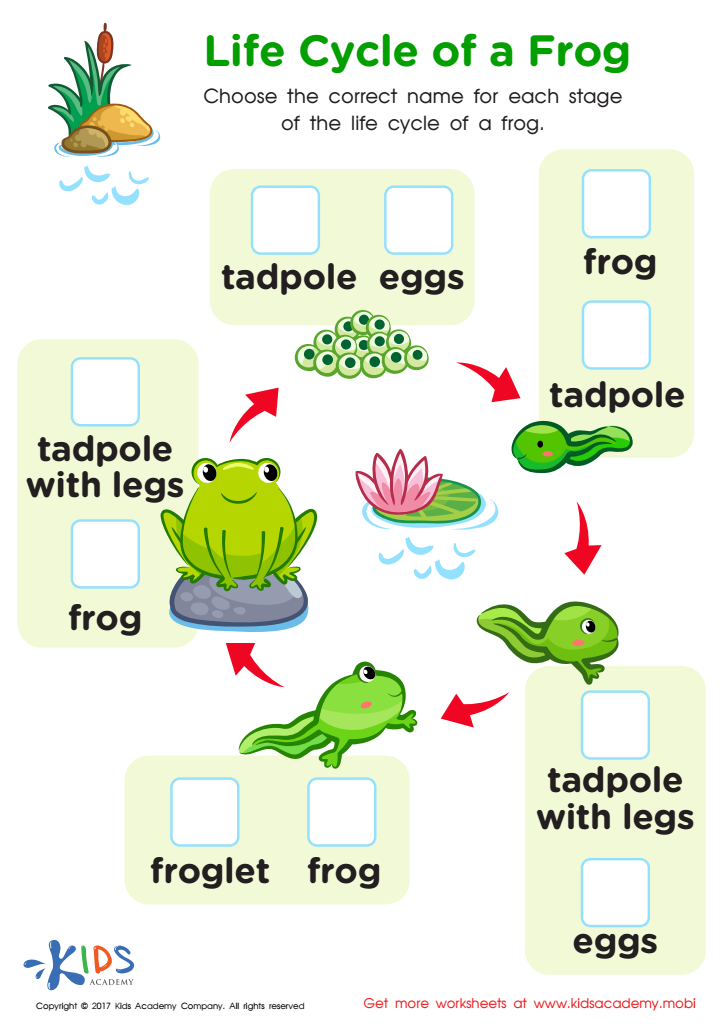
Life Cycle Frog Printable







Understanding life cycles is pivotal for children ages 4-6 as it builds foundational knowledge about the natural world and develops critical thinking skills. At this age, children are naturally curious and eager to learn about their environment. Life cycles, such as those of plants, butterflies, or frogs, offer tangible examples of growth, change, and the continuity of life, concepts that are essential in understanding science and nature.
For parents and teachers, fostering an awareness of life cycles nurtures a child's sense of wonder and appreciation for living organisms. This understanding helps kids make connections between different stages of life and the concept of time. It also lays the groundwork for learning about ecosystems and the relationships between organisms and their habitats, promoting environmental stewardship.
Moreover, learning about life cycles integrates various educational domains. It enhances vocabulary, introduces sequencing, and supports observational skills. Activities like planting seeds or watching caterpillars transform into butterflies provide hands-on experiences that reinforce these concepts. This experiential learning is crucial at this stage, as it accommodates varied learning styles and helps solidify abstract concepts.
In essence, by prioritizing understanding life cycles, parents and teachers empower children with knowledge that is critical for their intellectual and emotional development, setting the stage for lifelong learning and curiosity.








