Understanding patterns Normal Worksheets for Ages 4-6
5 filtered results
-
From - To
Enhance your child's early learning skills with our "Understanding Patterns Normal Worksheets for Ages 4-6." Our thoughtfully designed worksheets make pattern recognition fun and engaging for young learners. By completing vibrant, hands-on activities, children develop crucial cognitive abilities, including sequencing, predicting, and logic. These worksheets are perfect for preschool and kindergarten kids, helping them to identify and create simple patterns using a variety of shapes, colors, and objects. Dive into our collection to boost your child's confidence and proficiency in recognizing and applying patterns in their everyday environment. Foster a love for learning and problem-solving today!
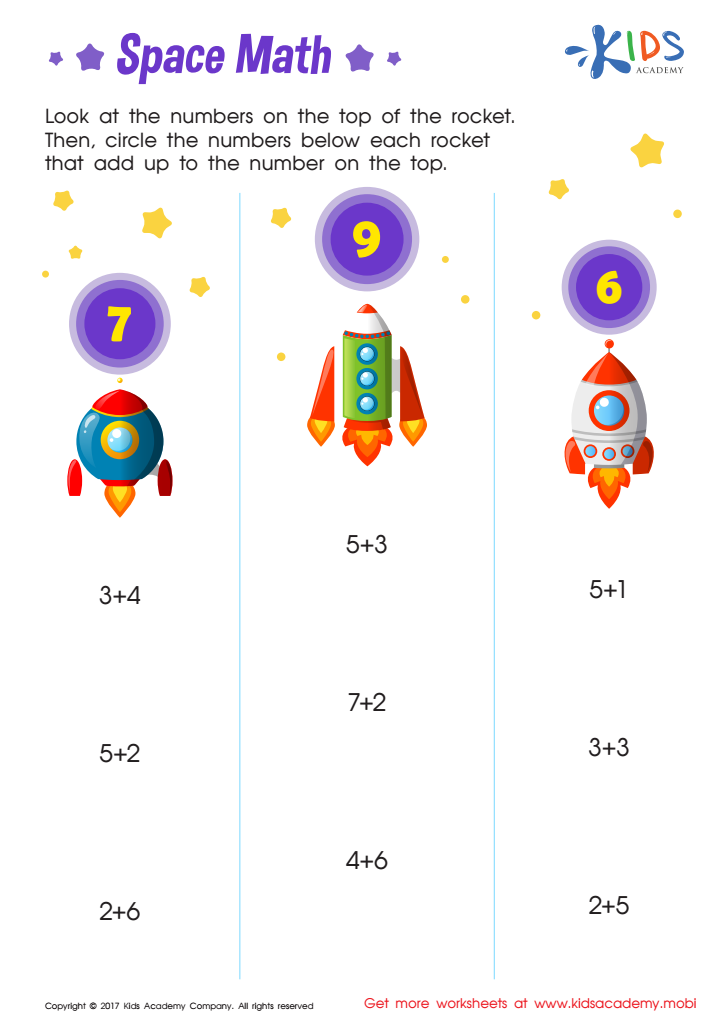
Addition: Space Math Worksheet
 Assign to My Students
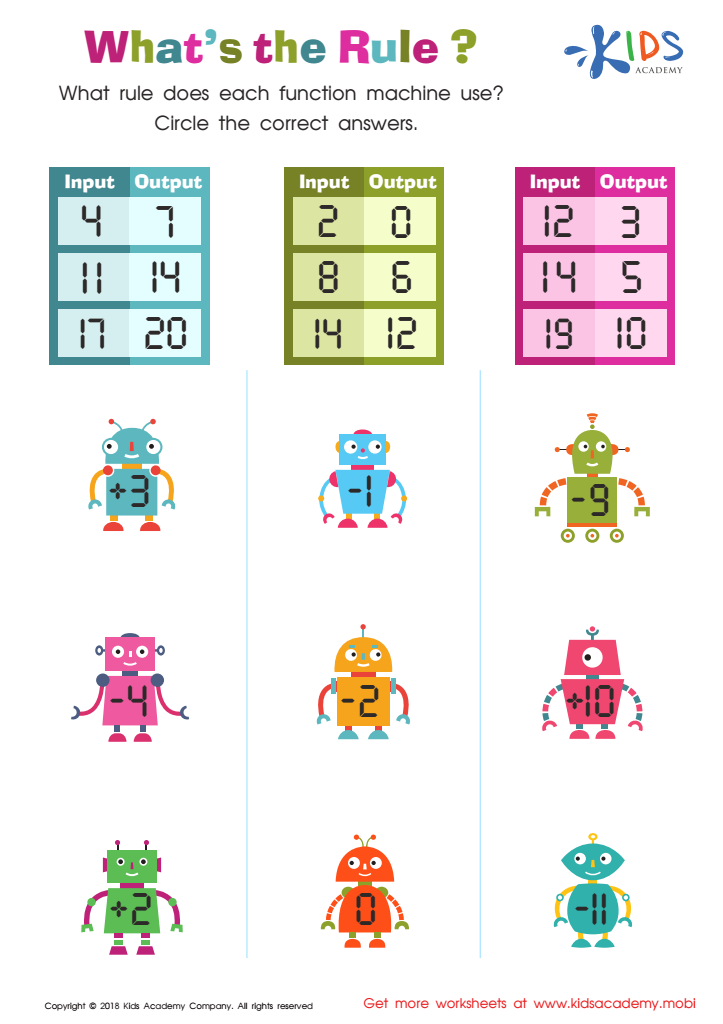
What's the Rule Worksheet
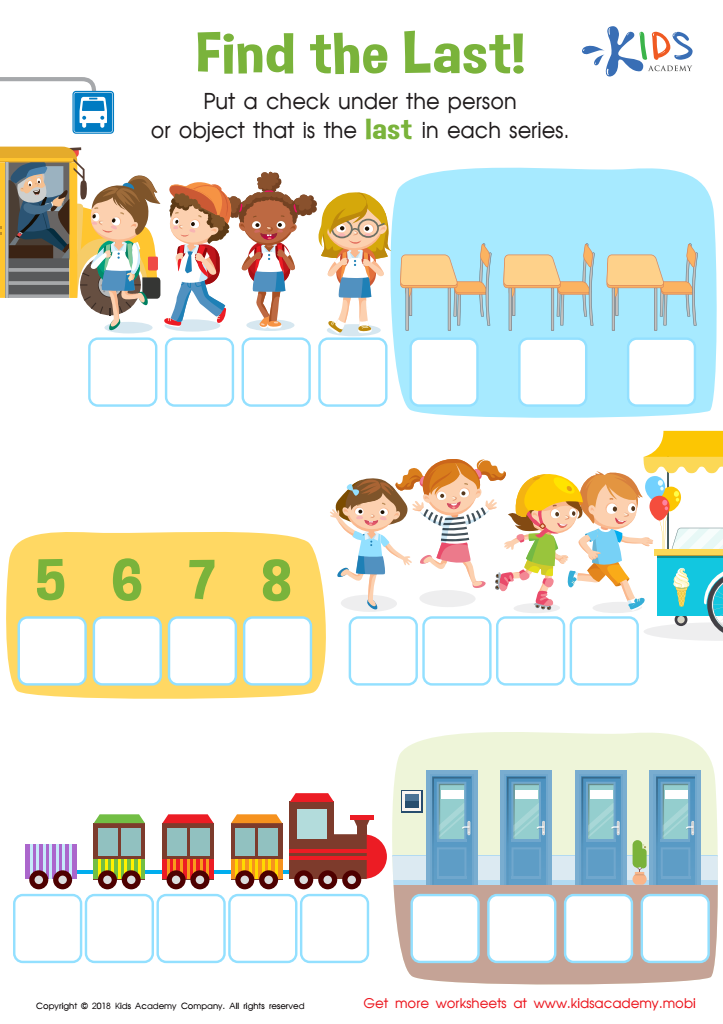
Find the Last! Worksheet
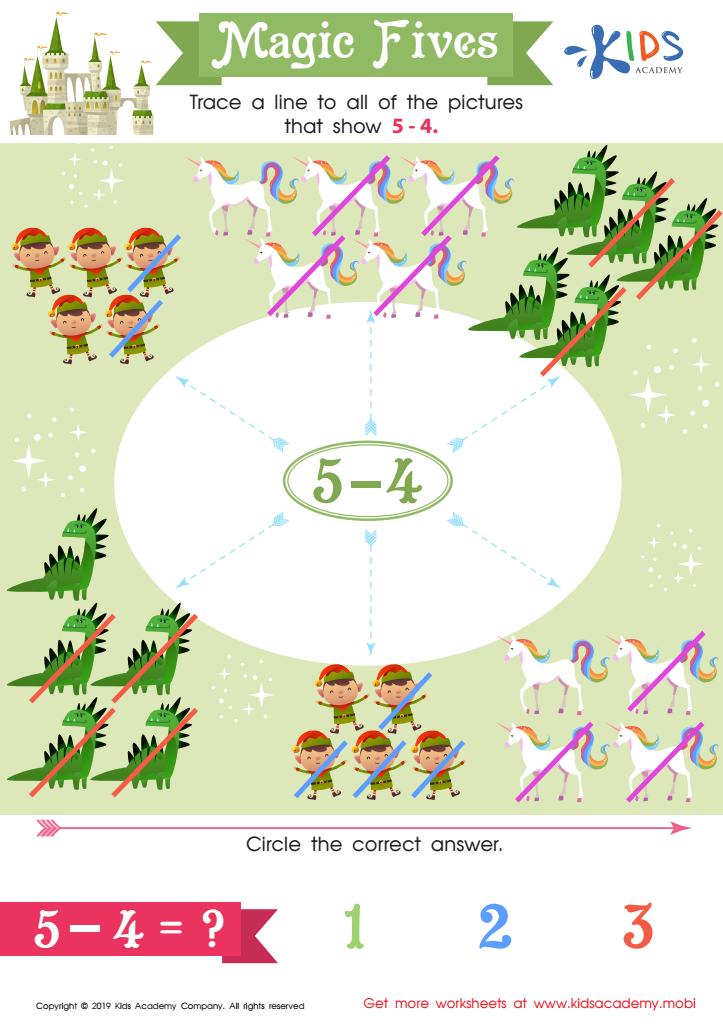
Magic Fives Worksheet
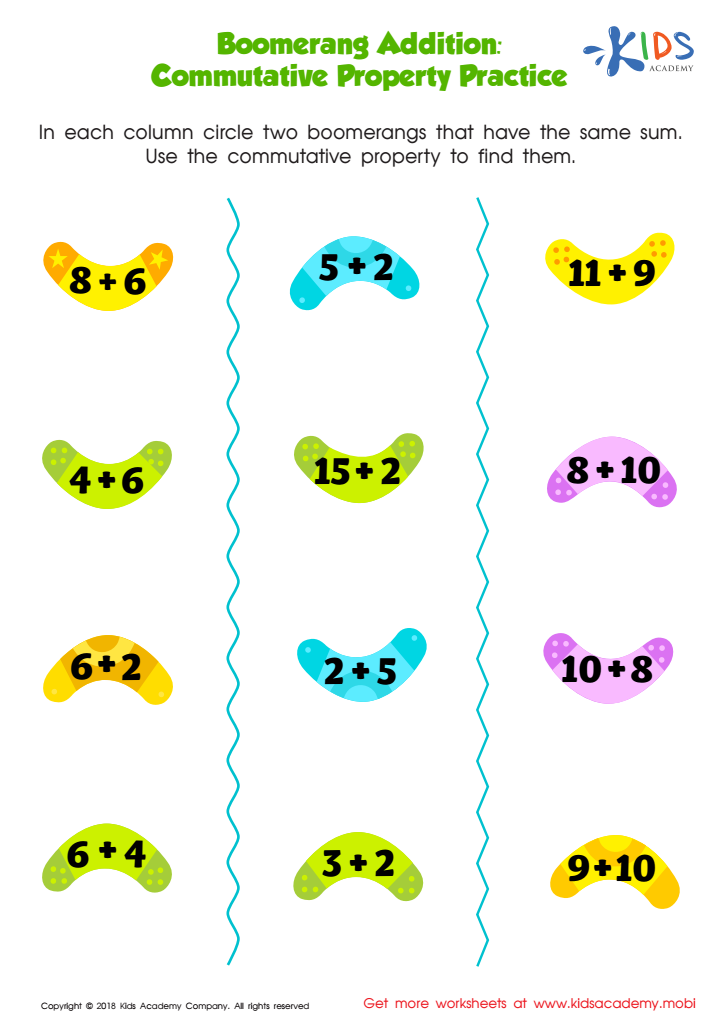
Boomerang Addition Worksheet








Understanding patterns is essential for young children, particularly those aged 4-6, because it forms the foundation for more complex cognitive skills and learning. Patterns are not just limited to sequences in math but are also present in daily routines, language, and nature. By recognizing and understanding patterns, children develop critical thinking and problem-solving skills that are fundamental for academic and life success.
For parents and teachers, fostering an awareness of patterns in early education helps to enhance children's intellectual development. These children will start recognizing predictable sequences, which improves their ability to make predictions and understand the concept of cause and effect. This cognitive ability supports early math skills, as patterns are the basis of understanding numbers, operations, shapes, and more. Additionally, recognizing patterns in the environment boosts language development, as children discern patterns in sounds, words, and sentence structures, aiding early reading skills.
Socially and emotionally, becoming familiar with patterns provides children with a sense of security and predictability, which is crucial for their overall well-being. Routine patterns, such as daily schedules, help children anticipate what comes next and feel more confident and in control. For these reasons, caregivers investing time in helping children recognize and understand patterns are equipping them with vital tools for their educational journey and beyond.








