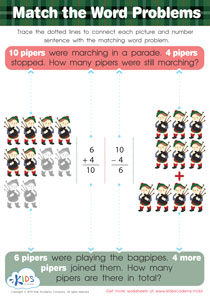
Mental math skills Normal Addition Worksheets for Ages 4-6
4 filtered results
Difficulty Level
Grade
Age
-
From - To
Subject
Activity
Standards
Boost young learners' confidence and arithmetic abilities with our Mental Math Skills Normal Addition Worksheets designed for ages 4-6. These engaging printable worksheets focus on enhancing basic addition skills through fun and interactive problems. Designed to suit early learners, they help in developing quick mental calculations and fostering a strong foundation in math. Ideal for both classroom and home use, these worksheets provide a balanced mix of challenges to keep kids excited about learning. Give your child the head start they need in math with our expertly crafted, age-appropriate addition worksheets.
Favorites
With answer key
Interactive
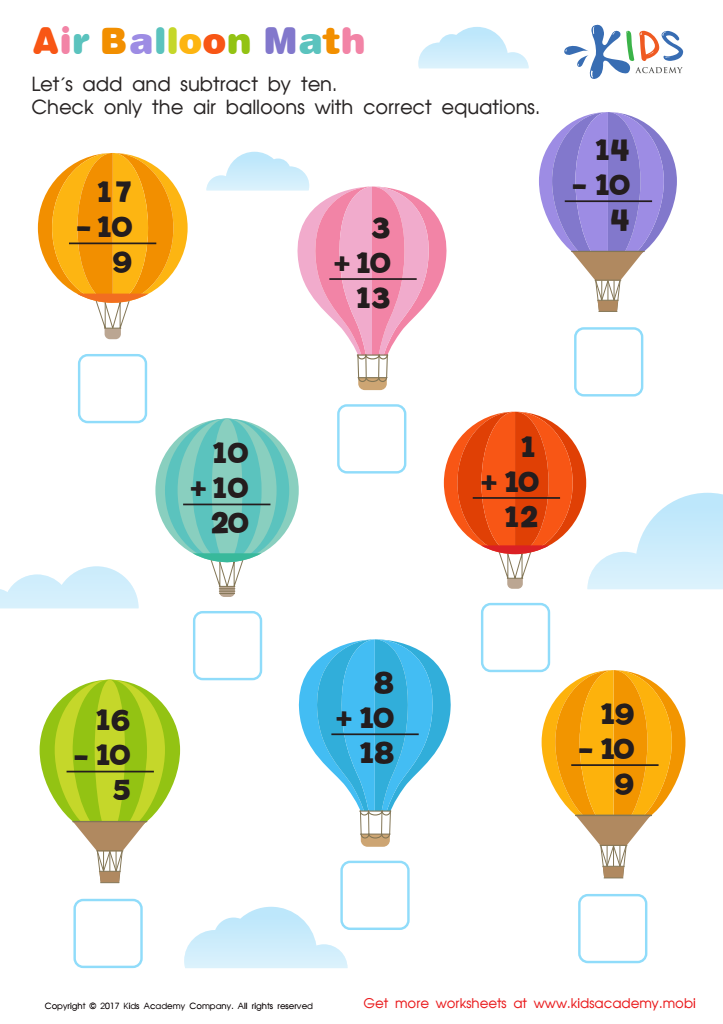
Air Balloon Math Worksheet
Revised:
Review your child's addition and subtraction skills with this fun worksheet. Featuring hot air balloons filled with math equations, help your child add or subtract by ten before ticking the boxes with the right answers. Working through the equations one-by-one is a great way to make math practice enjoyable!
 Assign to My Students
Air Balloon Math Worksheet
Worksheet
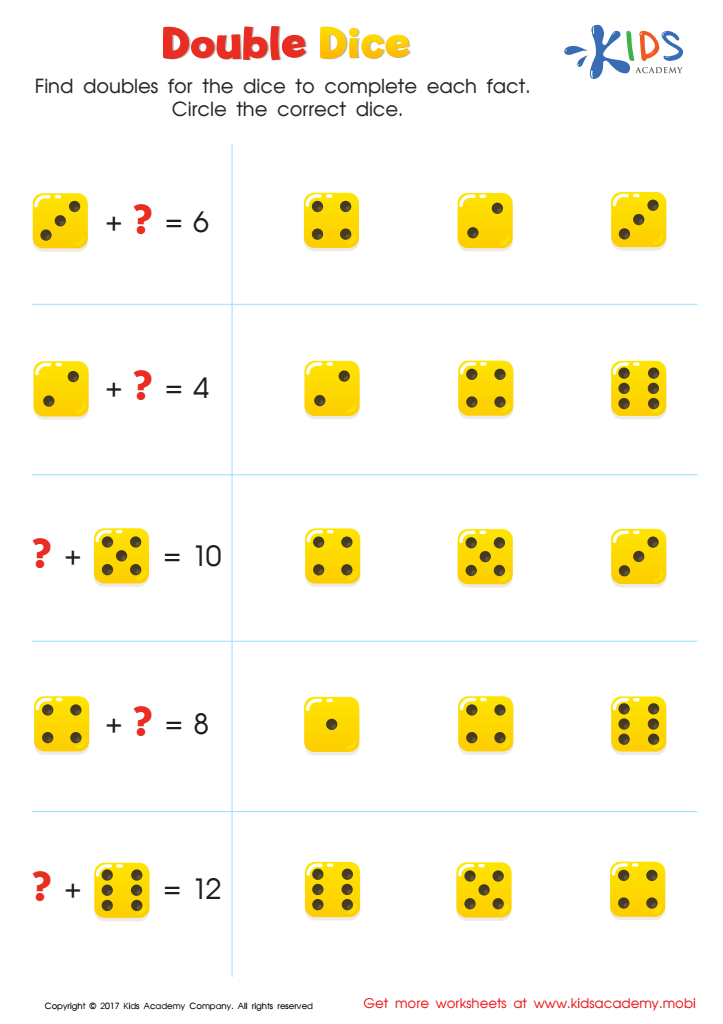
Addition Facts: Double Dice Worksheet
Are you looking for ways to make maths more engaging for kids? Maths can be a bore, but by teaching kids from an early age that it can be fun, they won't struggle with it. This worksheet is a great way to start: your child needs to identify the number on the left dice and find its double on the right. The sum of the two dice is also given.
Addition Facts: Double Dice Worksheet
Worksheet
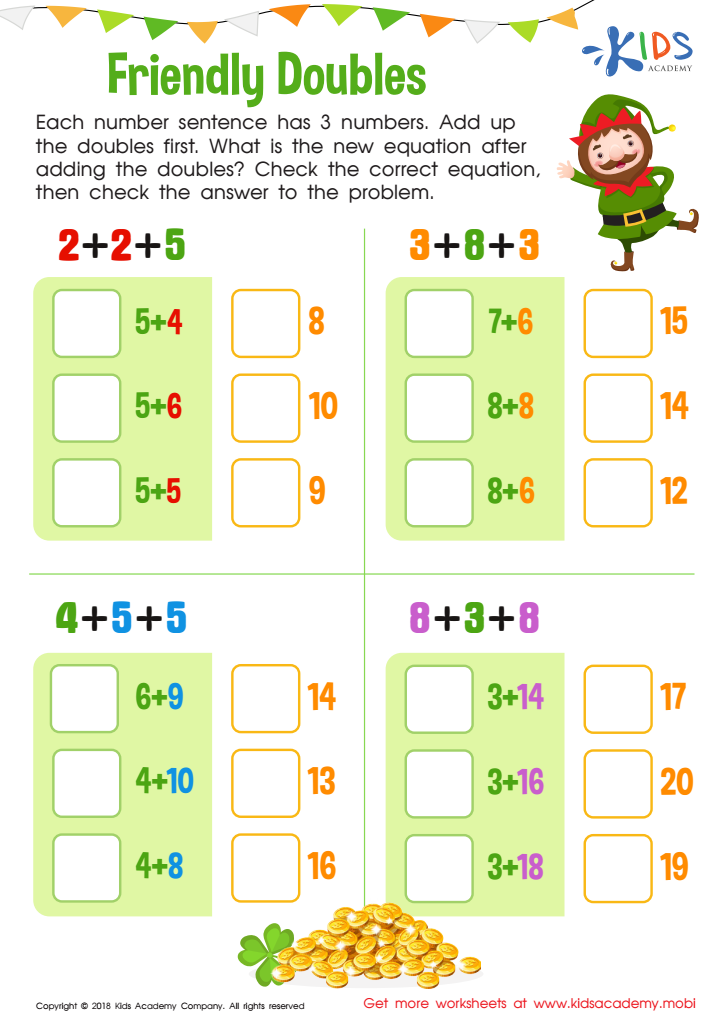
Friendly Doubles Worksheet
Kids will love this animated worksheet with bright colors! It helps them learn how to use doubles facts to answer three addend addition problems. It boosts their math skills, making computation easier, faster and more efficient. It also assists with adding and subtracting larger numbers. Let the power of doubles get them started!
Friendly Doubles Worksheet
Worksheet
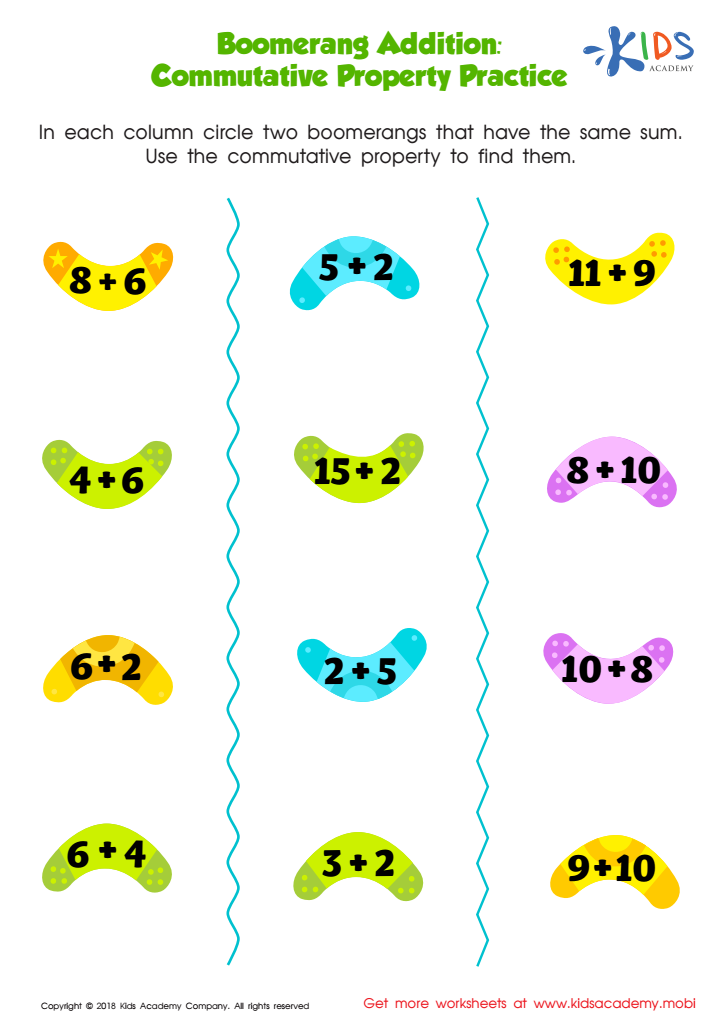
Boomerang Addition Worksheet
Kids know that when a boomerang is thrown, it reverses its path back. The same goes for addition: numbers can be rearranged and the sum will remain the same. Use this worksheet to find matching pairs of colorful boomerangs and equations. Look through each column and use the commutative property to find the pairs with the same sum.
Boomerang Addition Worksheet
Worksheet
Join Kids Academy for Free
Who is primarily going to use this learning content?








Parents and teachers should place significant importance on developing mental math skills, especially basic addition, in children aged 4-6. At this early age, children's brains showcase rapid cognitive development, and introducing them to mental addition can foster critical thinking and problem-solving skills essential for their educational journey.
Mental math enhances numerical fluency, helping children understand and manipulate numbers with ease. This foundational competency extends beyond math; it influences thinking patterns, promotes logical reasoning, and improves overall academic performance. By mastering addition early, children gain confidence in their mathematical abilities, reducing anxiety related to more complex topics they will encounter in the future.
Practicing mental math also sharpens memory and concentration. By learning to keep track of numbers and perform calculations mentally, youngsters enhance short-term memory, which supports learning in other areas such as reading comprehension and following instructions.
Incorporating mental addition into daily routines exemplifies how math is present in real-life scenarios, whether counting toys, sharing snacks, or understanding time. This practical approach helps children appreciate the value of math beyond the classroom, motivating them to engage in further mathematical explorations.
In summary, nurturing mental math skills through normal addition at a young age equips children with indispensable tools for academic success and everyday life, underscoring the importance for parents and teachers to integrate these practices into early education.