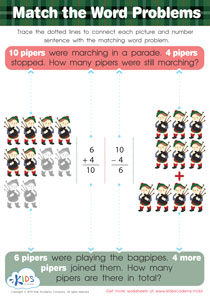
Problem-solving abilities Normal Addition Worksheets for Ages 4-6
4 filtered results
-
From - To
Enhance your child's problem-solving abilities with our engaging and educational Normal Addition Worksheets, tailored specifically for ages 4-6. Designed to foster cognitive and mathematical skills, these worksheets blend fun and learning, helping young learners grasp the basics of addition effortlessly. Through vivid illustrations and simple exercises, kids practice adding numbers while developing their critical thinking and problem-solving skills. These worksheets offer a fantastic way for children to build a strong foundation in math, preparing them for future academic challenges. Perfect for both classroom and home use, our worksheets make math enjoyable and accessible for early learners.
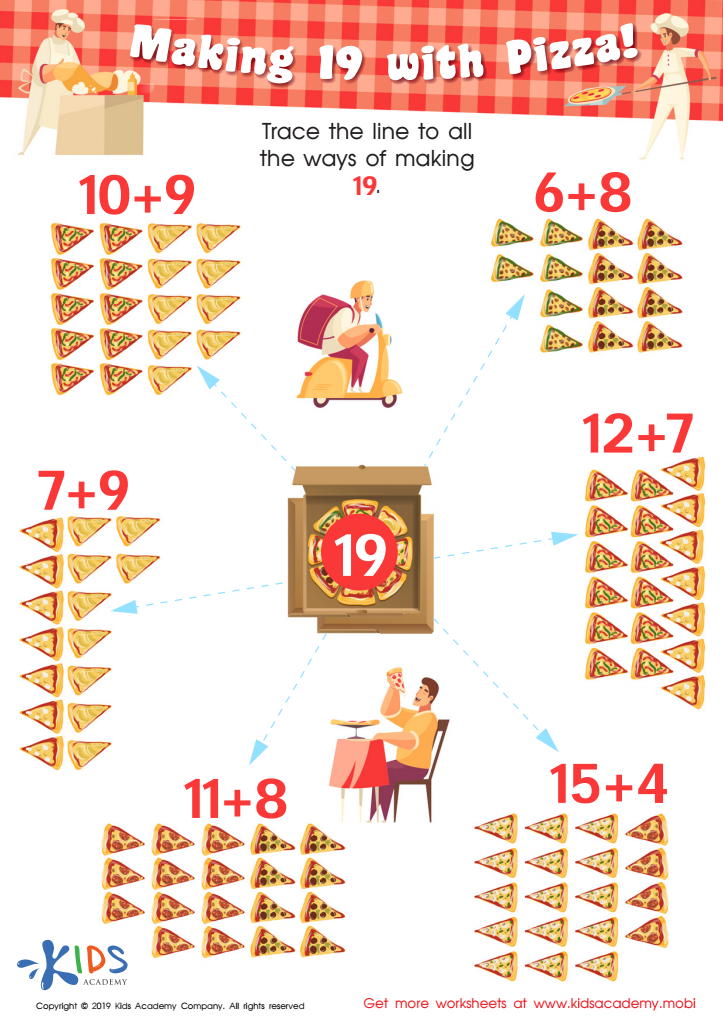
Making 19 with Pizza! Worksheet
 Assign to My Students
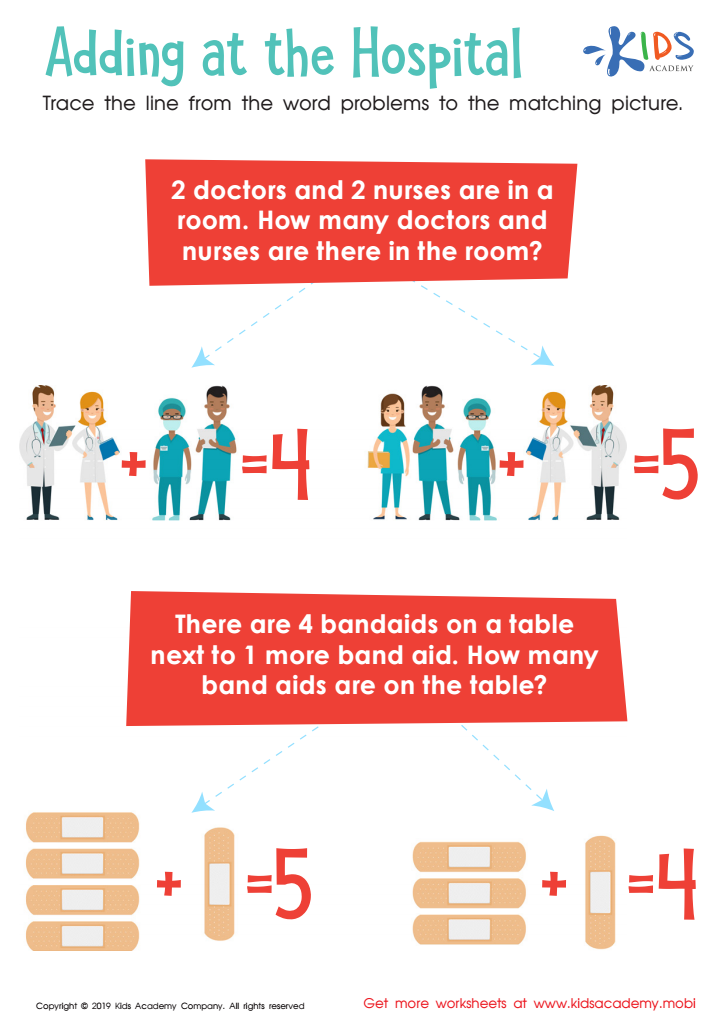
Adding at the Hospital Worksheet
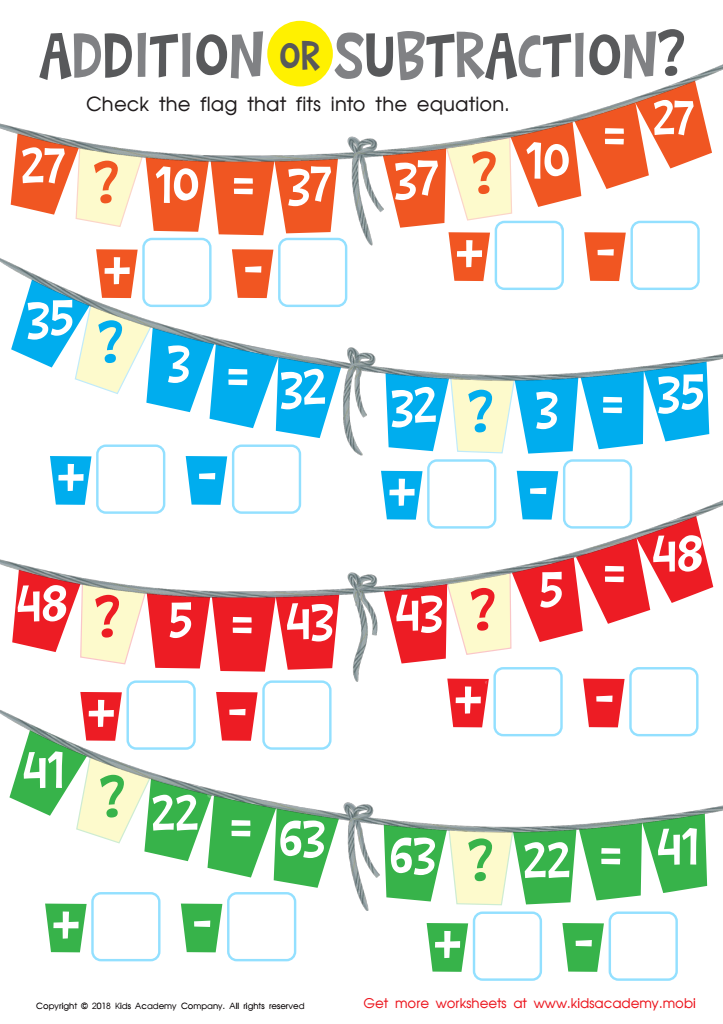
Addition or Subtraction? Worksheet
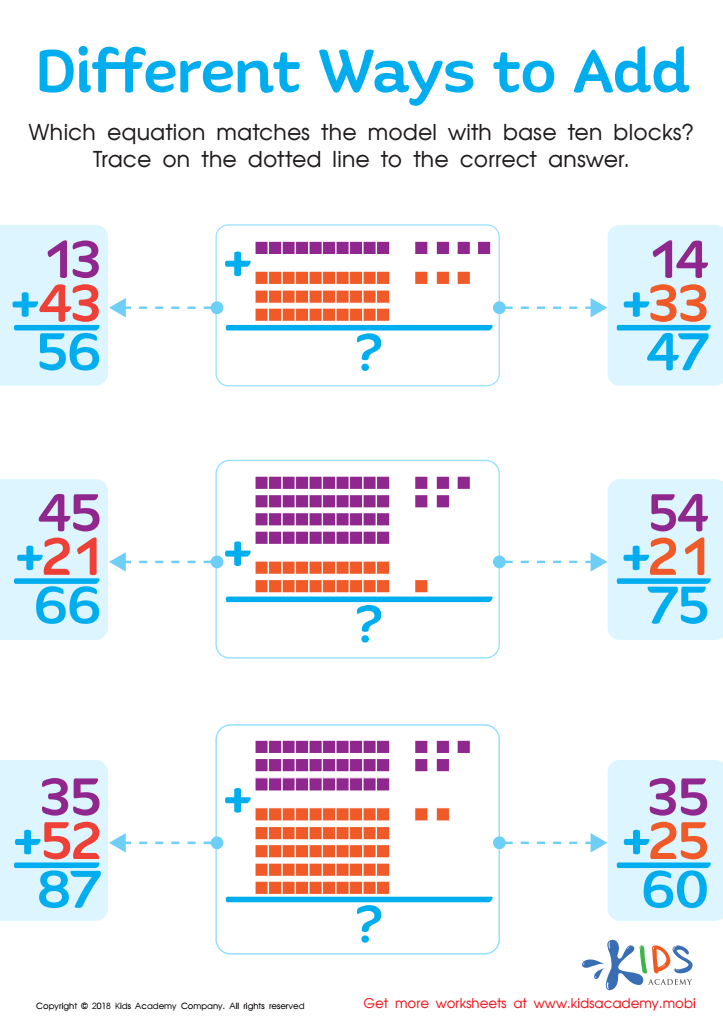
Different Ways to Add Worksheet







.jpg)
Problem-solving abilities in young children, especially in the context of normal addition, are crucial for several foundational reasons. For ages 4-6, the development of these skills goes beyond simple arithmetic; it helps build essential cognitive abilities such as logical thinking, pattern recognition, and sequencing. When parents and teachers focus on nurturing problem-solving skills through basic addition, they are essentially laying the groundwork for higher-order math concepts and overall critical thinking.
Adding numbers requires understanding and memory, as children need to remember what has been counted and make connections between numbers. This process enhances their working memory and attention to detail, attributes important for academic success across various subjects. Moreover, engaging young children in solving simple addition problems encourages curiosity and fosters a sense of accomplishment. This positive reinforcement can increase their confidence and enthusiasm for learning new things.
Furthermore, these early mathematical experiences usually involve using manipulatives or visual aids, such as blocks or counters, which support sensory development and fine motor skills. Finally, problem-solving through addition in a group setting also facilitates social learning, as children often learn by observing peers and experiencing teamwork. Therefore, prioritizing problem-solving abilities for young children isn't just about math; it's about promoting comprehensive developmental growth.