Shape identification Normal Geometry Worksheets for Ages 4-6
5 filtered results
-
From - To
Discover our engaging Shape Identification Worksheets for children aged 4-6! Designed to spark curiosity and enhance learning, these normal geometry worksheets introduce young learners to basic shapes such as circles, squares, triangles, and rectangles. Each fun and interactive activity promotes essential cognitive skills and helps children recognize and classify shapes in everyday objects. With vibrant illustrations and age-appropriate challenges, these worksheets make learning enjoyable and effective. Perfect for home or classroom use, our resources support early mathematics education and boost confidence in shape recognition. Equip your little ones with foundational geometry skills today! Explore our collection and watch their creativity flourish!
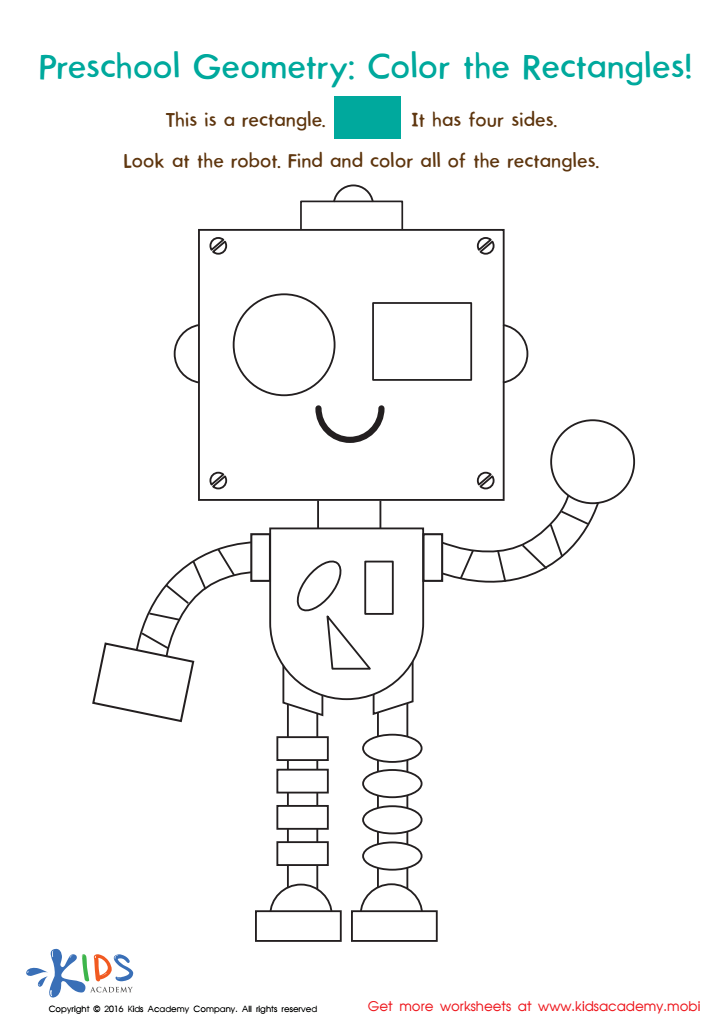
Geometry Worksheet
 Assign to My Students











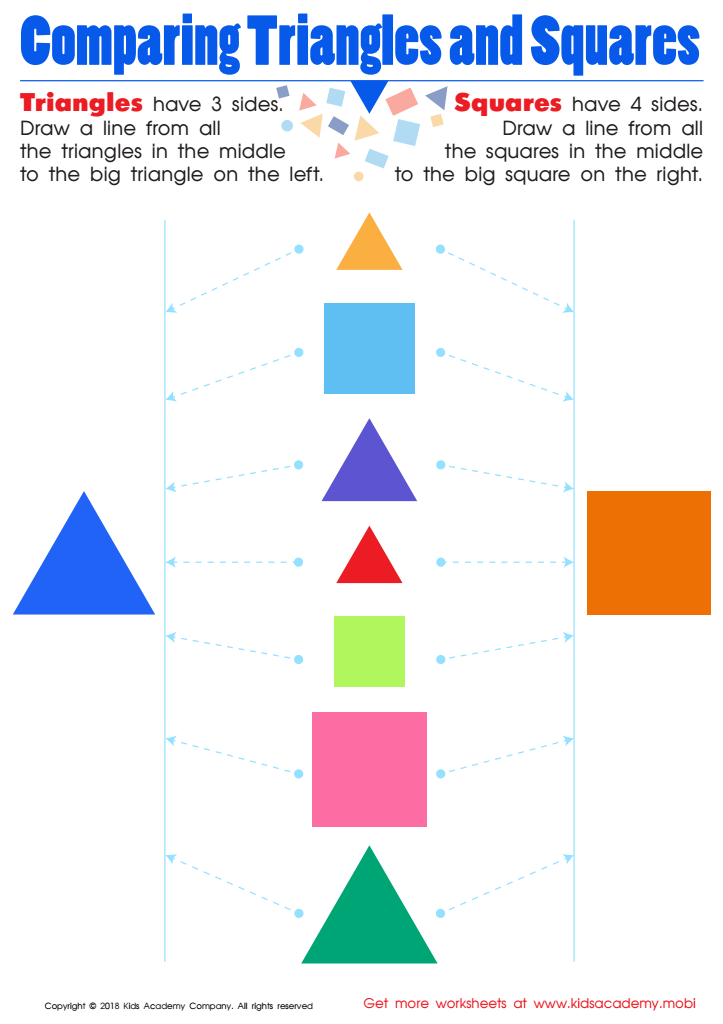
Comparing Triangles Squares Worksheet
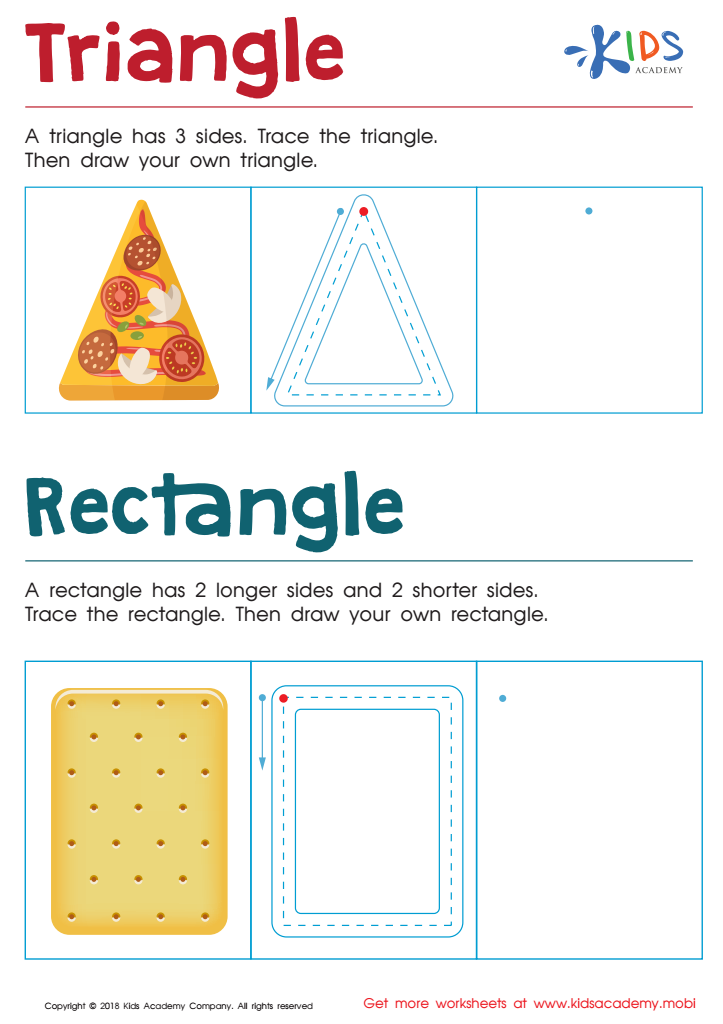
Triangle Rectangle Worksheet
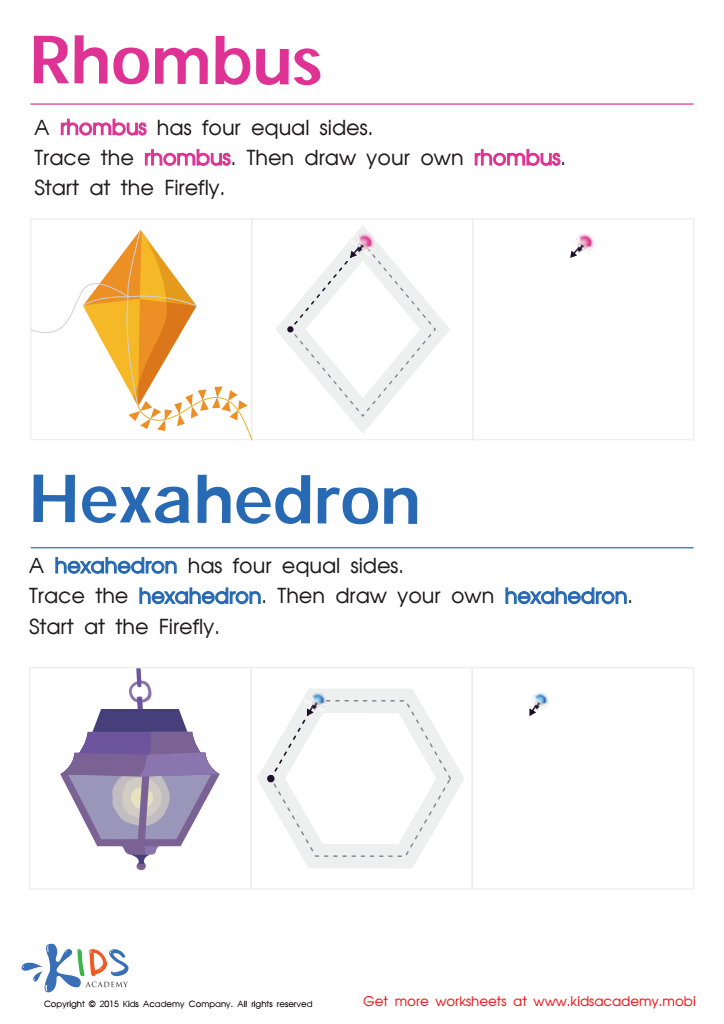
Draw a Rhombus And a Hexahedron Printable
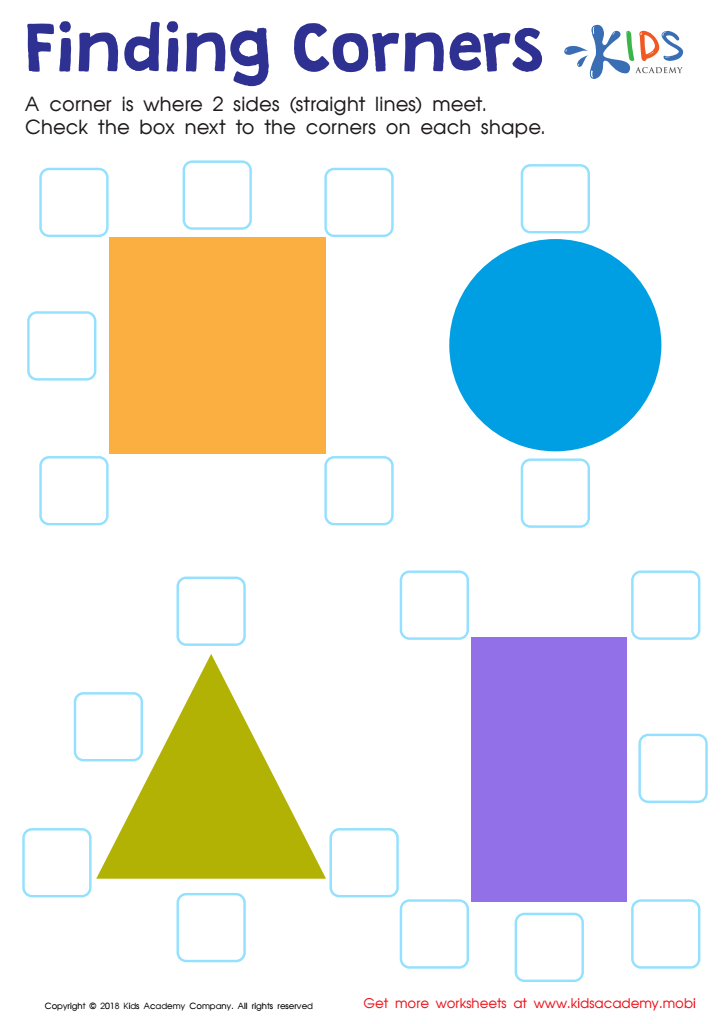
Finding Corners Worksheet








Shape identification and understanding basic geometry is crucial for children ages 4-6, as it lays the foundation for their cognitive development and math education. At this early stage, kids are naturally curious and enthusiastic about exploring their environment. By engaging in shape identification activities, parents and teachers can enhance spatial awareness, which is essential for problem-solving and critical thinking later in life.
Recognizing basic shapes — such as circles, squares, triangles, and rectangles — helps children develop fine motor skills through hands-on activities, such as drawing, cutting, and assembling shapes. Moreover, these early experiences with shapes contribute to a child's ability to categorize and connect concepts, which is a fundamental skill in mathematics and science.
About social skills, activities involving shapes often stimulate cooperation and communication among peers, facilitating teamwork as they work together in exploring shapes or building with blocks. This not only promotes their academic skills but also fosters emotional and social development.
In conclusion, parents and teachers should prioritize shape identification and normal geometry as they form the building blocks for children's academic growth, fine motor proficiency, social interaction, and overall confidence in learning. Investing time in these activities supports a holistic approach to education during these formative years.








