Color Identification Normal Numbers Worksheets for Ages 4-6
3 filtered results
-
From - To
Introduce your little ones to the vibrant world of color with our "Color Identification Normal Numbers Worksheets for Ages 4-6"! Designed to engage young learners, these worksheets combine number learning with colorful exploration. Each activity encourages children to identify and match colors while reinforcing their counting and number recognition skills. Perfect for preschool and kindergarten settings, our worksheets promote creativity and cognitive development. Give your child a head start by blending math and art—ensuring learning is both fun and interactive! Download these printable worksheets today and watch your child's confidence soar as they discover colors and numbers in innovative ways!
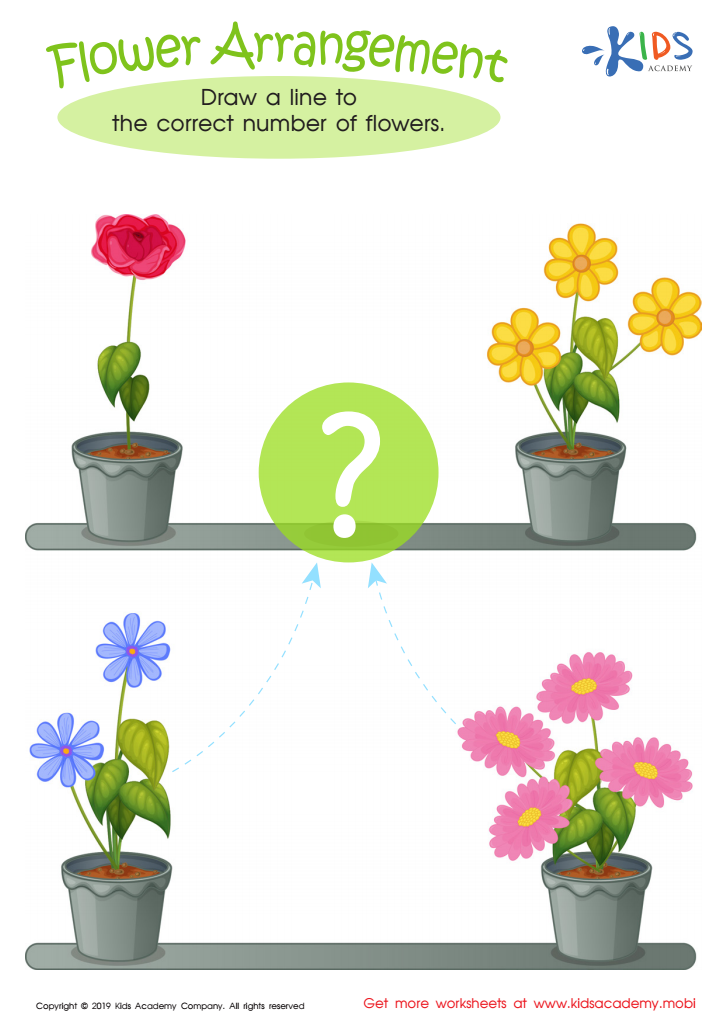
Flower Arrangement Worksheet
 Assign to My Students
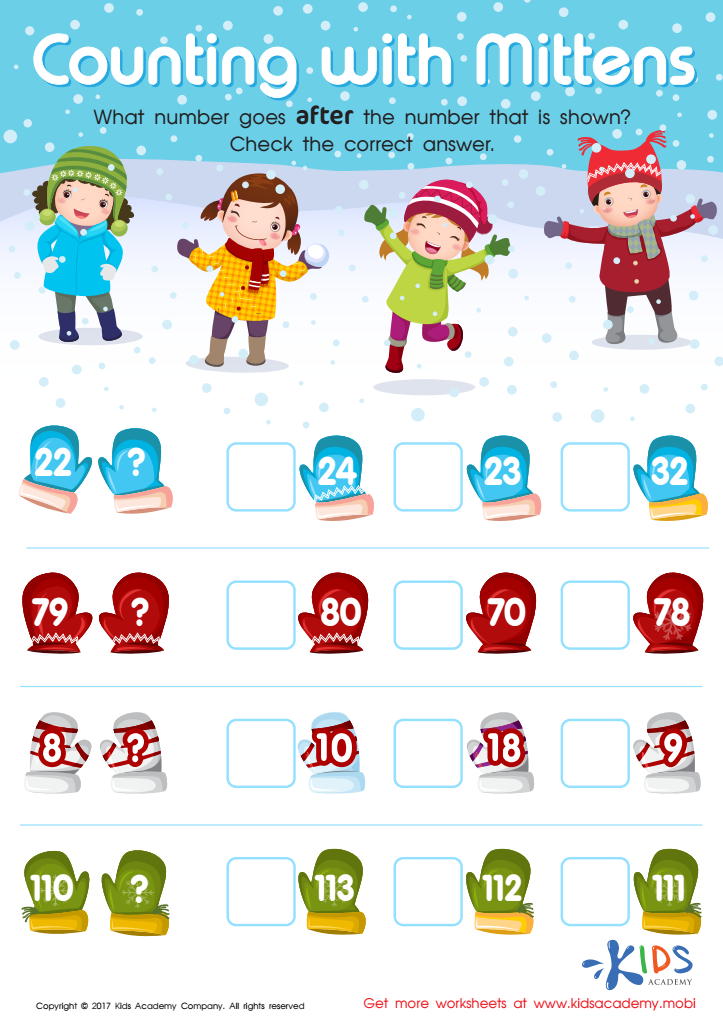
Counting with Mittens Worksheet
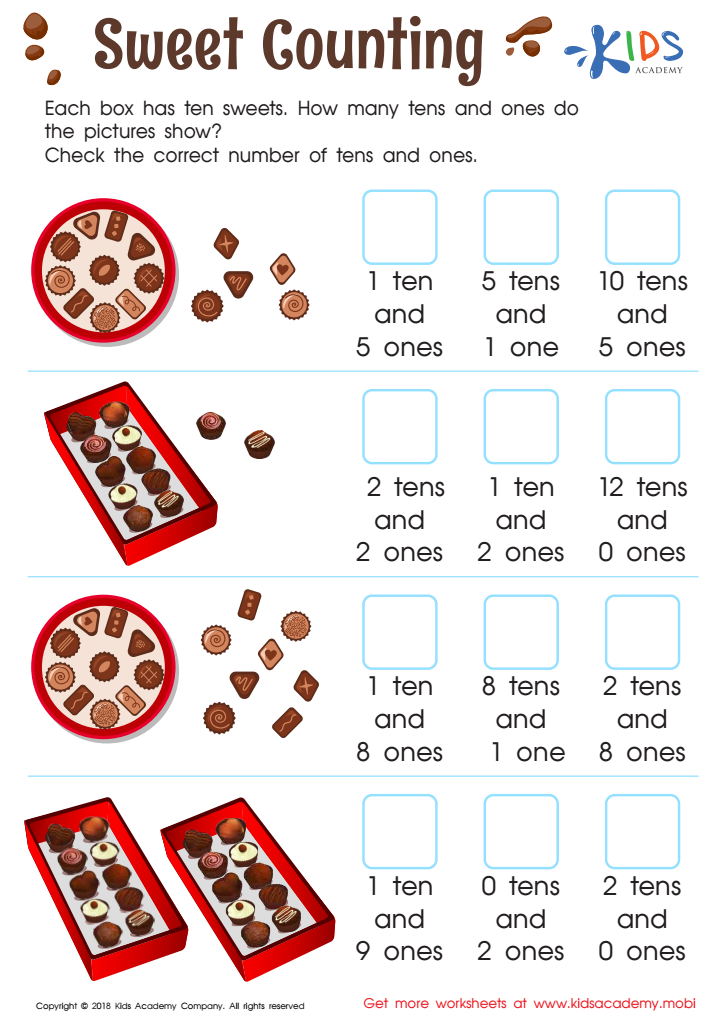
Sweet Counting - Part 2 Worksheet






.jpg)

Color identification and normalization of numbers play a crucial role in the early development of children aged 4-6. This period is foundational for cognitive growth, and both skills contribute significantly to a child's learning journey.
Firstly, color identification enhances a child’s cognitive abilities and helps in the development of their observational skills. Understanding colors can support language development; children learn to express themselves and communicate their thoughts more effectively. It also aids in creative expression through arts and crafts, where they explore colors visually and emotionally.
Secondly, normal numbers are essential for developing numeracy skills. Mastering basic number concepts prepares children for mathematics in later stages of education. Recognizing numbers helps them understand quantities, counting, and even basic problem-solving. This early exposure creates a strong foundation for future learning in mathematics, promoting confidence and enthusiasm for the subject.
Additionally, engaging children in activities that combine color identification and number recognition can enhance learning experiences, making them more interactive and enjoyable. As such, both parents and teachers should prioritize these skills, understanding that they are fundamental not only for academic preparedness but also for fostering creativity, critical thinking, and lifelong learning habits in children.








