Matching numbers Normal Numbers Worksheets for Ages 4-6
5 filtered results
-
From - To
Explore our engaging Matching Numbers Normal Numbers Worksheets designed for children aged 4-6! These interactive activities help young learners develop essential number recognition and matching skills. Our worksheets feature colorful illustrations and age-appropriate challenges that make learning fun and effective. Perfect for both classroom and at-home use, these resources encourage kids to practice identifying and matching numbers while boosting their confidence in math. Tailored to support early childhood education, our Matching Numbers worksheets align with developmental milestones and foster critical thinking. Download and start your child’s learning journey today! Enhance their mathematical abilities with joy and creativity!

Count and Match Boxes with Vegetables
 Assign to My Students
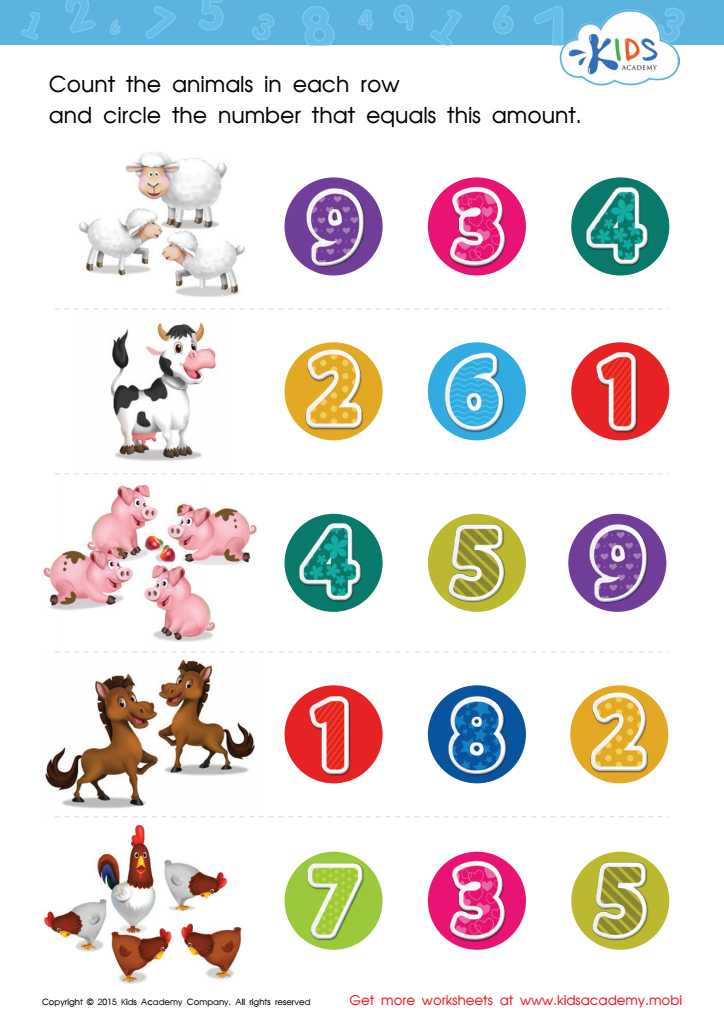
Count and Match 1 – 5 Math Worksheet
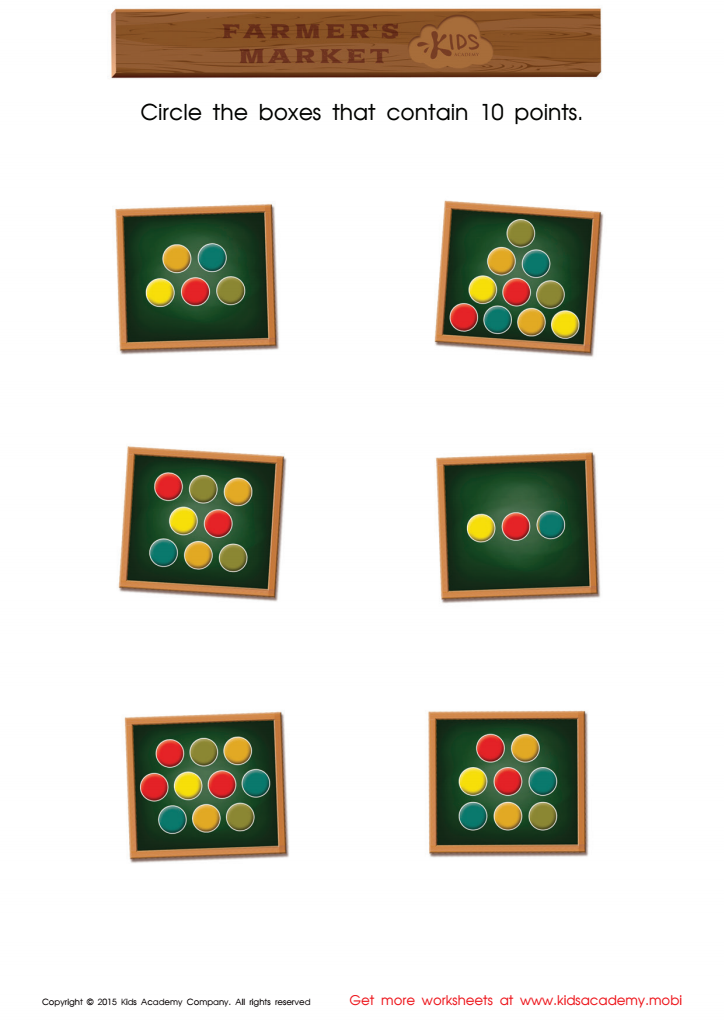
Count and Match Points 10 Math Worksheet
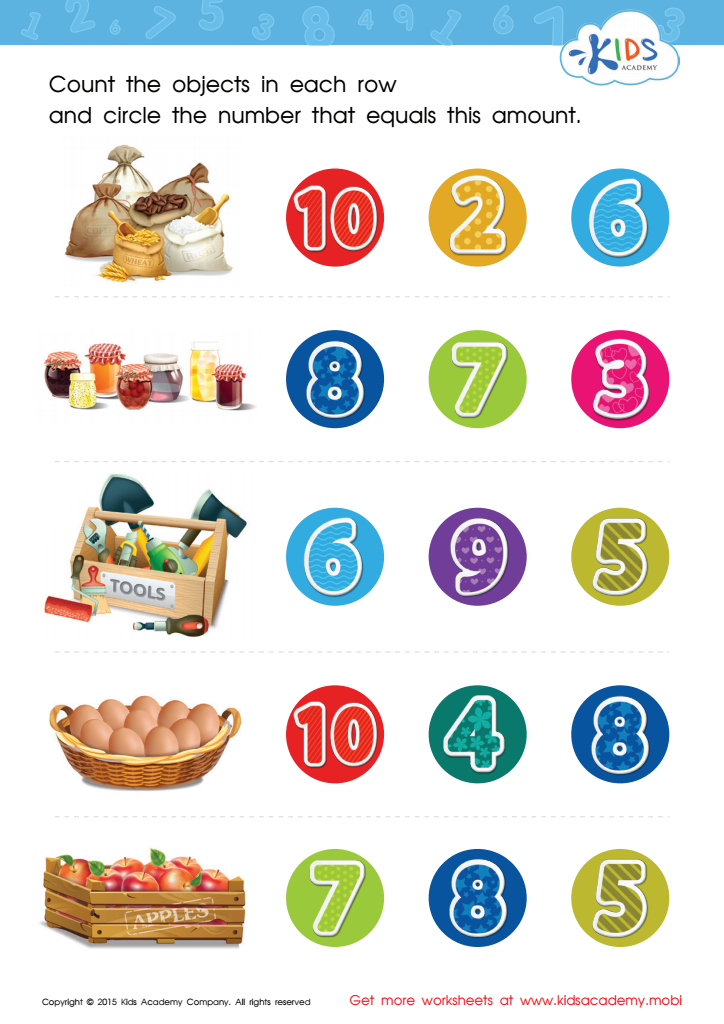
Count and Match 6 – 10 Math Worksheet

Count and Match Vegetables and Points Math Worksheet







Understanding matching numbers and normal numbers is essential for children aged 4-6 as it lays a strong foundation for their mathematical skills. During this critical period of development, kids begin to grasp basic numerical concepts, and recognizing how to match and compare numbers enhances their cognitive abilities and precision.
Parents and teachers should care because mastering these skills aids in building a child's confidence and enhances their problem-solving capabilities. It encourages logical reasoning as children understand the one-to-one correspondence of numbers, which is vital for later math classes.
Moreover, matching numbers fosters engagement in play-based learning, bridging liking numbers with real-life applications through hands-on activities like counting objects, playing games, or sorting. This not only makes learning enjoyable but also supports the development of fine motor skills and social interactions.
Additionally, establishing a comfort level with numbers early on can prevent future math anxiety. Children who have a solid grasp of matching and normal numbers are more likely to succeed when faced with more complex concepts in later grades. Therefore, investing time in these early mathematics skills is critical, as they contribute significantly to a child’s overall academic trajectory and love for learning.








