Basic Math Skills Normal Math Worksheets for Ages 4-6 - Page 2
25 filtered results
-
From - To
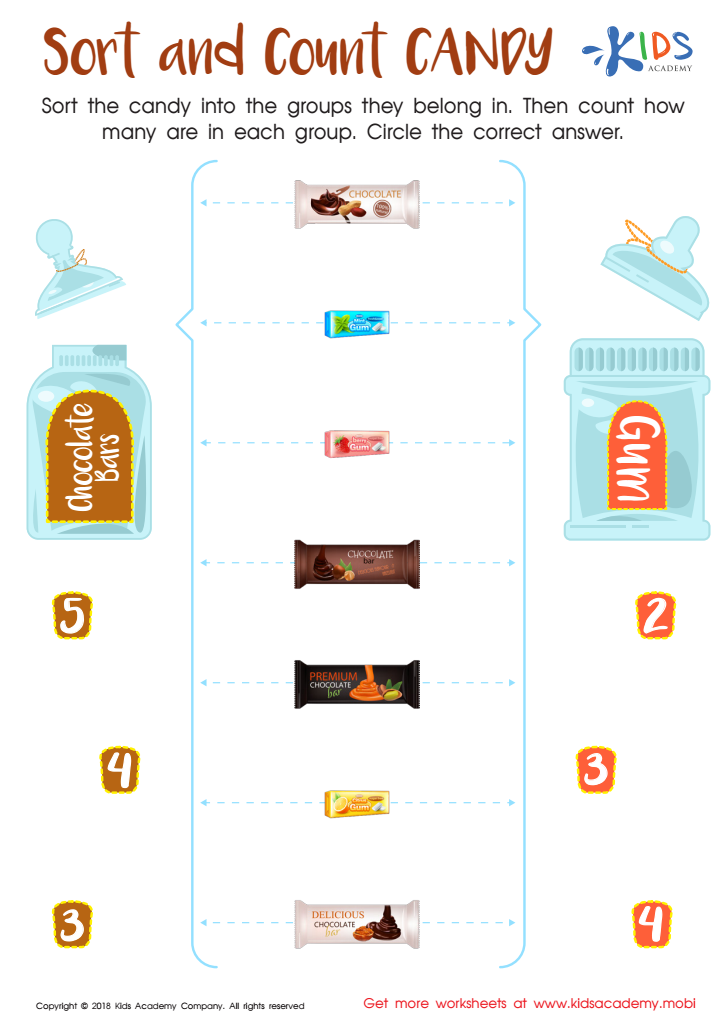
Sort and Count Candy Worksheet
 Assign to My Students








Basic math skills are crucial for children aged 4-6 as they serve as the foundation for all future learning in mathematics and related subjects. At this early stage, children develop critical thinking, problem-solving abilities, and spatial awareness through foundational math concepts. Parents and teachers play a vital role in nurturing these skills, as early exposure enhances cognitive development.
Engaging with basic math—such as counting, sorting, and recognizing patterns—helps young learners build confidence and a positive attitude towards math. This is essential, as a strong mathematical base can lead to improved academic performance as they progress to more complex topics.
Moreover, math skills are not just pertinent for academic success; they also support life skills. For instance, learning to count helps in grasping concepts like time and money, which are practical for navigating everyday life.
By prioritizing basic math development, parents and teachers foster an environment where children can explore, ask questions, and develop a love for learning. Encouraging regular interactions with math stimulates curiosity and lays the groundwork for lifelong learning, ensuring children are well-prepared for both academic challenges and real-world situations.








