
Developing math skills Normal Math Worksheets for Ages 4-6
3 filtered results
Difficulty Level
Grade
Age
-
From - To
Subject
Activity
Standards
Enhance your child's early math skills with our expertly designed Normal Math Worksheets for Ages 4-6. These engaging, age-appropriate sheets cover vital concepts such as counting, addition, and shape recognition, providing a solid foundation for future learning. Tailored to young minds, each worksheet makes math fun and interactive, encouraging kids to explore numbers and patterns in a stress-free environment. Boost your child's confidence and proficiency in mathematics with our structured, visually appealing resources! Ideal for parents and educators striving to foster a love for math from the start, ensuring academic success and a joyous learning journey.
Favorites
With answer key
Interactive
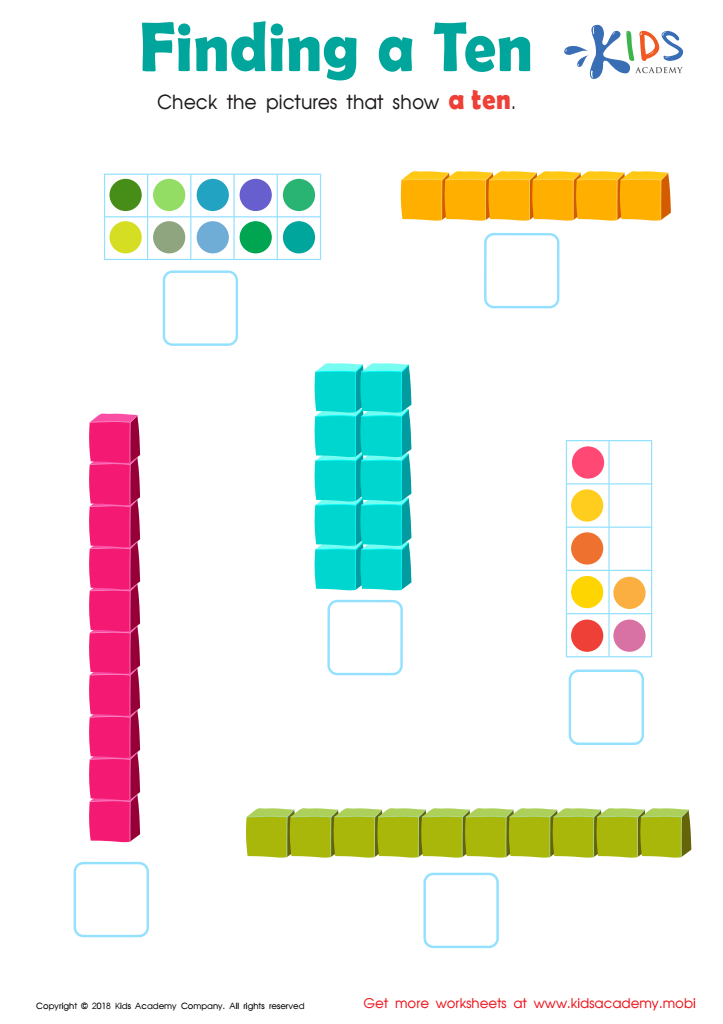
Finding a Ten Worksheet
Can your child count to ten? Distinguish groups of ten? This free printable worksheet uses shapes and colors to help first graders learn to count and understand what groups of numbers look like. It's fun and easy to comprehend, helping kids master the fundamentals of math.
 Assign to My Students
Finding a Ten Worksheet
Worksheet
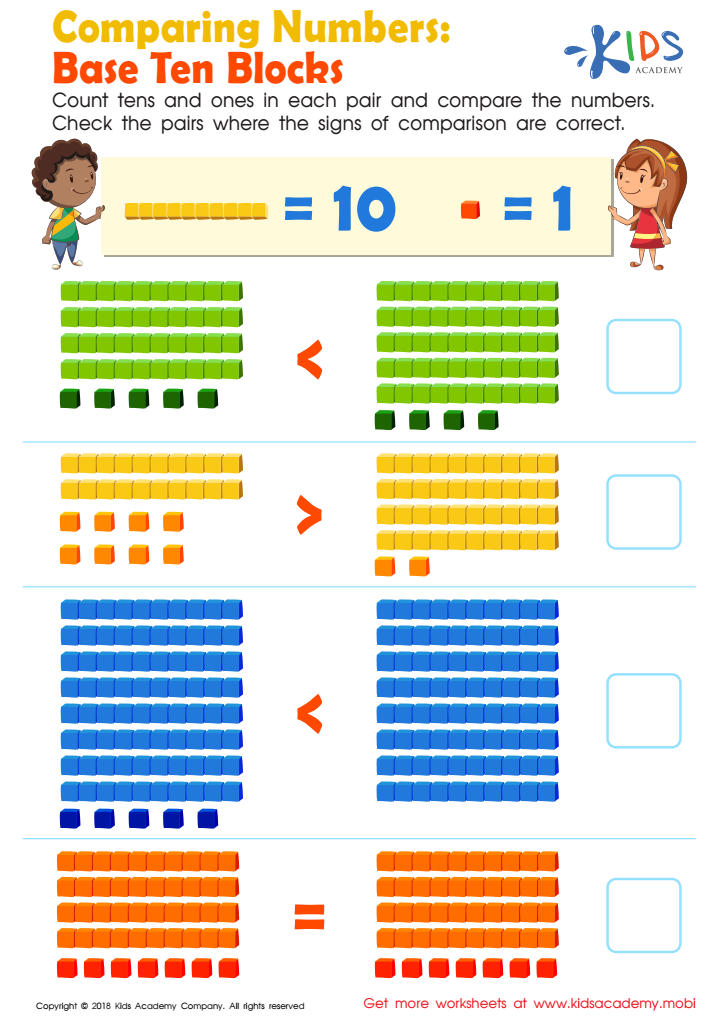
Comparing Numbers: Base Ten Blocks Worksheet
Make math fun for your child with a colorful worksheet. They'll need to compare signs by counting blocks on each side and signifying whether it's correct or not. This is one way to help your child beat the unhappiness that comes with math.
Comparing Numbers: Base Ten Blocks Worksheet
Worksheet
Matching: Classifying Toys by Size Worksheet
.
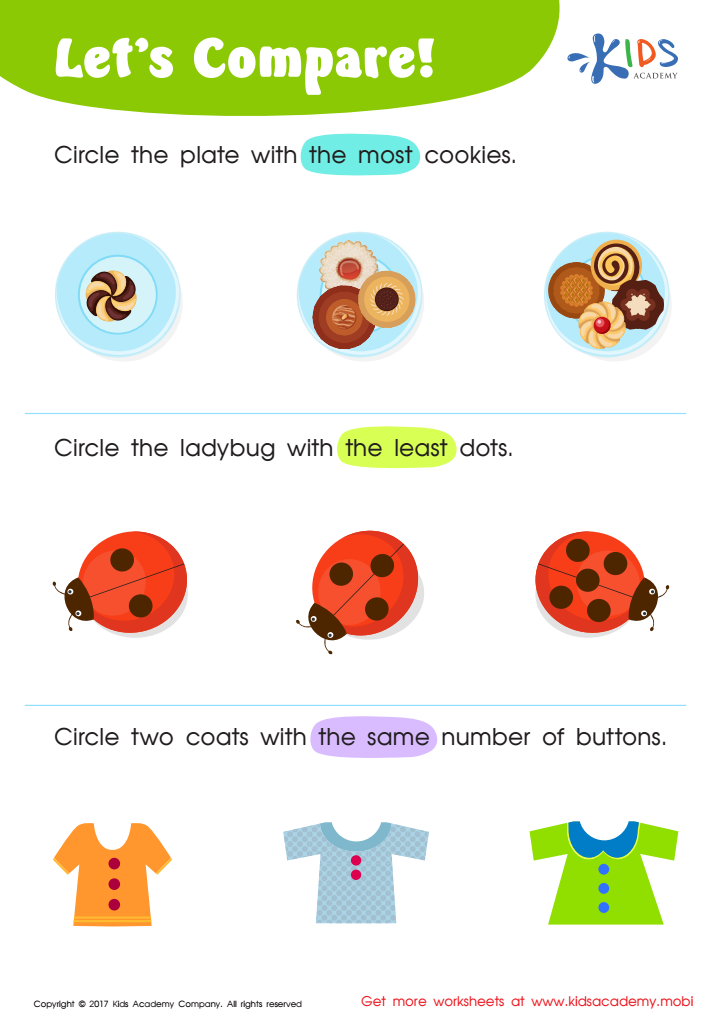
Have your young one's observation and counting skills ready for this worksheet; carefully look through the images and count the objects, then circle the plates with the least, most or equal number of patterns. Pay attention and have good counting abilities to make this task easy.
Matching: Classifying Toys by Size Worksheet
Worksheet
Join Kids Academy for Free
Who is primarily going to use this learning content?







.jpg)
Developing math skills in early childhood is foundational for future academic success and everyday problem-solving. For children ages 4-6, acquiring basic math concepts serves as the bedrock for more advanced learning. Early math experiences sow the seeds for logical reasoning, pattern recognition, and critical thinking—all crucial cognitive abilities.
Starting math education early can also help children develop a positive attitude towards the subject. At this age, children are naturally curious and enthusiastic learners. With engaging activities, they can view math as fun and enjoyable, easing any potential anxiety about the subject as they progress through their schooling.
Furthermore, early competency in math lays the groundwork for subjects beyond arithmetic or geometry. Skills such as counting, understanding shapes, recognizing patterns, and grasping spatial relations contribute to literacy, science, and technological learning. For instance, the ability to recognize patterns improves reading skills, while spatial awareness aids scientific understanding.
Incorporating math into daily life also cultivates practical life skills. Parents and teachers can integrate math into everyday activities like cooking, shopping, and playing games, equipping children with the tools they need for real-world application. By investing time and effort into developing these early math skills, parents and teachers help set the stage for well-rounded, confident, and capable learners.








