Differentiating shapes Normal Math Worksheets for Ages 4-6
3 filtered results
-
From - To
Discover the joy of learning with our "Differentiating Shapes – Normal Math Worksheets for Ages 4-6"! Specially crafted for young learners, these worksheets make identifying and differentiating shapes both fun and educational. Children will engage in various activities designed to develop their shape recognition and cognitive skills. Perfect for preschool through early elementary, each page combines colorful illustrations with simple instructions, fostering a love for geometry in a playful way. Tailored to fit the unique learning pace of each child, our worksheets ensure foundational math skills are built seamlessly. Spark curiosity and watch your child’s understanding of shapes flourish!
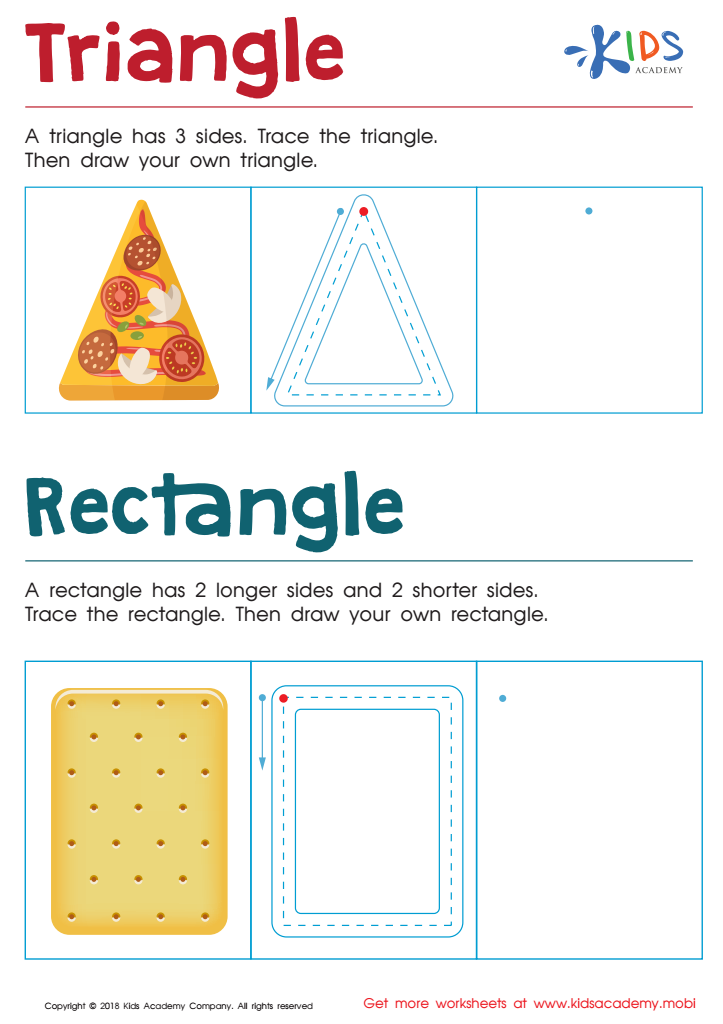
Triangle Rectangle Worksheet
 Assign to My Students
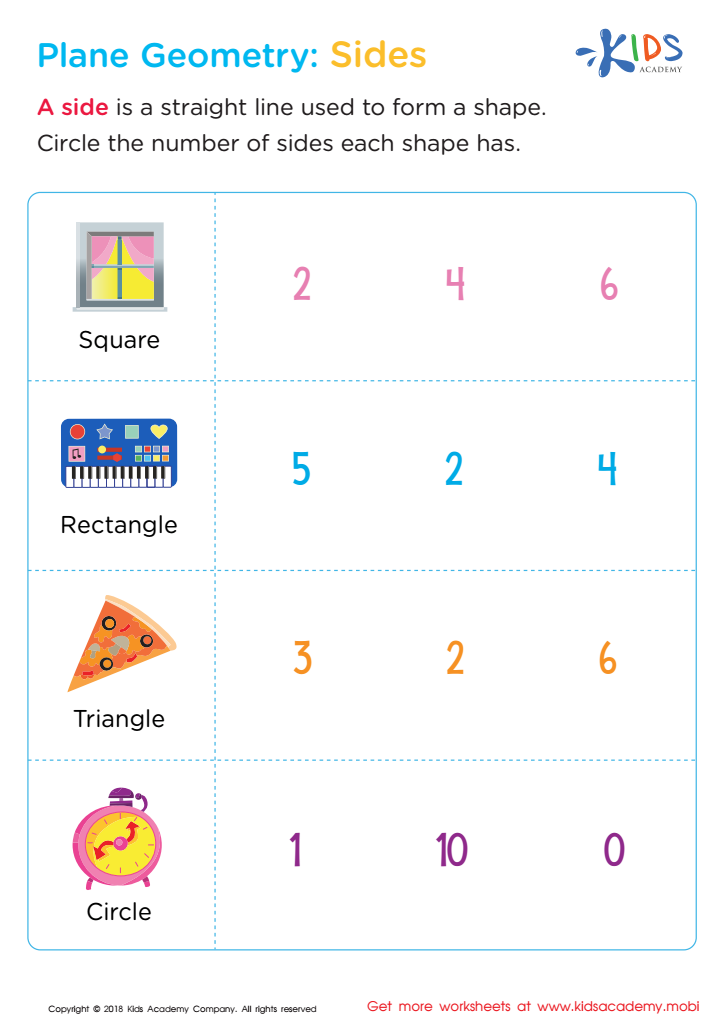
Plane Geometry: Sides Worksheet
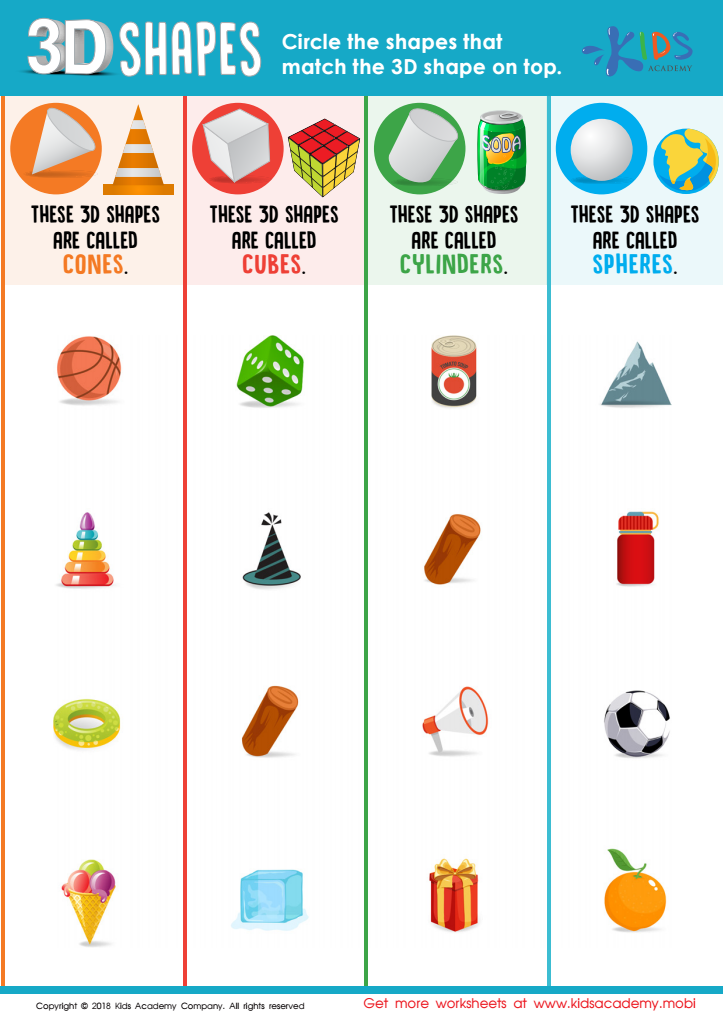
3D Shapes Worksheet





%20(1).jpg)


Understanding shapes is fundamental to cognitive development in young children aged 4-6. At this early stage, children are honing their visual and spatial awareness, which form the basis for later mathematical reasoning and problem-solving skills. Differentiating shapes is not just about recognizing circles, squares, and triangles; it’s about fostering an understanding of different properties such as the number of sides, angles, and symmetry.
When parents and teachers emphasize shape differentiation, they provide children with the tools to classify and categorize objects, a skill essential for their cognitive toolkit. Learning to distinguish and name shapes lays the groundwork for geometry and other complex mathematical concepts introduced at older ages. It also enables children to describe their environment more accurately, honing their language and communication skills.
Differentiating shapes enhances fine motor skills, as activities like drawing, tracing, and cutting shapes require precision and coordination. These skills are interconnected with overall academic achievements and daily life activities.
Early exposure to various shapes encourages curiosity and critical thinking. By integrating shape activities into daily routines, parents and teachers can make learning interactive and fun, ensuring children remain engaged while building a solid foundation for future math learning. It allows children to see mathematics as relevant to their world, stimulating a lifelong interest in learning.








