Understanding prepositions Normal Math Worksheets for Ages 4-6
3 filtered results
-
From - To
Introduce your young learners to prepositions with our "Understanding Prepositions Normal Math Worksheets for Ages 4-6." Designed to develop core math skills while teaching spatial awareness, these printable worksheets make learning fun and engaging. Children will practice identifying and using prepositions such as above, below, and beside through vibrant illustrations and interactive activities. Our curriculum-aligned resources not only enhance vocabulary but also improve cognitive and motor skills. Ideal for building a strong educational foundation, these worksheets are perfect for home or classroom use. Help your child master prepositions and more—with a seamless blend of learning and play!
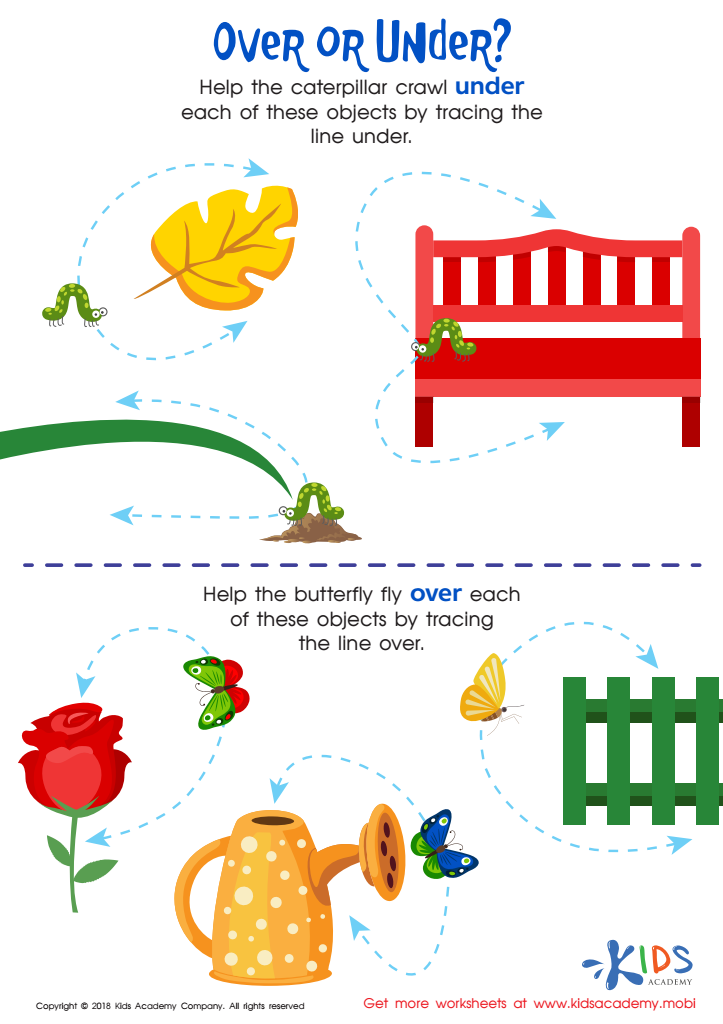
Over or Under? Worksheet
 Assign to My Students
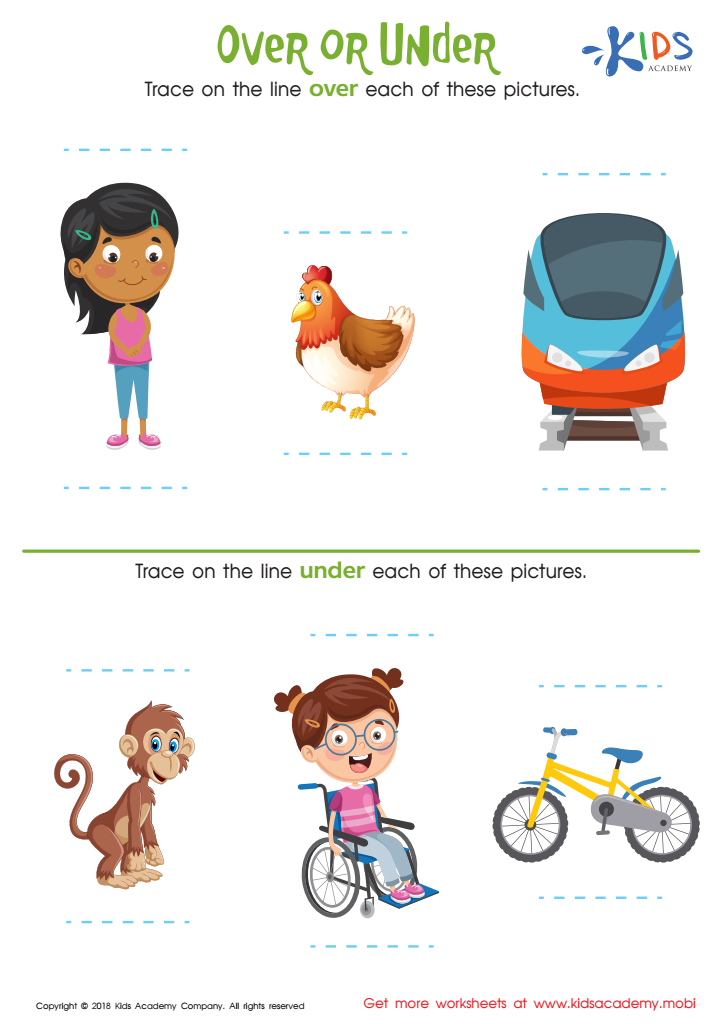
Over or Under Worksheet
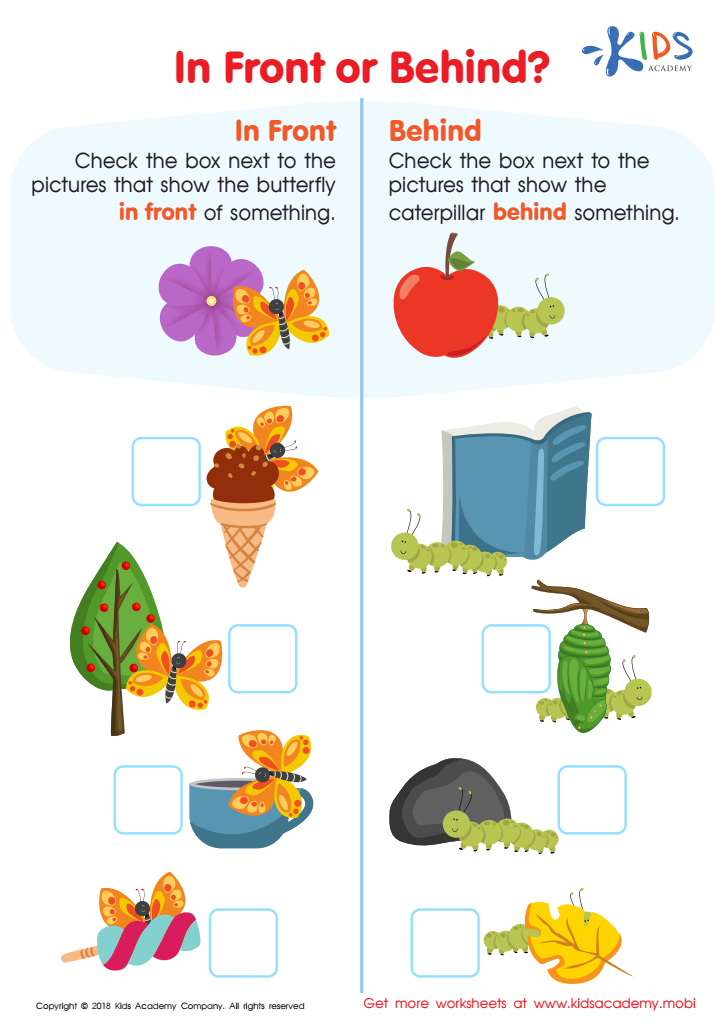
In Front or Behind Worksheet







Understanding prepositions and normal math processes for children aged 4-6 is crucial for early cognitive and language development. First, prepositions—words like "in," "on," "under," and "next to"—help convey relationships between objects and their positions. When children grasp these concepts, they can better communicate and understand instructions, which is foundational for reading comprehension later on. Recognizing how objects relate in space boosts spatial awareness, an essential skill in both daily life and future STEM learning.
Math skills learned at this age, such as counting, recognizing numbers, and basic addition and subtraction, are equally foundational. These concepts promote logical thinking, problem-solving abilities, and persistence. Early exposure to math builds confidence and reduces math anxiety, creating a positive attitude towards learning that persists into later years.
Parents and teachers play critical roles in this developmental stage. Engaging children in activities that use prepositions and incorporate basic math—such as sorting toys by size or shape, organizing counting games, or giving preposition-rich instructions during play—enhances both language and numerical proficiency. By focusing on these areas, adults cultivate a child's natural curiosity and lay the groundwork for academic success. They also provide tools for self-expression, independent thinking, and lifelong learning skills, which are invaluable as the child progresses through education.








