Understanding Quantities Normal Math Worksheets for Ages 4-6
3 filtered results
-
From - To
Introduce your little learner to the foundational concept of understanding quantities with our expertly designed math worksheets for ages 4-6. These engaging worksheets help young children develop essential skills such as counting, number recognition, and basic arithmetic in a fun and interactive way. Perfect for early learners, our worksheets utilize vibrant images and simple instructions to make the learning process enjoyable and effective. Enhance your child's math abilities and confidence by providing them with these structured, easy-to-follow resources that lay the groundwork for future math success. Explore our printable worksheets today and see the difference in your child's learning journey!
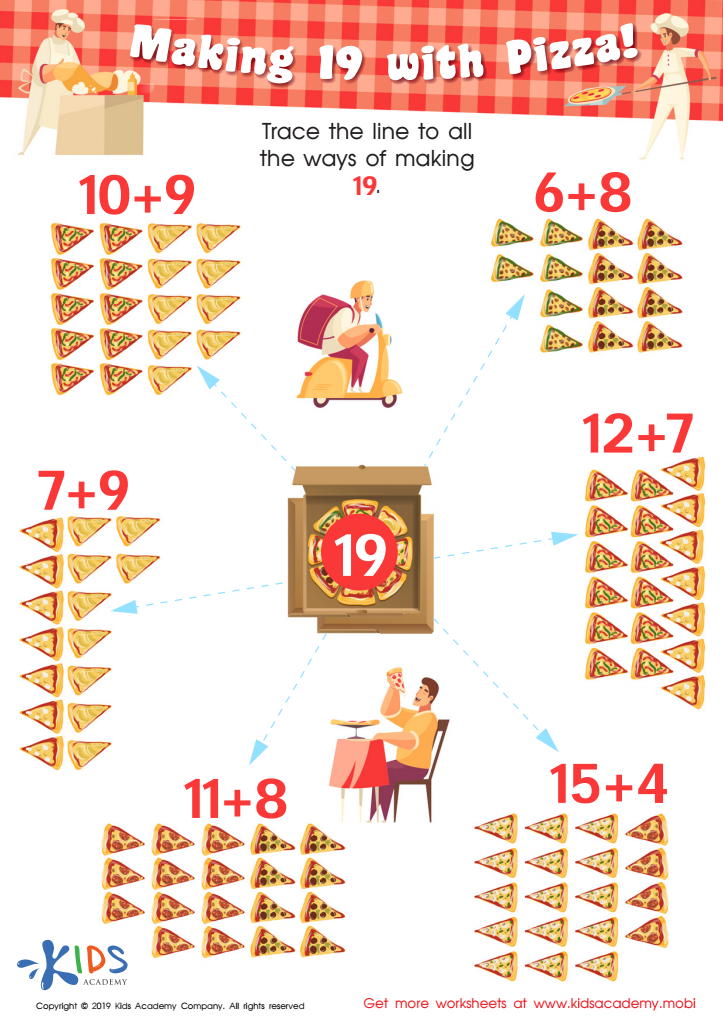
Making 19 with Pizza! Worksheet
 Assign to My Students
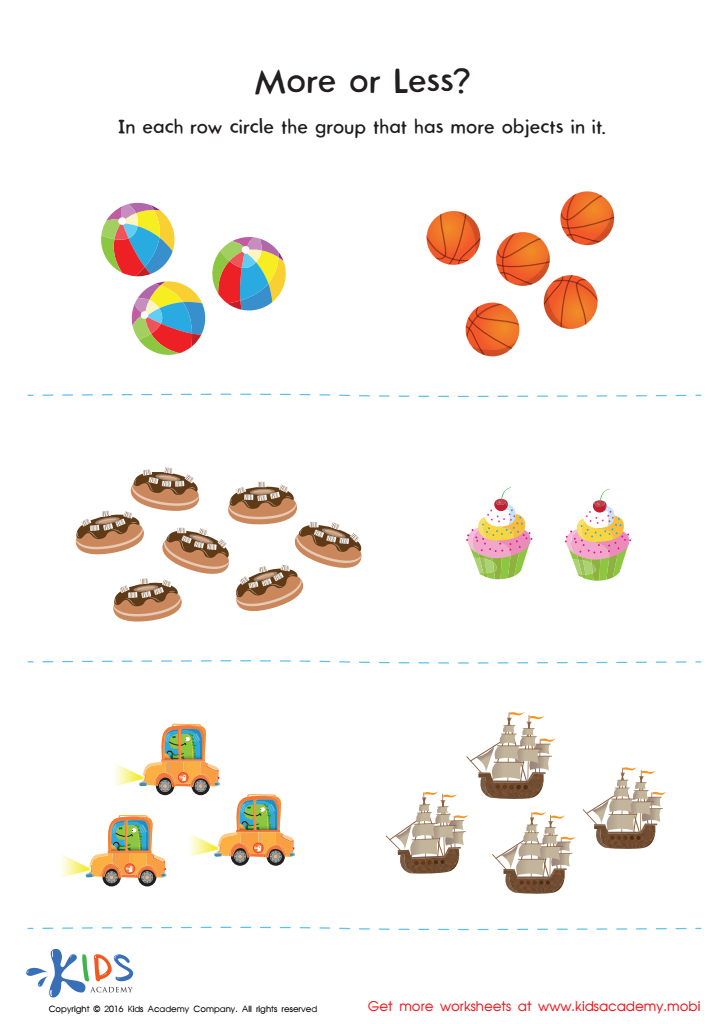
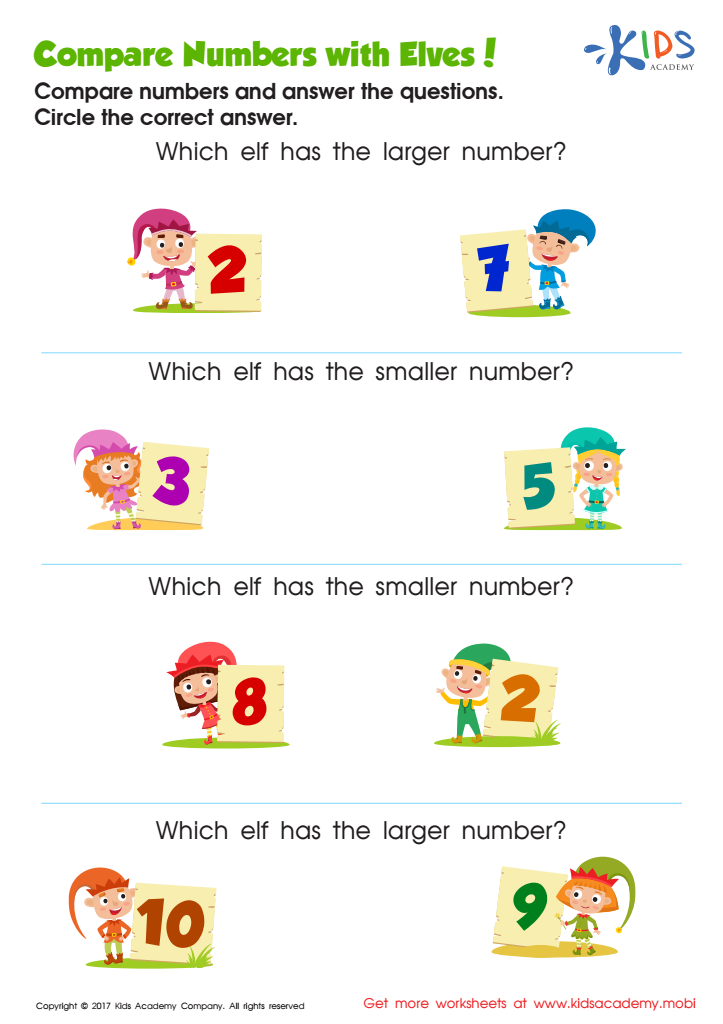
Comparing Numbers Worksheet for Kindergarten








Understanding quantities is crucial in early childhood education because it lays the foundation for future mathematical skills and real-world problem-solving. For children ages 4-6, grasping the concept of quantities helps them make sense of their environment and everyday experiences. When parents and teachers emphasize understanding quantities, they support children's ability to compare, measure, and reason mathematically.
At this age, children are naturally curious and primed to learn through play and exploration. Activities that involve counting objects, sorting items by size, or comparing amounts are not just fun but also educational. They help kids develop number sense, which is the intuitive understanding of numbers and their relationships. This foundational skill is essential for more advanced mathematical concepts such as addition, subtraction, and estimation.
Additionally, mastering quantities aids cognitive development, including improved memory, attention to detail, and critical thinking. It also enhances language skills as children learn terms like “more,” “less,” “equal,” and specific number names.
Parents and teachers should care because reinforcing these fundamental skills early sets children up for academic success. By creating rich, engaging learning experiences, adults can help children build confidence in their mathematical abilities, fostering a positive attitude towards learning and mastering challenges in the future.








