
Writing practice Normal Math Worksheets for Ages 4-6
3 filtered results
Difficulty Level
Grade
Age
-
From - To
Subject
Activity
Standards
Enhance your child's early writing skills with our Normal Math Worksheets for ages 4-6! Designed to make learning fun and engaging, these worksheets provide various activities that help little learners practice writing numbers and developing fine motor skills. Each worksheet is tailored to ensure a smooth introduction to math concepts, fostering a strong foundation for future learning. Through colorful illustrations and interactive prompts, children will enjoy the process of writing while gaining confidence in their abilities. Perfect for at-home practice or as additional classroom resources, these worksheets are a fantastic way to combine math and writing in one entertaining package!
Favorites
With answer key
Interactive
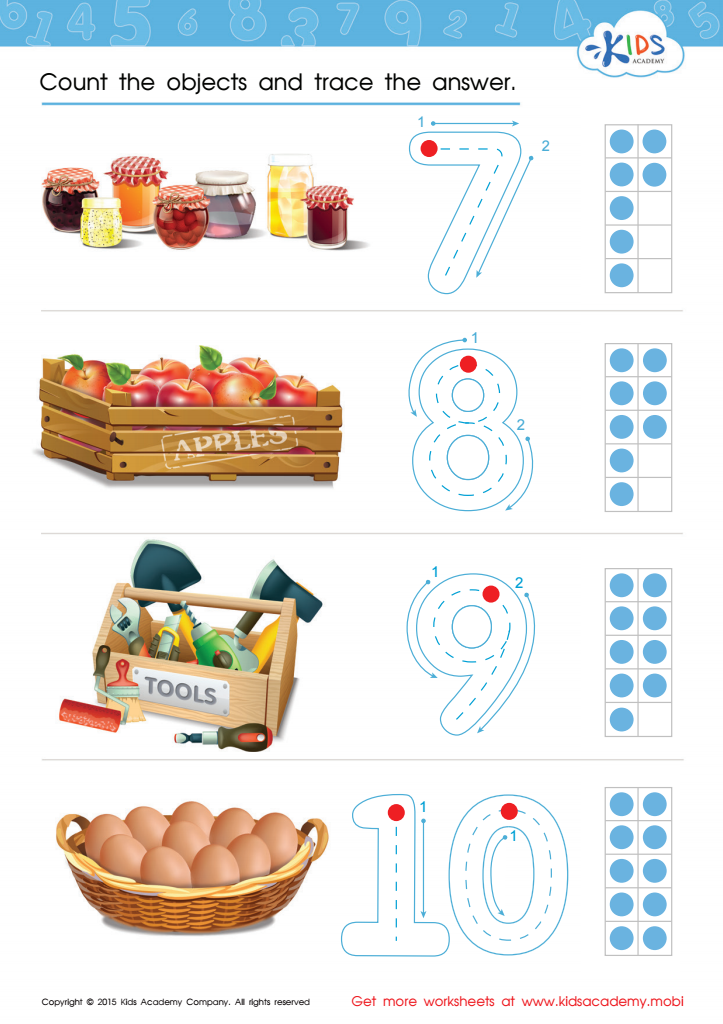
Count and Trace 7 – 10 Worksheet
Let your child develop a lifelong love of math with Kids Academy's printable math worksheet based on the innovative Singapore Math method. It uses funny pictures and graphs to help solve math problems. Check out our amazing collection of free printable math worksheets now!
 Assign to My Students
Count and Trace 7 – 10 Worksheet
Worksheet
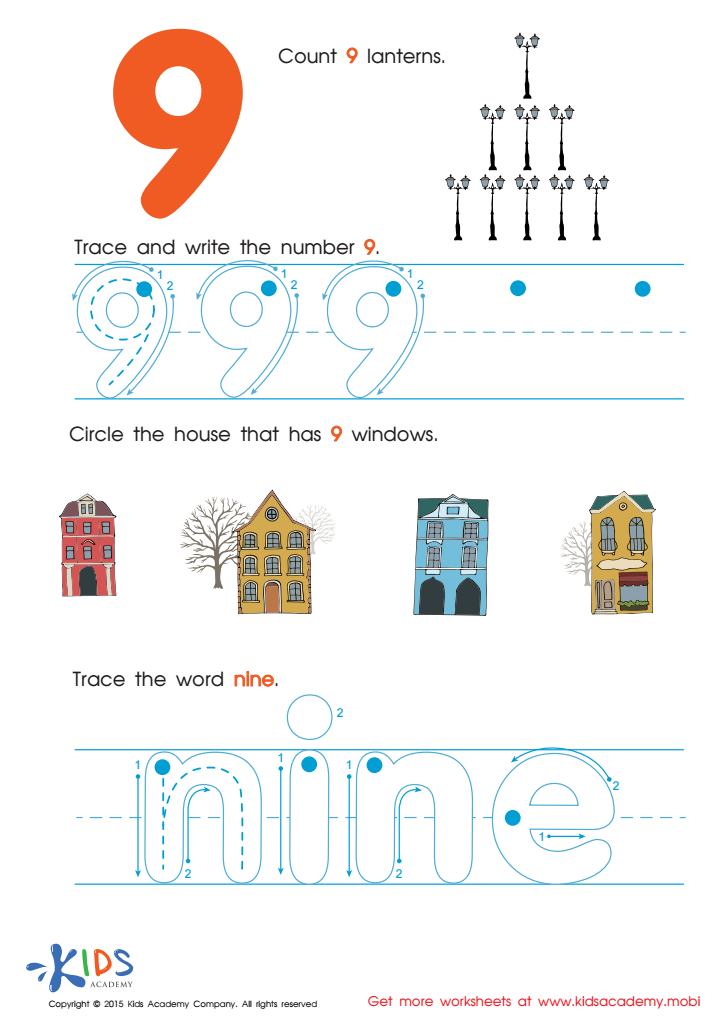
Tracing And Learning to Write Number 9 Worksheet
Explore our collection of learning numbers worksheets and make teaching numbers to preschoolers easier with Kids Academy. Trace numbers, circle houses with the specified number of windows, write the corresponding number words and revise previous numbers regularly to help kids learn.
Tracing And Learning to Write Number 9 Worksheet
Worksheet
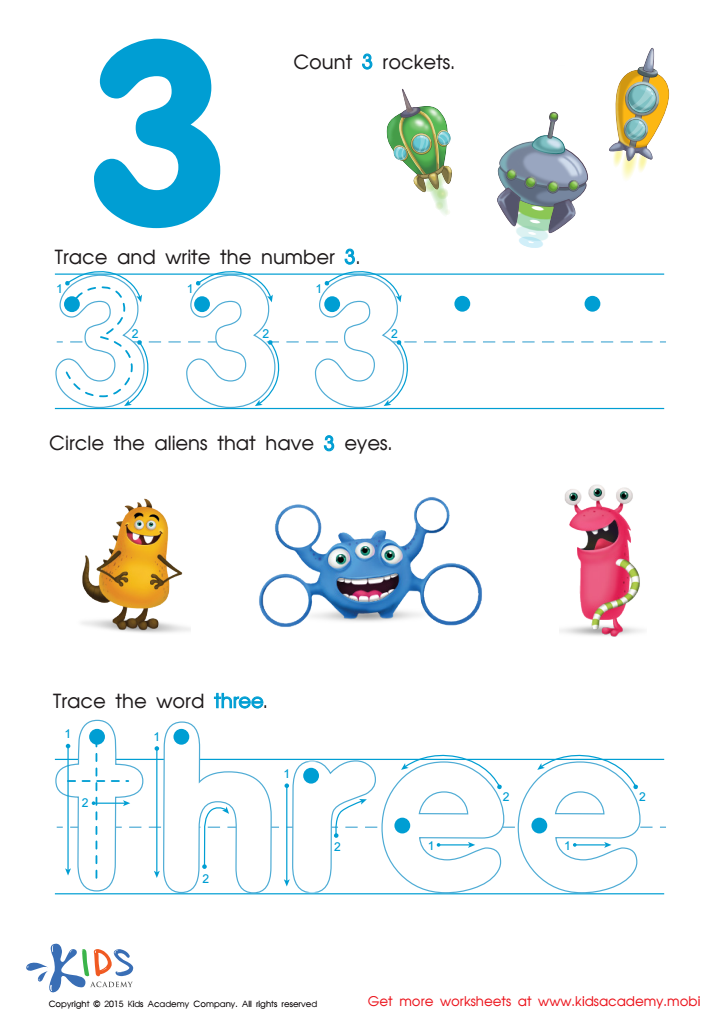
Learning Number Three Worksheet
Learn to count with aliens! Trace the number 3 and circle aliens with 3 eyes. Explore our web site for more number games and activities for preschoolers.
Learning Number Three Worksheet
Worksheet
Learning Skills
Join Kids Academy for Free
Who is primarily going to use this learning content?







Writing practice in mathematics for ages 4-6 is essential for early development, as it nurtures critical skills that lay the foundation for future learning. This practice is not just about mastering numbers and symbols; it intertwines cognitive growth, fine motor skill development, and language learning. As young learners engage in writing numbers and basic math equations, they enhance their ability to recognize patterns and solve problems—a crucial part of mathematical thinking.
For parents and teachers, fostering a positive attitude towards math during these formative years can encourage lifelong learning. When children write about math problems, they verbalize their thought processes, reinforcing comprehension and critical analysis. This engagement boosts children's confidence and curiosity, making math a fun and integral part of their education.
Additionally, writing about math using drawings and descriptive phrases bridges literacy and numeracy. It allows children to express their thoughts and feelings about mathematical concepts creatively while building vocabulary associated with numbers and operations.
Incorporating regular writing practice in math helps set students on a path toward academic success, equipping them with foundational skills that are essential not just for math, but for all areas of learning—and ultimately, for navigating the world around them.








