Counting skills Normal Matching Worksheets for Ages 4-6
6 filtered results
-
From - To
Enhance your child’s math foundation with our "Counting Skills Normal Matching Worksheets for Ages 4-6". Designed to develop crucial counting abilities, these printable worksheets are perfect for young learners. Each activity engages preschoolers and kindergarteners in matching numbers to quantities, promoting number recognition and one-to-one correspondence. Colorful and thought-provoking, these worksheets make learning fun and interactive. Ideal for classroom use or at-home practice, our resources support your child’s journey to mathematical proficiency. Prepare your little ones for future arithmetic success while nurturing their confidence and curiosity with Kids Academy’s expertly crafted counting worksheets.
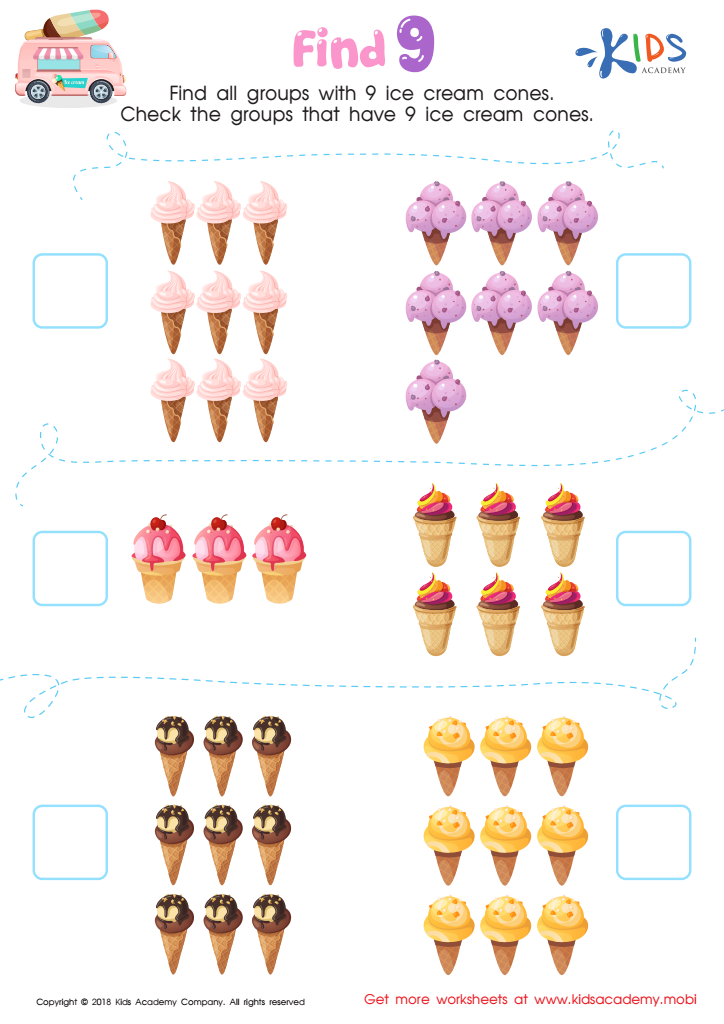
Find 9 Worksheet
 Assign to My Students
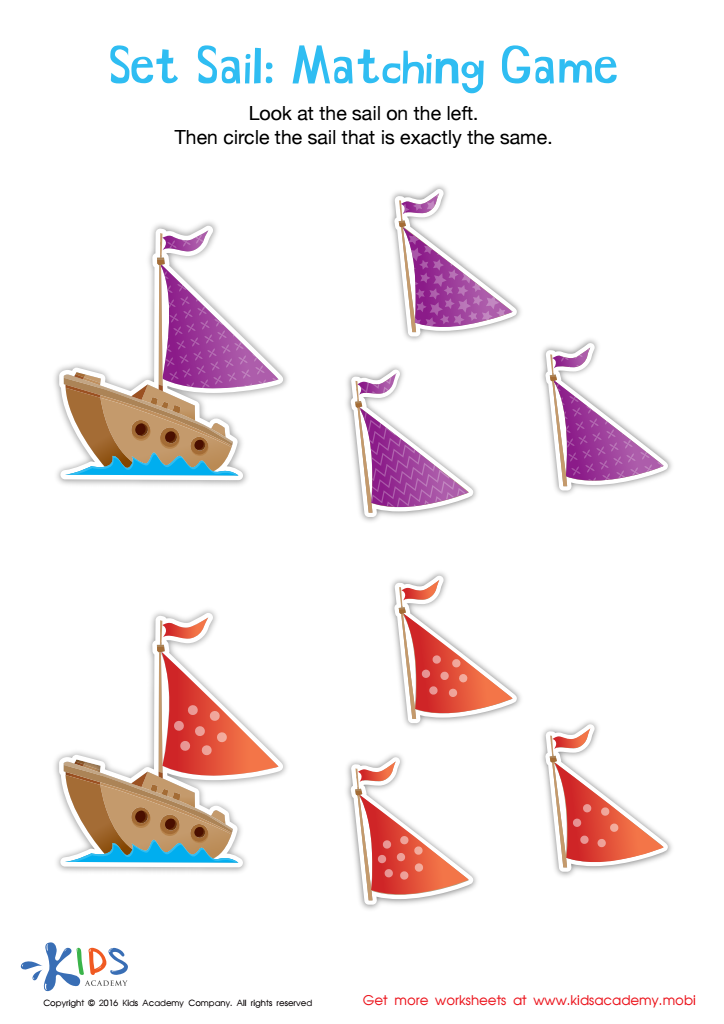
Set Sail Worksheet
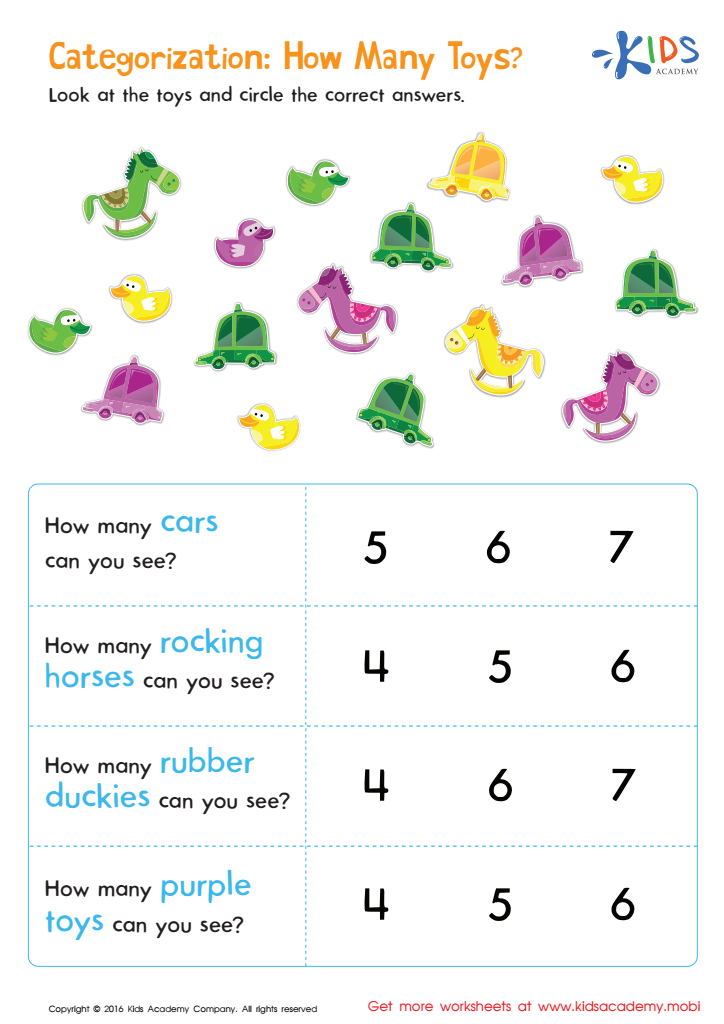
Classifying Toys by Type and Color Sorting Worksheet
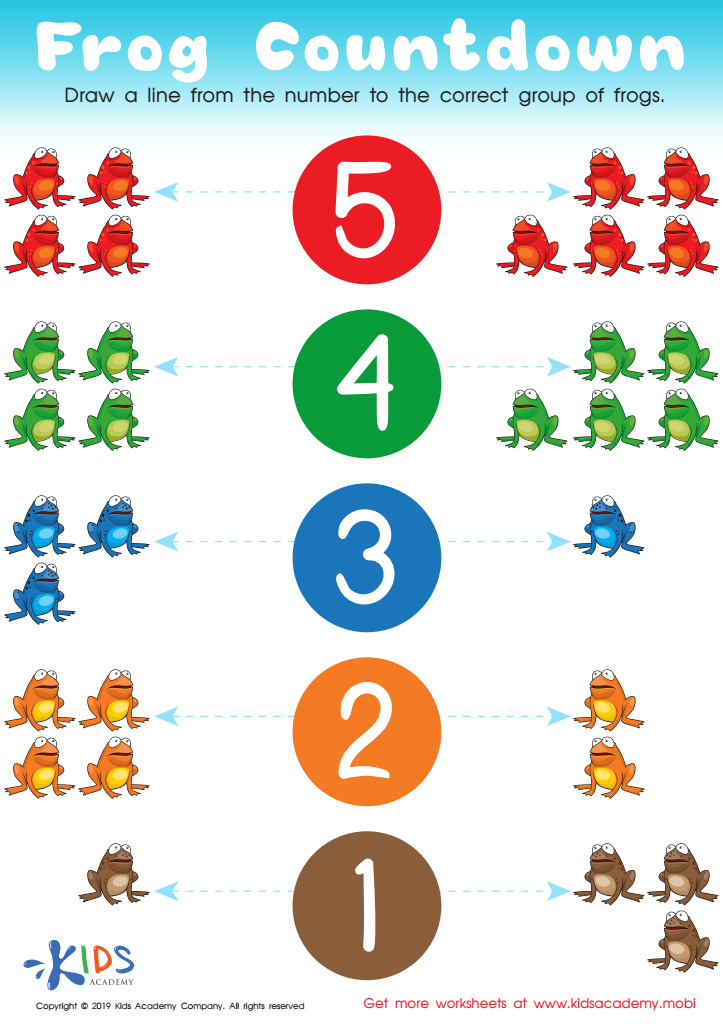
Frog Countdown Worksheet
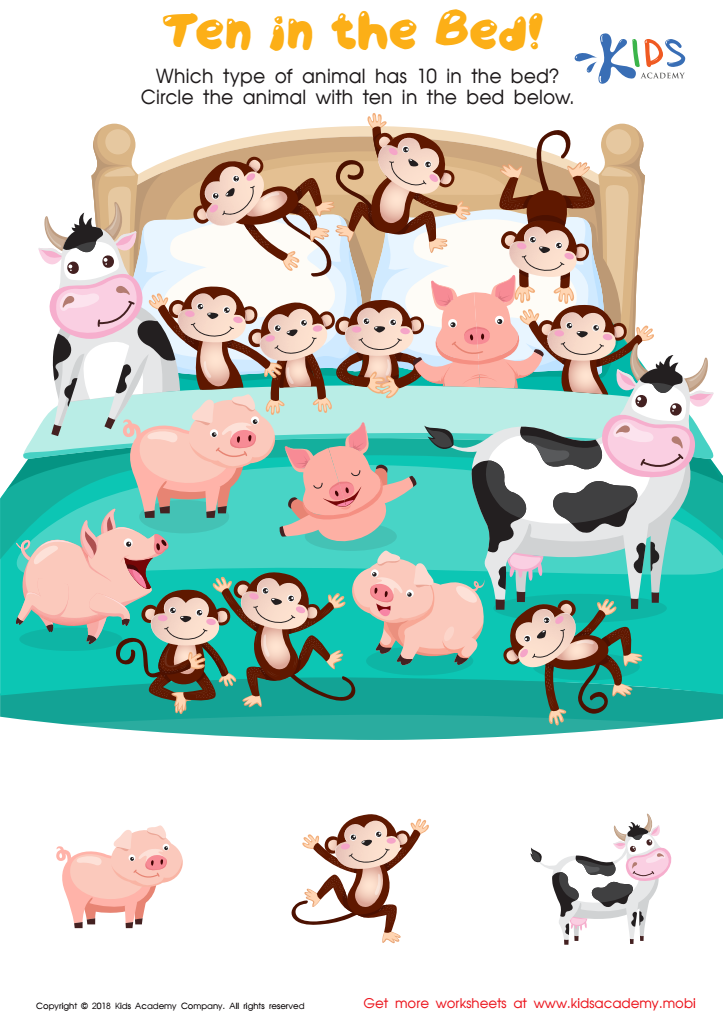
Ten in the Bed Worksheet
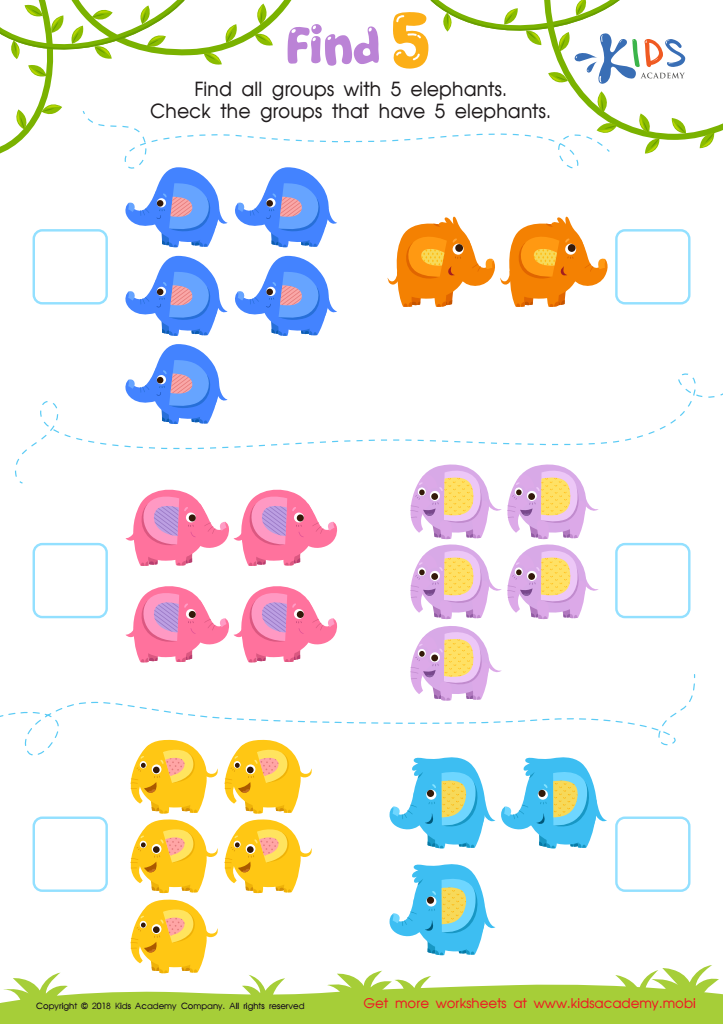
Find 5 Worksheet








Counting skills are a fundamental part of early childhood education, playing a vital role in cognitive development, particularly for children aged 4-6. At this stage, mastering counting and one-to-one matching helps lay the foundation for more complex mathematical concepts. When children count objects and match them correspondingly, they grasp the foundational concept that numbers represent quantities.
This ability, known as numerical proficiency, is crucial for understanding arithmetic operations like addition and subtraction. Children learn to organize and categorize objects, enhancing both their memory and cognitive skills. Recognizing numbers and matching them accurately also boosts their attention to detail and observational skills.
For parents and teachers, encouraging these skills is essential because they align with broader educational and developmental milestones. Proficiency in counting is not limited to numerical understanding; it supports language development by expanding vocabulary related to numbers and quantities. When children discuss and compare amounts, they also develop their verbal and social interaction skills.
Moreover, early competency in counting and matching instills confidence in young learners. It positions them for academic success and cultivates a positive attitude towards learning. Simple activities like counting toys during play or identifying numbers in everyday surroundings reinforce these skills, making learning engaging and meaningful. Supporting counting skills at this critical age ultimately fosters a well-rounded and prepared student, ready to tackle more challenging educational tasks ahead.








