Fine Motor Skills Normal Sorting Worksheets for Ages 4-6
3 filtered results
Difficulty Level
Grade
Age
-
From - To
Subject
Activity
Standards
Unlock your child's potential with our Fine Motor Skills Normal Sorting Worksheets, designed specifically for ages 4-6! These engaging worksheets help young learners refine their hand-eye coordination and dexterity while having fun sorting various objects and images. Each activity promotes cognitive development as children categorize items by shape, color, size, and other attributes. Perfect for use at home or in the classroom, our worksheets foster both fine motor skills and early mathematical concepts, setting a solid foundation for lifelong learning. Download today to inspire creativity and boost your child's confidence as they master essential sorting skills!
Favorites
With answer key
Interactive
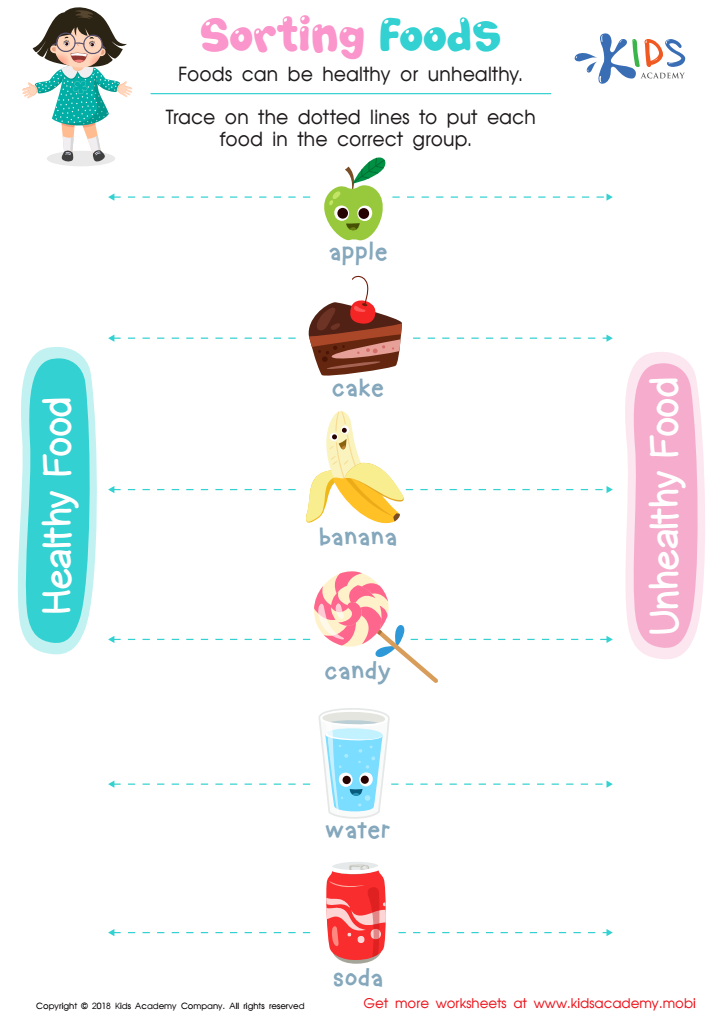
Sorting Food Worksheet
This delightful worksheet boosts critical thinking and fine motor skills. Kids use prior knowledge and pictures to sort foods into healthy and unhealthy groups. Tracing lines support accurate sorting and matching. Enjoy fun and free learning!
 Assign to My Students
Sorting Food Worksheet
Worksheet
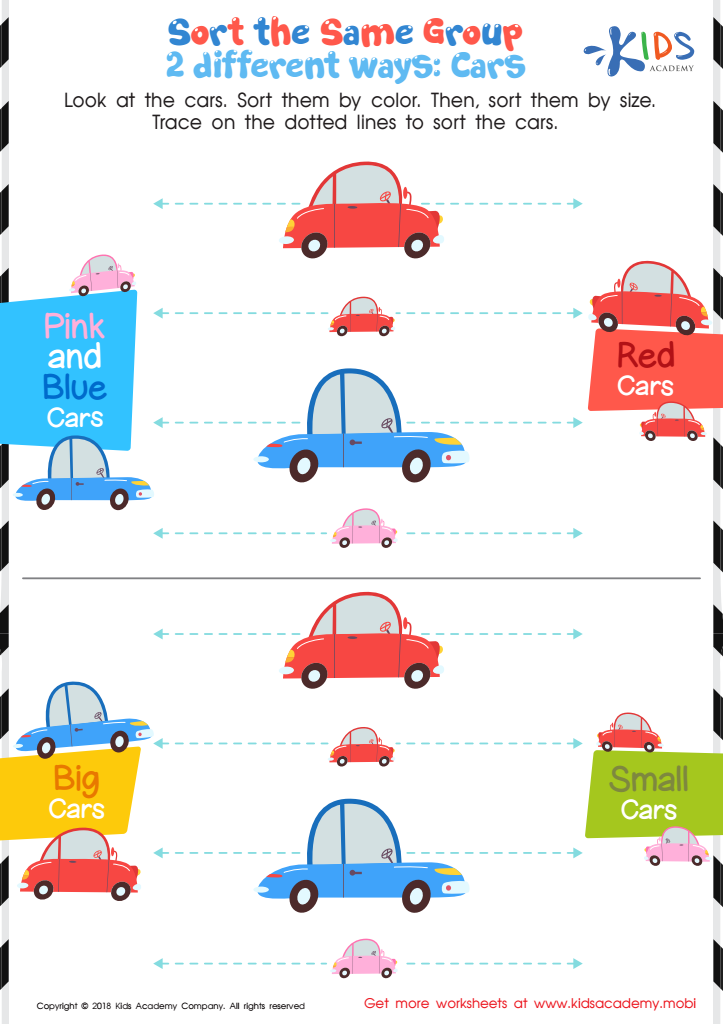
Sort the Same Group 2 Different Ways: Cars Worksheet
Look at the pictures with your child. Can they identify the objects? Ask them to sort the cars first by color and then size. Assist them to trace the dotted lines to sort the cars by color and size. This worksheet lets you easily assess your child's color and size organization skills.
Sort the Same Group 2 Different Ways: Cars Worksheet
Worksheet
Join Kids Academy for Free
Who is primarily going to use this learning content?








Fine motor skills are essential for young children as they lay the foundation for more complex tasks in school and daily life. Ages 4-6 is a crucial period for the development of these skills. Normal sorting activities, such as sorting objects by size, shape, or color, can significantly enhance fine motor development by encouraging precise hand movements and hand-eye coordination.
Parents and teachers should care about this aspect of development because fine motor skills are closely linked to a child's ability to perform important activities such as writing, cutting, and tying shoelaces. Engaging in sorting not only helps refine these skills but also fosters cognitive growth, as it promotes critical thinking and categorization.
Moreover, these activities encourage children to develop patience and focus, qualities that are vital for academic success. Engaging in systematic activities like sorting can also nurture social skills, as it often involves working in pairs or groups, leading to cooperative play and communication opportunities. Ultimately, supporting fine motor skill development through normal sorting activities prepares children for future challenges in the classroom and promotes their overall growth and confidence.