Sorting skills Normal Sorting Worksheets for Ages 4-6
5 filtered results
-
From - To
Enhance your child's sorting skills with our engaging Normal Sorting Worksheets for ages 4-6! These printable worksheets are designed to support early learning by helping children recognize patterns, categorize items, and understand similarities and differences. With colorful illustrations and age-appropriate exercises, your little ones will enjoy hands-on practice while developing critical thinking skills. Our sorting activities promote cognitive development and refine fine motor skills as children cut, sort, and organize various objects. Ideal for homeschooling or classroom settings, these worksheets offer a fun and interactive way to foster a love for learning. Start your sorting journey today and watch your child thrive!
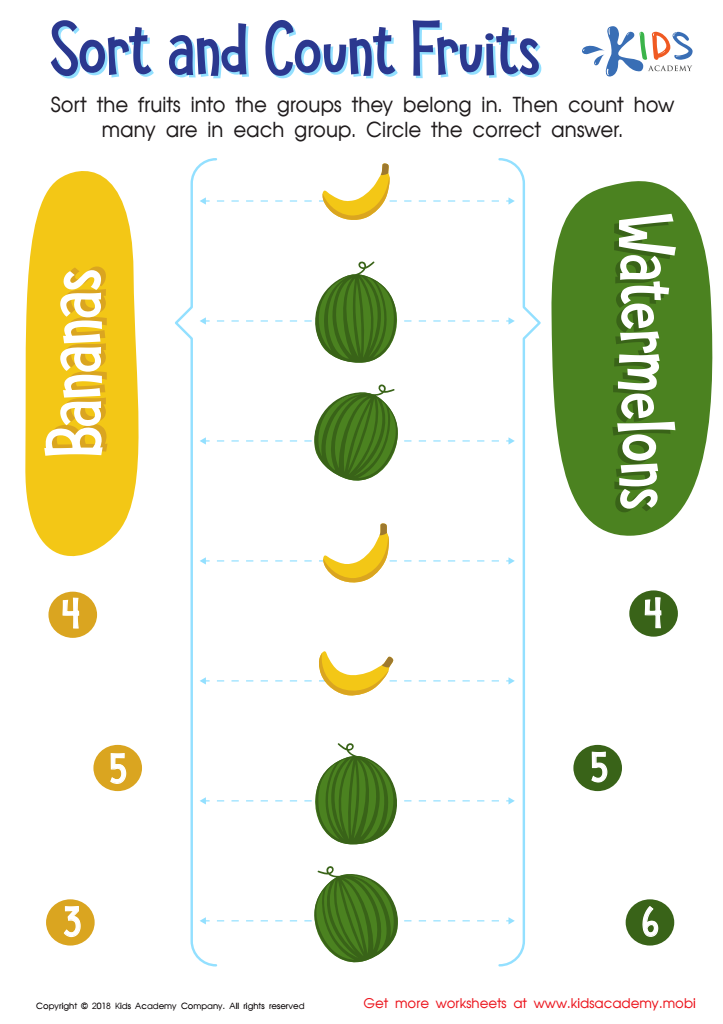
Sort and Count Fruits Worksheet
 Assign to My Students
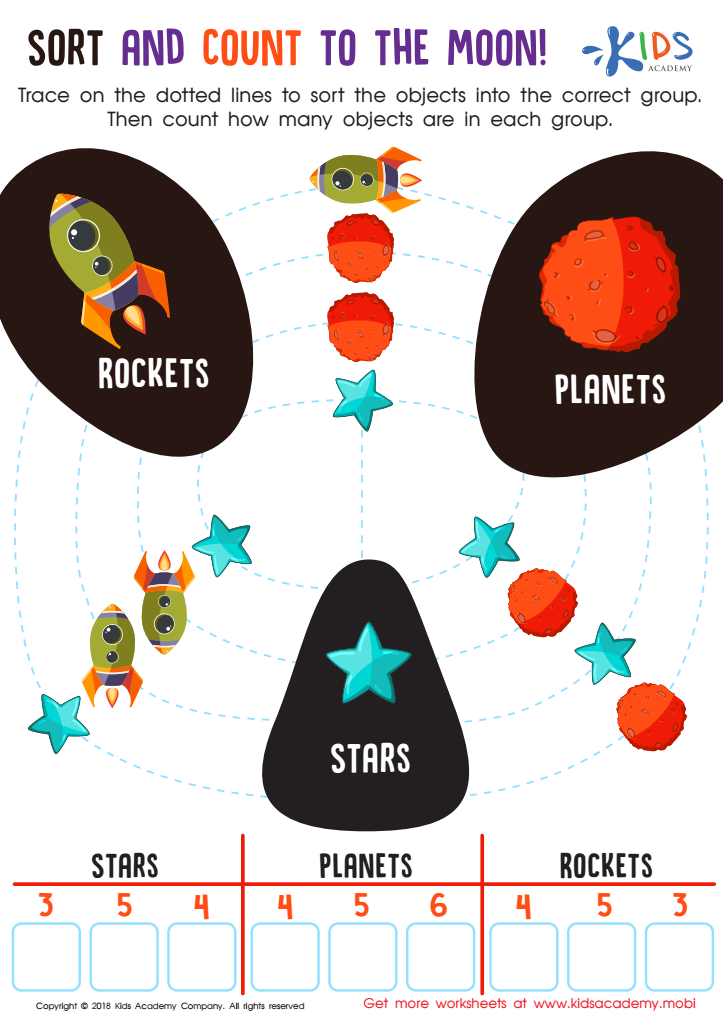
Sort and Count to the Moon Worksheet
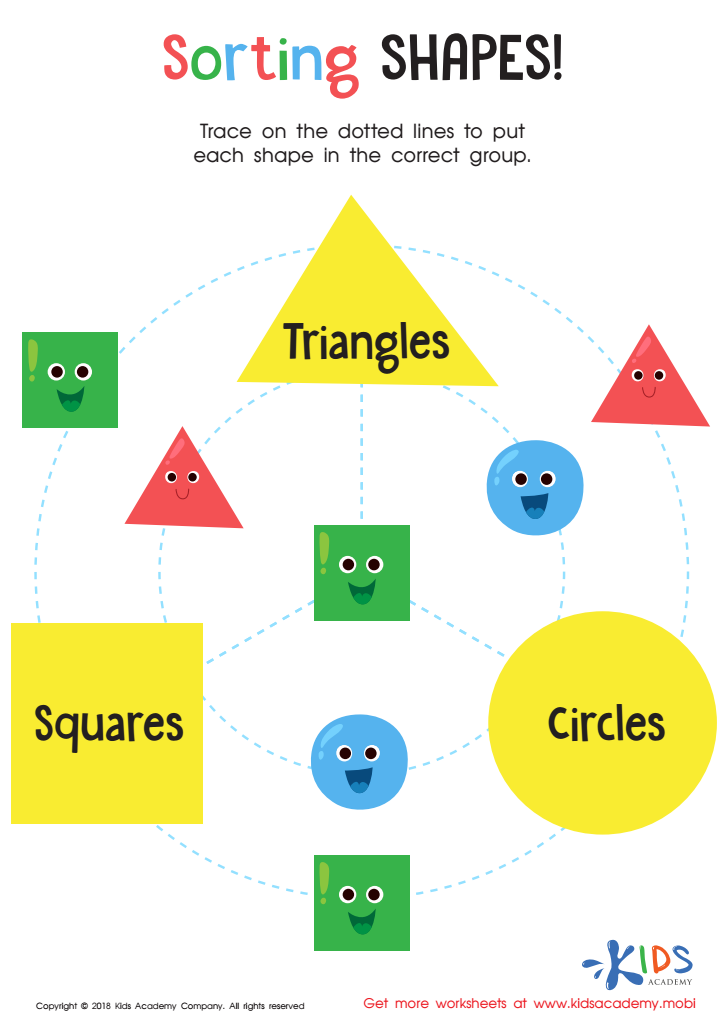
Sorting Shapes - Part 3 Worksheet
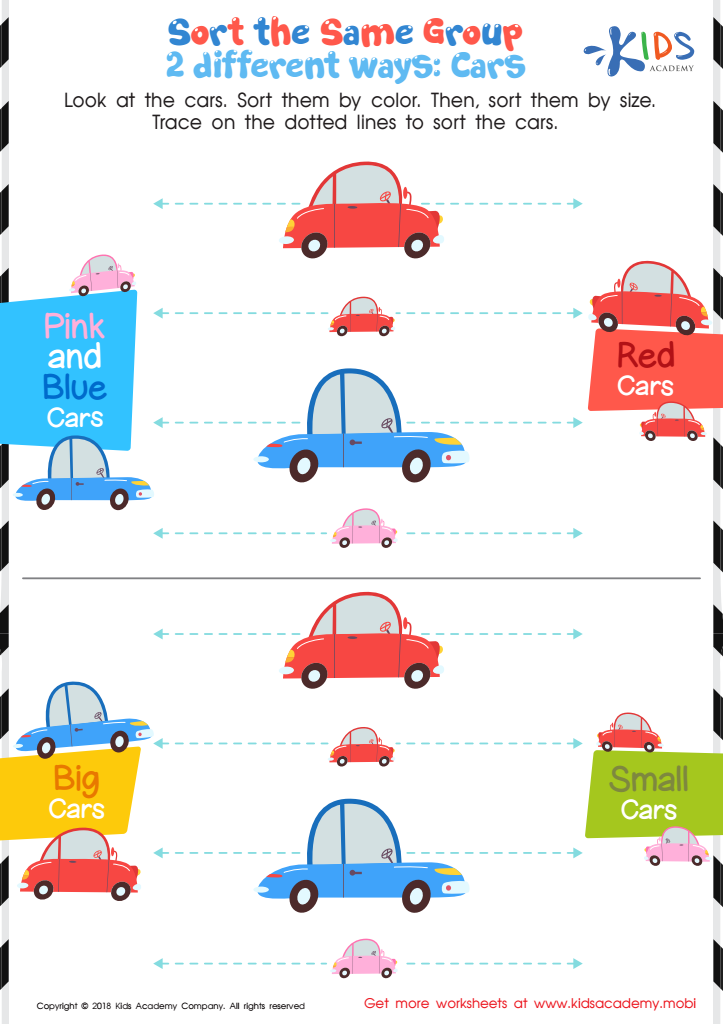
Sort the Same Group 2 Different Ways: Cars Worksheet
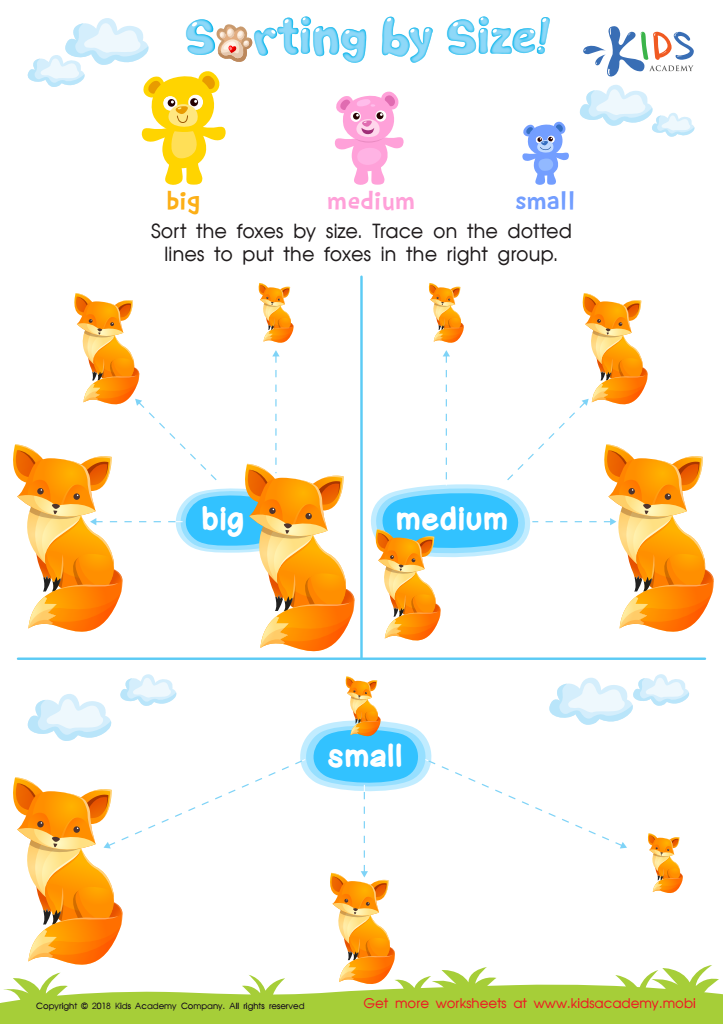
Sorting by Size Worksheet








Sorting skills are crucial for children aged 4-6 as they lay the foundation for essential cognitive, social, and academic development. Firstly, sorting activities help young children understand categories and patterns, enhancing their critical thinking and problem-solving abilities. When children sort objects by color, shape, or size, they learn to identify similarities and differences, which is key to developing logical reasoning.
Moreover, sorting fosters early math skills, such as understanding quantities, comparisons, and basic operations. These skills are foundational for more complex mathematical concepts they will encounter later. Additionally, sorting tasks often involve communication and collaboration, promoting social skills as children share ideas, take turns, and respect others' viewpoints during joint activities.
Sorting also builds vocabulary and language skills. As children describe their sorting choices, they practice using new words and concepts, enriching their language development. Finally, engaging in sorting activities can enhance fine motor skills, as children manipulate objects and develop hand-eye coordination.
Ultimately, by focusing on sorting skills in early education, parents and teachers equip children with a range of abilities vital for their overall growth and preparedness for future learning experiences.