Categorization skills Normal Reading Worksheets for Ages 4-6
3 filtered results
-
From - To
Enhance your child's reading development with our Categorization Skills Worksheets designed for ages 4-6. These engaging printable resources help young learners group items based on similarities, encouraging critical thinking and vocabulary expansion. Each worksheet features colorful illustrations and captivating themes that keep children motivated and focused. By practicing categorization, kids will improve their comprehension skills, build their familiarity with different topics, and boost their confidence in reading. Ideal for at-home learning or as supplemental activities in the classroom, our worksheets offer endless opportunities for fun and educational exploration. Start your child's journey to reading success today!
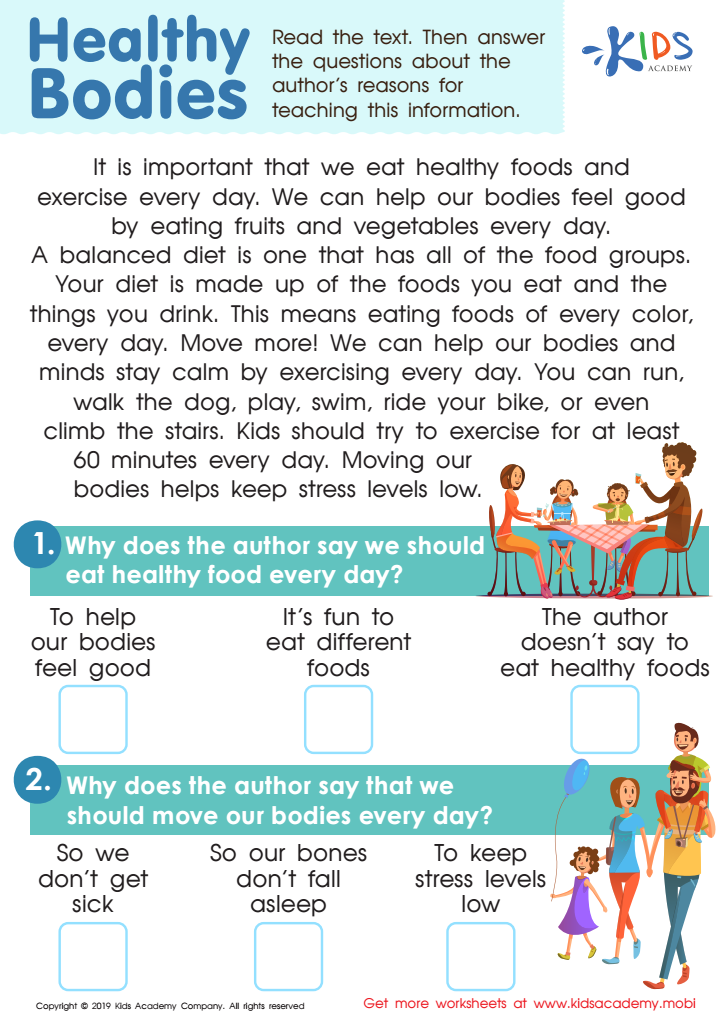
Healthy Bodies Worksheet
 Assign to My Students
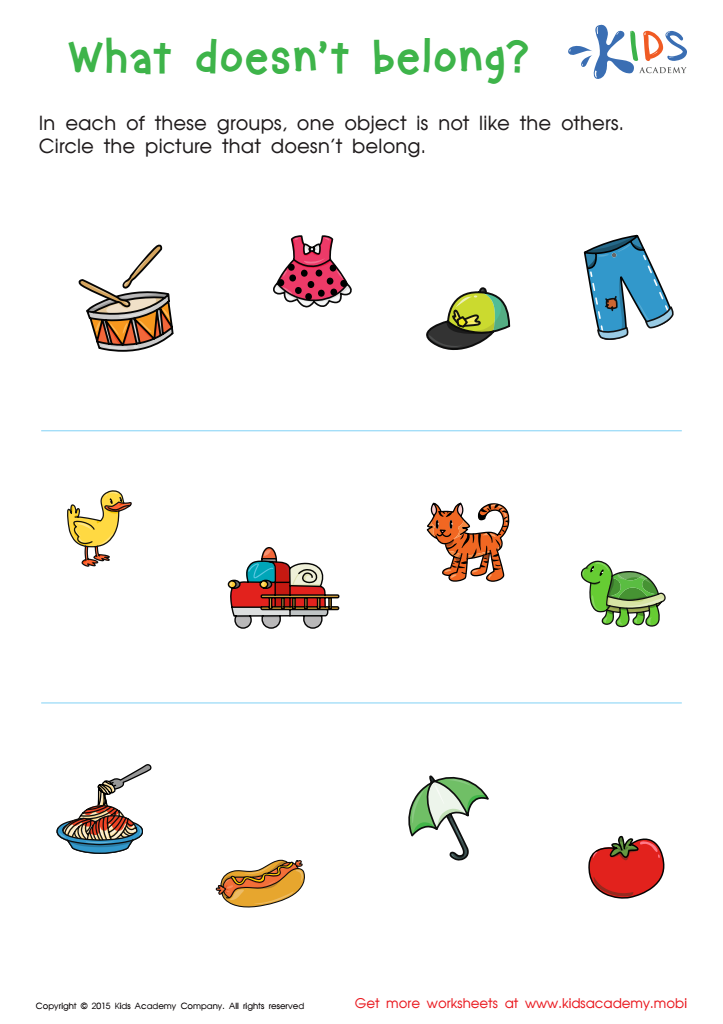
First Words: What Doesn't Belong Worksheet
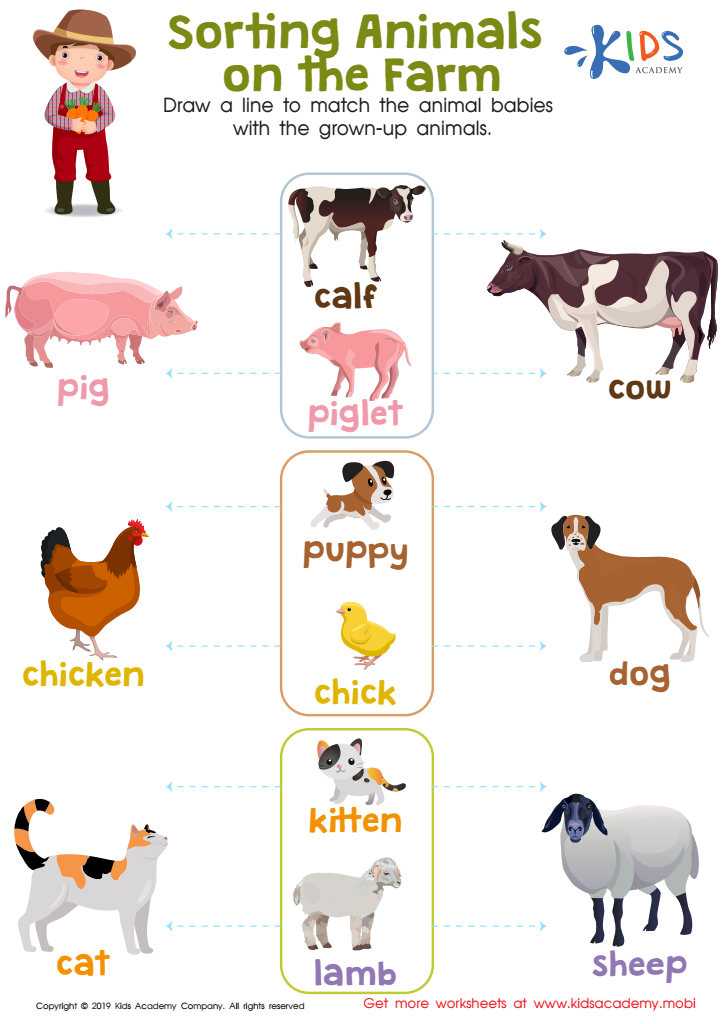
Sorting Animals on the Farm Worksheet








Categorization skills are crucial for early literacy development in children aged 4-6. These skills allow young learners to identify and group objects, ideas, and words based on shared characteristics, which is foundational for effective reading and comprehension. When children can categorize, they develop stronger critical thinking abilities, enabling them to make connections between different concepts and enhancing their understanding of the world around them.
Parents and teachers should care about enhancing these skills, as they play a vital role in helping children develop vocabulary and comprehension strategies. Categorization supports phonemic awareness, which is essential for decoding words. For instance, when children classify animals or colors, they engage in sorting that reinforces their understanding of language structures.
Furthermore, categorization fosters cognitive flexibility, allowing children to adjust their thinking as they encounter new information. This adaptability is essential not just in reading, but in problem-solving and navigating social interactions. By nurturing categorization skills, caregivers can set the foundation for successful academic futures, helping children become confident readers and lifelong learners. Optimal literacy skills established during these formative years significantly influence a child’s overall educational trajectory, making categorization skills a vital focus for parents and educators alike.








