Critical Thinking Normal Reading Worksheets for Ages 4-6 - Page 2
27 filtered results
-
From - To
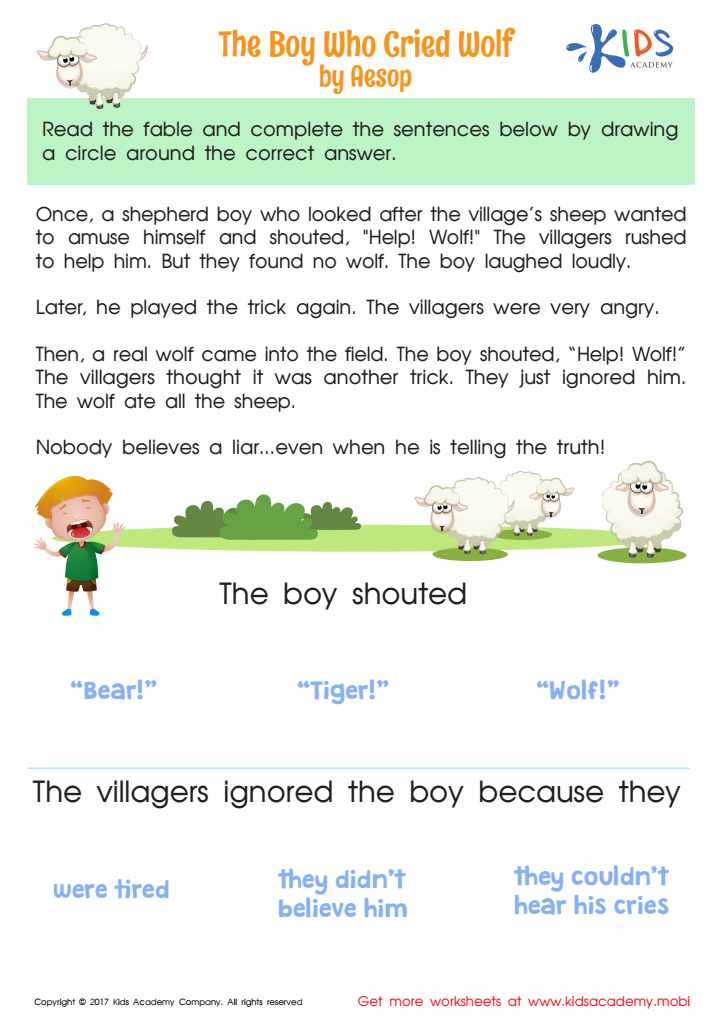
The Boy Who Cried Wolf Worksheet
 Assign to My Students
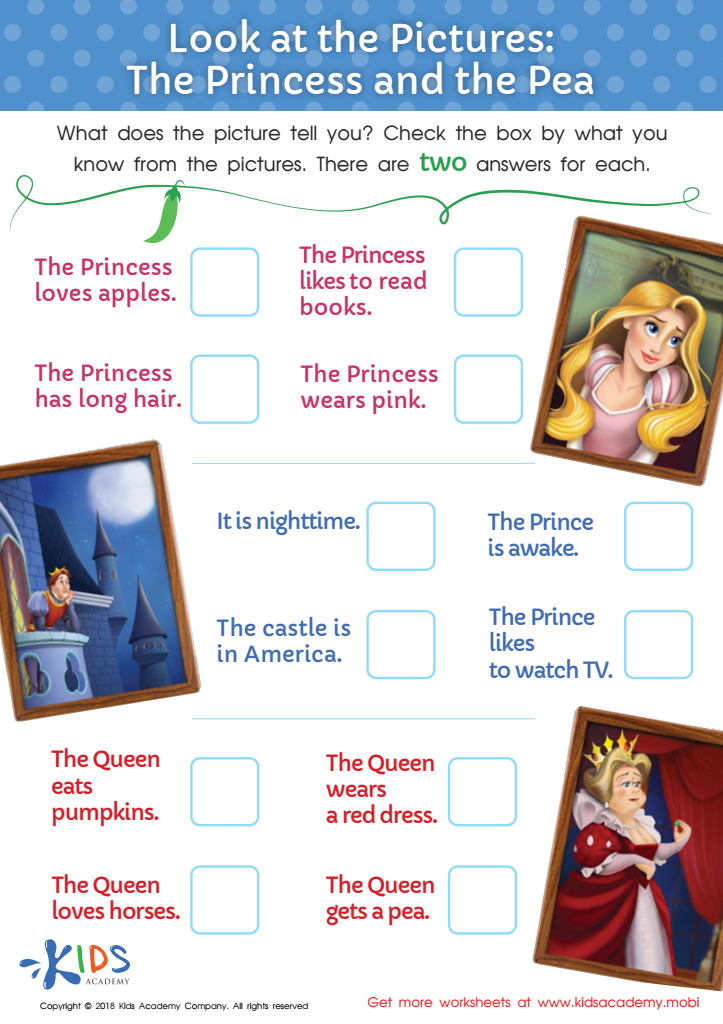
Look at the Pictures: The Princess and the Pea Worksheet
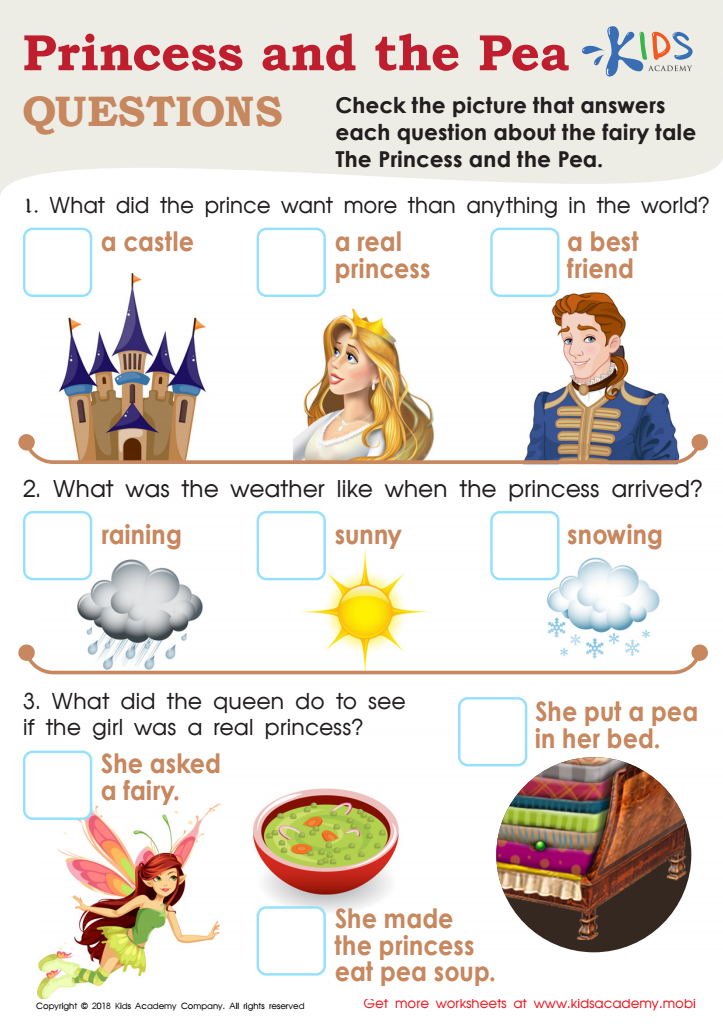
Princess and the Pea Questions Worksheet








Critical thinking is an essential skill that lays the foundation for a child's lifelong learning and problem-solving abilities. For parents and teachers of children aged 4-6, focusing on critical thinking during normal reading activities can significantly enhance a child's cognitive development.
At this age, children are naturally curious and eager to explore the world around them. By integrating critical thinking into reading sessions, adults can encourage kids to ask questions, make predictions, and analyze story elements. This not only improves comprehension but also fosters creativity and independence.
By presenting children with relatable characters and scenarios, caregivers can invite discussions that require young ones to think beyond the text. For instance, asking questions like, "What do you think will happen next?" or "Why did the character make that choice?" promotes analytical thinking.
Moreover, engaging in discussions during reading helps develop language skills and emotional intelligence, allowing children to articulate their thoughts and empathize with others. As children learn to navigate complex ideas and viewpoints, they become more effective communicators and decision-makers.
Ultimately, nurturing critical thinking through reading equips young learners with the skills they need to succeed academically and socially, fostering a generation of thoughtful, reflective individuals.








