Analytical skills Normal Reading Comprehension Worksheets for Ages 4-6
5 filtered results
-
From - To
Our Analytical Skills Normal Reading Comprehension Worksheets for Ages 4-6 are designed to foster essential critical thinking and understanding in young readers. These expertly crafted worksheets aim to enhance children's analytical skills through carefully curated reading passages followed by engaging questions. Perfect for early learners, each worksheet helps children practice extracting key information, drawing inferences, and making connections between ideas. Ideal for parents and educators, these activities ensure a fun and educational experience, encouraging children to become confident and proficient readers. Explore a variety of topics and themes to keep your young learner motivated and ready for future reading success.
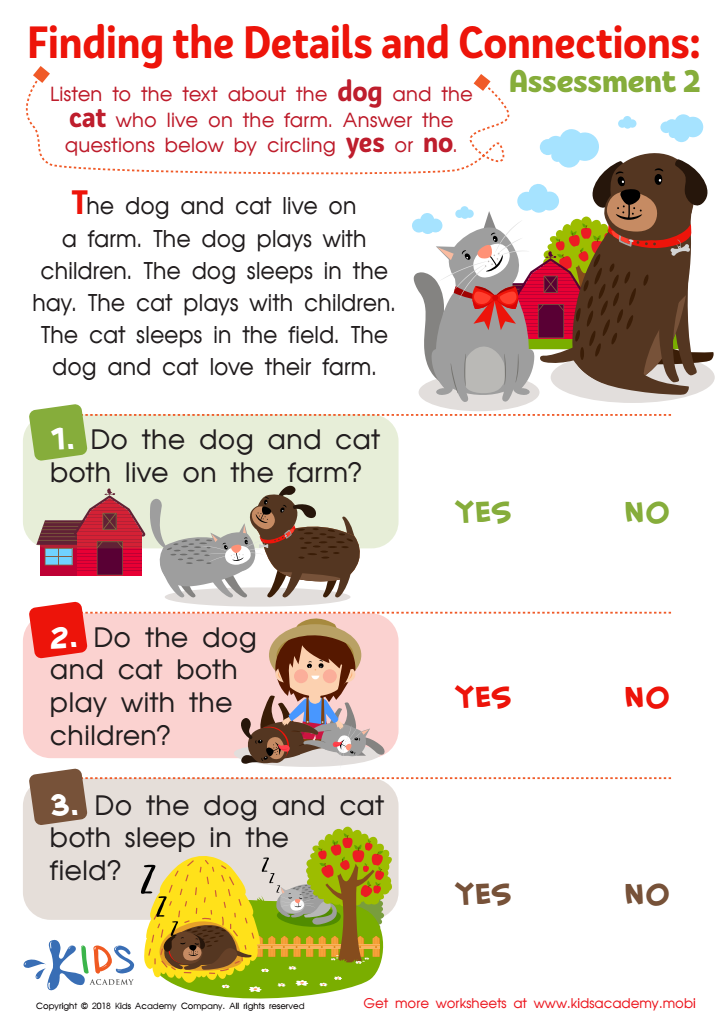
Finding the Details and Connections: Assessment 2 Worksheet
 Assign to My Students
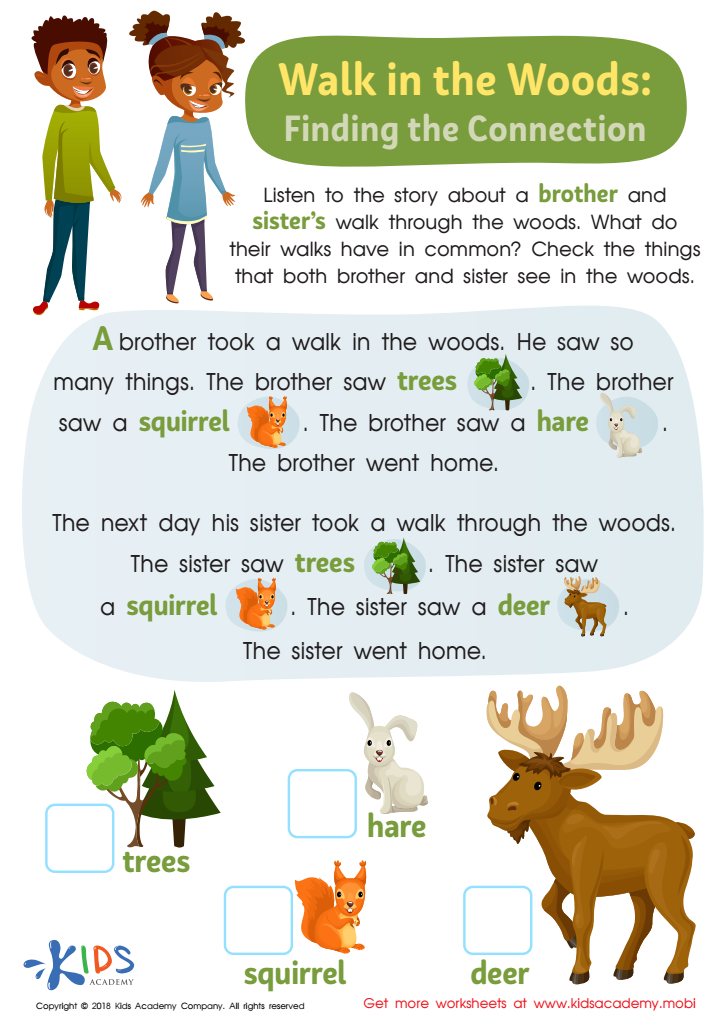
Walk In the Woods: Finding Connections Worksheet
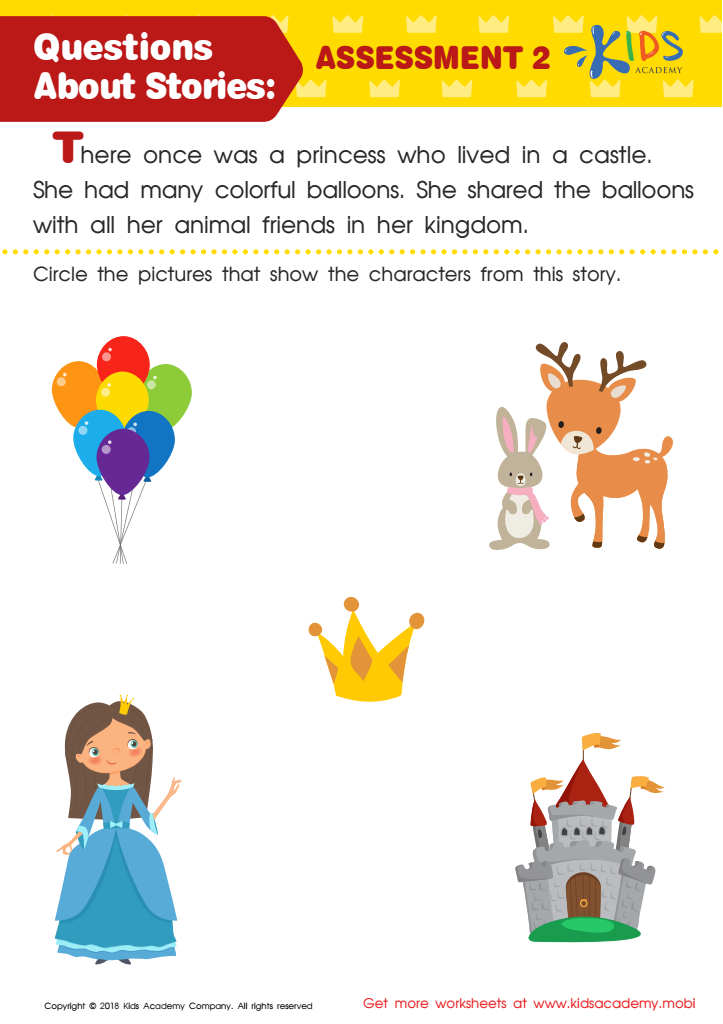
Questions About Stories: Assessment 2 Worksheet
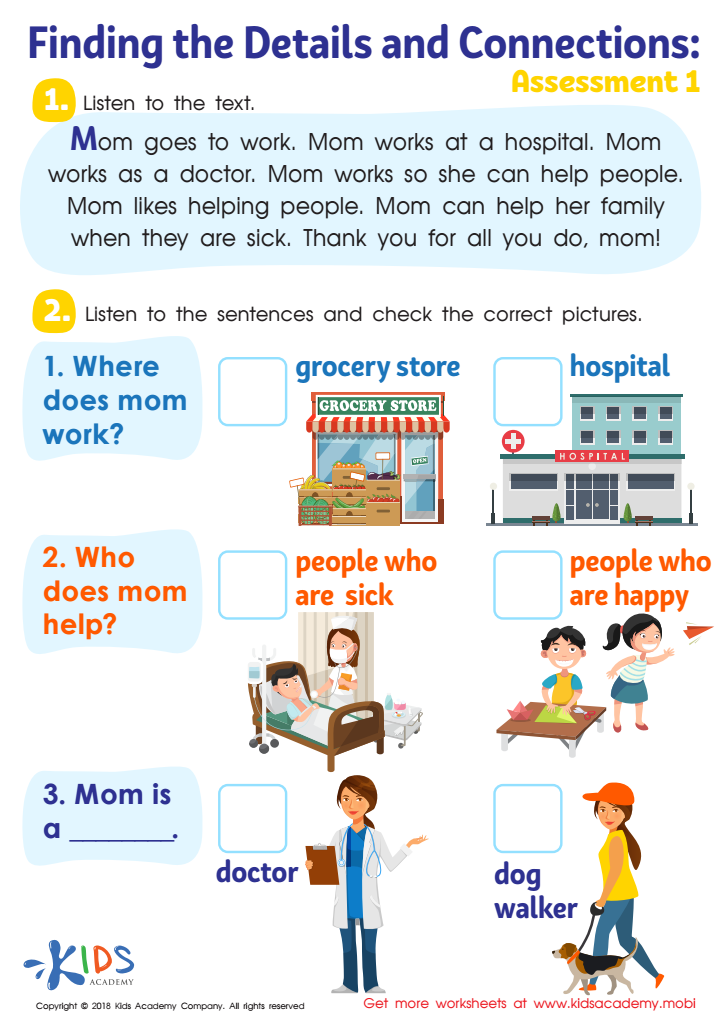
Finding the Details and Connections: Assessment 1 Worksheet
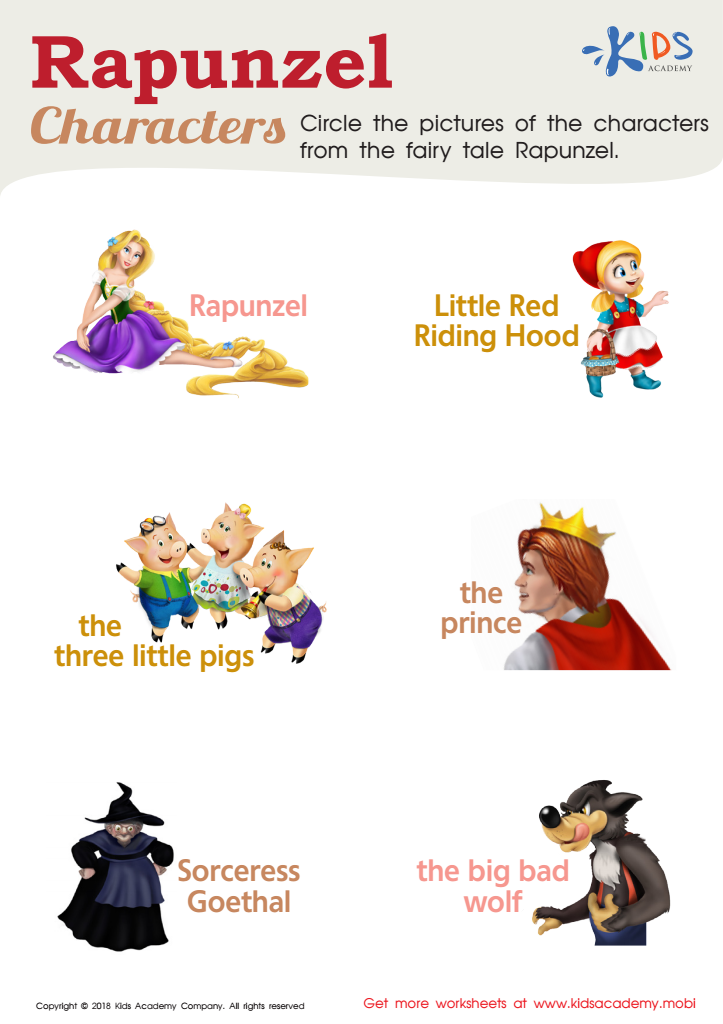
Rapunzel Characters Worksheet



.jpg)



Parents and teachers should deeply value the cultivation of analytical skills and normal reading comprehension in children ages 4-6, as these abilities lay the groundwork for future academic success and critical thinking. In this foundational period, children's brains are highly malleable and receptive to learning, making it a prime time to introduce skills that will support their lifelong educational journey.
Analytical skills enable young children to make connections, compare and contrast information, and draw conclusions, fostering a deeper understanding of the world around them. These skills are not just relevant to academic subjects; they also enhance problem-solving abilities, essential for everyday decision-making and social interactions. Encouraging young children to ask questions and think critically helps them develop a curious mindset, which leads to continuous learning and adaptability.
Normal reading comprehension, on the other hand, provides children with the ability to understand and interpret written language. Mastering reading comprehension at an early age not only boosts vocabulary and language skills but also improves concentration and memory. It sets the stage for academic success across various subjects, as the ability to read and understand instructions, problems, and stories is crucial.
Together, these skills equip children with essential tools for learning and personal development, fostering independence, confidence, and resilience in their educational pursuits and beyond.








