Comprehension skills Normal Reading Comprehension Worksheets for Ages 4-6
5 filtered results
-
From - To
Boost your child's understanding with our "Comprehension Skills Normal Reading Comprehension Worksheets" for ages 4-6. These engaging worksheets are designed to foster early reading skills by enhancing vocabulary, inference, and critical thinking abilities. Perfectly tailored for young learners, each worksheet is filled with colorful illustrations and simple narratives that make learning enjoyable. Our exercises support kids in identifying key details, sequencing events, and responding to questions about the text. Ideal for both classroom and home use, these worksheets provide a solid foundation for successful reading and comprehension. Start your little one's literacy journey today with our expertly crafted resources.
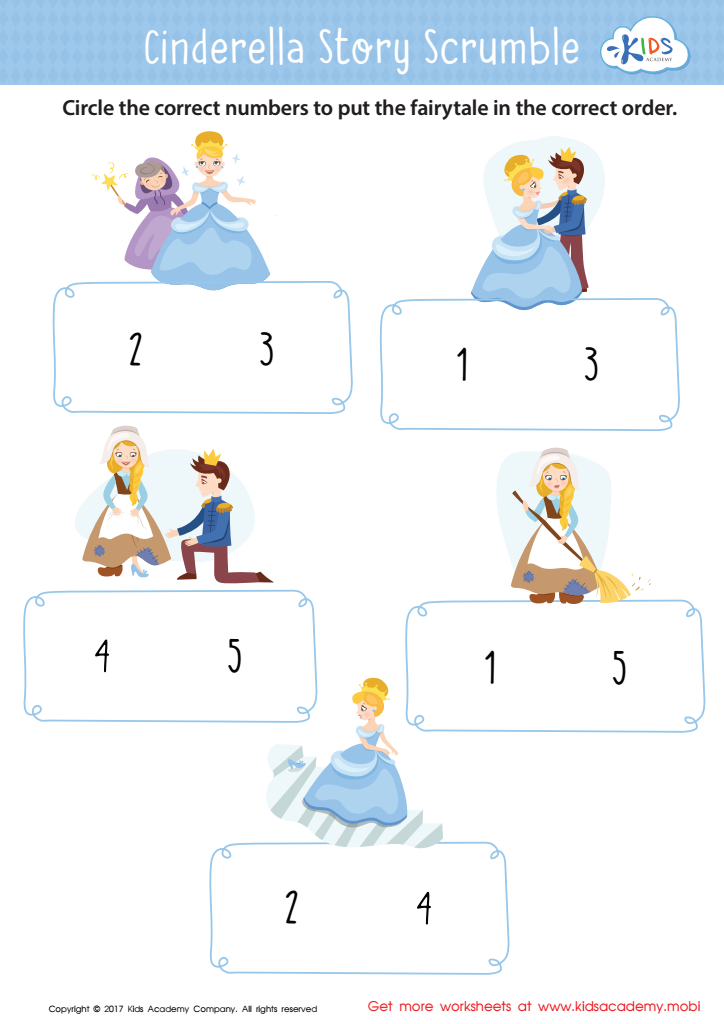
Cinderella Story Sequencing Worksheet
 Assign to My Students
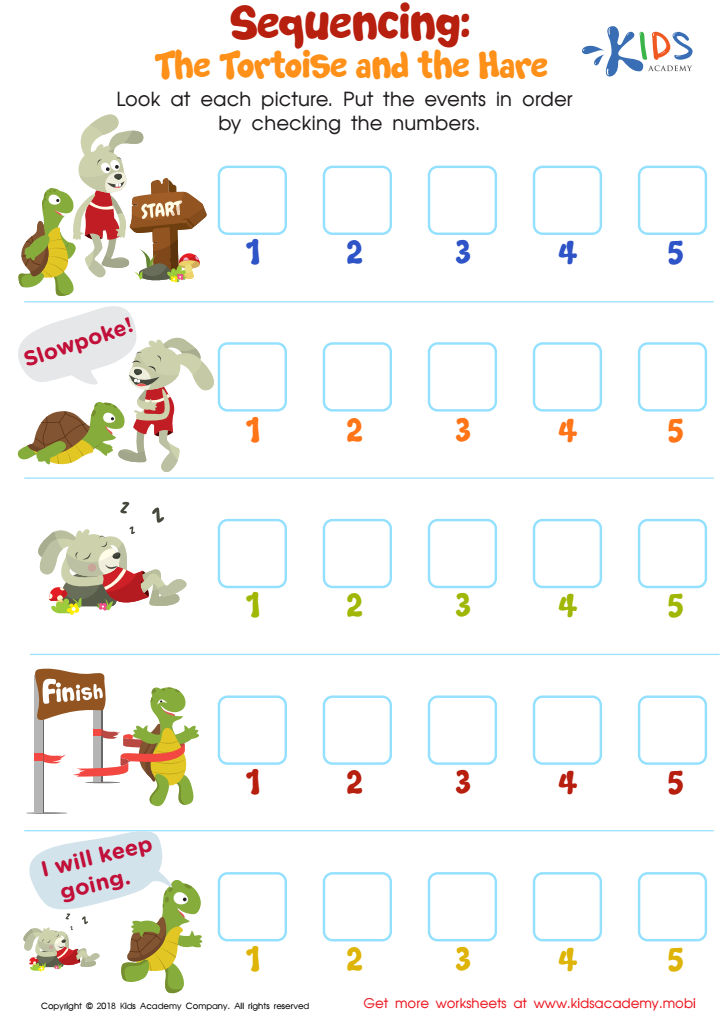
Sequencing: The Tortoise and the Hare Worksheet
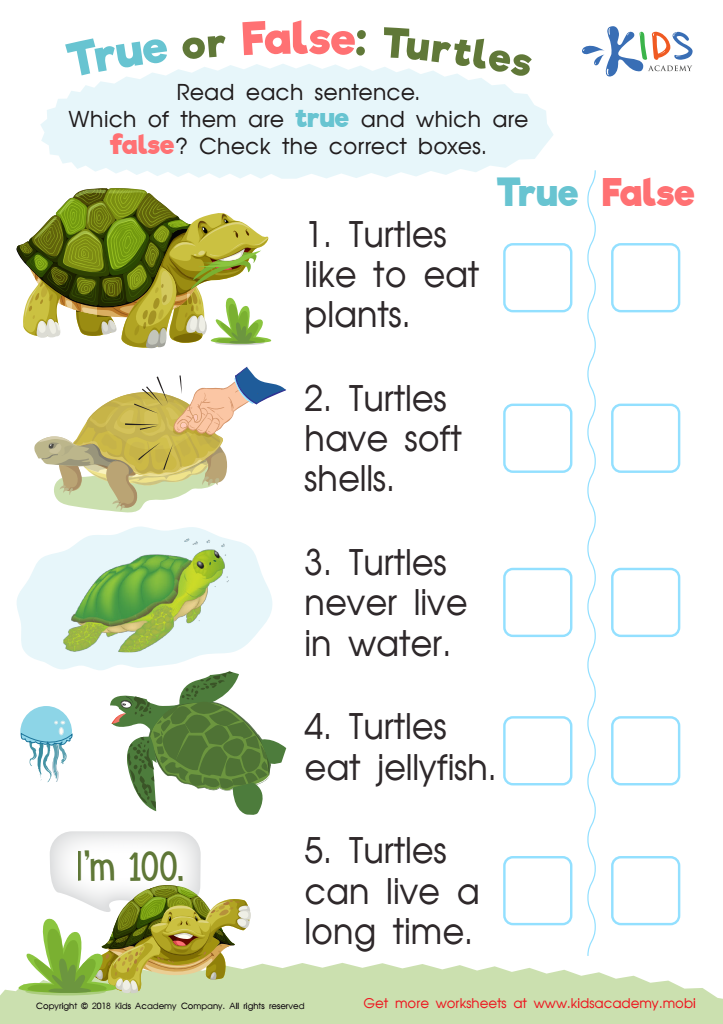
True or False: Turtles Worksheet
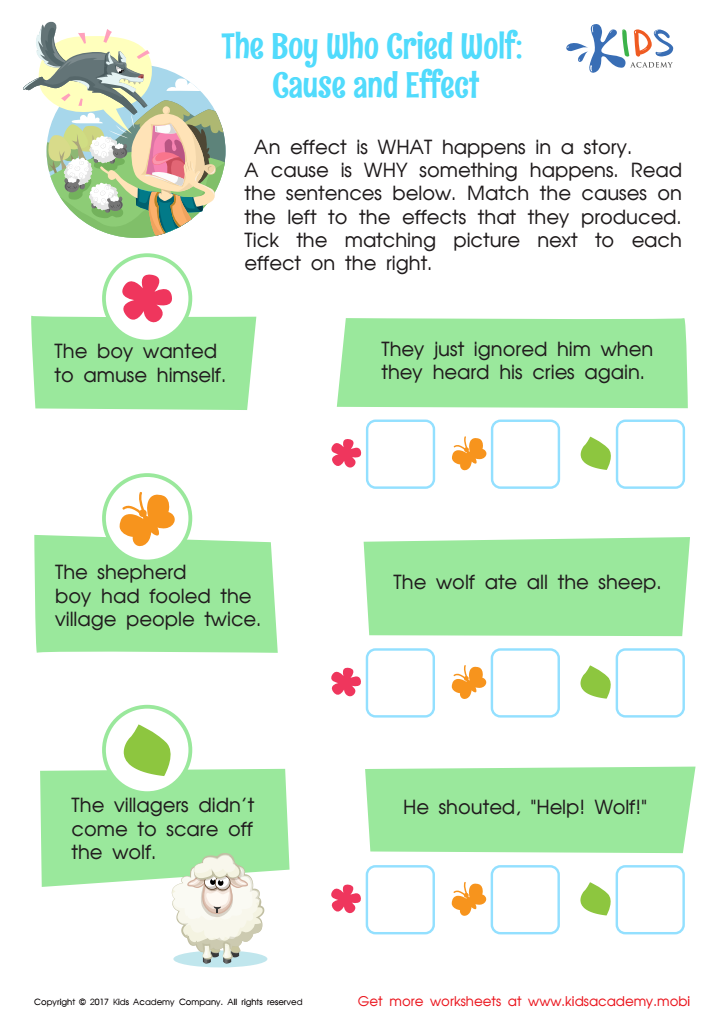
The Boy Who Cried Wolf: Cause and Effect Worksheet
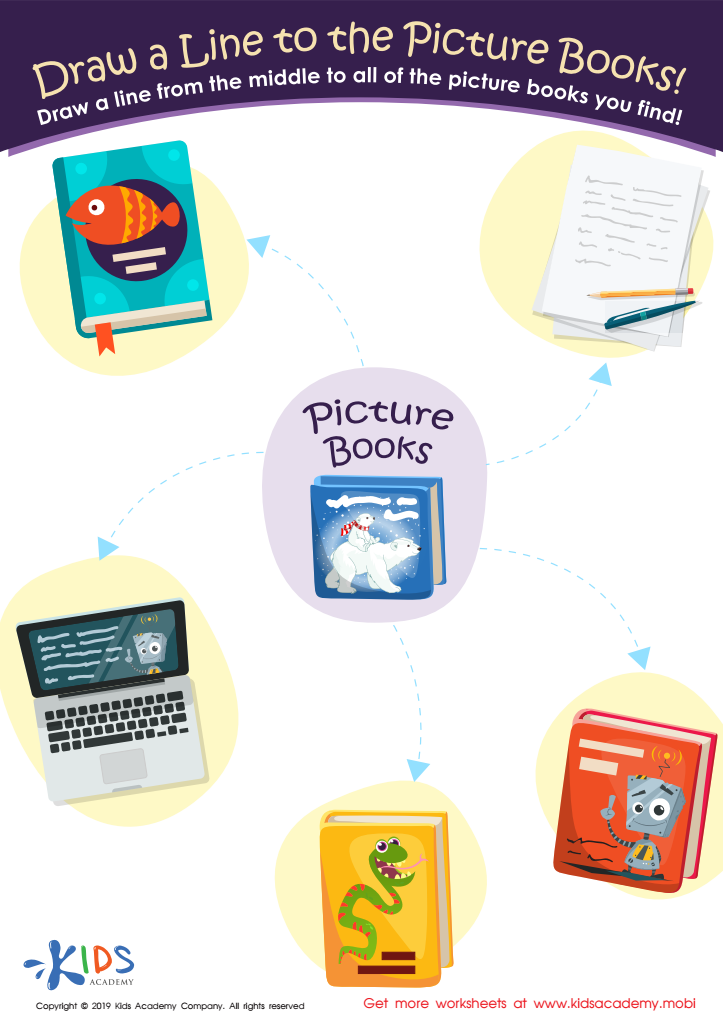
Draw a Line to the Picture Books Worksheet






.jpg)

Comprehension skills are fundamental for young children, aged 4-6, as these early years are critical for cognitive development. At this stage, children are not just learning to read; they are also beginning to understand and make sense of the world around them through stories and text. Good reading comprehension skills help children develop strong foundational language abilities, which positively impact their entire educational journey.
Enhancing comprehension skills at a young age improves children’s ability to grasp main ideas, follow narratives, and infer meaning, skills that are essential for all future learning. For parents and teachers, fostering these skills means engaging children with age-appropriate books, asking open-ended questions, and encouraging discussions about the stories read. This practice not only builds vocabulary but also develops critical thinking, focus, and memory.
Moreover, strong reading comprehension bonds tightly with overall academic success. Children who understand what they read tend to do better in other subjects, as they can apply comprehension strategies across different areas of learning. Additionally, promoting these skills can foster a love for reading, encourage lifelong learning, and expand a child's imagination.
Therefore, parents and teachers should prioritize reading comprehension to give children the tools they need for academic success, personal growth, and an enduring love of reading.








