Logical Reasoning Normal Reading Fiction Worksheets for Ages 4-6
3 filtered results
-
From - To
Explore our engaging Logical Reasoning Normal Reading Fiction Worksheets designed specifically for children aged 4-6. These worksheets combine fun storytelling with critical thinking exercises, helping young learners enhance their reasoning skills while enjoying delightful narratives. Each activity encourages kids to analyze stories, make predictions, and draw connections, fostering comprehension and cognitive development. Ideal for parents and educators, these printable resources provide a perfect blend of entertainment and education. Watch as your little ones sharpen their logic skills and deepen their understanding of fiction through interactive learning. Give your child a head start in reading and reasoning in a joyful, supportive environment.
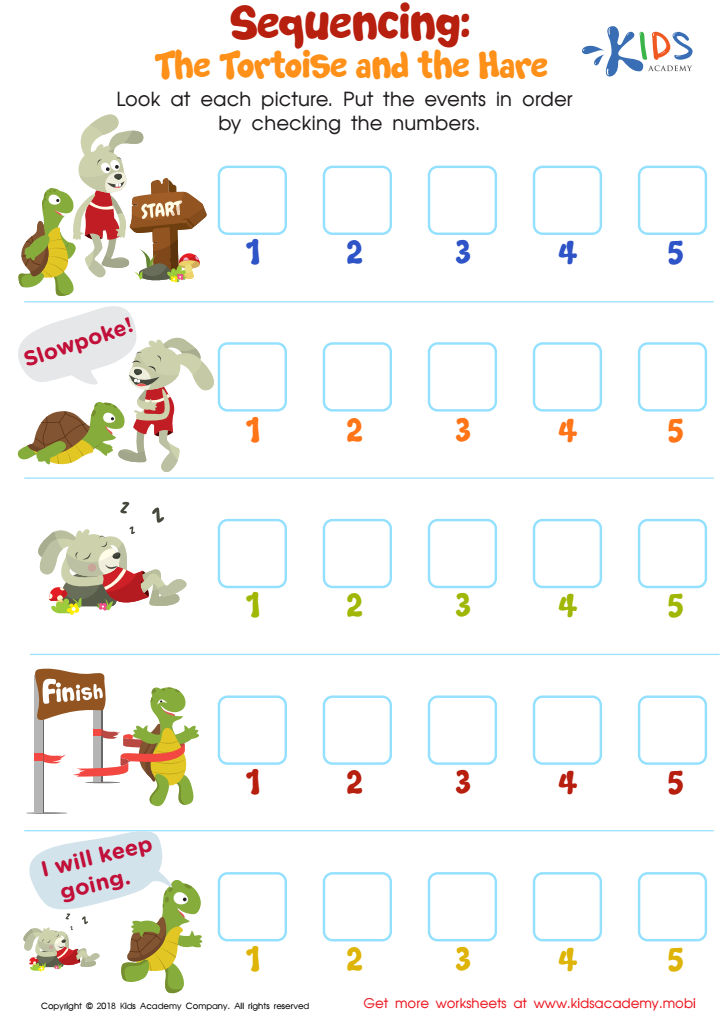
Sequencing: The Tortoise and the Hare Worksheet
 Assign to My Students
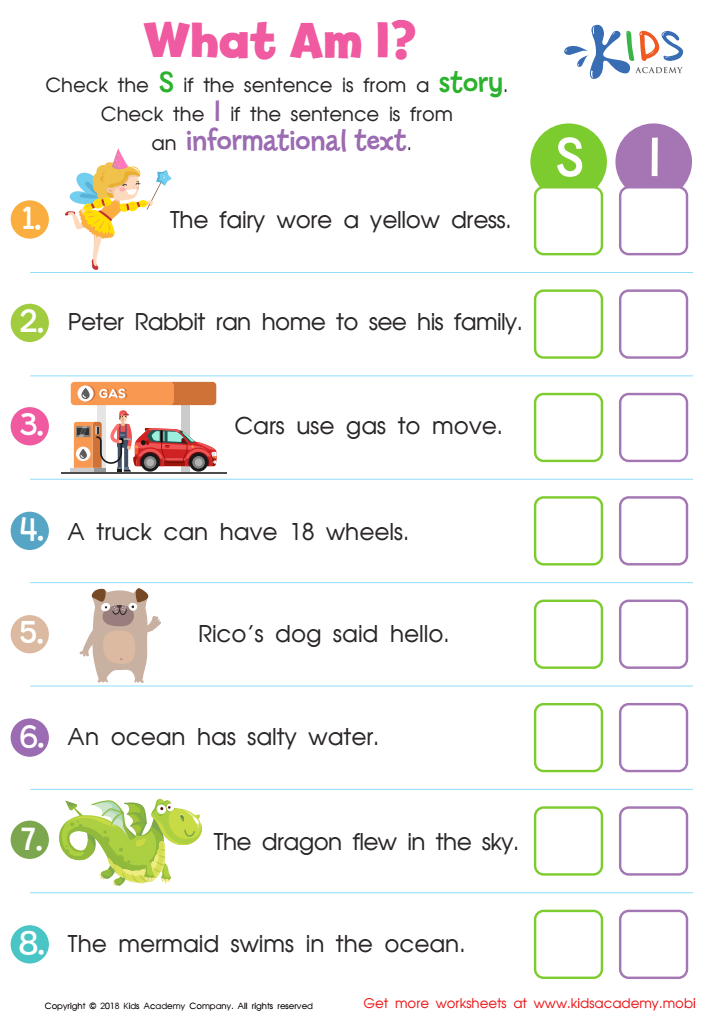
What Am I? Worksheet
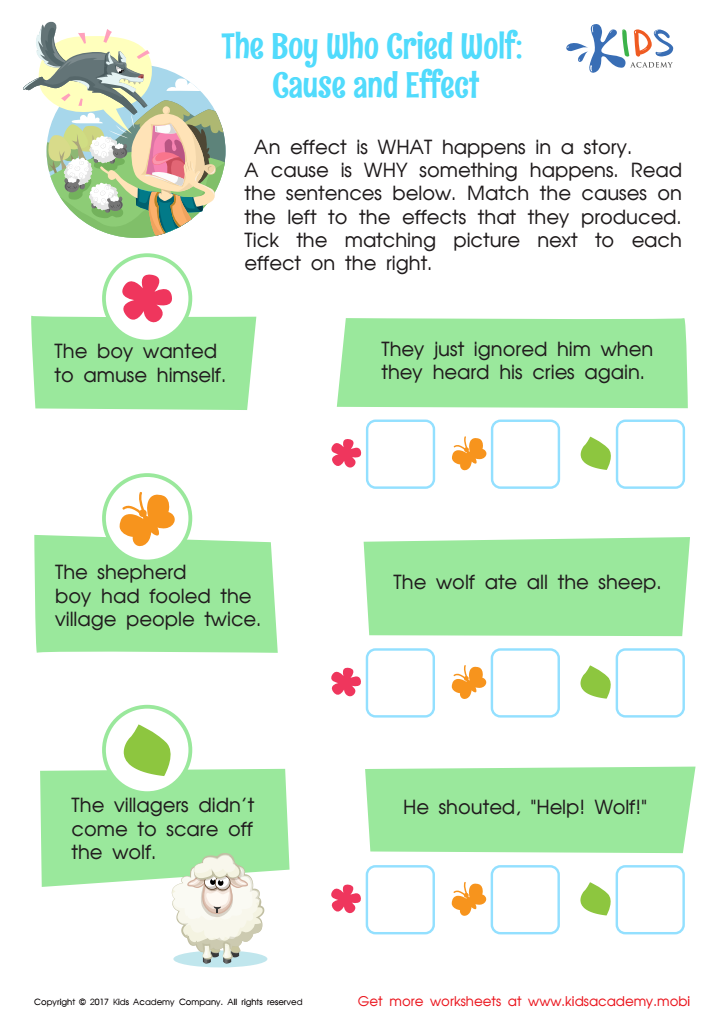
The Boy Who Cried Wolf: Cause and Effect Worksheet








Logical reasoning is a crucial cognitive skill that lays the foundation for critical thinking and problem-solving in young children. For ages 4-6, engaging with reading fiction is an effective way to enhance these skills. When parents and teachers introduce age-appropriate fictional stories, children learn to follow plotlines, understand character motivations, and anticipate story outcomes—all fundamental aspects of logic.
Storytelling involves sequencing events and making connections, which fosters the ability to reason through problems. As children encounter various scenarios in fiction, they develop skills such as inference, prediction, and deduction. These skills are not only important for literacy development but also for navigating social interactions and everyday challenges.
Furthermore, reading fiction encourages imagination and creativity, allowing young learners to explore diverse perspectives and ideate possibilities. Engaging with logically structured narratives helps them recognize cause-and-effect relationships, enhancing their analytical thinking.
Parents and teachers play a vital role by choosing high-quality fiction that promotes logical reasoning. By nurturing connections between reading and logical thought, they help children acquire life-long skills that support academic success and personal development. Thus, prioritizing logical reasoning through reading fiction is essential in early education.







