Story analysis Normal Reading Fiction Worksheets for Ages 4-6
3 filtered results
-
From - To
Discover engaging "Story Analysis Normal Reading Fiction Worksheets for Ages 4-6" that make reading fun and educational. Designed to enhance comprehension and critical thinking, these worksheets help young learners dissect and understand fictional stories through interactive and age-appropriate exercises. Perfect for early readers, each worksheet promotes skills such as identifying characters, settings, and main events. These wonderful learning tools foster a love for reading while developing essential literacy skills. With colorful illustrations and easy-to-follow prompts, your child will enjoy improving their storytelling abilities. Give your kids the foundation they need for future reading success!
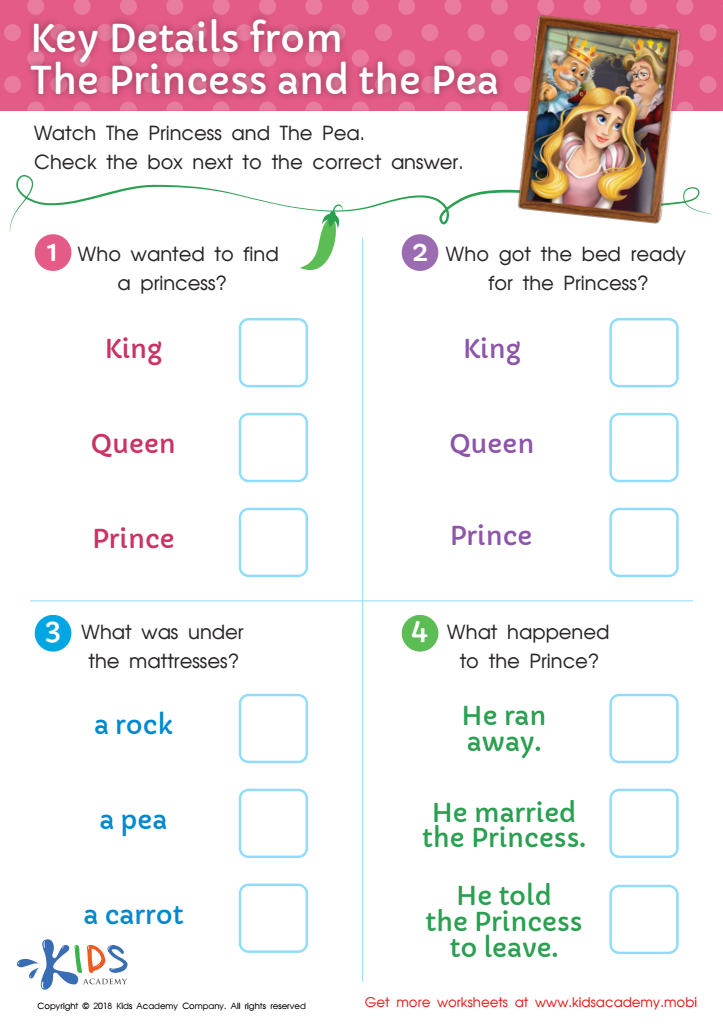
Key Details from the Princess and the Pea Worksheet
 Assign to My Students
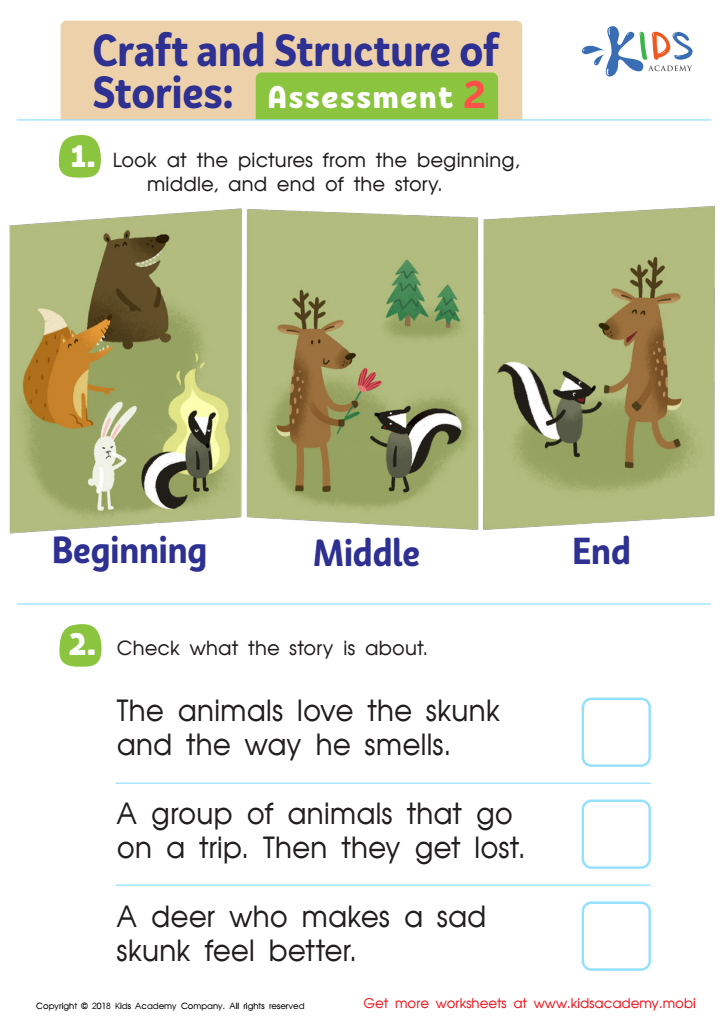
Craft and Structure of Stories: Assessment 2 Worksheet
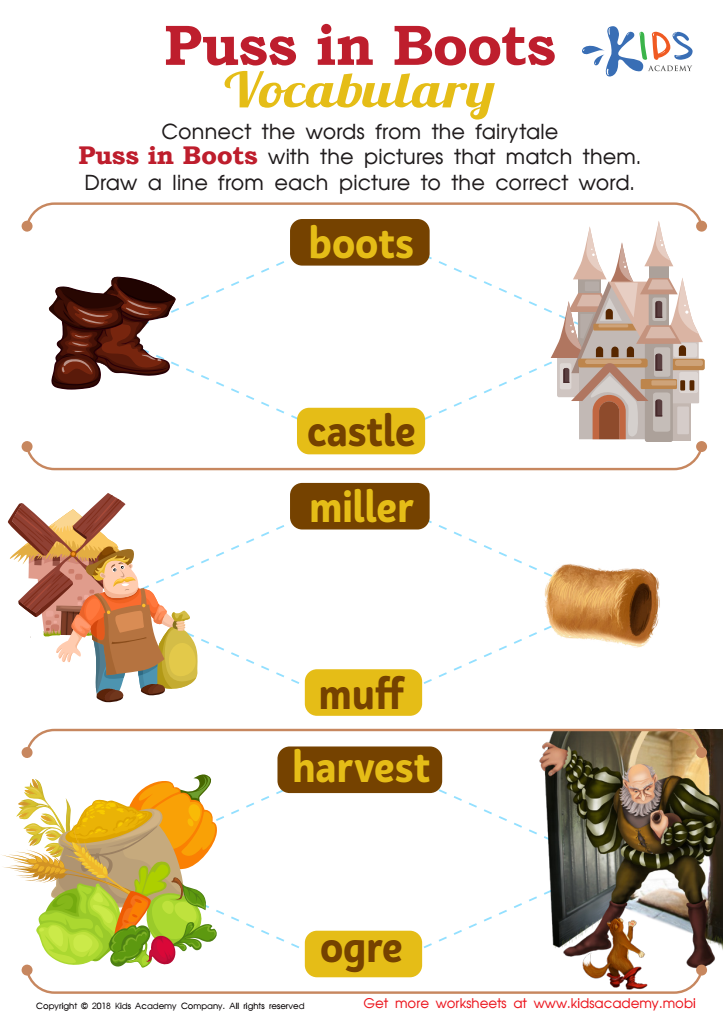
Puss in Boots Vocabulary Worksheet







.jpg)
Reading fiction and analyzing stories with children aged 4-6 is crucial for their developmental growth and serves multiple educational and emotional benefits. At this early stage, children are rapidly developing their language skills, comprehension, and cognitive abilities. Through story analysis, young minds learn to discern plot structures, understand character motivations, and predict outcomes. This nurtures critical thinking and problem-solving skills.
Moreover, engaging with fiction enhances vocabulary and encourages expressive language. Hearing new words in context allows children to grasp meanings more accurately, improving both their speaking and reading abilities. For teachers and parents, discussions about the story's context, characters, and moral lessons can further stimulate communication and bonding, which are indispensable during these formative years.
Emotional development is another key aspect. Fiction introduces children to a range of emotions and ethical lessons within a safe environment. Children learn empathy by identifying with characters' experiences and feelings, fostering social skills and emotional intelligence.
In conclusion, integrating story analysis into regular reading routines offers a multifaceted approach to early education. Parents and teachers who prioritize this are helping to build both the intellectual and emotional foundations that will support lifelong learning and well-being.







